
How to Pitch Journalists Today: What Gets Read, What Gets Ignored, and Why

Key Takeaways: The 2026 Media Relations Playbook
The contemporary landscape of UK media relations is defined by extreme fragmentation, shrinking newsrooms, and the rapid ascent of generative search technologies. To secure earned media coverage in 2026, public relations practitioners must transition from volume-based outreach to a model centered on high-relevance, data-backed storytelling and multimedia integration.
Introduction: The Landscape of UK Media Relations
The traditional top-down model of media communication has been permanently replaced by a lateral, multi-platform ecosystem where news narratives move in a non-linear fashion. In this environment, the journey of a story is no longer a straight line from the public relations team to the newsroom and then to the audience; it is a “pinball machine” where narratives leap between social media sub-communities, hyper-local platforms like Reddit, and mainstream broadcasting. This fragmentation has profound implications for how brands manage their reputation and engage with the press.
Recent data from the Reuters Institute Digital News Report indicates a sharp decline in traditional media consumption among UK audiences, with print and broadcast both falling. Consequently, newsrooms are pivoting towards online-first, mobile-led strategies to capture fragmented attention.
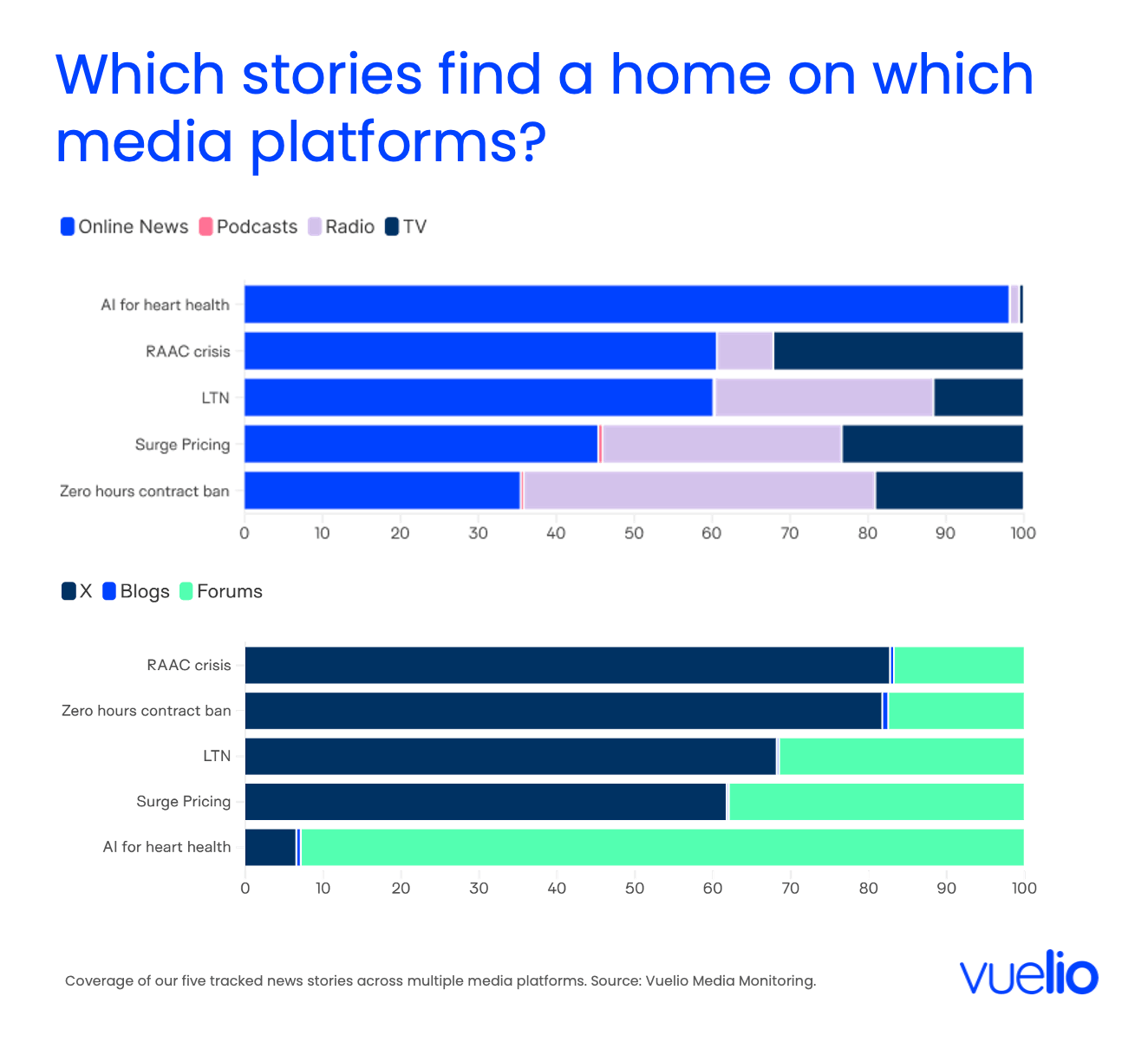
For the PR professional, this means the competition for space is fiercer than ever. Newsrooms have shrunk, leaving fewer journalists to handle a higher volume of more complex, cross-platform stories.
Vuelio research highlights that journalists are increasingly time-poor, managing multiple content channels from traditional articles to vertical videos and podcasts. This resource scarcity has shifted the power dynamic; journalists are no longer looking for mere story ideas but for support from PRs who can understand their challenges, provide the necessary data, experts, and multimedia assets to complete a story with minimal friction.
The year 2025 marked a difficult period for the industry, where economic pressures and the influx of “AI slop” and misinformation forced a return to core values of trust and credibility. As newsrooms adopt formal AI policies, the requirement for verified, human-led storytelling has become a prerequisite for coverage. Practitioners must navigate this “modern media maze” not as an obstacle, but as a map of alternative routes to their audience.
The Anatomy of a Perfect Pitch: Breakdown of the Subject Line, the Lead, and the CTA
The successful pitch in 2025 is an exercise in precision. With newsrooms operating at capacity, the margin for error is non-existent. A practitioner must capture attention in the seconds it takes an editor to scan an inbox. This requires a structural understanding of the three critical components of an email: the subject line, the lead, and the call to action (CTA).
The Subject Line as the Digital Gatekeeper
The subject line is the most important element of any outreach campaign. Research into journalist behavior shows that short, snappy subject lines between 8 and 10 words (approximately 65 characters) are the most effective.23 This length ensures the text is not truncated on mobile devices, which is where many journalists first scan their notifications.
Strategic subject lines often function as “pre-emails” that tell the story before the message is even opened. The most successful tactics include mocking up a headline that matches the publication’s style, which allows the editor to envision the story in their section. For instance, using a data-led hook such as “STUDY: London energy bills to rise by 15% in Q4” is more likely to be opened than a generic title like “Energy News for your consideration”.
| Subject Line Type | Effective Example | Psychological Trigger |
| Data-Driven | “45% of UK SMEs fear bankruptcy by 2026” | Curiosity driven by statistical significance. |
| Headline Mockup | “Why the TikTok ban will reshape UK retail in 2025” | Newsroom-ready formatting for easy adoption. |
| Exclusive Asset | “EXCL VIDEO: Inside the world’s first AI-run warehouse” | FOMO and the need for high-value multimedia. |
| Urgency/Newsjack | “Expert Comment: Today’s interest rate hike and first-time buyers” | Immediate relevance to the current news cycle. |
The Lead: The Inverted Pyramid in Practice
The lead paragraph must immediately answer the “so what?” factor. In accordance with the inverted pyramid structure, the most critical information—who, what, where, when, and why—must appear in the first two sentences. Successful leads in the current era often include a “why now” hook that ties the story to a larger cultural trend, a policy announcement, or a recent data spike.
Instead of focusing on what the brand wants to say, the lead must focus on what the audience wants to hear. This requires a deep understanding of the “User Needs Model,” which categorizes audience motivations into four categories: knowledge, understanding, doing, and feeling. As media outlets move toward “slow journalism” and constructive news, leads that offer to “inspire” or “give perspective” are increasingly prioritized over simple updates.
The Call to Action: Reducing Newsroom Friction
The pitch should conclude with a clear, concise ask that reduces administrative work for the journalist. In 2025, this means providing immediate access to assets rather than asking for interest first. A professional CTA might offer high-resolution imagery, a pre-recorded video interview, or a specific time slot for a spokesperson.
A vital part of the CTA is ensuring that all links are functional and lead to a dedicated media pack or a “newsroom-ready” landing page. This approach respects the journalist’s workflow and increases the likelihood of adoption, as it provides a complete “electronic news package” that the AI-assisted newsroom can easily parse.
Why Journalists Hit ‘Delete’: Common Mistakes that Damage Your Reputation
Understanding the reasons for rejection is the first step toward refining a media relations strategy. In a landscape where only 7% of pitches are considered relevant, the “delete” button is the journalist’s primary tool for managing an overwhelmed inbox.
The Perils of “Spray and Pray” Tactics
The most frequent reason for a pitch being ignored or blocked is a lack of relevance to the journalist’s beat or audience. Automated, mass-distributed emails that treat every journalist as a generic contact are a waste of time and a risk to the agency’s long-term reputation. The “User Needs Model” suggests that different outlets have very specific brand requirements; pitching a high-level technical piece to a tabloid editor, or a gossip-based story to a trade publication, signals a total lack of research.
The Influx of “AI Slop” and Misinformation
As 2025 progressed, the industry saw a surge in low-quality, AI-generated content—often referred to as “slop”—which has made journalists hyper-vigilant. Pitches that sound automated, lack a human voice, or provide unsourced data are immediately dismissed. Furthermore, the rise of “fake experts” has led to a trust crisis; the CIPR and PRCA have both called on journalists to verify the credentials of any source through publicly available professional registers.
| Pitch Killer | Consequence | Professional Fix |
| Generic Lists | Permanent “Blocked” status for the domain. | Manual prospecting and bespoke media lists. |
| Massive Attachments | Triggers spam filters or crashes mobile browsers. | Use high-quality links to dedicated media packs. |
| Over-selling/Hype | Loss of credibility as a reliable news source. | Lead with facts, data, and neutral expert quotes. |
| Lack of “Why Now” | Pitch is archived for “slow news days” (and never read). | Tie every pitch to a trend, seasonal event, or data spike. |
Data-Driven Pitching: How to Use Media Intelligence to Time Your Outreach
In the modern media cycle, timing is not just about the day of the week; it is about the “seasonality of interest”. Vuelio’s data-driven insights allow practitioners to map their outreach to the predictable peaks of the news calendar, ensuring that pitches arrive when journalists are actively seeking specific content.
The Five Qualities of a Newsworthy Story
To determine if a story is truly ready for distribution, practitioners should measure it against the five qualities that journalists prioritize: Impact, Timeliness, Prominence, Proximity, and Oddity. A story is newsworthy if it affects a large number of people (Impact), relates to a current event (Timeliness), involves a recognizable name or brand (Prominence), is geographically relevant (Proximity), or is genuinely surprising (Oddity).
However, not all data is equal; original research involving 2,000+ respondents or in-depth executive interviews is required to provide the “fresh insight” that separates a hero campaign from a routine update.
Strategic Timing: The “News Day” Dynamics
While the news cycle is 24/7, the administrative habits of the newsroom remain consistent. The highest news consumption and reading rates occur on Tuesdays, Wednesdays, and Thursdays. Correspondingly, these are the best days for pitching, as journalists are in the “story planning” phase rather than the “deadline race” of Monday morning or Friday afternoon. For topical news, readership is extremely concentrated, with 86% of the audience engaging within the first three days of publication, making speed and timing essential for any correction or response.
The Impact of AI on Media Relations: Balancing Efficiency with the “Human Touch”
The arrival of AI in 2025 and 2026 means a shift in daily reality for both journalists and PR practitioners. However, the role of AI is shifting from a content generation tool to a strategic “first-class communications channel”.
The Necessity of Multimedia Assets
The “video-fication” of everything has redefined the modern newsroom.21 PA Media and other national agencies now operate on an “audience first” strategy where video is a central tool, not an afterthought. To stay relevant, PR pitches must include a variety of formats: short-form video (TikTok/Reels style), high-resolution imagery, and “social-ready” infographics.
A story accompanied by a short video clip or an interactive map is far more likely to be picked up than a text-only press release. This multimedia approach also helps with “Search Generative Experiences,” as AI engines prioritize content that includes rich media.
Balancing Automation with Personalization
While 92% of PR teams use generative AI in some form—primarily for brainstorming and content optimization—39% believe the key to success in 2026 lies in strengthening human-to-human relationships. The practitioners who thrive will be those who use AI to do the “mundane tasks” (like drafting initial research summaries or checking grammar) while spending more time on the strategic “judgment calls” that machines cannot make.
The “New Rules” of engagement prioritize intergenerational literacy and foresight over “output craft”. In an era of AI-mediated discovery, high performance depends on disciplined listening and the ability to forge authentic connections that cut through the digital noise.
Building Long-Term Relationships Over One-Off Hits
The era of transactional, “link-building only” PR is over. As we move into 2026, the value of an agency is measured not by its volume of clippings, but by its “organizational intelligence” and the depth of its trusted relationships.
Don’t let a pitch be a full stop; it’s the beginning of a potential collaborative partnership. Practitioners should focus on providing the “missing piece” of a story—whether that is a reactive quote, a specific case study, or a unique data set—that makes a journalist’s job easier. This “human-led governance” of the PR-journalist relationship is the only effective defense against the erosion of public trust caused by AI misinformation.
Growth-Focused Metrics
Clients and stakeholders are increasingly demanding “outcome-based” measurements rather than just “outputs”. Success in 2026 is defined by the impact on reputation, the improvement of stakeholder trust, and ultimately, the tangible business results generated by earned media coverage. This requires a shift from celebrating “clever ideas” that went unseen to championing impact that resonates with the target audience.
Frequently Asked Questions
What is the best time to email a journalist?
Pitching in the morning—specifically between 9:00 AM and 11:00 AM—allows journalists to include your content in their daily story planning before they hit afternoon deadlines. While news cycles are continuous, and every outlet found on Vuelio Media Database has its own editorial deadlines.
How long should a media pitch be?
A media pitch should be concise, ideally around 150-200 words in the body of the email. This includes a one-line “hook” explaining why the story matters today, 1-2 sentences of critical facts, and a clear list of available multimedia assets.
Should I follow up with a journalist after sending a pitch?
Yes, but with restraint. One follow-up email is considered ideal, preferably 24-48 hours after the initial pitch. Adding a “new angle” or an additional insight in the follow-up can often re-engage interest. However, persistent contact beyond this can lead to being blocked; 50% of journalists report that repeated chasing is a major reason for blacklisting a PR contact.
What is the “User Needs Model” in journalism?
The User Needs Model is a strategy newsrooms use to focus on audience motivations rather than just “updating” the news. It involves categories like “Inspire me,” “Give me perspective,” and “Educate me”. For PRs, this means tailoring pitches to fulfill these specific needs—for example, by providing an inspiring case study or an expert who can explain the wider context of a trending topic.


Leave a Comment