
The UK Housing Crisis: From A Supply Problem To A Political Emergency?

The UK housing debate has become heated as arguments over who we are building for and whether the current political leadership is capable of delivering on its promises abound.
Over the last month, the conversation has moved away from construction targets and toward a much messier reality involving planning gridlock, industrial supply chain failures, and a burgeoning leadership crisis in Westminster.
To understand how these narratives are moving, we analysed media data using Vuelio’s Lumina. This AI-powered tool surfaces the stories that matter, the different viewpoints within them, and the specific people and organisations driving the news. Between 5 April and 30 April 2026, we examined 17 distinct stories with competing perspectives to cut through thousands of media items and offer a definite look at where the narratives sit right now.
The results show a sector under immense pressure. From the grey belt of Kent to the rural Highlands, the debate is fragmenting. For those in public affairs and communications, staying on top of these shifts is the difference between leading the conversation and being buried by it.
Here is what the data tells us about the current state of the UK housing market…
A Perfect Storm Brings Housebuilding To A Decade Low
The most dominant story right now reflects a growing concern that the national housebuilding machine has ground to a halt. While the Labour government remains committed to its target of 1.5 million homes, the industry is describing a perfect storm that makes those numbers look more like a dream than a delivery plan.
The Home Builders Federation and major players like the Berkeley Group are leading this narrative, arguing that the entire financial model of building in the UK is becoming unviable. They point to a mix of high interest rates, rising material costs, and what they call bureaucratic ‘sludge’ in the planning system. This has led to a situation where major developers are cutting back on land purchases, with no clear path to profit.
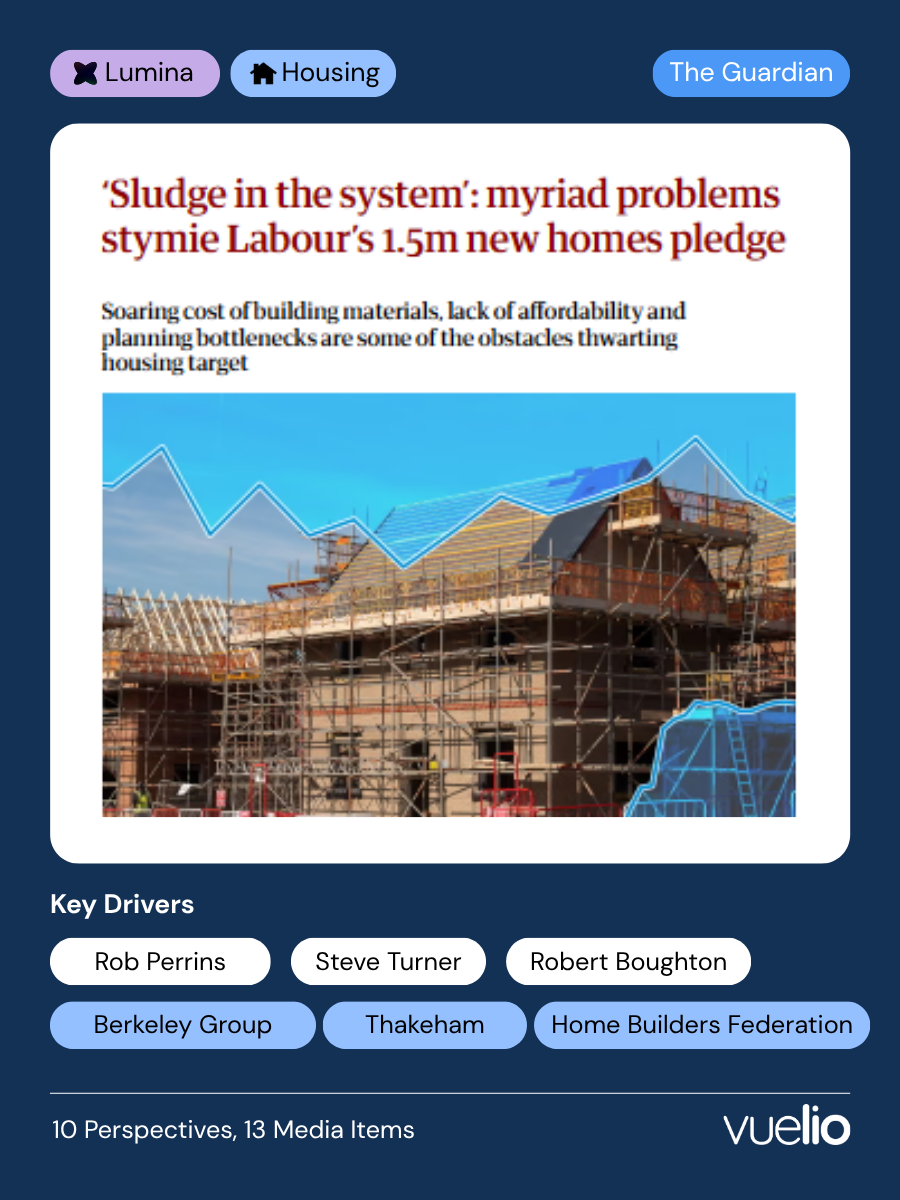
Due to the data, this viewpoint carries a lot of weight. Construction starts in London have plummeted to levels not seen in years, and national figures for brick and block deliveries are falling. As reported by Guardian Online, these systemic delays are now being described as a ‘housing recession’, putting the Government in a difficult spot. While ministers insist their planning reforms will eventually work, the industry loudly disagrees.
The key drivers here are the industry bodies who have shifted from quiet lobbying to very public warnings. Neil Jefferson of the Home Builders Federation is a central figure, framing the crisis as a failure of policy to meet economic reality. When these organisations speak, they go beyond representing individual companies, to an entire supply chain that feels abandoned by the current fiscal environment.
The Battle Over ‘Beauty’ And Family Space In London
While the national story is about volume, the London narrative is about quality and suitability. A major divide has opened up between City Hall and its critics over what kind of homes the capital actually needs. The Deputy Mayor for Housing Tom Copley has been vocal in defending the current strategy, predicting that 2026 will be a turnaround year.
However, a growing chorus of experts and politicians disagree. The Housing Forum and the G15 group of housing associations are pushing a perspective that London is centering units over people. They argue that building thousands of small one-bedroom flats does nothing for the 75,000 households stuck in temporary accommodation, or families living in overcrowded conditions. They instead want a shift toward counting the number of people housed, rather than just the number of front doors created.
This debate has become aesthetically-focused, as well. Shadow Housing Secretary James Cleverly has entered the fray, attacking what he calls ‘soulless tower blocks’. He advocates for ‘mansion blocks’ and ‘intelligent density’, in some clever political positioning. With the focus on ‘beauty’ and ‘gentle density’, the Conservatives seek to win over local residents with a tendency to block new developments. Their bet: people are less likely to say no plans that are an aesthetic improvement.
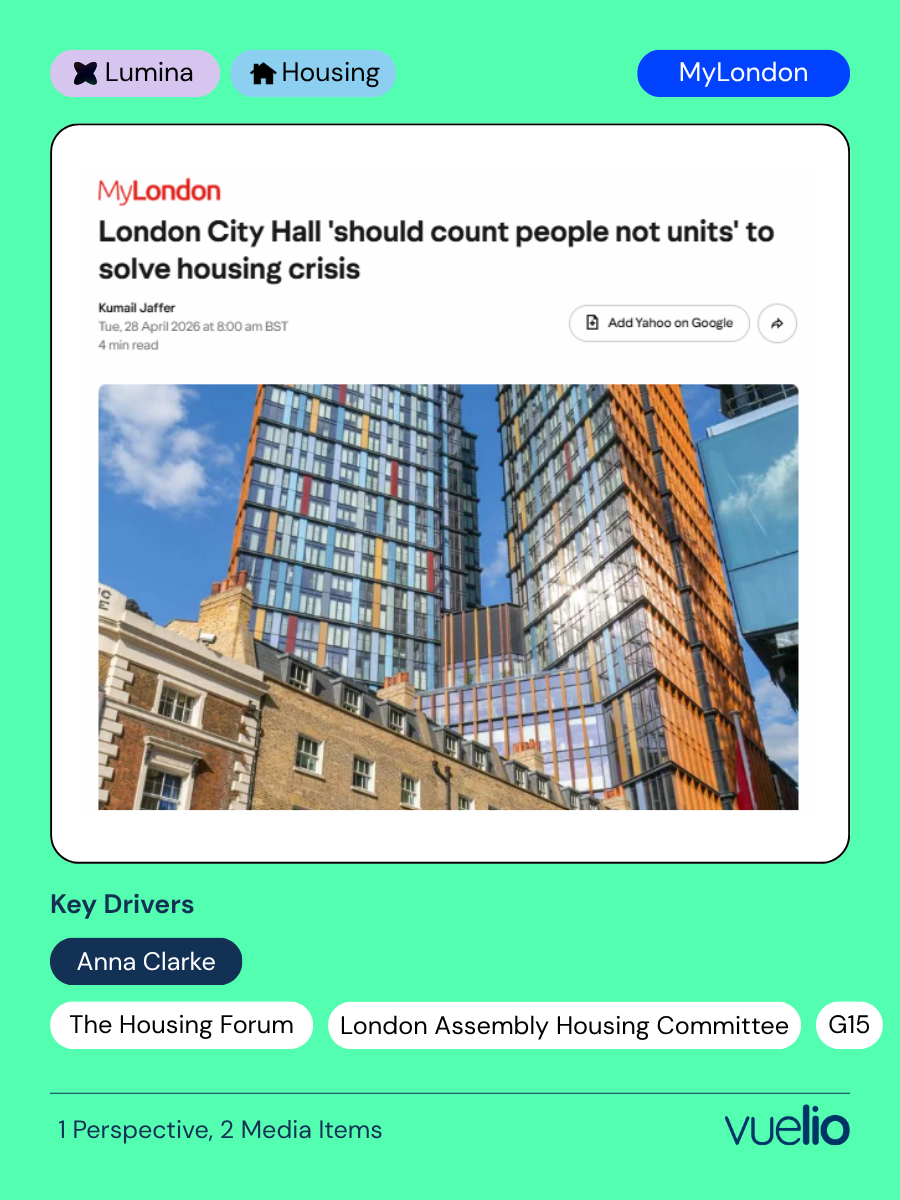
According to MyLondon, this debate is a fundamental challenge to the Mayor’s strategy. If the public starts to believe that the new homes being built are the wrong homes, political support for massive development could vanish. The key drivers in this section, including Anna Clarke of The Housing Forum, are successfully reframing the crisis as one of distribution and suitability, not just supply.
Political Instability Casting A Shadow Over Policy
Perhaps a concerning trend for those in the housing sector is how much the Mandelson controversy and questions regarding Keir Starmer’s leadership are starting to take hold of the policy agenda – the work of fixing the planning system curtailed by a focus on internal dissent and scandals.
Commentators like Alex Brummer for This Is Money and reporters for the Financial Times are painting a picture of a ‘rudderless’ Britain, with power draining away from Downing Street. And this could have real-world consequences for the economy going beyond gossip, with the Bank of England maintaining a cautious approach to interest rates, and the uncertainty in Westminster making investors nervous.
When a Prime Minister is under fire, bold reforms get pushed to the back burner, and we are already seeing this play out with housing targets. Industry analysts are increasingly calling the 1.5 million aim ‘fanciful’ as the political capital needed to force planning changes through is being spent on managing party rebellions.
The key drivers here are high-profile columnists and disillusioned backbenchers, who are linking political failure directly to the housing slump. Their argument: If the government cannot manage its own party, how can it manage the biggest building programme in 50 years? This link is potentially dangerous for the Labour brand, turning a technical policy failure into a perceived character flaw of leadership.
Supply Chain Shocks And Creative Solutions
While influential players argue in London, other stories show how the crisis is hitting the ground in different ways. The GMB Union has raised a red flag regarding brick manufacturing, pointing out a ‘nonsensical’ energy policy that gives relief to mortar makers but excludes brick kilns. This has led to factories idling and stockpiles growing, even as the country begs for more homes. Charlotte Brumpton-Childs from GMB is a key driver here, aiming to protect manufacturing jobs and pointing out the disconnect in government strategy.
Concurrently, there are creative, and controversial, attempts to bypass the planning system. In Ireland, the government has approved exemptions for garden homes and modular cabins. While ministers like Micheál Martin champion this as a pragmatic solution to a national emergency, housing advocates like Threshold warn it could lead to a return to substandard ‘beds in sheds‘.

In Kent, Hallam Land is testing the new grey belt rules with a 300-home proposal in Sevenoaks. This has sparked a familiar villager versus developer trope,, with local residents calling it an ‘absolute joke’, and the developer characterising the move instead as a ‘sympathetic expansion’. This story could be a preview of the many battles that will take place across the UK as the Government attempts to reclassify green belt land.
What This Means For Comms Professionals
For PR and public affairs professionals, this data suggests that supply vs demand messaging won’t get attention from the press, or from stakeholders. Campaigns focusing on building more should make way for updates on what is being built, where it is, and who it is for:
The suitability message: The focus is shifting to family-sized homes and ‘intelligent density’. If representing a developer, lead with how projects fit the local population’s specific needs, not the contribution to a national target.
Infrastructure first: The Sevenoaks story shows that local opposition is still rooted in infrastructure fears (doctors, schools, traffic). Communicators must address these points before they talk about the houses.
Everything is political: Housing is being used as a means to criticise the current UK leadership. Any project that stalls can be framed as a failure of the Government – be prepared for your project to become a political pinball.
Supply chain transparency: The brick and energy crisis shows that the how of building is just as important as the where. There is a space for thought leadership on industrial strategy and how it supports housing.
The UK housing crisis is currently enmeshed in a collection of competing crises, with a construction crisis, a planning crisis, and a leadership crisis all happening at once. The narrative has moved from a debate about numbers to a complex argument about aesthetics, family needs, and industrial viability.
Navigating this environment requires an understanding of the perspectives that are gaining traction and the key drivers and stakeholders who are shifting public opinion. The data from Lumina shows that the winners in this debate will be those who can bridge the gap between policy ambition and the reality on the ground. By staying ahead of emerging trends in the press, communicators can help shape a more constructive conversation.
Find out more about the closer alignment between public affairs, communications, and the political press here.


Leave a Comment