
How the changing landscape of political journalism impacts PR and comms professionals

Political reporting in the UK is arguably more splintered and divided than ever before. Combine that with a significant number of younger people losing interest not only in politically-focused news, but in politics completely, the media ecosystem is a difficult one to operate in for journalists, but also for PR teams with important messages to share.
At the recent Society of Editors conference, political reporters from newspapers and broadcast media reflected on the challenges and opportunities – here is what this means for PR and comms professionals navigating the political sphere.
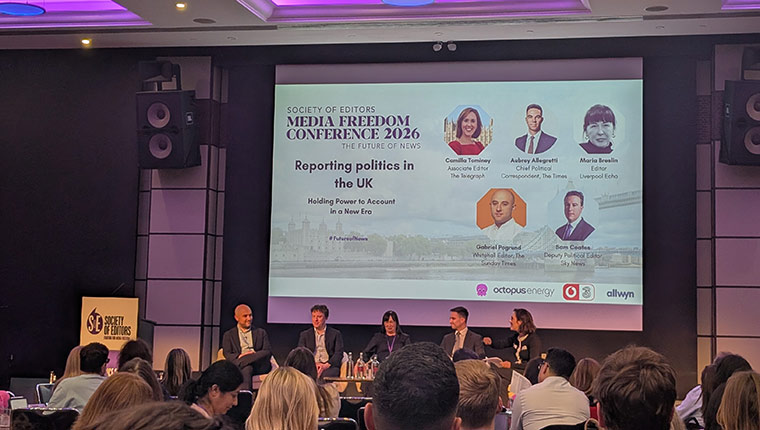
The importance of neutrality
While many newspapers have in the past declared their political allegiances, especially in the run-up to elections, the majority of political journalists today are striving for neutrality. This is even more important for broadcast journalists, as Sam Coates, deputy political editor at Sky News, explained:
‘When you’re a broadcast journalist, people have a different type of relationship with you than they do with journalists in print. They form a view on how you go about your job and how you present what you say. Therefore, fairness when reporting across political parties and reporting across the government system must be absolutely at the heart of your approach.’
Aubrey Allegretti, chief political correspondent at The Times, has worked across ‘the full political spectrum’ when it comes to news organisations, having reported for HuffPost, Sky News, and now The Times. Aubrey hasn’t found it too challenging to adapt as ‘you are led by the stories and the facts that present themselves’. Integrity to the story was something that Sam also emphasised – ‘you’ve got to be respected on all sides’ to earn the trust of audiences, sources, and colleagues.
The impact on PRs: Political press releases and information should be presented as neutrally as possible. Broadcast journalists especially can’t be seen to favour a particular side and the facts need to be trustworthy and reliable for use. Some news outlets do still have more of a political stance, so always keep in mind who you are reaching out to when putting a press list together for your media outreach, and what will most likely appeal to them.
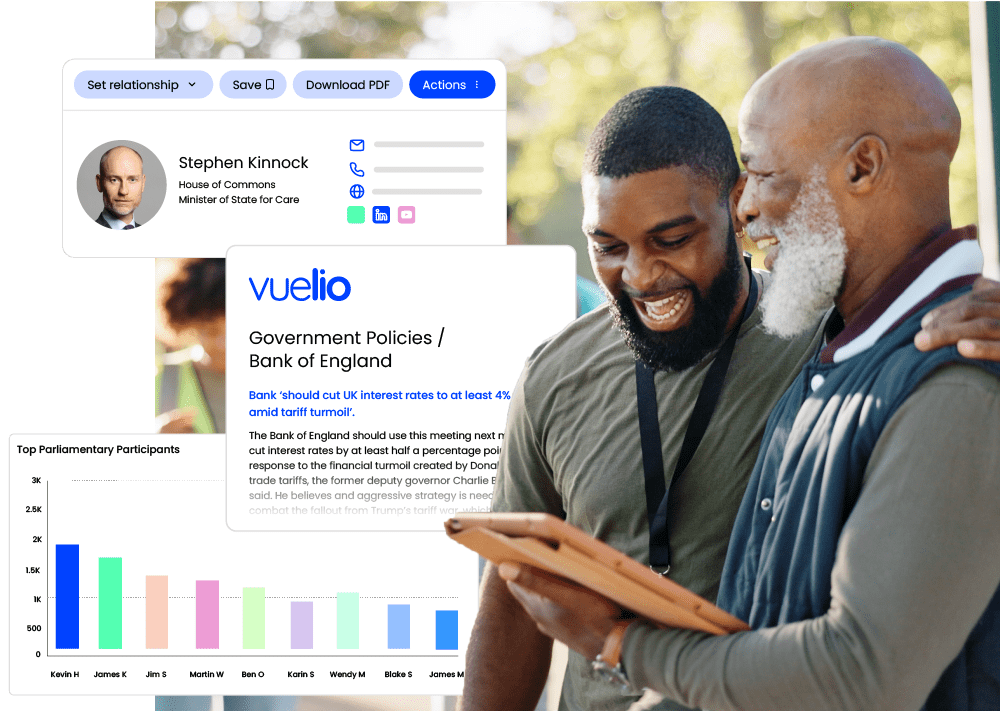
To help, the Vuelio Media Database features content details and deep intel on media covering the entire political gamut, featuring print, broadcast, podcasts, social media, and more. To receive requests directly from reporters and broadcasters covering politics in the UK and internationally, check out the Journalist Enquiry Service, now embedded into the Vuelio platform.
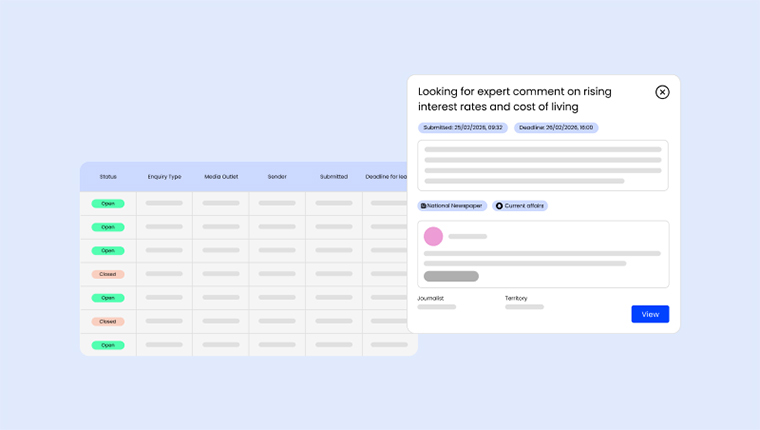
With politics now inextricable from the majority of media reporting, Vuelio’s integrated political suite also offers a Political Database, Political Monitoring, and more, all in one place.
Differences in national political reporting and local
The majority of national press titles will have a journalist based at Westminster making use of their lobby pass to the Houses of Parliament, Downing Street, and daily briefings.
Sam believes that it’s important that there are journalists on site ‘trying to understand how political parties, government departments, Downing Street, and the operation of power actually works’ and communicating this to the public.
Aubrey echoed the importance of the lobby as ‘a really powerful force’, highlighting its role during the height of the COVID-19 pandemic, as journalists demanded answers from the government on issues with national significance.
Local news outlets are unlikely to have a journalist based out of Westminster and therefore have a different focus when it comes to reporting on politics. Maria Breslin, editor of the Liverpool Echo, explained:
‘We have a local democracy reporting service, which is really important in terms of reporting on what is happening on the ground with our local authorities and our councils. I think we’re in a different space than the national press. We’re thinking about how politics impact on the lives of people, and telling people’s stories, as opposed to politics for the sake of politics.’
Impact on PRs: It may sound fairly obvious, but national press journalists are looking to get political news and information that is going to impact the whole of the country. Already inside Westminster, they have the ear of government officials, so exclusive political research and information with implications on a national scale will catch their eye.
Local outlets are much more focused on their specific audience and are, naturally, covering politics closer to home. Case studies are likely to resonate well with local political reporters, or experts that can delve into how the latest political issue, controversy, or announcement will affect people directly, and what it means for their town, city, or county.
Have relevant case studies to offer journalists? Connect with local reporters via the Journalist Enquiry Service.
Meeting the audience where they are
While national and local press have different audiences that they target, both are now increasingly moving towards where their audiences are getting their news – social media. Maria remarked on the fact that there is now ‘a whole generation of people who source their news from different platforms’. This includes platforms like TikTok (a social platform increasingly employed by Reform UK in its campaigning) for big political events like party conference season.
This has been a key consideration for Sam and Sky News as well, which has a daily podcast, previewing what the day ahead looks like from a political viewpoint. It’s been put together with the audience front of mind:
‘Everything about how we do that podcast is designed to meet a very particular audience. It’s made so it’s ready for the commute of people, largely in Westminster, and it was conceived and designed because we had this audience in mind. And this is the kind of conversation and thought process that’s going on at Sky News right now.’
Impact on PRs: While political reporters and columnists are still writing for print, there is an increasing likelihood that the content will go out across various platforms including vertical video sites like TikTok. Journalists therefore no longer just need facts and stats, but may require visuals and spokespeople to work across these different mediums. If you’ve got experts who are comfortable with speaking on camera, or would be willing to make appearances on podcasts or vlogs, then this will help them to stand out and get them coverage.
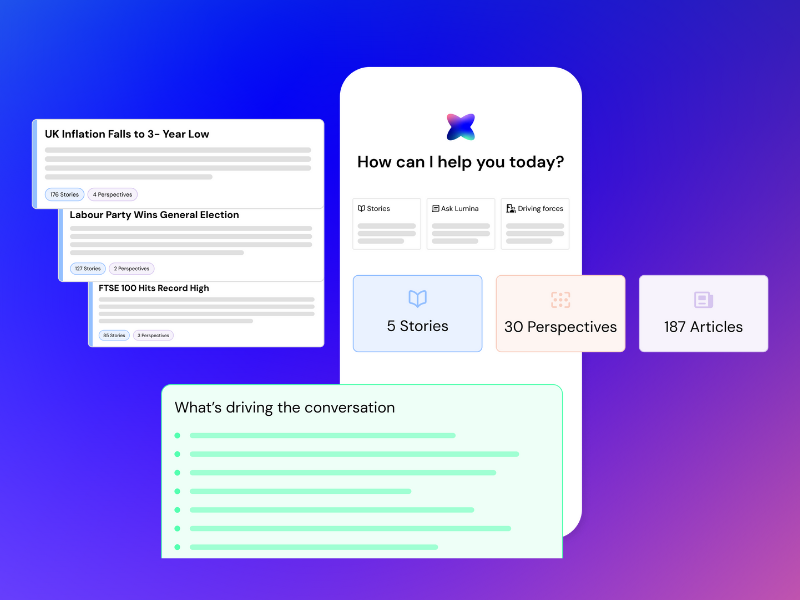
To monitor which platforms to target for your upcoming campaigns, Vuelio Media Monitoring and bespoke reports from the Vuelio Insights team offer a 360-view of what is becoming an increasingly fragmented media and political landscape – harder to navigate than ever before, but filled with extra opportunity to share your story. Want more insight? Uncover narratives emerging in the press with Vuelio Lumina.
For more on navigating the modern media landscape, download Vuelio report ‘How news travels in today’s fragmented media environment‘.


Leave a Comment