
How AI is changing the way we communicate: Balancing AI efficiency with human authenticity in PR
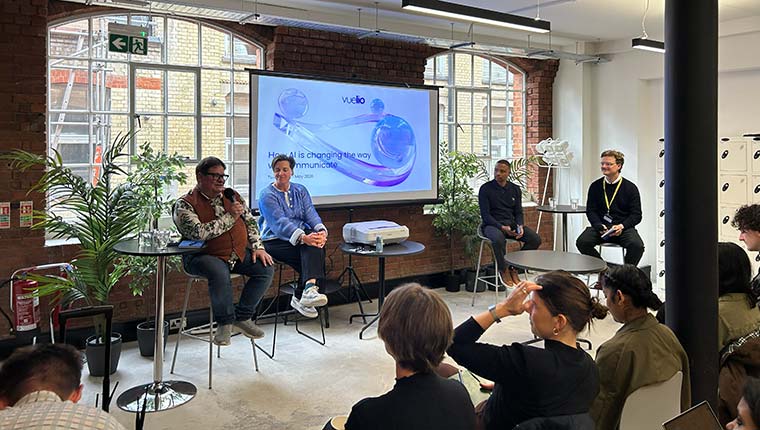
AI is changing the way the creative industries communicate, with PRs, public affairs practitioners, marketers, and the media all battling to keep pace with innovation. To explore these changes, Vuelio’s latest in-person event brought together a panel of comms and media industry experts to provide perspectives on the challenges and opportunities that AI poses to modern communications.
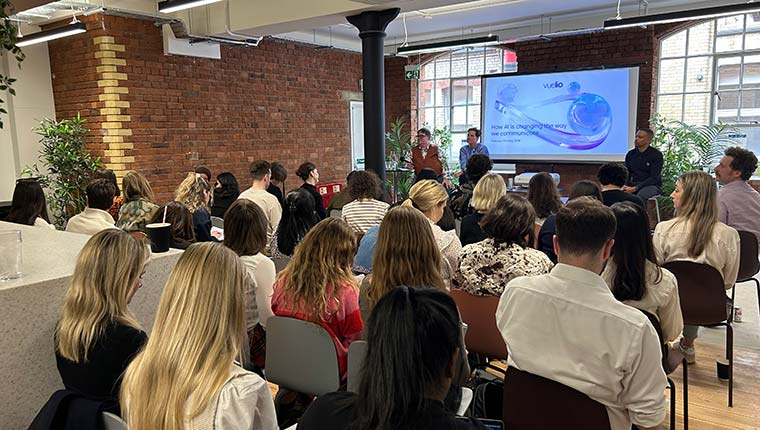
The discussion was framed by an urgent reality, as Stuart Bruce, PR Futurist and Co-founder of Purposeful Relations, warned the audience:
‘Communications is standing on a precipice. Historically, we have not been an innovative industry. Both the scale and the speed of AI adoption needs to be a lot faster. AI is impacting you because organisations around you are using it — your competitors, your peers, your users, your customers. If you’re not understanding those shifts that are happening in society, in the economy, you are going to be left behind. We’ve got to get our act together quickly.’
Our panel featured leaders at the intersection of technology and storytelling. Nicole Yost, Director of Communications and Corporate Affairs at the British Heart Foundation (BHF), provided the in-house viewpoint, sharing how a major charity balances the efficiency of AI with the critical need for trust in healthcare. Tshepo Tshabalala, Manager and Team Lead at JournalismAI (LSE), brought a global perspective on how newsrooms are responsibly implementing AI. Joining them was Stuart Bruce, who advises small agencies to international bodies on AI adoption and the emerging field of AI as a stakeholder.
Embracing the speed of change while retaining trust
The consensus among the panel was that AI has fundamentally accelerated the pace of communication, but that this speed comes at a cost to credibility. This mirrors broader trends in the industry that were at play before AI proliferated to its current extent (but have been magnified by its arrival), such as the spread of misinformation and the sheet volumes of content and stakeholders across channels; organisations must be increasingly strategic to ensure their messaging remains effective against this backdrop. Nicole highlighted that the BHF has made proactive moves to plot a direction through this changed landscape:
‘AI is changing how we work… It’s making everything faster. We’re finding that there’s so much content and data out there. How do we get hold of all that, and make sure we’re part of that conversation?’
She warned that this speed is a double-edged sword: ‘Content is abundant, but trust is scarce. One of the things that we’re noticing is that issues can escalate much more quickly with AI — misinformation can spread much more quickly, and it can often look very credible, which is dangerous.’
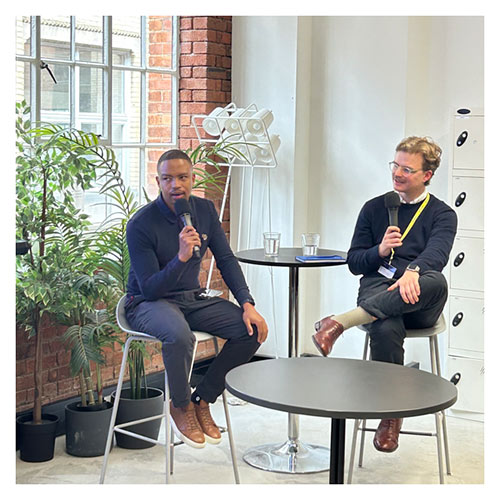
Tshepo observed a similar tension within journalism.
‘There’s a lot of noise, and noise comes in the form of misinformation. What’s also challenging is that we are both consumers and producers of content. When I was still a journalist in the newsroom, there was a bit of gatekeeping in terms of who could be a producer of content. Right now, anybody with a microphone is a podcaster, anybody with a phone can create content.
‘So, the challenge is not only from AI, but also from humans. Journalists are competing with the regular person who just picks up their phone, records, and uploads it onto the internet.
‘Right now, as a consumer and producer of content, I struggle to trust. It’s challenging for the people who don’t have journalist training where you are told to read widely, listen to everything, and then make your judgment.
‘The other challenge is that journalists are no longer just working in one silo – I now have to work across websites, social media, and with AI. That makes it a lot easier, in the sense that I can produce one article and then change that into various formats – a podcast, Tiktok, an Instagram post – but that adds to the problem of noise, a lot of information.
‘In combination with all this, AI is a double-edged sword: it’s good and bad for the media industry.’
AI as a stakeholder: A new mapping exercise
One emerging concept discussed was the idea of treating AI models not just as tools, but as stakeholders in their own right. This requires a shift in how comms teams approach media monitoring and SEO, moving toward Generative Engine Optimisation (GEO).
Stuart emphasised that traditional assumptions about earned media may no longer hold true for every brand.
‘100% you really need to do that stakeholder mapping exercise first,’ Stuart said.
‘For a trade body that we’ve just worked with, earned media was the third most important for them. Number one was owned media. You really have to do that mapping exercise and not just believe the hype.’
This strategic mapping is central to modern PR, where practitioners must understand how their brand appears in AI-generated answers.
Stuart warned that while data sources for traditional social listening are robust, mapping AI stakeholders is more complex because ‘none of the AI companies tell you how many prompts they’re getting on this topic. It’s telemetry’.
What can help make sense of this murky area are tools designed to bridge the data gap:
‘Vuelio is launching something soon that will help you to understand that (I’ve had a sneak peek),’ said Stuart.
‘Tools that are coming from the PR space are a lot more useful to PR people than some of the ones that are coming from the digital marketing and the search space – they understand the pressures, the trends, the type of information that we need to know.’
Authenticity and the resurgence of human storytelling
As AI-generated content becomes the norm, the panel suggested that ‘human’ elements (emotion, lived experience, and authenticity) will become a premium currency.
Nicole shared how the BHF uses human stories to cut through the digital noise:
‘Including case studies and real stories in your messaging is more valuable than ever, because it’s that human story, that human touch, that AI can’t replicate,’ she said, sharing the story of the BHF’s 65 red benches campaign, which featured real people with heart conditions.
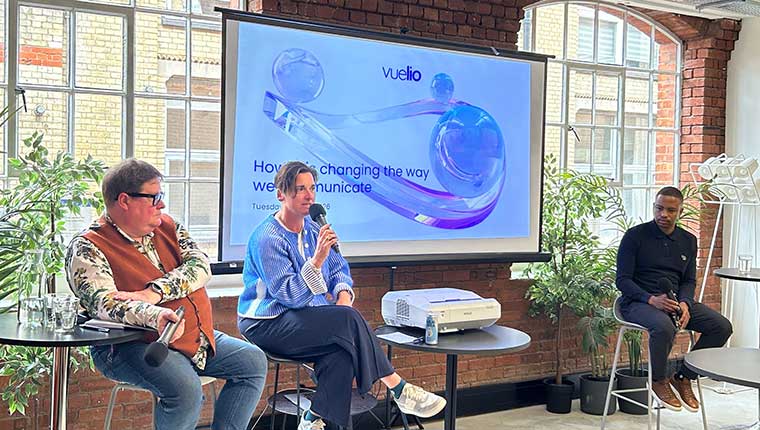
‘Storytelling, the craft of that… human emotion and connection, authenticity, is having a resurgence. There is backlash against LinkedIn posts obviously written by AI, for example.’
Stuart agreed, suggesting that AI’s best role is as a creative spark rather than a final author:
‘Too often, we use AI for content creation, and that’s not actually the most useful place for it,’ he argued. ‘You, as a human, can write a more powerful story. Where AI comes in is you can create a prompt that suggests improvements, sparks ideas. That creative element right at the start cannot be replaced.’
Navigating Misinformation and Brand Equity
The rise of AI has made the battle against misinformation a top priority for PR professionals. This is particularly vital for organisations like the BHF. Nicole explained, ‘It’s a vulnerable moment for people when they’ve just been diagnosed. The last thing they need is nonsense coming through from the wrong source’.
To combat this, the BHF has worked with fellow organisations like Cancer Research UK and the Patient Information Forum on initiatives like Pif Ticks to signal trusted information to both humans and Large Language Models (LLMs).
As Tshepo noted, brand equity is increasingly tied to individuals.
‘Brands are struggling to remain as trusted brands, especially now that there’s a plethora of platforms, news organisations, news websites that are coming up, with everybody claiming that they are independent. People are trusting humans more than anything, especially with the rise of TikTok; a lot of people prefer trusting a human more than a brand.’
Building AI expert teams with training and ethics
Adopting AI is a cultural shift as well as a technological upgrade. The panel debunked the myth that AI proficiency is strictly the domain of younger members of the comms team:
‘There is no correlation with age and AI literacy whatsoever,’ Stuart said. ‘In fact, often, there is reluctance among younger people, because they’re the ones that are most afraid that AI is going to take their job.’
Both Nicole and Stuart stressed the importance of formal governance and training. The BHF has implemented bespoke training for all staff on areas like prompt engineering. Without such training, Stuart warned, ‘you open yourself up to lots of risks in terms of people using AI tools badly or unethically. You’ve really got to have that governance and training in place’.
The future of media relations
The relationship between PR and the media is also being rewritten. Reach plc’s use of its AI tool Guten to rewrite content for different titles serves as a prime example of how publishers are automating the newsroom. For PRs, this means transparency is paramount.
‘That transparency, and credibility, is a really big issue that the PR industry should be taking notice of,’ Stuart said. He suggested that future media lists might need to be split: ‘maybe you want to double your top tier media list: ten for AI, and ten for the humans’.
Tshepo concluded that the future belongs to those who can communicate with both:
‘AI can do a great job of analysing your site, what’s wrong and what’s good about it, what’s bad about it, about SEO and GEO. What it’s not as good at is actually helping you to create that compelling content that is going to work for both machines and humans. The reality is that, even in journalism, we are going to have to learn how to produce content for both; creating in a way that AI can read, and humans are going to love.’
Key Takeaways for PR and comms professionals from the experts
- Conduct AI Stakeholder Mapping: Don’t assume your traditional media hierarchy still applies. Identify where your brand surfaces in LLM responses and prioritise the platforms (owned or institutional) that feed those models.
- Lean into Authenticity: As AI scales content production, human-first storytelling, case studies, and emotional connection will be your greatest differentiators.
- Invest in Governance and Training: Move beyond ad-hoc AI use. Implement formal guidelines and training to ensure ethical use and to help teams overcome the fear of displacement.
- Prioritise Trust and Transparency: Use tools to monitor misinformation and work closely with publishers to ensure your content is cited correctly by AI agents.
- Write for Two Audiences: Modern PR requires a dual approach — optimising content for machine readability (GEO) while maintaining the creative spark that engages human readers.
Want more on the growing influence of AI on PR and communications? Catch up with Vuelio webinar ‘AI as the new PR & Comms stakeholder‘.


Leave a Comment