
The paywall problem: Why your best coverage could be invisible to AI

Nearly eight in ten of the biggest UK and US news websites block at least one AI training crawler. So when a stakeholder asks an LLM about your organisation, the national feature you snagged last quarter may not be in the answer at all.
While prestige is often seen as a shorthand for value in PR, it frequently comes with a paywall in the way. Can AI read your coverage and cite it in its answers when it’s locked behind a barrier?
AI can only cite what it can reach
When an LLM with live search answers a question, it retrieves pages in real time and builds its response from what it finds. But if a page sits behind a hard paywall, or its publisher has blocked AI crawlers, the model often can’t read it, and will start looking elsewhere for sources.
The impact on citations can be significant. The Paywall Penalty: The 2026 Everything-PR x 5W AI Communications Paywall Visibility Index found that hard-paywalled and metered titles, including the Financial Times, the Wall Street Journal and the New York Times, received no citations in a series of Claude enquiries, while open-web publishers took 91.3%. Research from Press Ranger and OtterlyAI found that access deals also have an impact – publishers with OpenAI licensing agreements received 48% more ChatGPT citations per cited page than those without.
Locked-down journalism isn’t completely unreachable by LLMs, but that comes with its own issues. The Tow Center for Digital Journalism found chatbots pointing to syndicated copies rather than originals – coverage may be credited to a different outlet entirely.
Social posts won’t entirely close the gap
Can social content fill in where paywalls block access? Not for most standalone AI engines. Claude draws around 65% of its citations from earned media and just 1% from social. In comparison, Google’s AI Overviews lean more heavily on social, according to Semrush’s 2025 AI Overviews study. Each model’s differences need to be taken into consideration.
Vuelio’s own research backs this up. In ‘The role of AI, LLMs, and earned media in shaping reputation‘, built on Lumina AI View data, around 94% of links cited by leading LLMs came from non-paid, earned, media.
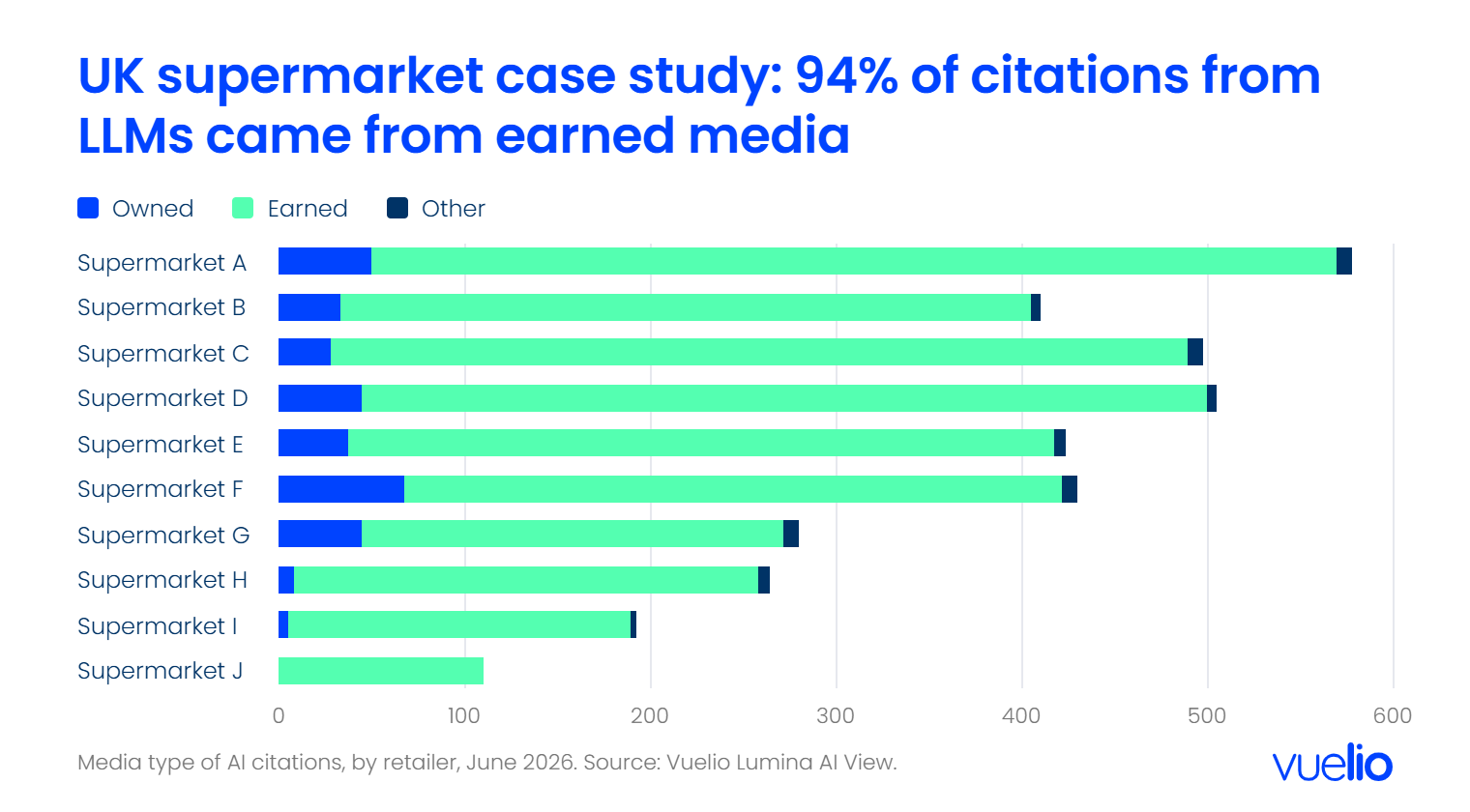
Social media amplified conflict, whereas the AI citations leaned towards authority. And authority comes from earned media – the kind of coverage comms teams are already primed to achieve.
Credibility builds over time
The same Vuelio research found a large share of the content AI cited was months, or even years, old. Models don’t grab the newest story, but instead favour sources that have built up credibility over time – and credibility comes with access.
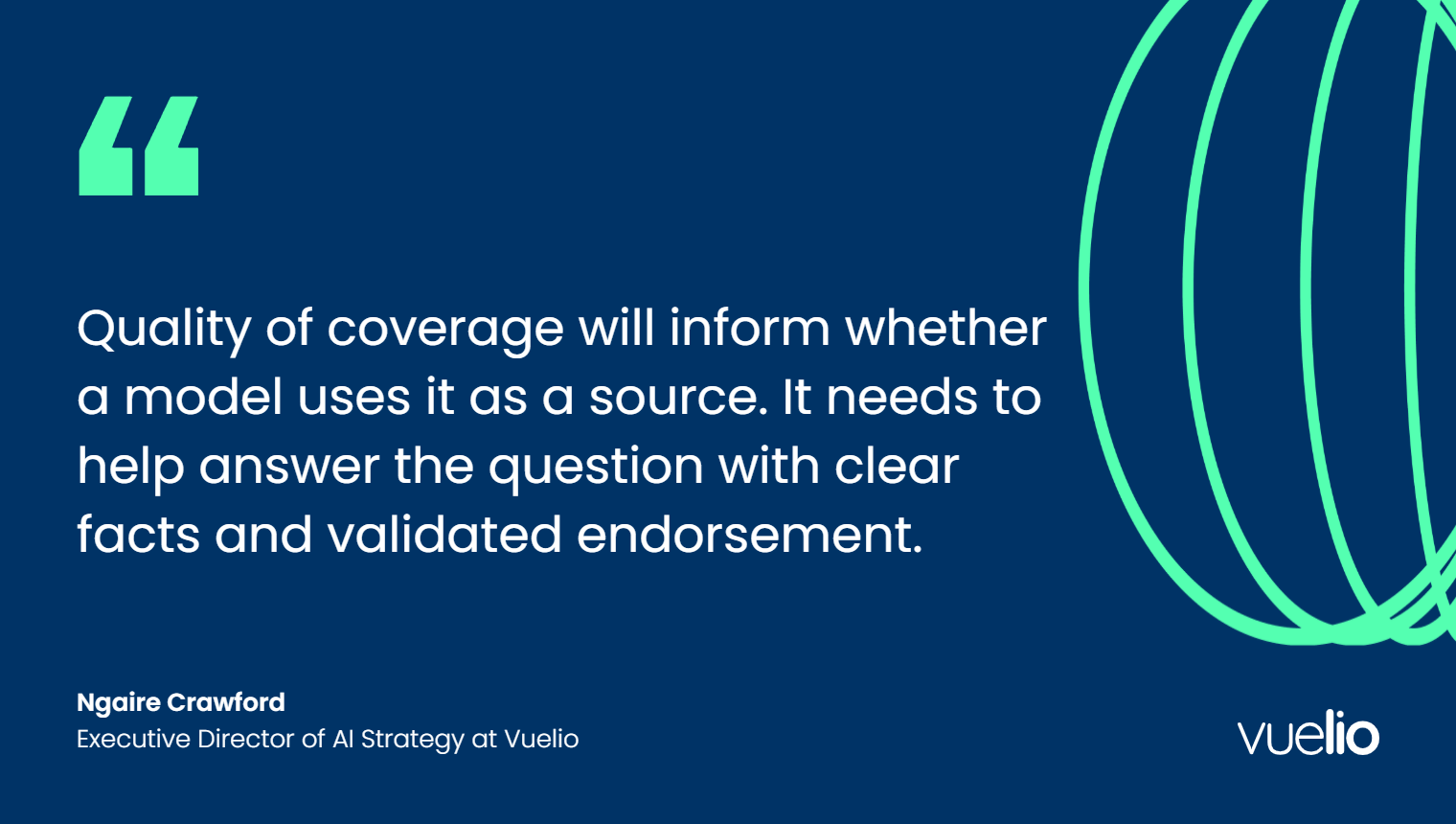
New coverage keeps a model’s picture current, but it’s the trusted sources accumulated that anchor it. As Ngaire Crawford, Executive Director of AI Strategy at Vuelio, put it: ‘The quality of the coverage will really inform whether the model uses it as a source’.
Put together, a single paywalled Tier 1 piece, however prestigious, may do far less for your organisation’s AI visibility than a steady run of open, specialist, and well-sourced coverage.
Audit your coverage by accessibility
The front page of a national press title (imagine…) is still gold dust for a comms team, Tier 1 titles still set agendas and reach decision-makers directly, but media strategy now needs to include questions beyond ‘will this be visible on the newsstand’:
Can it be read?
Flag which pieces sit behind hard paywalls, metered walls, or registration.
Is it corroborated?
Is your key message carried by open sources a model can check it against? As Stuart Bruce, PR Futurist and Co-founder of Purposeful Relations, said during Vuelio webinar ‘AI as the new PR & comms stakeholder‘: ‘The more touchpoints the AI finds to verify a fact, the more likely it is to include it’.
Will it last?
Is it the kind of authoritative, fact-rich coverage models return to long after the news cycle moves on?
Plan outreach with accessibility in mind. Tier 2 titles (trade magazines, specialist websites and niche industry platforms) are often open to read, highly trusted in their field, and frequently cited. In Vuelio’s supermarket research for its latest report, trade titles such as The Grocer did much of the heavy lifting in LLM answers.
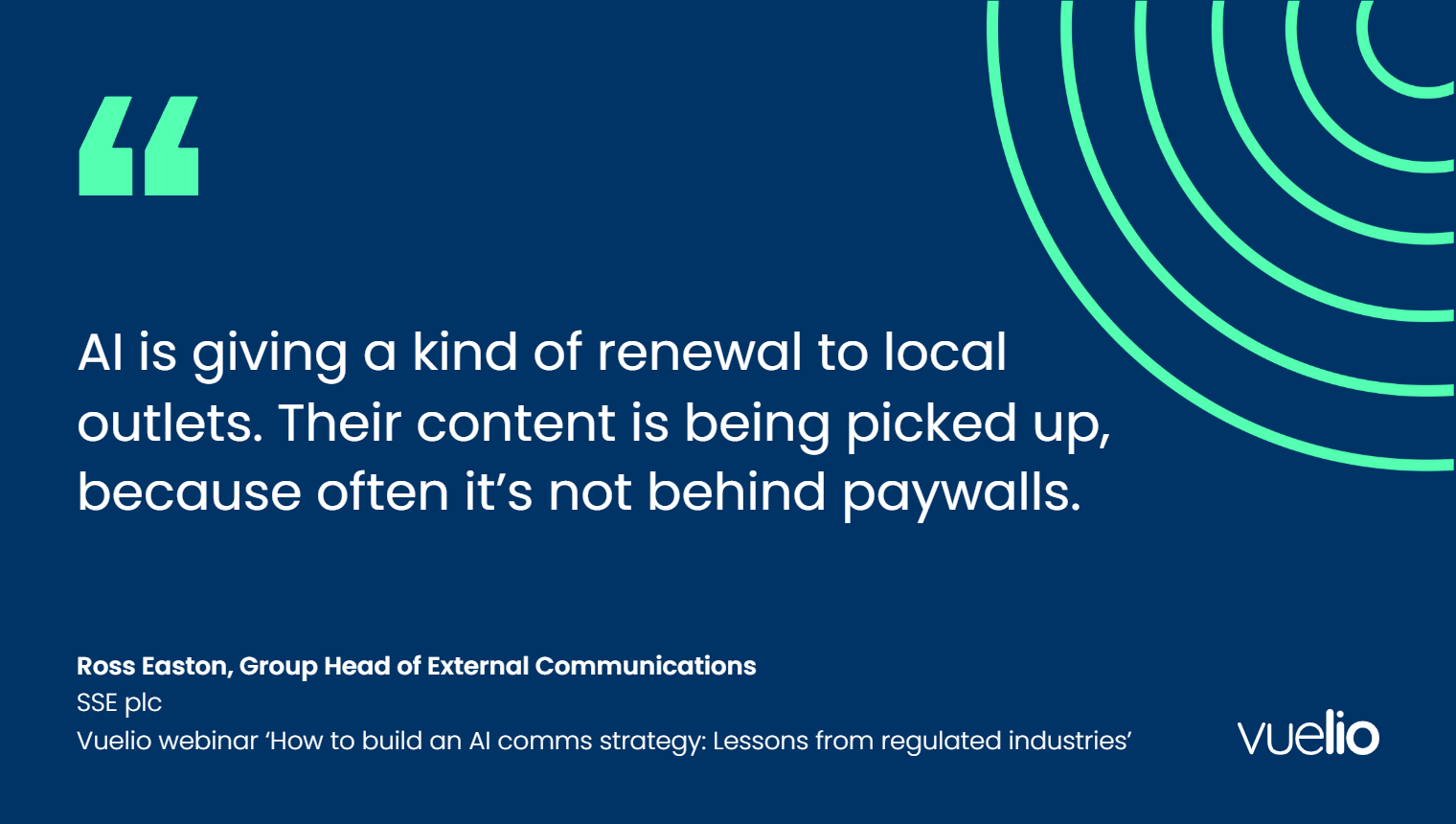
Local media matters, too. Ross Easton, Group Head of External Communications at SSE plc, shared during Vuelio webinar ‘How to build an AI comms strategy: Lessons from regulated industries‘ that ‘AI is giving a kind of renewal to those local outlets, because their content is being picked up, and often it’s not behind paywalls’.
Find the right media, and reach them the right way
Planning by accessibility means knowing more about the media landscape than a Tier 1 wish list can tell. The Vuelio Media Database covers more than 1.3 million contacts, outlets, and opportunities – including the trade, specialist, and regional titles that feed AI answers and are less likely to be paywalled, alongside bloggers, podcasters, and influencers – all maintained by our in-house research team.
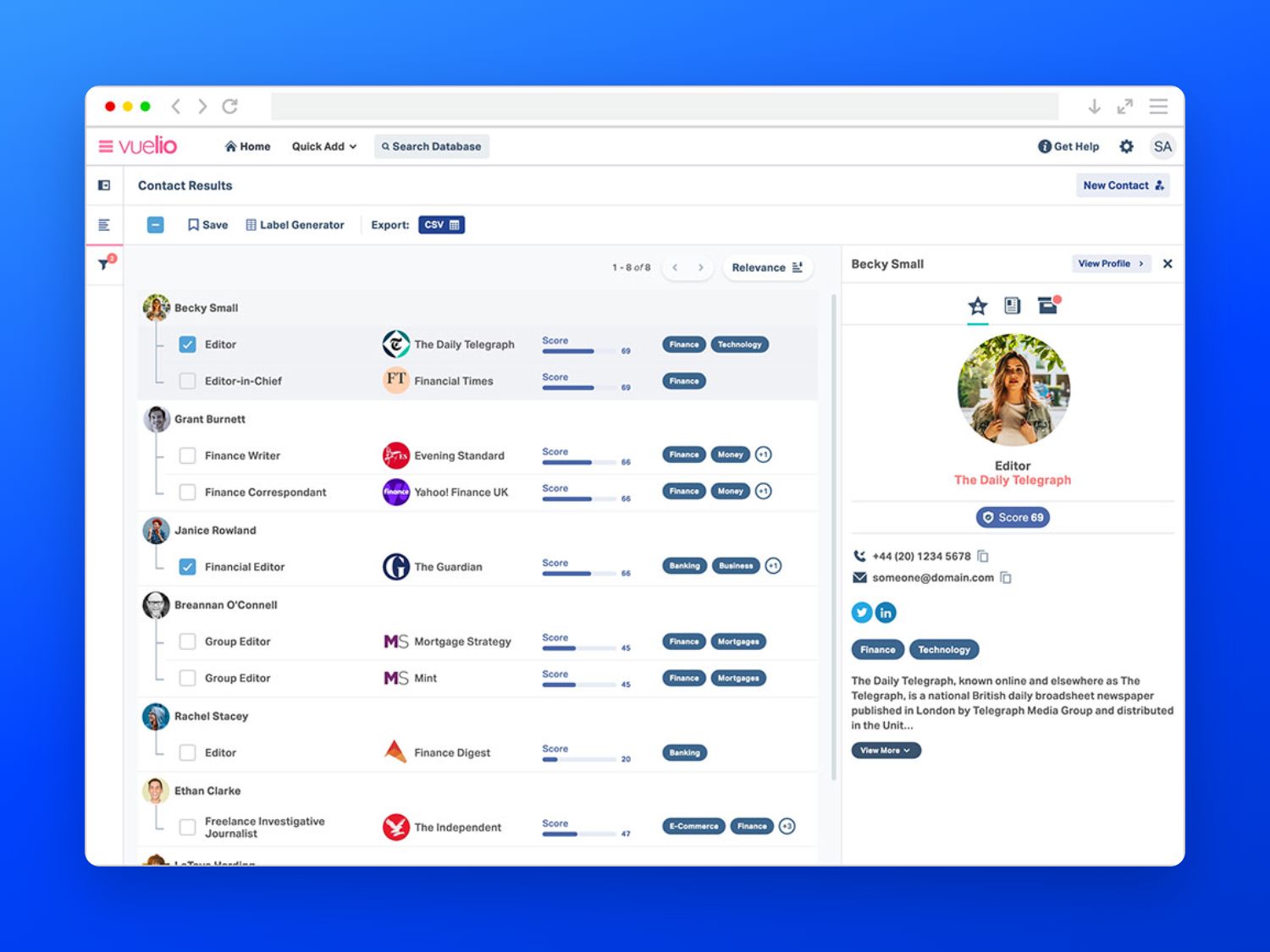
Contact profiles include journalists’ preferred contact and pitching methods and ways of working, so you can send the right content, in the right format, through the right channel – rather than a blanket release that could land badly. Forward features and live requests through the Journalist Enquiry Service can also help with spotting openings in specialist titles early.
Check what the models actually see
Initial research and outreach are just the first part of the process – measure how your message is landing with Lumina AI View, which tracks the sources that models such as ChatGPT, Gemini, and Claude cite when they describe your organisation. It breaks down your source mix, so you can see whether your coverage is being picked up, which outlets are doing the work, and where the gaps are. Benchmark citation strength and source quality against competitors, and get alerts when citation patterns shift.
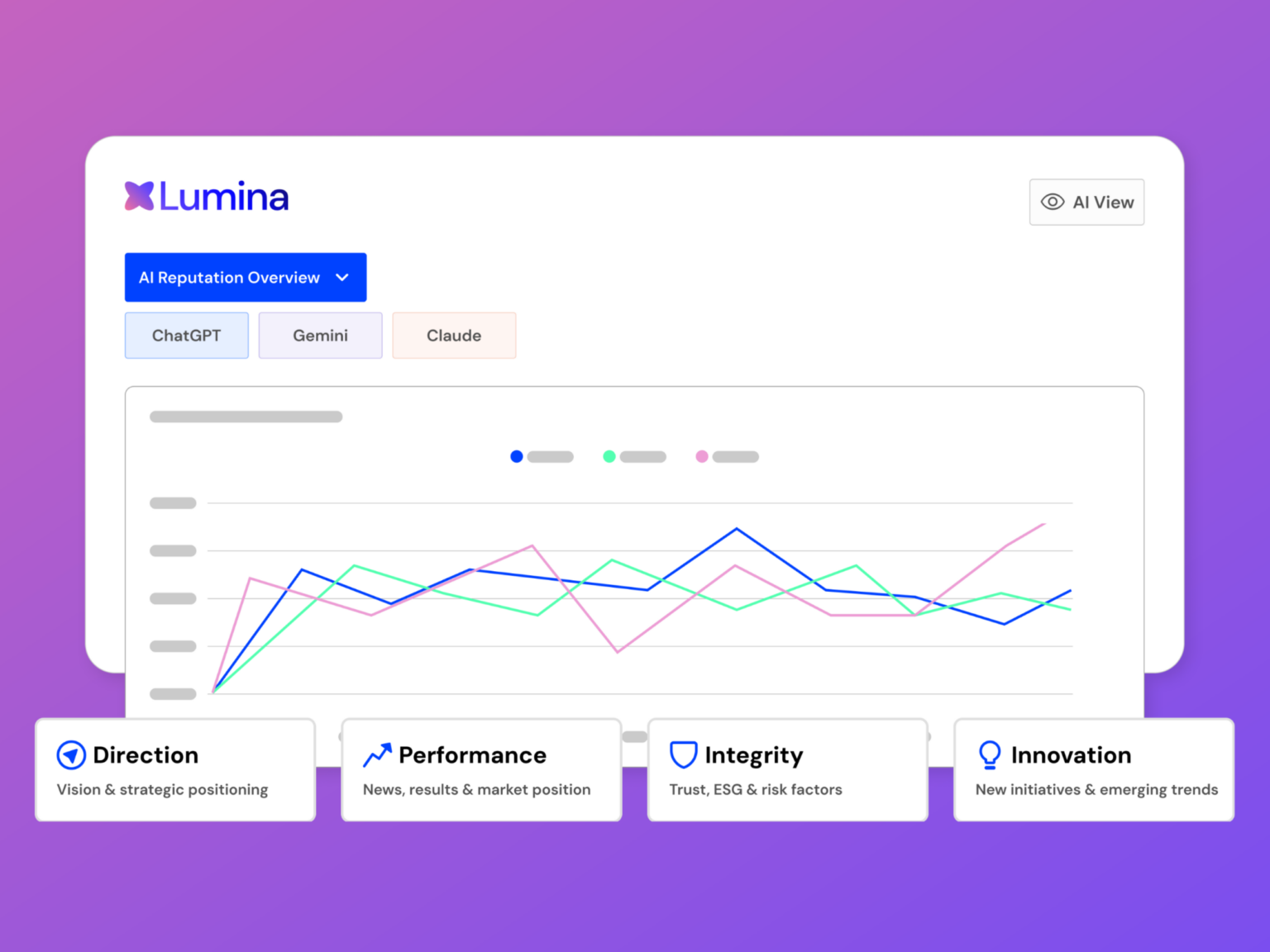
AI View is built for comms teams and connects AI visibility straight back to the media relations work you do every day. If your best coverage is invisible to AI, you’ll see it, and with the Media Database, you can do something about it.
Prestige still matters. But in the age of AI answers, coverage a model can’t read is coverage it can’t cite. Audit your coverage by accessibility and go beyond Tier 1 titles – and their paywalls – when planning outreach, checking the results in the models themselves.
Find out how Lumina AI View can show you which sources AI relies on to support your media outreach strategy.


Leave a Comment