
Be the expert LLMs can find: Reactive commentary for AI visibility

With LLM use on the rise, and earned media becoming a key source of information for AI models, placing experts where they can be seen and cited is increasingly important for comms teams.
When someone asks a model who the leading voices are on adult social care funding, rail decarbonisation, or charity regulation, will it name someone from your organisation, or your clients? The most dependable route into that answer is the one your press office already knows: reactive commentary in independent journalism.
Why attributable expertise is what LLMs want
Research in Vuelio’s report ‘The role of AI, LLMs, and earned media in shaping reputation‘ found journalism alone accounts for close to a quarter of the links AI answers cite. And as we explored in our look at content freshness, journalism’s share of citations rises to almost half when the question is about something recent.
But models don’t weigh every piece of coverage equally. A named expert with a clear job title and organisation, giving a specific view in a title that covers the subject week in, week out, is exactly the kind of signal an LLM can verify and reuse.
Ngaire Crawford, Executive Director of AI Strategy at Isentia, believes the quality of coverage decides whether a model treats it as a source: ‘It needs to help answer the question with clear facts and validated endorsement’.
The combination of a quality quote, from a qualified expert, in a publication the model has reason to trust, is a win that can pay off over time for comms teams in search of visibility in the media and in AI answers.
Slow and steady wins the visibility race, not one splash
Reactive commentary, or newsjacking, could be seen as a short-term solution, but that would undersell how useful it is in the long term in the AI age.
Models decide who matters through repetition and corroboration. Stuart Bruce, PR Futurist and Co-founder of Purposeful Relations, put it bluntly at Vuelio event ‘How AI is changing the way we communicate‘:
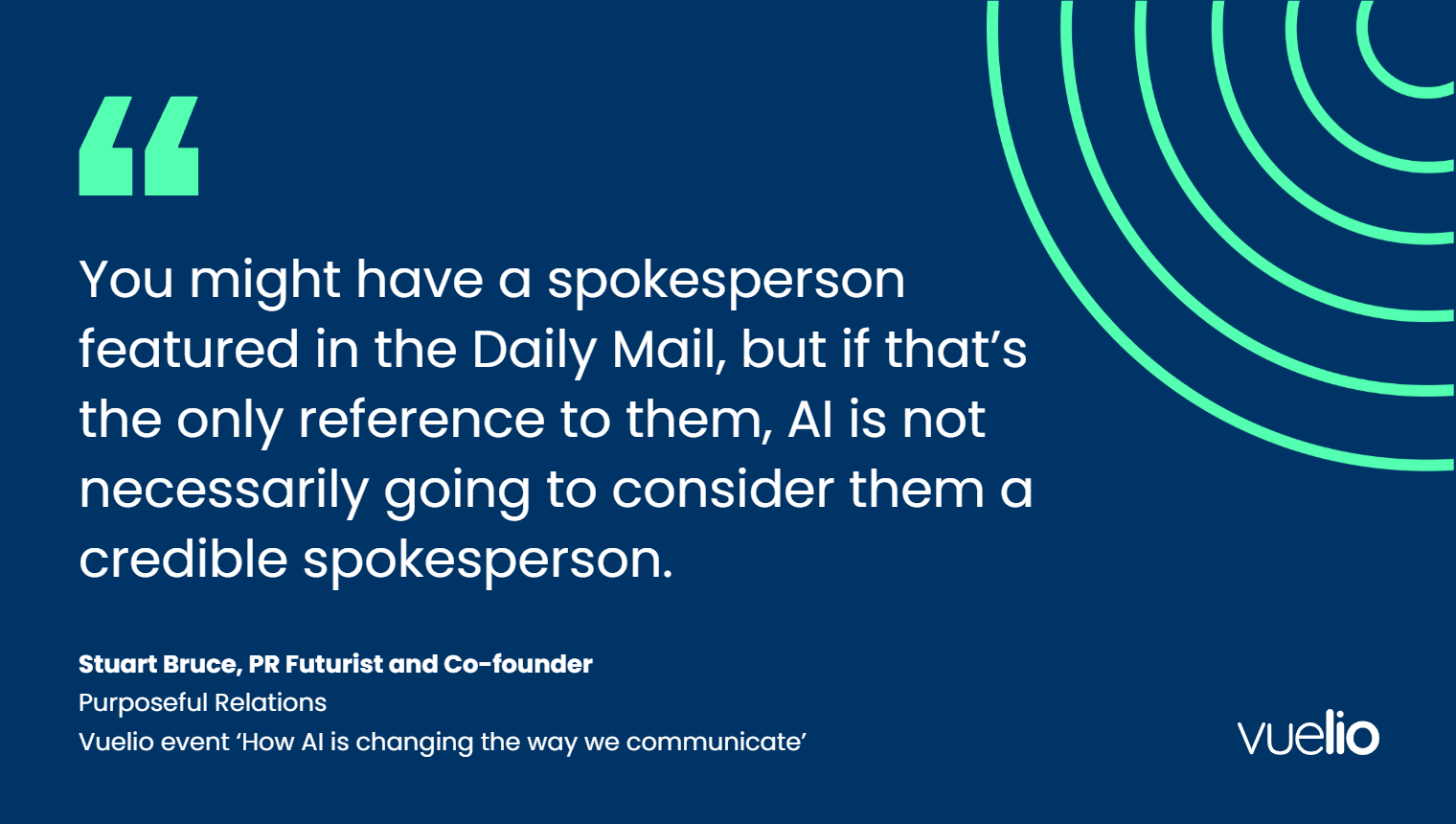
‘You might have a spokesperson featured in the Daily Mail, but if that’s the only reference to them, AI is not necessarily going to consider them a credible spokesperson.’
If the same spokesperson had been quoted in a trade title in March, a regional daily in May, and a specialist podcast in July, each appearance will reinforce the last. Source-building compounds trust, and therefore visibility.
Older coverage can linger in AI answers long after the facts have moved on. As Dr Anne Gregory, Professor Emeritus at the University of Huddersfield, warned during Vuelio webinar ‘AI is the new PR & comms stakeholder‘:
‘Once a narrative is set, it becomes extremely difficult to counter.’
A regular flow of fresh, attributable commentary can shape the narrative before it sets.
Journalists and LLMs want the same thing (when it comes to content, at least)
The content that earns citations in AI answers is the content journalists keep asking for.
Expert commentary is still a staple of media requests, but our analysis of GLP-1 coverage found case studies have become the most requested content type of 2026 on the Journalist Enquiry Service. Data-led stories increasingly need a human voice to cut through the jargon and get the attention of readers (whether human, or AI).
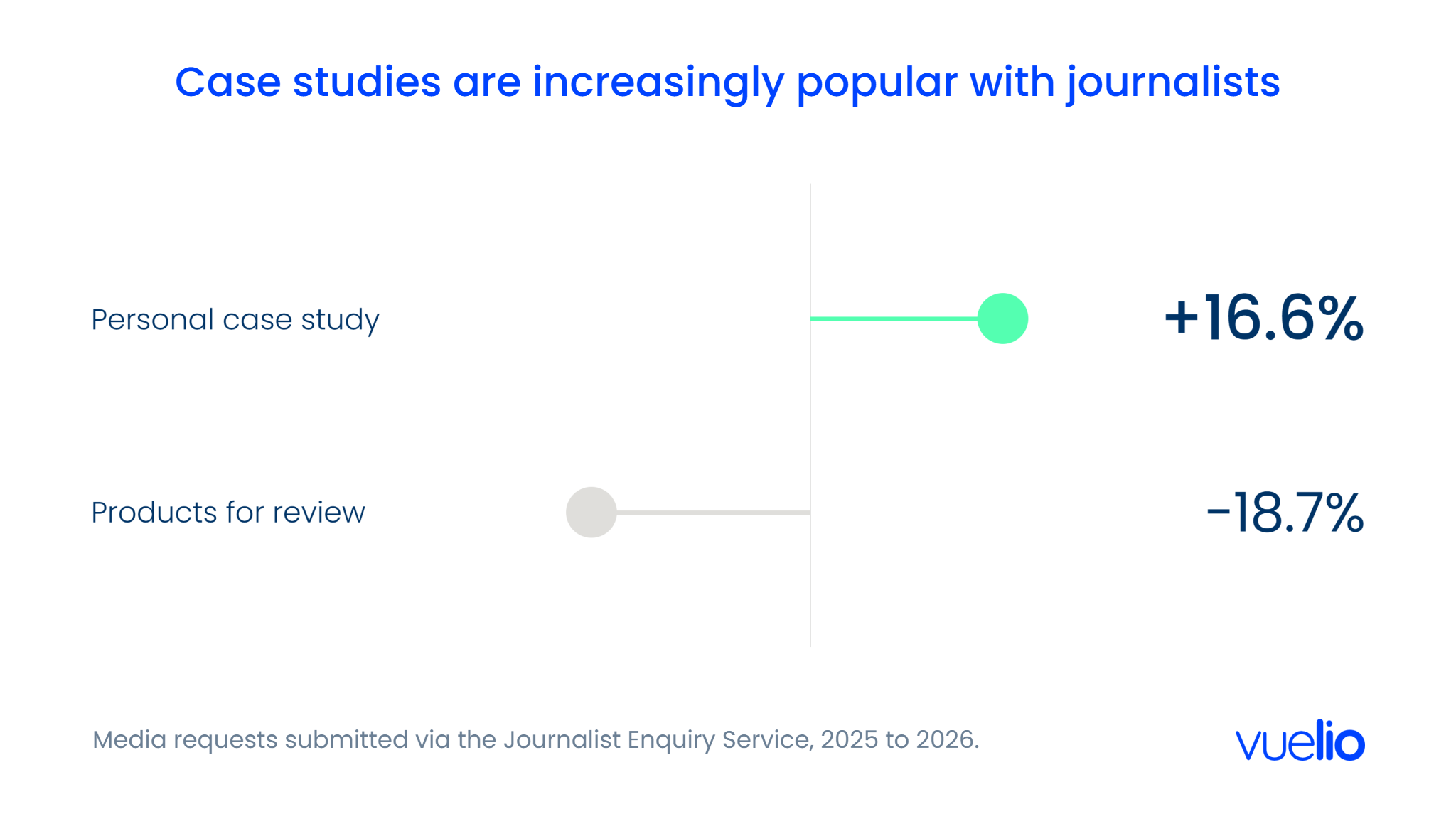
This is an opening not only for consumer and industry-specific comms teams, but for public sector bodies, charities, and regulated organisations. Specialist knowledge and lived experience are elements journalists need to imbue their stories and reporting with relatability, and models also draw on this.
Building the habit: six best practices
1) Know where your sector’s authority lives
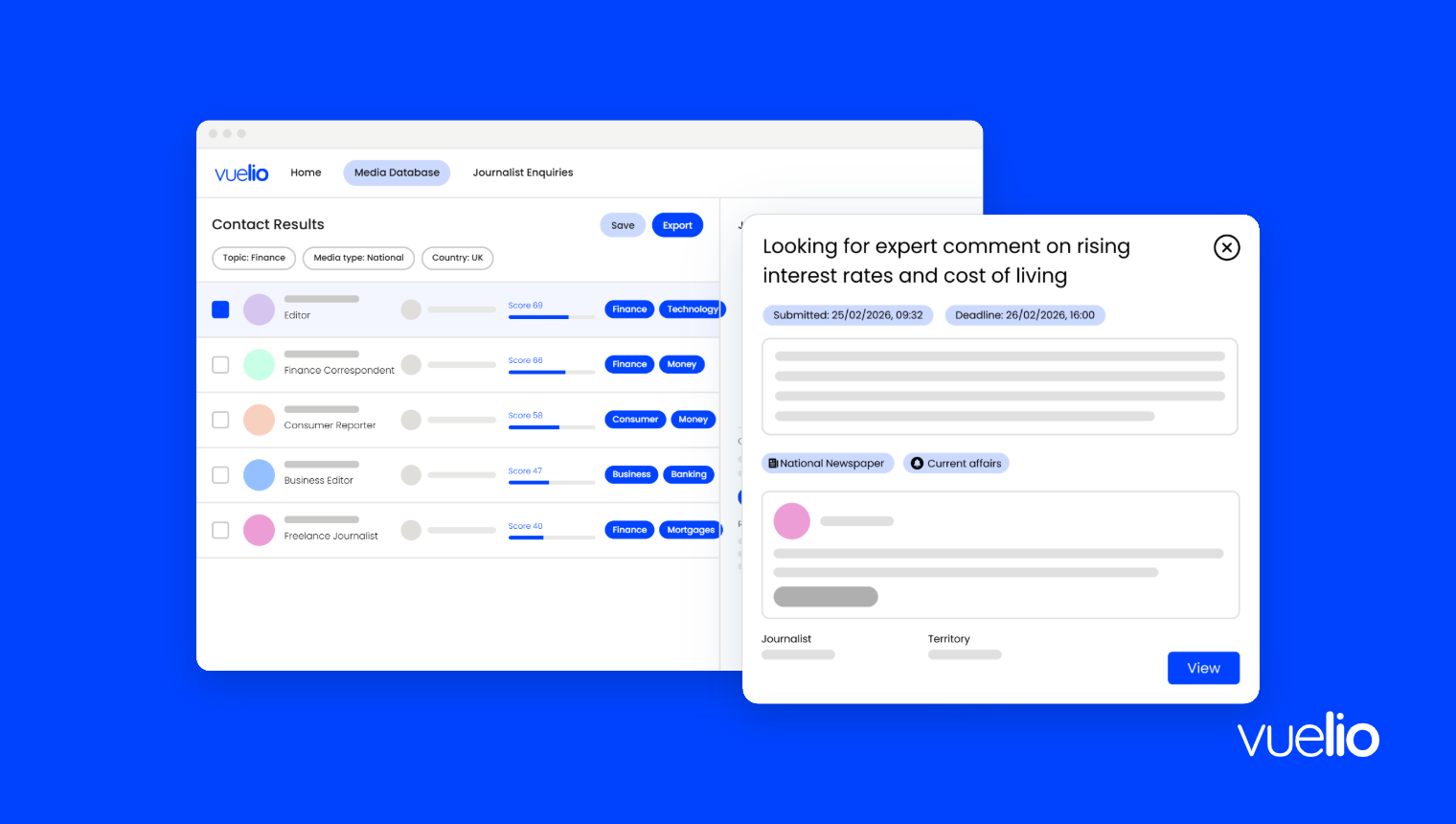
Models don’t always cite the tier 1 headlines. Specialist and trade press often do the heavy lifting for sector questions, and local media, frequently free of paywalls, is exerting more impact on audiences and the media cycle than it has in decades, even if the precise nature of that impact is quite different. The Vuelio Media Database can help comms teams map the journalists, outlets, broadcasters, and podcasts covering each patch, with profiles maintained by our in-house research team. Correctly pitched commentary will land where both people and models can find it.
2) Answer the brief you were sent
Read the whole request, including the deadline, format, and outlet. Send what was asked for and say why it fits. If you can’t deliver, don’t reply. Our guide to responding to journalist enquiries covers the essentials, and there’s help for the vaguer requests, too.
3) Line up experts and case studies before you need them
Pre-approve spokespeople and their areas of expertise, and secure consent from case studies in advance. For public sector teams with layered sign-off, it can be the difference between making a deadline and missing it. One Metro interiors journalist told us the PRs they value most are those who don’t ‘need to check with a dozen people to get a green light’.
4) Be there when the request lands
Reactive commentary only works if the opportunity is seen in time. The Journalist Enquiry Service sends live requests from UK journalists straight to your inbox, filtered to the sectors you cover. Because it now sits inside Vuelio, you can check a journalist’s beat and recent work in the Media Database before you reply, all in one place.
5) Attribute it the same way, every time
Use the same full name, job title, and organisation in every response. Models link people to topics through repetition, so inconsistent titles or spellings will weaken the signal you’re building.
6) Measure what the models see
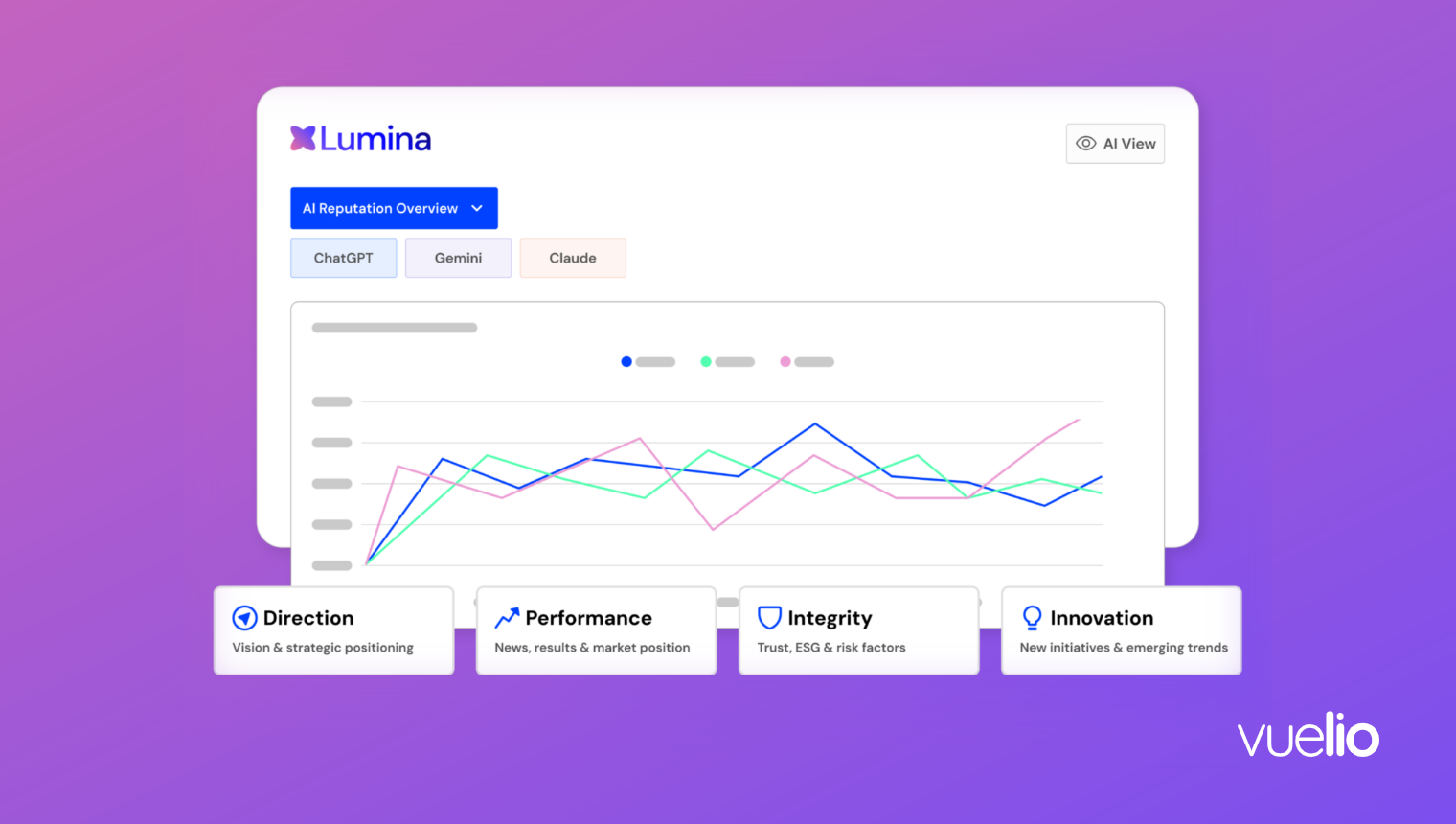
Lumina AI View tracks which sources models such as ChatGPT, Gemini, and Claude cite when they talk about you and your sector. It benchmarks you against peers and shows how the picture shifts over time. It can’t rewrite what a model says (nothing can… yet), but shows whether your commentary is reaching the sources that count, and where the gaps are. Unlike tools adapted from search marketing, it was built specifically for communicators.
From reactive to reliable
Reactive commentary is how your experts become those voices, for journalists and for the models drawing on their work.
Treat every response as a deposit rather than a one-off. Over time, they will add up to an organisation that journalists call first, and that AI names when your audience asks who to trust.
Ready to put your expertise in front of the right journalists? Get started with the Journalist Enquiry Service, or get in touch about a demo of Lumina AI View to see which sources AI models trust in your sector.


Leave a Comment