
Clean energy and net zero

Labour Milestones Review: Home-grown energy and net zero goals

Labour came to power in July 2024 with a clear ambition: to make Britain a clean energy superpower. It promised that the benefits of this mission would be felt across all parts of the UK, from lower bills and protection from volatile fossil fuel markets, to the creation of jobs and greater investment and growth opportunities in British industries and industrial heartlands. Labour has insisted that its clean energy ambitions are achievable and has undertaken actions to change the face of the UK’s energy landscape already. However, confronted with an increasingly fractured consensus around net zero and an unstable geopolitical backdrop, achieving the clean power mission will be no small feat. So, one year on, how much progress has Labour made since its election?

Labour’s flagship target of clean power by 2030 is arguably one of its most ambitious. With 2030 just five years away, achieving the target will require radical reforms to the UK’s energy system, to be delivered at pace. Labour’s first few months in office saw the party hit the ground running. Within days of coming to power, the Government lifted the de facto ban on onshore wind introduced by the Conservatives in 2016, and announced a new partnership between the Crown Estate and Great British Energy, the Government’s publicly-owned energy company, to support the development of clean energy infrastructure. Last year also saw Labour deliver a record budget allocation for the next Contracts for Difference auction round, and the Government’s clean power delivery unit, Mission Control, published its Clean Power Action Plan, outlining the roadmap to 2030. Other significant milestones during Labour’s tenure have included the closure of the UK’s last coal-fired power station and Scotland’s only oil refinery, as well as the Government’s commitment of over £14bn to build the first nuclear power station in over three decades, Sizewell C.

However, these milestones, while historic, have not come without challenges, and have been beset with criticism from across the spectrum. The last year has seen a shift in the Conservative Party’s stance towards net zero, with its leader Kemi Badenoch now describing the net zero by 2050 target as ‘impossible’, and one that cannot be achieved ‘without a serious drop in [living standards].’ Reform UK has been equally as vocal in its opposition to the Government’s clean energy ambitions, arguing that ‘net stupid zero’ is ‘destroying’ jobs, and leading to higher energy bills and deindustrialisation in the UK.

A report from the Tony Blair Institute in April captured this breakdown in the political consensus around net zero, highlighting the ‘widening credibility gap’ at the heart of climate change policies and that the current climate debate is ‘broken.’ Despite this political noise around net zero, recent polling revealed that the public’s support of climate action is holding strong. However, with Brits currently paying some of the world’s highest electricity prices; an increasing loss of jobs in oil and gas industries; and the NIMBY argument looming large, Labour face a challenge in keeping the public onside as it moves full steam ahead towards net zero. The question remains whether the promise of lower energy bills and benefits for communities hosting clean energy infrastructure will be enough to garner support for the net zero transition, and whether the rise of the Reform party will derail the Government’s plans and steer the public towards a different path.

Looking ahead, Labour has a task on its hands to drive forward the momentum behind its clean energy mission, and ensure that the public, industry and investors are brought along with it. Will the UK become a clean energy superpower, or will Labour’s net zero policies, in the words of Badenoch, ‘bankrupt’ British industries and its people?

For more on how the Labour Government is delivering on its promises, read the Vuelio Political team’s take on housing, children’s wellbeing, the NHS, living standards, and policing

Raising living standards

Labour Milestones Review: Raising living standards

As the summer of 2025 draws to a close, the Government’s milestone to ‘raise living standards so working people have more money in their pockets’ sits in a complex economic landscape. Polling patterns suggest that inflation continues to weigh heavily on public perceptions of economic competences and while inflation has eased from the peaks of the cost-of-living crisis it remains at around 3.6%, above the Bank of England’s 2% target. Moreover, for many households, the modest GDP growth of 0.3% in the last quarter offers little tangible relief when combined with rising unemployment, now at its highest level in four years.

Labour’s central interventions have focused on wage policy. In April, the National Living Wage rose by 6.7% to £12.21, with projections to reach at least £12.71 by next spring. Moreover, the Low Pay Commission’s remit has been expanded to consider cost-of-living measures when it makes future recommendations to the Government on the minimum wage.

However, surveys from Lancaster University suggest that almost half of workers have little left after covering essential bills, with low-income households especially doubtful that wages will keep pace with rising costs. Similarly, the Joseph Rowntree Foundation calculates that average disposable incomes remain £400 below pre-pandemic levels, with the poorest fifth of households on course to see a 6% drop by 2030. The Resolution Foundation notes that for higher earners, apparent gains can be offset once the value of public services and tax changes is factored in, making any perception of improvement more reliant on service delivery than on disposable income alone.

A turning point came in the spring when the Government was forced to row back on some of its proposed reforms to disability benefits after a sharp backlash from campaigners, charities, and backbench MPs. Although the U-turn avoided a Labour rebellion, it created a gap in the Government’s fiscal plans; as planned savings from welfare reform were baked into the Budget’s forecasts. This gap will need to be filled, and attention is turning to the possibility of further tax rises in the autumn, a move that could complicate Labour’s narrative of helping working people keep more money in their pockets. According to the National Institute of Economic and Social Research, the Chancellor may now need to find more than £40bn of tax rises or spending cuts in the autumn budget to meet her fiscal rules.

Moreover, business groups warn that higher employer costs, from the NLW to National Insurance and the Employment Rights Bill currently going through Parliament, risk dampening investment and hiring. The CBI projects growth of just over one percent this year, enough to avoid recession but not enough to produce the rising tide needed to lift all boats.

The milestone of raising living standards was never going to be achieved within a single year, but by mid 2025 Labour’s progress feels somewhat incomplete. The challenge heading into the autumn spending round is to deepen and accelerate measures that deliver direct, visible benefits.

For more on how the Labour Government is delivering on its promises, read the Vuelio Political team’s take on its housing, policing, healthcare, and education commitments.

Labour Milestones Review: Education

Labour Milestones Review: Giving children the best start in life

During the 2024 General Election campaign, the Labour Party raised concerns that too many children arriving at primary school were not ready to learn. Across England, 33% of all children in the 2022/23 academic year were considered not school ready when starting reception. This included a quarter not having basic language skills and 30% being unable to communicate their needs to teachers. While the long-term implications of low school readiness are well researched, stakeholders called for the Government to act quickly to reduce the effects of poor spoken language, literacy and numeracy. They also noted that children from less affluent backgrounds face a high risk of low educational attainment, which could entrench intergenerational disadvantages.

In December 2024, the Government committed to increasing school readiness as part of its six key milestones for this parliament. The term ‘school readiness’ often refers to a child’s preparedness and their ability to succeed in school through cognitive, social, and emotional skills. It most commonly refers to children around the age of five and the start of formal education. A child’s development is considered ‘good’ if they meet the expected requirements across five early learning categories. These include communication, personal, social and emotional development, literacy, mathematics, and physical development. Assessments are made at the end of the Early Years Foundation Stage.

In its pledge, the Government has committed to increasing school readiness to 75% of all five-year-olds by 2028. Progress will be measured against children reaching a ‘good level of development’ across the five areas of learning in the Early Years Foundation Stage, and would mark an increase of 40,000 to 45,000 a year reaching the standard. In November 2024, the Department for Education reported that 67.7% of children in 2023/24 met a good level of development at the start of the academic year.

To meet this milestone, the Government has rolled out multiple initiatives across early years education, targeting improvements in accessibility, quality, family support and local services. The Government’s commitment to early childhood is centred around collaboration and partnership with parents, teachers, and communities. The Government’s strategy has included a £1.5bn commitment to structural reform across family services and early years education, and will work in tandem with broader Government strategies, including the 10-Year Health Plan.

Firstly, the Government has committed to reforming family services, critical to supporting early development. It is launching over 1,000 Best Start Family Hubs across the country by the end of 2028, ensuring that there is a hub situated in every local authority by April 2026. These services will also be integrated by a new national digital service, which will centralise information and guidance from local service providers for families.

The Government has also targeted accessibility and affordability for early education and care. This has included Government funded childcare which is reported to save families an average of £7,500 a year by providing 30 hours of childcare a week. The Government has stated that over 500,000 children are currently benefitting from the initiative. There have also been efforts to expand access to the early years sector, with up to 6,000 new places opening in school-based nurseries. The expansion marks efforts to reduce a regional attainment gap, with the majority of new nurseries opening in phase one in the North and the Midlands.

The strategy has also centred on inclusion and accountability. The Government has raised the Early Years Pupil Premium to its ‘highest level’ to increase support for low-income families, increased accountability through reforms to the frequency of Ofsted inspections and focused training support on evidence-based programs that support those identified with SEND. Broader reforms to the early years system are further being supported by targeted skills development and teacher retention to tackle a broader teaching ‘crisis’.

As the Government enters its second year in power, stakeholders have acknowledged the Government’s strategy as both wide-reaching and ambitious, with many noting the complexity and importance of improving school readiness. However, concerns have been raised about the plausibility of the ‘75%’ goal and the financial stability that is required to ensure a sustained and progressive rise in early years development. A survey by Schools Week indicated that 80% of teachers believe that the Government will miss its target.

The Sutton Trust, similarly to the Institute for Government, emphasised the scale of disparities in school readiness between different demographic groups. They noted that targeted intervention must be focused on the most deprived areas, where 51.5% of children from disadvantaged backgrounds reach school readiness by the age of five. The gap between children who are eligible for free school meals and their peers has widened since 2017 and poses a complicated challenge for the Government to address.

While there remains an acknowledgement of support in the Government’s efforts to reform early years education, how the Government tackles an increasing attainment gap will be crucial in reaching its milestone. The Government’s ability to resolve the issue at speed, whilst ensuring sustained financial support, will be critical to supporting vulnerable children and its overarching ambition of raising school readiness to 75% for all children at the age of five.

For more on how the Labour Government is delivering on its promises, read the Vuelio Political team’s take on its housing and policing commitments.

Labour milestones review hospital waiting lists

Labour Milestones Review: Clearing hospital waiting lists

Labour has placed fixing the ‘broken’ NHS at the core of its pre- and post-election political messaging, connecting this milestone intrinsically in its mandate; failure to improve the state of the NHS and the wider health sector would epitomise its governmental failure.

To prevent this, political messaging has been supplemented by policy. In the Autumn Budget, Spring Statement and Spending Review, the NHS and the Department for Health and Social Care emerged the real ‘winners’ with other departments picking up the scraps of funding left. Equally, in a June and July which saw strategies and sector plans published frequently, the 10 Year Health Plan was a key point of attention, taking large expansive steps hoping to revitalise the NHS through ‘major surgery, not sticking plasters’.

The dire state of the NHS is unequivocally clear, and Lord Darzi’s report, published in September 2024, found waiting lists at an all time high, up 200% since 2010. In 2020, there were 720,000 people waiting over 18 weeks for elective treatment. Following the pandemic spike and a steady increase since, in July 2024, upon Labour’s election, 2.85m people were waiting between 18 and 52 weeks, with a further 290,000 waiting over a year. This amounts to 58% of patients meeting the 18 week target, 34 percentage points shy of the milestone. Therefore, Labour’s challenge was and is still to inversely reflect this backlog, reversing the steady increase and going further to reach the 92% target, last met over ten years ago.

So far, as of May 2025, 60.9% of patients are waiting less than 18 weeks, thus, early signs point to a failure to reach this milestone, where the moderate improvements over the last year would reflect an eventual 75% rate, falling short of the target. Rebuttals to this will cite that the policies have had little time to bed in and are in the process of delivering the changes needed to innovate service, harness doctors’ capabilities, recruit new staff and tear through the backlog.

The 10 Year Health Plan sets out these changes. Firstly, one of the triad of core shifts is moving care from hospital to community. This involves reforming the NHS to the Neighbourhood Health Service, functioning as a one-stop shop for community-based care. This move, backed and called for by the sector, hopes to shift the culture of the operating model by directing the correct need and care into the community, freeing up NHS staff to deal with pertinent issues and tackle the backlog. Despite this, moving health to the community is nothing new, and has circulated health ministers’ discourse since the Blair Government. Thus, this calls into question, as highlighted by the Chief Executive of the Health Foundation Dr Jennifer Dixon DBE, whether ‘lessons have been learned’ from past failures. Further, harnessing technological innovation, another core shift, hopes to relieve the administrative burden placed on staff. Mechanisms such as the Single Patient Record, to store all patient data in one transferable place, should work to relieve staff of administrative duties and allow them to focus on providing care and working through the backlog.

Ultimately, as many large multi-year targets do, any improvements will have to be seen. But, with a clear mandate, health and care at the nucleus of Labour’s mission and clear policy put in motion, convincing excuses will be needed to explain any stalling improvements.

For more on how the Labour Government is delivering on its promises, read the Vuelio Political team’s take on its housing and policing commitments.

Labour milestones - policing

Labour Milestones Review: Law and order

Back in May last year, Keir Starmer and members of the then Shadow Cabinet launched the Labour Party’s ‘Steps for Change’, outlining actions their government would take towards achieving Starmer’s five missions. One of these steps was to ‘crack down on antisocial behaviour’, by having more police presence on our streets and introducing tougher new penalties for offenders. Then Shadow Home Secretary, Yvette Cooper, noted that 90% of crime was essentially going unsolved under the Conservatives and pointed out that community confidence in policing was plummeting. In saying this, Cooper framed Labour not only as a party of law and order, but also as one capable of restoring trust. By promising visible action on antisocial behaviour, Labour sought to connect policing policy with broader public concerns about safety and social cohesion.

Less than a month after attaining office, riots broke out across the country following the Southport stabbings. The events served as an early stress test of the Government’s capacity to deliver on its law and order commitments. While the unrest highlighted the case for stronger police powers, it equally demonstrated that enforcement alone cannot address the root causes of disorder without parallel investment in community trust-building.

In October, Home Secretary Yvette Cooper made a statement following the acquittal of Sergeant Martyn Blake in the Chris Kaba case, setting out measures to improve accountability, standards, and public confidence in policing. She stressed the need to respect the jury’s verdict while recognising reduced public trust (particularly among Black communities) and long-standing problems in the police accountability system. These comments signalled an attempt to defuse tensions while maintaining political credibility with both police and minority communities.

Two major reports followed in late 2024 and early 2025 that painted a complex picture of public trust in policing. A YFF survey found that while Black teenagers were the most likely to say their local police do a good job, they and their mixed ethnicity peers were far less likely than White children to believe officers treat everyone fairly or use force only when necessary. In contrast, a Policy Exchange study suggested that ethnic minorities overall reported significantly higher levels of confidence and satisfaction in the police than White respondents. Taken together, these findings suggest that general perceptions of police effectiveness can coexist with deep concerns about fairness, particularly in day-to-day interactions.

In order to present the Labour Government as a guarantor of religious freedom and public order, the Government announced in March that they would be introducing new powers to protect places of worship from disruptive protests, as part of the Crime and Policing Bill. These measures aimed to help police manage protests near synagogues, mosques, churches, and other religious sites by setting clear conditions on protest routes and timings to prevent intimidation. Then in May, the Government also introduced new rules to ensure that police officers found guilty of gross misconduct are automatically dismissed (barring exceptional circumstances).

In terms of funding, Chancellor Rachel Reeves announced in last year’s Autumn Budget new measures changing employer national insurance contributions (NICs). In response, the Conservatives accused the Treasury of not conducting an impact assessment or consulting police forces on the changes prior to the announcement. Despite this, the Government announced in August that police officers across England and Wales would receive a 4.2% above-inflation pay rise, covering all ranks up to chief superintendent. It was also confirmed later that month that, for the financial year ending 31 March 2026, funding for policing in England and Wales would be up to £19.9bn.

This all comes as we still await the Government’s White Paper on police reform, which is due to be published at some point this year, focusing on governance, efficiency, and resource allocation. In the autumn, the Public Accounts Committee will also begin its inquiry on police productivity, questioning Home Office officials on financial constraints and how the department ensures police forces will deliver value for money going forward. The timing of the White Paper and the PAC inquiry could prove politically sensitive, as both will likely set the terms for future debates on whether the Government’s early interventions in policing have delivered measurable improvements, or whether its approach remains more rhetorical than results-driven.

For more on how the Labour Government is delivering on its promises, read the Vuelio Political team’s take on housing commitments. 

Labour Milestones Review: How is the Government doing on housing?

Labour’s return to power in last year’s election (their first win since 2005) came with a strong mandate to deliver meaningful change. Central to Labour’s manifesto was a commitment to build 1.5 million new homes, alongside immediate reforms to the National Planning Policy Framework (NPPF). The party also promised a generational investment in social housing and long-overdue reforms to fix the broken leasehold system and the private rented sector. Framing the new approach, Angela Rayner stated that ‘this Labour Government are on the side of the builders, not the blockers’—a clear signal of intent to move beyond the planning inertia and delivery shortfalls seen in recent years.

The Government’s flagship policy on housing was its pledge to build 1.5 million homes in this Parliament. While deemed a ‘stretch’ by Housing Minister Matthew Pennycook, shortly after the election, the Government established a New Homes Accelerator to take direct action on individual sites. This was later backed by the creation of a new National Housing Bank. Central to delivery has been reforming the planning system: restoring housing targets via an updated NPPF, reallocating poor-quality ‘grey belt’ land, and requiring councils to maintain a five-year land supply and an up-to-date local plan. Further measures in the Planning and Infrastructure Bill aim to modernise planning committees, delegate more decisions to officers, and streamline approvals for Nationally Significant Infrastructure Projects (NSIPs). To boost capacity, 300 additional planning officers are also being recruited. In addition to this, more support has been provided for SME builders through establishing a new ‘medium site’ category with reduced planning rules, and establishing a Small Sites Aggregator to unlock small sites which otherwise would not be developed.

However, planning reform alone won’t be enough. Industry leaders have consistently warned that without a significantly larger construction workforce, housing targets will remain out of reach. According to the Construction Industry Training Board (CITB), the sector needs to recruit around 47,860 additional workers each year between 2025 and 2029—amounting to nearly 240,000 new workers over five years. The Home Builders Federation (HBF), alongside major developers like Barratt Redrow, point to skills shortages, an ageing workforce, and the effects of Brexit as key challenges behind the shrinking labour pool.

In response, the Government has acknowledged a ‘dire shortage’ of construction workers and introduced a series of measures to address it. These include the creation of Skills England, a new national body focused on tackling skills gaps; a £600m investment in construction training; and the launch of a Construction Skills Mission Board with an ambition to recruit 100,000 new workers annually. While these initiatives signal a clear intent to turn the tide, many in the industry are waiting to see whether they will translate into meaningful change on the ground.

As mentioned, all of these commitments signal serious intent—but tracking their progress and ensuring their delivery will be key to turning policy into real change. It could also be argued that more needs to be done to make the political case that these changes will genuinely improve voters’ lives. Beyond boosting supply, the Government is also battling with deep-rooted challenges across the housing system. From tackling poor-quality existing stock—particularly in social housing and high-rise blocks—to rolling out the Warm Homes Plan, addressing homelessness, and reforming outdated rental and leasehold laws through the Renters’ Rights Bill, the scale of the task ahead remains vast.

10 Year Health Plan

Optimism and opportunity? The Government’s 10 Year Health Plan for England

On Thursday, Secretary of State for Health and Social Care Wes Streeting published the Government’s 10 Year Health Plan for England. Predicated by the Lord Darzi report published in September, the Plan sets out to offer both an optimistic vision of the future and opportunity for the NHS on the backdrop of a concrete diagnosis of the current state of play that the NHS must ‘reform or die’. The plan sets out to fix these issues, placing science and technological innovation at the core of its Plan, hoping to propel the NHS from behind the curve to leading from the front.

The Plan is structured on three big shifts. The first, from hospital to community, rewords the NHS to Neighbourhood Health Service, shifting service from hospital to community care. Neighbourhood Health Centres are the beginning of this, functioning as a ‘one-stop shop’ with centralised patient care harnessed by AI and technological advancements. According to the NHS Confederation, support is there for this move, with health leaders committed to a more preventative, community-based NHS. This offers a complete restructure and cultural shift in the operating model, where success could be a ‘real win’ as described by The King’s Fund in reaction to the plan. However, having been long argued for by the sector, the Chief Executive of the Health Foundation Dr Jennifer Dixon DBE says she is unsure whether ‘lessons have been learned’ from past failures. The shift to community care is welcomed by the sector overall, with the British Geriatrics Society highlighting the need for co-produced neighbourhood services that provide good outcomes for older people. Picker welcomes the Plan’s emphasis on placing patients at the centre, through improved feedback routes, ‘Patient Power Payments’, and personalised care plans, and ARCO who says the move will leave patients ‘better off’.

This shift also sets out how dentistry, community pharmacy, and mental health provision will be further localised in community hubs and health centres. In reaction, the British Psychological Society say bringing mental health services to the community will lead to better outcomes, helping people at the earliest access point. Going beyond, Mind has called for more to be done including a further comprehensive plan that places mental health at the centre of the new NHS in order to truly tackle its deterioration in society.

For the second shift, taking the NHS from ‘analogue to digital’ involves the innovation of NHS technology. This includes the introduction of a Single Patient Record to streamline patient health accounts in one place, accessible from all points of provision. The NHS App is set to be revolutionised with a host of ‘My’ tools to help ease booking of appointments, cut down on archaic waste, provide quick advice, and improve the management of patient care. A HealthStore will deliver new innovative apps to further aid the experience and AI will be utilised to ‘liberate’ staff from their bureaucracy. Technological advancements must also go hand-in-hand with productivity improvements and the Plan sets forward how tariffs, new contacts, pay incentives, and financial planning will help boost this metric.

Technological advancements are welcomed by the sector and seen by the Nuffield Trust as a ‘real game changer’. NICE, a key component of new technological changes, say the Plan gives them the power to get medicines to patients faster, distribute health technology and maximise value for money through innovation. However, there is concern, as pointed out by The King’s Fund, technological improvements have often been ‘big on promise but lacking in delivery’. Further, the Chief Executive at Public Digital Chris Fleming has said that technology, especially in the NHS app, will mask the actual failure of services and, as noted by the Royal College of Physicians, can only work if co-designed with patients and staff in mind. Thus, while welcomed for its innovative ambition, more certainty is required to demonstrate its benefits.

The final shift, from sickness to prevention, sets a precedent to stop ill health at source, raise the ‘healthiest generation of children ever’, protect preventable NHS costs, and support economic growth. This includes harnessing AI and genomics to advance predictive analysis and diagnosis. The Tobacco and Vapes Bill, the introduction of healthy food standards, new weight loss drugs, investment in active lifestyles, a point scheme that rewards healthy lifestyles, strict alcohol requirements also will all work to tackle preventable risk factors.

Turning the tide on risk factors is key to saving lives and costs, and is welcomed by many in the sector, including the RCP and Diabetes UK who respectively stress that tackling tobacco and preventing obesity are key to stopping life-altering long-term conditions. On the contrary to this sentiment, the Institute for Alcohol Studies says it’s ‘embarassing’ to launch a prevention plan that ignores the most effective way to reduce alcohol harm in Minimum Unit Pricing. Healthwatch, a member of the 10 Year Health Plan working groups, welcomes some preventive initiatives but highlights the absence of plans for those with disabilities and cost-of-living support which also stand as key risk factors.

More widely, it is easy to read a long-term plan or strategy and be consumed by the breadth of positive measures that, in accordance with their objectives, will deliver beneficial change. The real sticking point involves an assessment of what choices and trade-offs were made. A key point of this is social care, a concern raised by many in the health sector even when the 10 Year Plan was only hypothesised in 2024. The Plan today, set with the backdrop of pending Baroness Casey’s Review, does little to address these concerns. The British Geriatrics Society has said that without a ‘sustainable social care system the 10 Year Health Plan will find it hard to succeed’ and therefore, as described by The King’s Fund, the Plan hinges on ’whether the government is willing to act more urgently – or indeed at all – to implement social care reforms’. Similarly, the Health Foundation says the plan is too focused on just the NHS and not the Government’s ambition to rebuild the nation’s health, reflecting concern of adverse consequences outside the three shifts. Another common theme in reaction is a question of how, which still remains pertinent to many. The Nuffield Trust articulates this well, saying the Plan is trying to ‘heal thyself’ through efficiencies and feedback but does little to address actual needs. This question also holds whether there is the funding capacity, with a lower than historic average spend projected by the Spending Review, combined with the costs of moving care to community and technological innovation.

The public perception of the Plan is that it is ambitious and clear on its foundational pillars for reforming the NHS away from a looming ‘death’. It looks to bring the service to the neighbourhood, harnessing technology to drive efficiency, bolster patent care and clamp down on health risks. However, concerns remain on its feasibility, its affordability and the potential losers, such as social care.

When politicians talk about AI is anyone listening?

When politicians talk about AI, is anyone listening? Innovation and regulation in the UK

In January of this year, Prime Minister Keir Starmer shared his plans to position the UK as an AI ‘superpower’.

As his fellow political and business leaders across the world grapple with the challenges that come with innovation, excitement for promised efficiencies mixes with questions regarding longer-term impacts.

How much has the Labour Government’s keen focus on this evolving technology influenced the conversation around artificial intelligence in the UK so far?

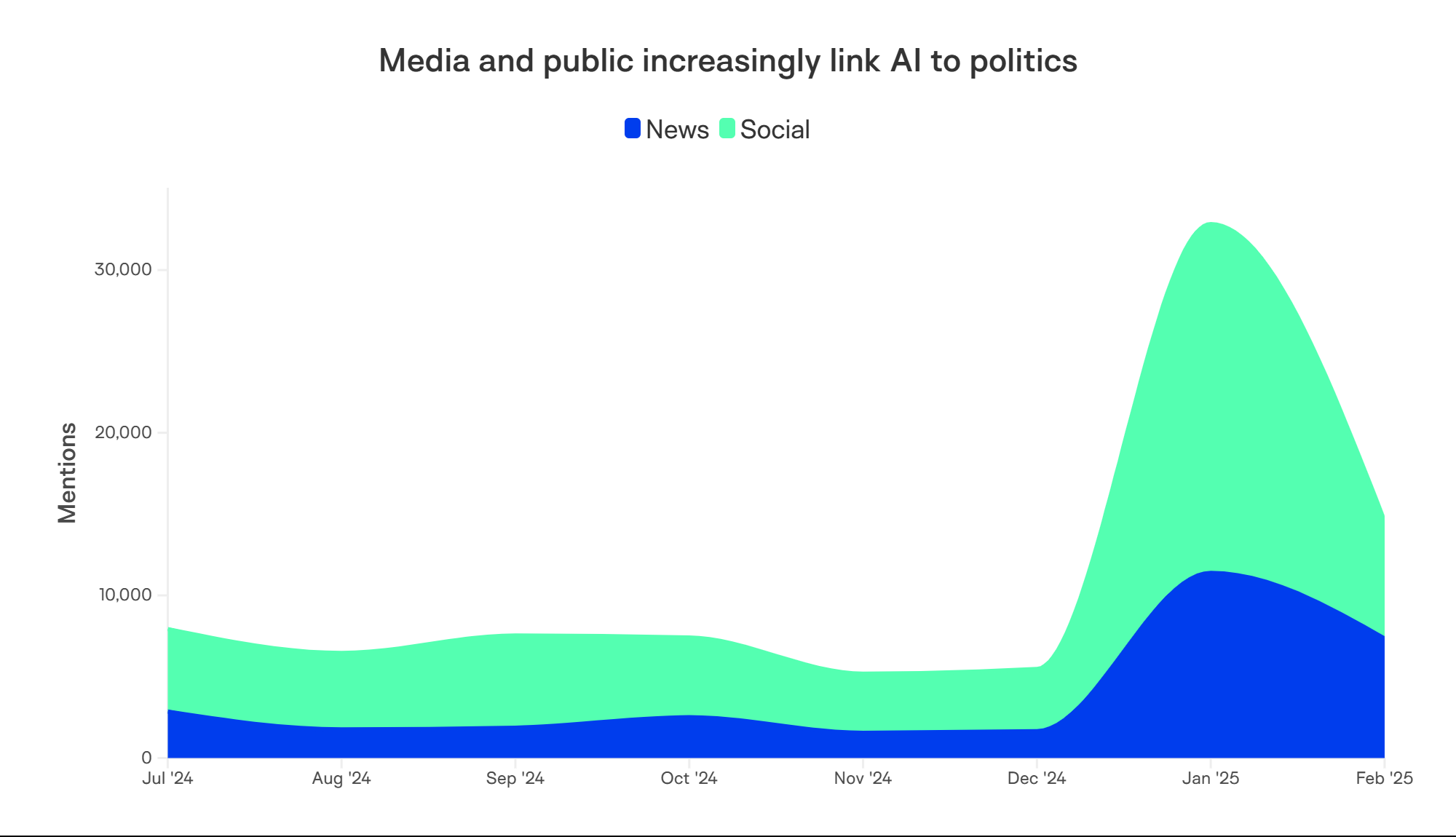
Our latest Vuelio report ‘When politicians talk about AI, is anyone listening: Innovation and regulation in the UK’ tracks the political, media, and public conversation to find out just how much influence our ruling party has on this topic.

Graph to show news and social volume around politics and AI

Using Vuelio Political and Media Monitoring; insight from the ResponseSource Journalist Enquiry Service; and social listening, we examine:

  • How the AI conversation has grown in the UK press and on social media since the General Election of 2024
  • What journalists and broadcasters covering AI are most interested in reporting
  • Which politicians & parties are best at making their voices heard around AI
Campaign reporting for PRs

Best practice for campaign reports

Whether you’re launching a product, hosting an event, or raising organisational awareness, a campaign report is the best way to showcase the successes to stakeholders in an easy and digestible format. Measurement also helps teams to improve, compare strategies, and understand the true value of events and campaigns.

Campaign reporting isn’t only about evaluating what happened in the past, you can also use media analysis to support you before and during a campaign.

By following this framework for your campaign reporting, you’ll be able to:

  • Set meaningful KPIs and understand the media landscape (before)
  • Respond to the media and receive analytical support from a team of experts during a busy period (during)
  • Showcase your successes to stakeholders with insightful evaluation and a greater understanding of what worked well and what didn’t work to identify opportunities for future campaigns (after)

Before your campaign

Goals 

Before your new campaign begins, it’s time to set up clear goals and meaningful KPIs. This will help provide everyone with a clear direction of what is to be achieved and help with the future measurement of assessing the success of the campaign.

Consider the following:

  • Who do you want to target?
  • What message do you want to send, and what action do you want your audience to take?
  • Where does your target audience go to consume traditional media?
  • When is the best time to launch the campaign?

For example:

A mountaineering rescue charity may want to analyse its summer mountain safety campaign. They may want to target novice hikers with the key message to be prepared while hiking this summer. This charity have particular issues in the North of England,  so want to target local media in that region, during the summer heatwave.

SMART Goals

With goals in place, you can set realistic SMART KPIs that align with your overall campaign objectives (SMART: Specific, Measurable, Achievable, Relevant, and Time-bound).

For example:

The mountaineering charity would like to increase the volume of campaign coverage by appearing in 400 outlets between 5 June – 4 July.

Or, they would like to increase the amount of headline mentions from the previous year by 5%.

Using historical or Industry Data

Once you’ve established your campaign’s goals and KPIs, use data to establish benchmarks to ensure your targets are SMART. Effective comparisons could be to your competitors, yourself, or the industry, and without data, you’re basing decisions on nothing more than a gut feeling.

Using data allows you to:

  • Assess against industry standards or pre-determined goals
  • Track progress over time if you compare it against your own previous campaigns
  • Hold yourself accountable by setting measurable targets
  • Say no to ideas that have underperformed in the past

For instance, the mountaineering rescue charity may have run a similar campaign the previous year and found that they achieved coverage in 300 outlets and a key message penetration of 35%. It would be unrealistic to set a goal of 100% key message penetration if the previous year had a 35% penetration, so an organisation can use this information to set a realistic target against last year’s results.

Vuelio can support you during the pre-campaign period with analysis of competitors or previous campaigns that can allow you to identify opportunities and threats.

Choosing the right metrics

Deciding which metrics to include is important, as the campaign report needs to reflect your SMART goals in a simple way that stakeholders in the wider business can understand.

Base your metrics on what best demonstrates your SMART objectives. This is especially the case with sentiment and proactivity analysis. Unless your campaign is to combat a negative reputation, sentiment will generally be positive, and the campaign itself is proactive, so consider other metrics such as the following:

Campaign-Specific Messaging: Track whether your intended key messages are being portrayed in the media e.g. How much coverage was the key message ‘When hiking this summer, be prepared and take water’ featured in?

Calls-to-action: Analyse if the media has included your campaign actions e.g. Head to mountaineeringrescue.co.uk to find out more about hiking safely this summer.

Prominence: Assess not just the volume of coverage about the campaign, but also the quality – are you appearing in headlines or as passing mentions?

Target Media Analysis: If your goal is to gain attention from specific media outlets, a detailed analysis of these results is necessary, e.g. Mountaineering Rescue is targeting local charities in the North of England so have compiled a list of relevant outlets in the region. It’s worth utilising a media database, like Vuelio’s Media Database, if these are journalists you haven’t worked with before.

The Vuelio team can support you with choosing the correct metrics. The team also typically provides manually analysed metrics that will allow you to analyse bespoke campaign metrics such as campaign messages.

During the campaign

Establish a useful reporting framework

During the campaign, it is important to continuously assess progress with the use of snapshot reports. These reports can help your organisation showcase immediate success, or respond to media reactions that may not be favourable or in line with messaging.

While you may already produce a campaign report at the end of your campaigns, sometimes this can be time-consuming. Vuelio’s Insights team can provide support during busy campaign periods on an ad hoc and ongoing basis. Many of our clients enlist us to provide them with multiple campaign reports per year to utilise our expertise, while some clients require our services on an ad hoc basis.

After the campaign

Once the campaign has finished, it is time to assess if your organisation has met its KPIs. At its core, media measurement is a continuous improvement process.

It may also be useful to consider if any additional data sets would add value to your reporting. For example, it may be useful to understand if donations, sales, or website traffic increased during the campaign.

Finally, when your campaign has ended and all analysis has been completed, you can then use this report not just as a summary of your campaign but as a benchmark for future work.

Find out more about campaign reporting and how Vuelio can help here

Hold the homepage!

Hold the homepage! How scoops circulate through the modern media landscape

Good news can travel quickly across the variety of platforms that make up the modern media landscape, but bad news often spreads just as fast.

How and why do certain stories make the leap from news columns to widely-shared social posts? And what do organisations and their comms teams need to know to push the positive stories further, and address negative narratives?

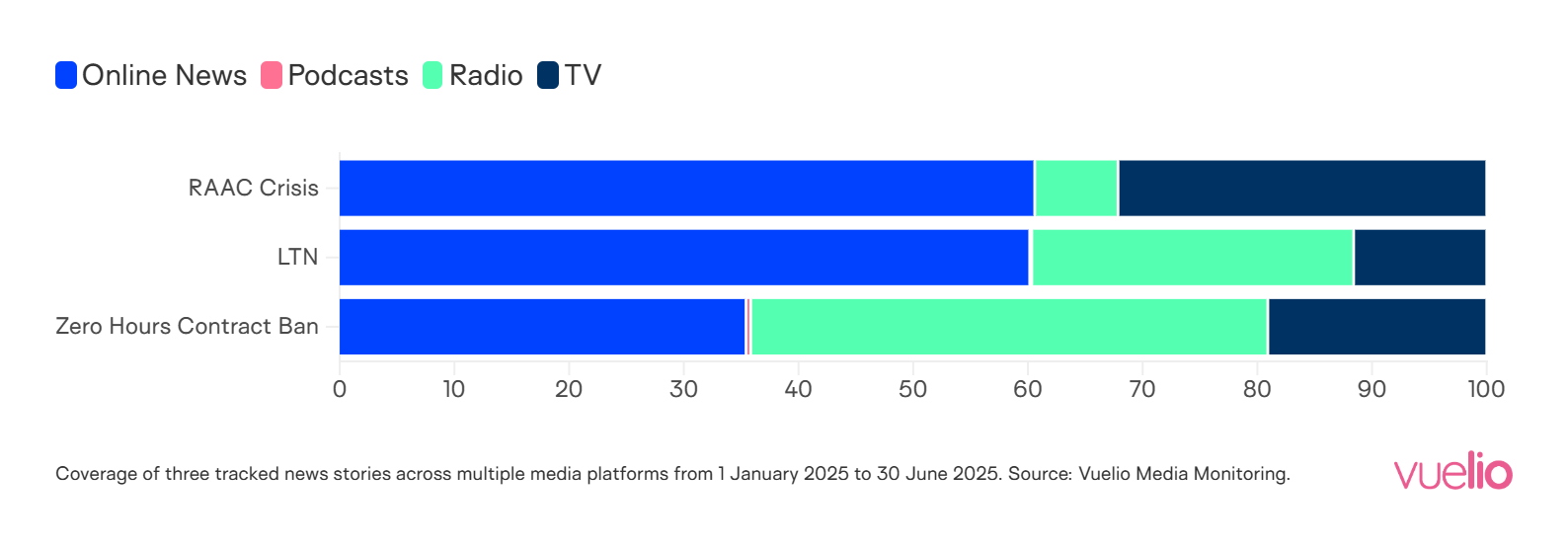
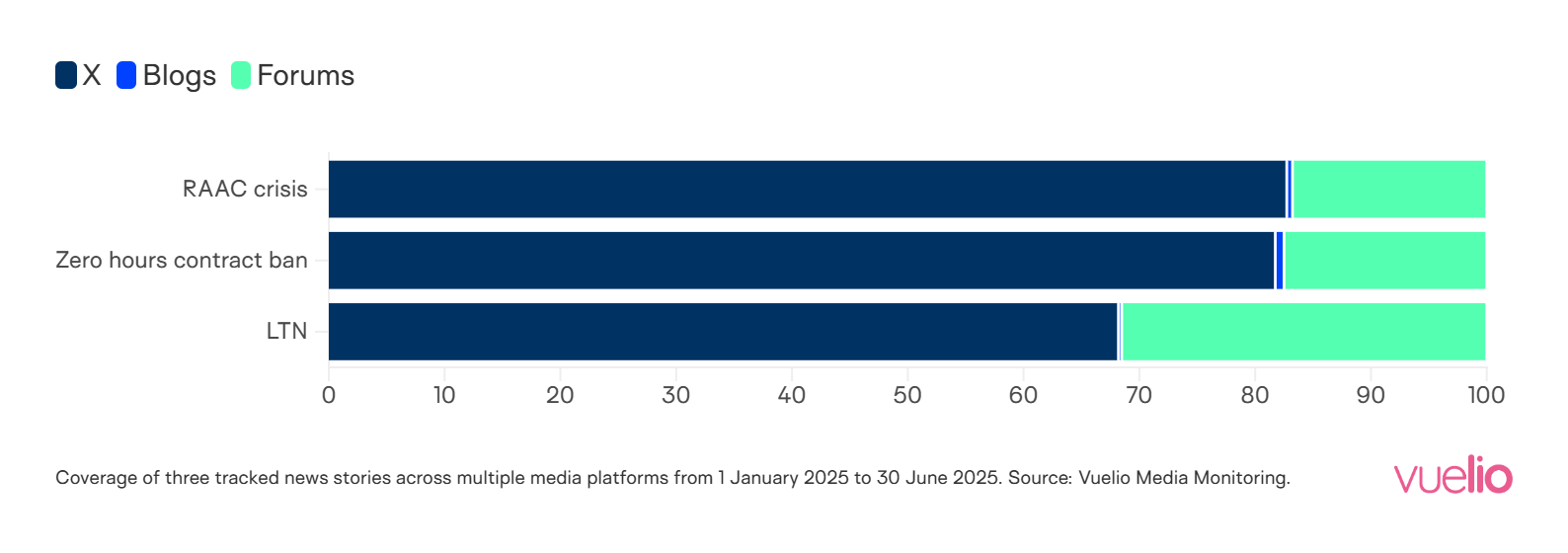
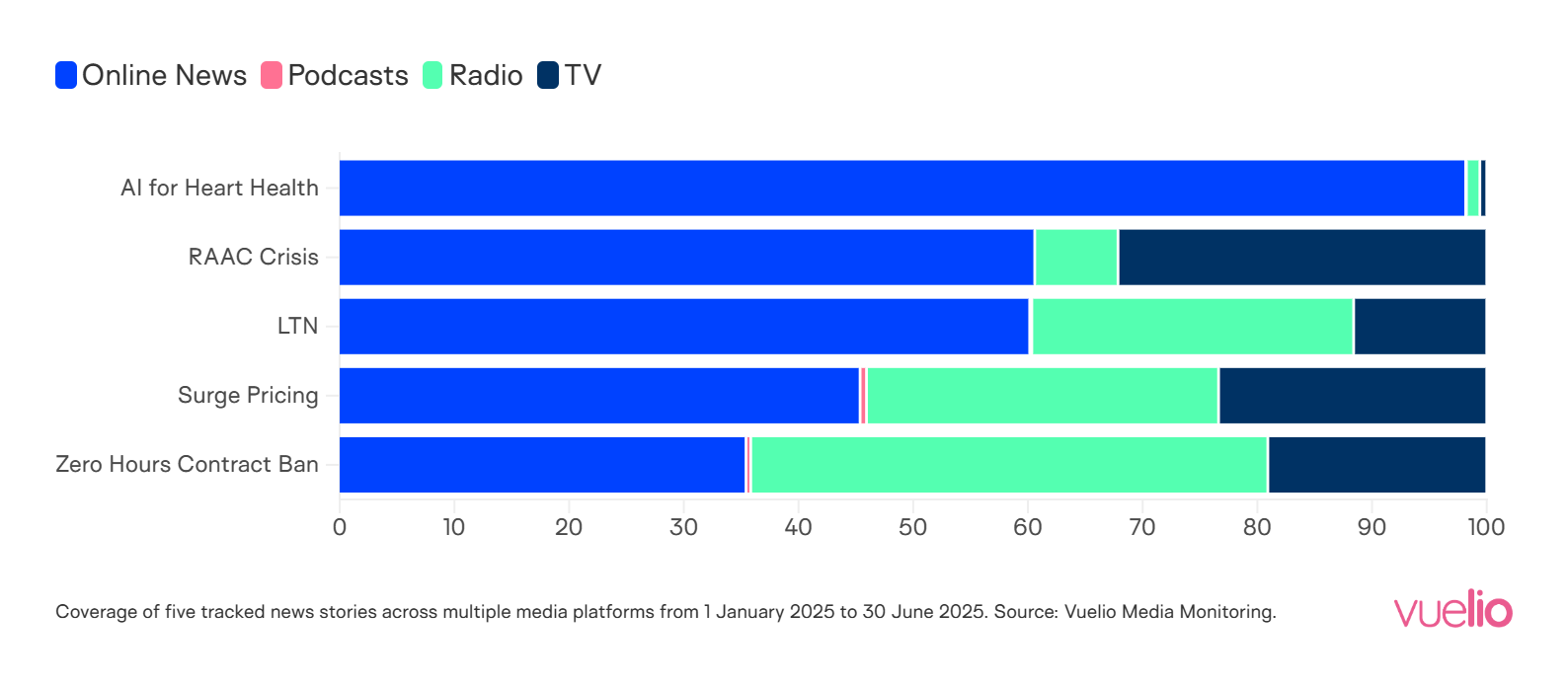
Our latest report ‘Hold the homepage! How scoops circulate the modern media landscape’ tracks two major reputational crises from the last year to uncover the forces at play. Using data points from traditional and social media – alongside public statements from UK political heavy-hitters – we examine how news reports evolve as they travel through different platforms & audiences.

Download the report to explore:

  • How scandal can spread beyond publishing paywalls, impacting everything from regulation to brand reputation
  • The forces that propel journalistic scoops from traditional media platforms to social virality
  • How an evolving story can embroil brands, including competitors, in unexpected ways
How podcasts shared the story of water pollution

Listen up: News podcasts share the story of water pollution in the UK

Bad news has the ability to spread quickly in our hyper-connected modern world of multiple platforms. For PRs, this means more channels to monitor than ever before for signs of crisis… but it also provides extra ways to boost important stories, connecting audiences to vital information.

One crisis with far-reaching implications for the UK audience over the last few years has been polluted waterways. This issue was put to politicians in the run-up to our General Election this summer, discussed with frustration across social platforms, and covered by the media in print, online, and in podcasts.

To highlight the impact of the podcasting format as an increasingly useful way to connect with audiences, we tracked the story of water pollution in the UK, and internationally, across podcasts from 1 November 2021 to 29 September 2024.

So many podcasts… and for good reason

2022’s Interactive Advertising Bureau and PricewaterhouseCoopers’ report on podcasting projected that the industry would generate $2 billion in revenue in 2023, and $4 billion by 2024. The prediction of podcasting’s emergence as a format for storytelling has proved right – not just among friendship groups sharing anecdotes on their sofas (of which there are many), but for publishers, too.

The Daily Telegraph’s political editor Ben Riley-Smith highlighted podcasts as ‘a huge booming area for news consumption’ when speaking on the changing political landscape in the UK in 2023, and other publishers and big media brands have capitalised on this in 2024:

‘It makes sense for publishers to be moving towards the podcast space,’ believes Reach Studio’s head of content Yara Silva, whose team launched The Division Bell podcast to coincide with the UK General Election, and the Euro Thrash vodcast for Euro 2024.

‘People are just busier and busier – it’s so easy to consume a podcast while you’re doing other things. Podcasts are only going to get bigger and more important to publishers’.

The importance of news podcasts to audiences is also clear when tracking mentions of the format on X since 2021:

Mentions of news podcasts reached a zenith on X in June 2023 as the industry ‘boomed’, and it continues to be a source of discussion on social media. It’s now a firmly established format to turn to for news, with listeners/viewers no longer posting about a ‘podcast’, but specific shows, namechecking where they heard about certain topics.

Examining mentions of the two biggest podcasts in the UK – The Rest is Politics, which launched in March 2022, and The News Agents, launched in August 2022 – proves podcasting’s utility as a news source. Peaks occur around key events in the news cycle – the obvious example being the UK General Election causing a spike in mentions for both podcasts this summer.

The News Agents X post

Podcasts aren’t just for entertainment – they are also turned to by the public as a way to stay informed on events happening around the world, as well as closer to home.

How podcasts reached audiences with reports of water pollution

Water pollution is an issue faced across the world to varying degrees – tracking related news shows a firm focus on the topic in UK and US regions especially. Following mentions also shows how these stories reached further audiences with publisher-affiliated podcasts.

UK media outlets including BBC News and The Guardian have an outsized impact on the global conversation. Their influence on ‘greener’ socially progressive conversations is to be expected within their UK base, but this international dominance is surprising… Until the impact of their podcast brand extensions is considered. Both outlets reported on water pollution, and then took up the story in their podcasts to share extra information and delve deeper into the specifics. By contrast, US and Australian outlets like The Washington Post or ABC Australia produced a significant amount of written content, but did not fully utilise their podcast channels.

X post about BBC Indepth on water pollution

The ‘boom’ of podcasting as a format for news reporting isn’t just the result of a faddish focus within the publishing industry – audiences are listening (and watching, when there is accompanying video). PR and comms teams tasked with raising awareness by securing coverage in the press should expand their focus to aural formats alongside the traditional written word – important stories can reach audiences across every platform out there to engage with.

For connecting with podcasts relevant to your brand or niche, try Vuelio’s Podcast Monitoring – providing access to 65k podcasts as well as insight into audience sentiment and emerging trends within the world of audio content.

Not sure which platform is right for your next campaign? Check out the benefits of each social media platform – and how Vuelio can help you make the most of them – in this blog post.

Empowering communities through advocacy campaigns

When legislation changes are likely to impact entire communities, how can comms teams create campaigns that resonate with the public and decision-makers?

Our recent webinar Empowering communities through advocacy campaigns highlights important campaigns that have made change in Parliament, and sparked progress for people who feel unheard.

Featuring on the panel are the Commission for Victims and Survivors for Northern Ireland’s head of communications and PR Alana Fisher as well as the Royal National Institute of Blind People’s PR manager Gorki Duhra and local campaigns manager Lindsay Coyle.


Fill in the form below to check out our webinar and learn 👇

  • How to create campaigns that make a difference, from stakeholder mapping to creating messages that resonate
  • How to influence government policy
  • Which strategies pay off when time, and resource, is limited

Reputation management: How PR and comms can maintain trust in an AI-assisted future


Nearly half of UK businesses with less than 500 employees are unprepared for potential reputational crises arising from the use of AI, says new study. 


We teamed up with international market research company Danebury Research for our report, Reputation management: How PR and comms can maintain trust in an AI-assisted future, which examines how PRs and the media are adjusting to the use of artificial intelligence in their work.


Based on 300 interviews with business decision makers working across Financial Services, Utilities, Pharma, Media, Retail, and Transport sectors, our research found that fears regarding the impacts of brand reputational issues are significant. This highlights the urgent need for upskilling teams in order to keep up with advances.


Download the full report below to learn:

  • Why AI-enabled individuals pose a huge threat to organisational reputation
  • Which industries are most receptive to the technological advances
  • How comms teams can benefit from AI both as creators and communicators

Medical misinformation: How PR can stop the spread


Misinformation has been on the rise since the start of the pandemic in March 2020 and continues its dangerous influence. Particularly dangerous – its negative impact on public health.


In this white paper, Medical misinformation: How PR can stop the spread, expertise and advice for communicating vital – sometimes lifesaving – information with the public comes from PRs working in the health, medical and pharmaceutical sector itself, both in-house at trusted brands and on behalf of clients.


With the fight against fake news on, effective PR and comms can help connect audiences with the information they need and curb the spread of damaging misinformation.


Download the full white paper by filling in the form below.