
Winning your sector in AI visibility

The new imperative for PR & Comms teams: Earning your place in AI answers

When someone asks an LLM about your sector, or which organisations are leading the way on the issues you work on, do you feature in the answer?

Journalists, policymakers, supporters, and consumers are much more likely to pose broader questions than ask about your organisation by name, so how can comms teams work on earning a place in AI answers?

Is anyone asking about you?

Considering what ChatGPT, Gemini, Claude, and Perplexity would say about your organisation when asked is a strong starting point for an AI strategy – outdated facts, resurfaced controversies, and models that tell different versions of your story are all real risks – but that assumes your intended audiences already know to ask about you. They might not, and if nobody has named you, then it’s up to the model to decide whether you belong in the answer.

That decision carries more weight than it used to. As Amy Chappell, Head of Insights Strategy at Vuelio, told our recent charity sector roundtable: ‘People are reading the synthesised answer, not the article. Reputation often now forms inside the AI response’.
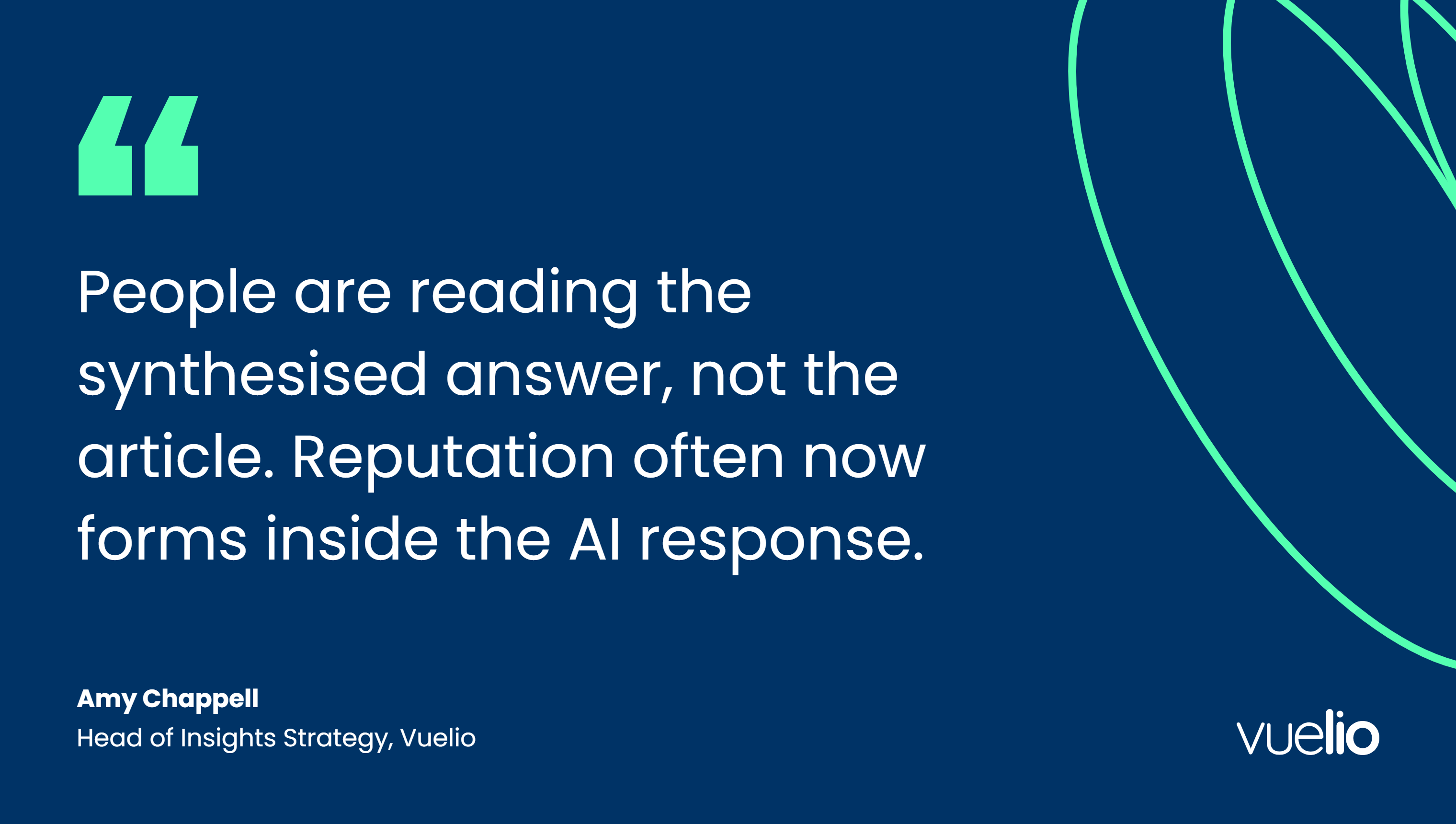
Amy Chappell quote card

And this isn’t just an issue for businesses – public bodies may not compete for customers, but they do compete to be the trusted source. First Rail London’s Communications Manager Dana Raer explained during our regulated industries webinar that auditing the main models is now a major part of her day-to-day role, because the public are asking AI questions about the London Overground – not the London Overground team themselves.

Why sector questions are harder to win

When a model answers a sector question, it isn’t recalling a ranked list, but instead weighs which organisations the wider body of evidence keeps pointing to. It builds confidence through corroboration.

During Vuelio webinar ‘AI as the new PR & comms stakeholder‘, Purposeful Relations PR Futurist and Co-founder Stuart Bruce described a university industrial dispute where AI answers were dominated by the union’s view. The union had left more traces for LLMs to pick up across its website, social channels, and in the media. As Stuart put it: ‘The trade union gave them half a dozen quotes. The university gave them one.’

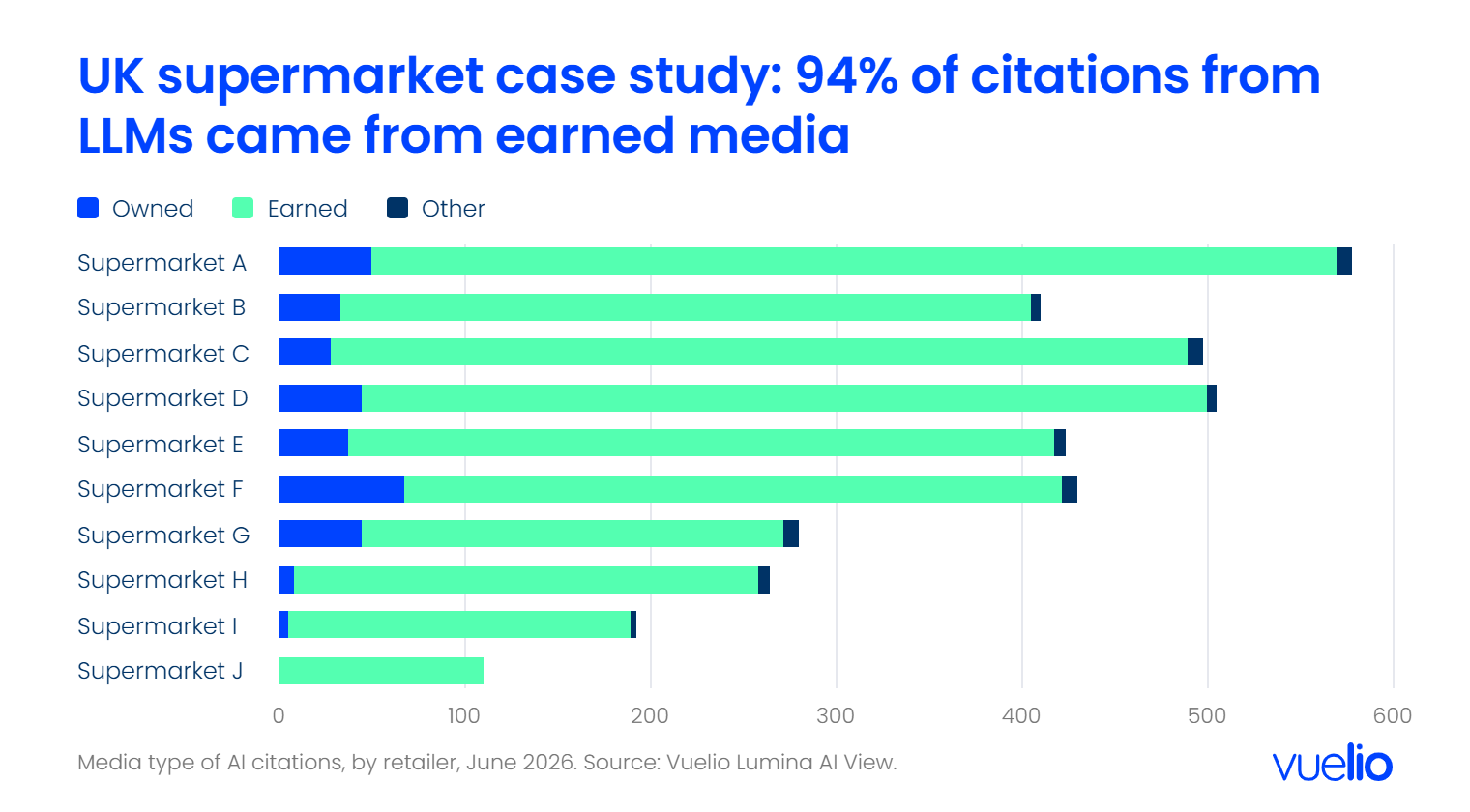
The sources doing the corroborating aren’t always the ones comms teams prize most. When the Vuelio Insights team analysed how LLMs cited UK supermarkets for our report ‘The role of AI, LLMs, and earned media in shaping reputation‘, trade titles such as The Grocer did more of the work than national press titles. Models also tend to favour evidence that has built credibility over time, so fresh content helps most when it adds to an established footprint.
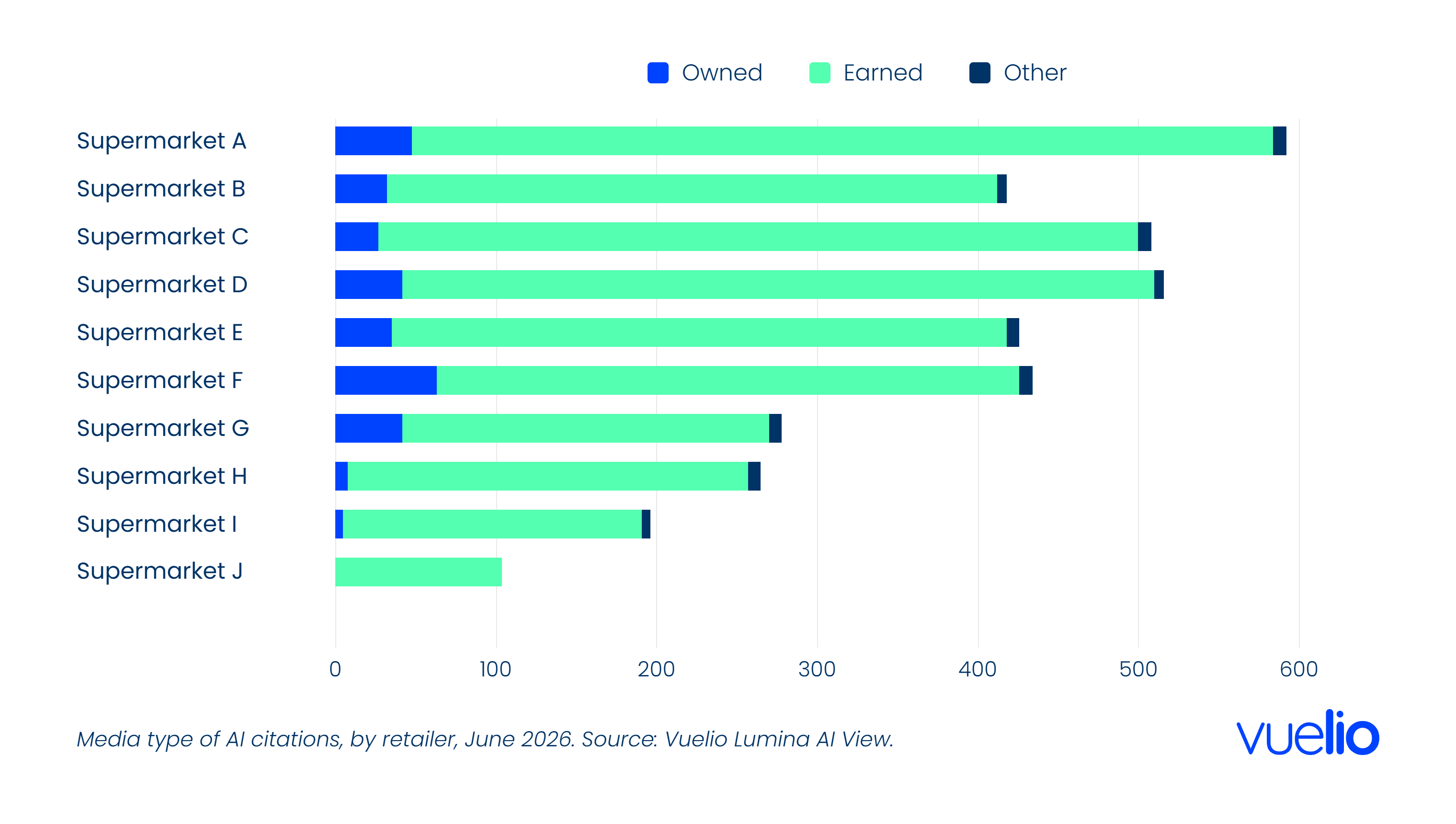
AI citations chart

Winning a sector answer comes down to a consistent, specific, and well-corroborated presence in the conversations that make up your sector. Here are three habits to help:

1) Own a few category conversations rather than many

Spreading effort across every topic your organisation could comment on can leave a thin, unconvincing trail. A model is far more likely to name you where your spokespeople, data, owned content, and earned coverage all say the same thing.

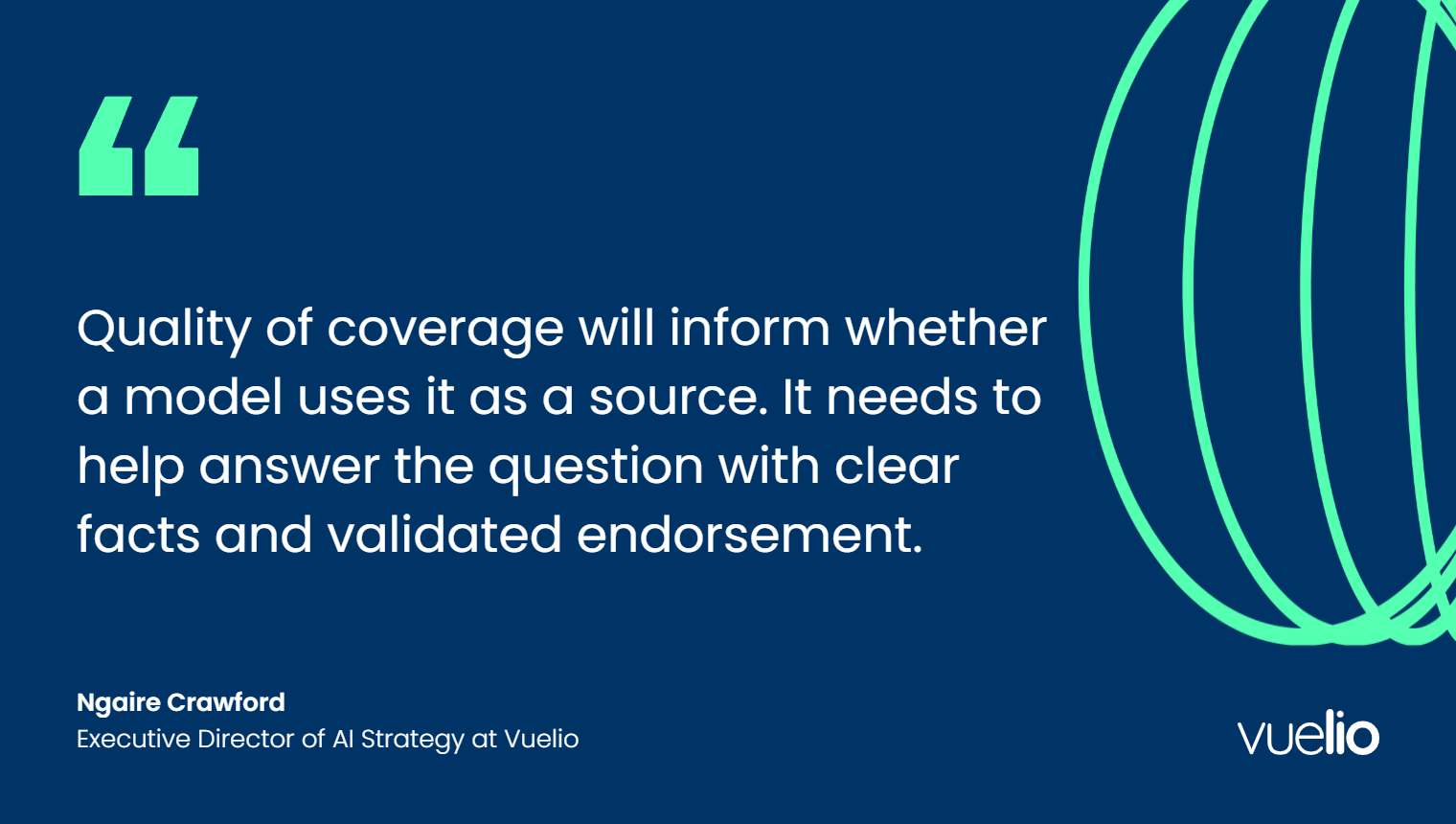
Choose two or three conversations where you hold genuine authority, and concentrate there: research, expert commentary, FAQs on your own site, and trade outreach, all sharing the same information. Substance is what is useful to LLMs. As Ngaire Crawford, Executive Director of AI Strategy at Vuelio, says, coverage needs to ‘help answer the question with clear facts and validated endorsement’.

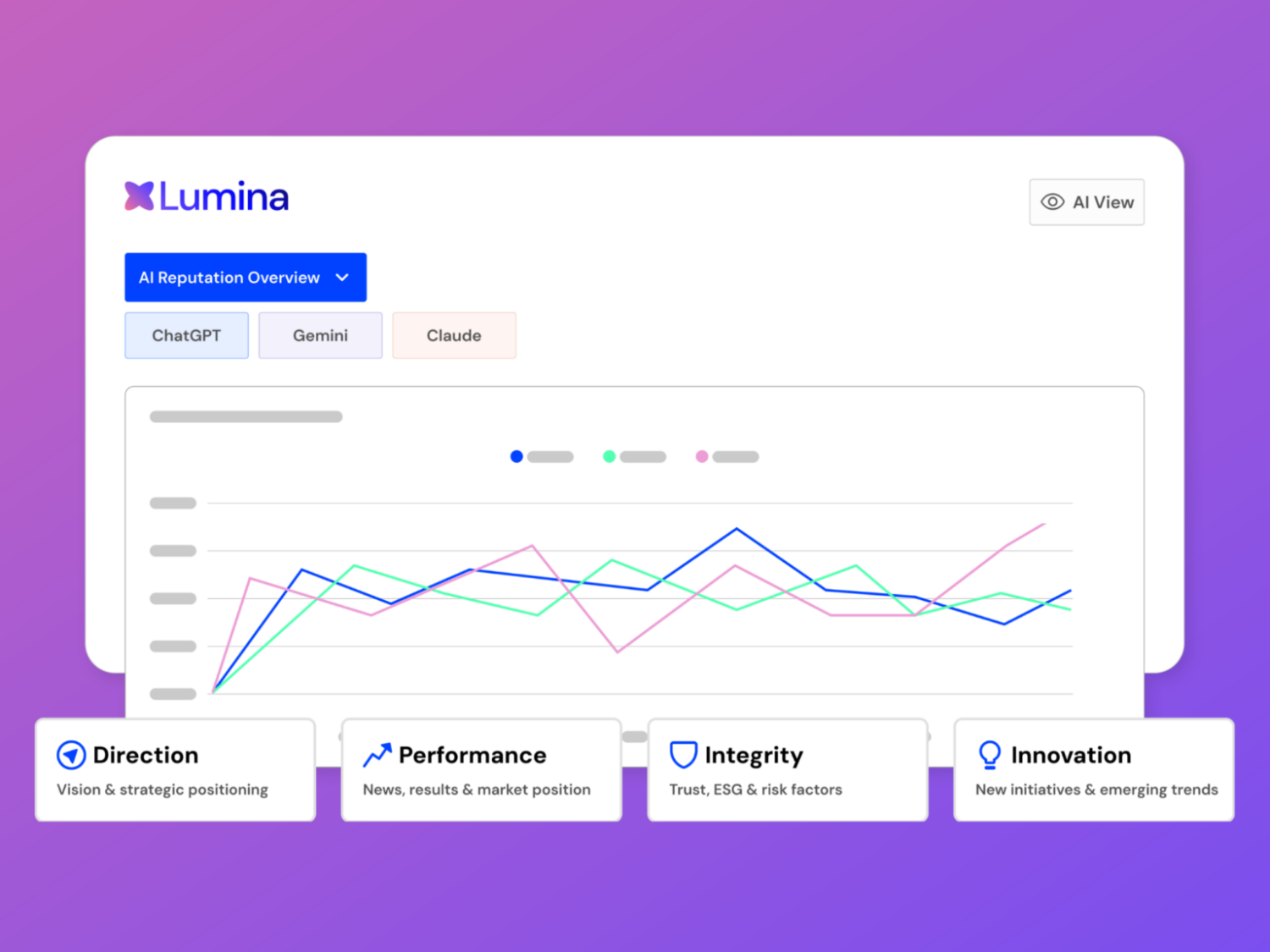
Knowing which conversations to focus on is where Lumina AI View can help, highlighting which conversations you’re already earning a place in versus those a competitor currently owns.
2) Find which stories in your sector are gaining ground

The stories building momentum in coverage today become the evidence base for AI answers. The earlier you contribute credibly, the more touchpoints you build before the narrative settles.

As Dr Anne Gregory, Professor Emeritus at the University of Huddersfield, shared during a Vuelio webinar: ‘Once a narrative is set, it becomes extremely difficult to counter. This is why PR must come in early’.

Lumina Stories & Perspectives is built for that early read. Instead of a stream of clips, it groups coverage into stories, shows which are gaining traction or fading, and reveals the perspectives and voices driving each one.

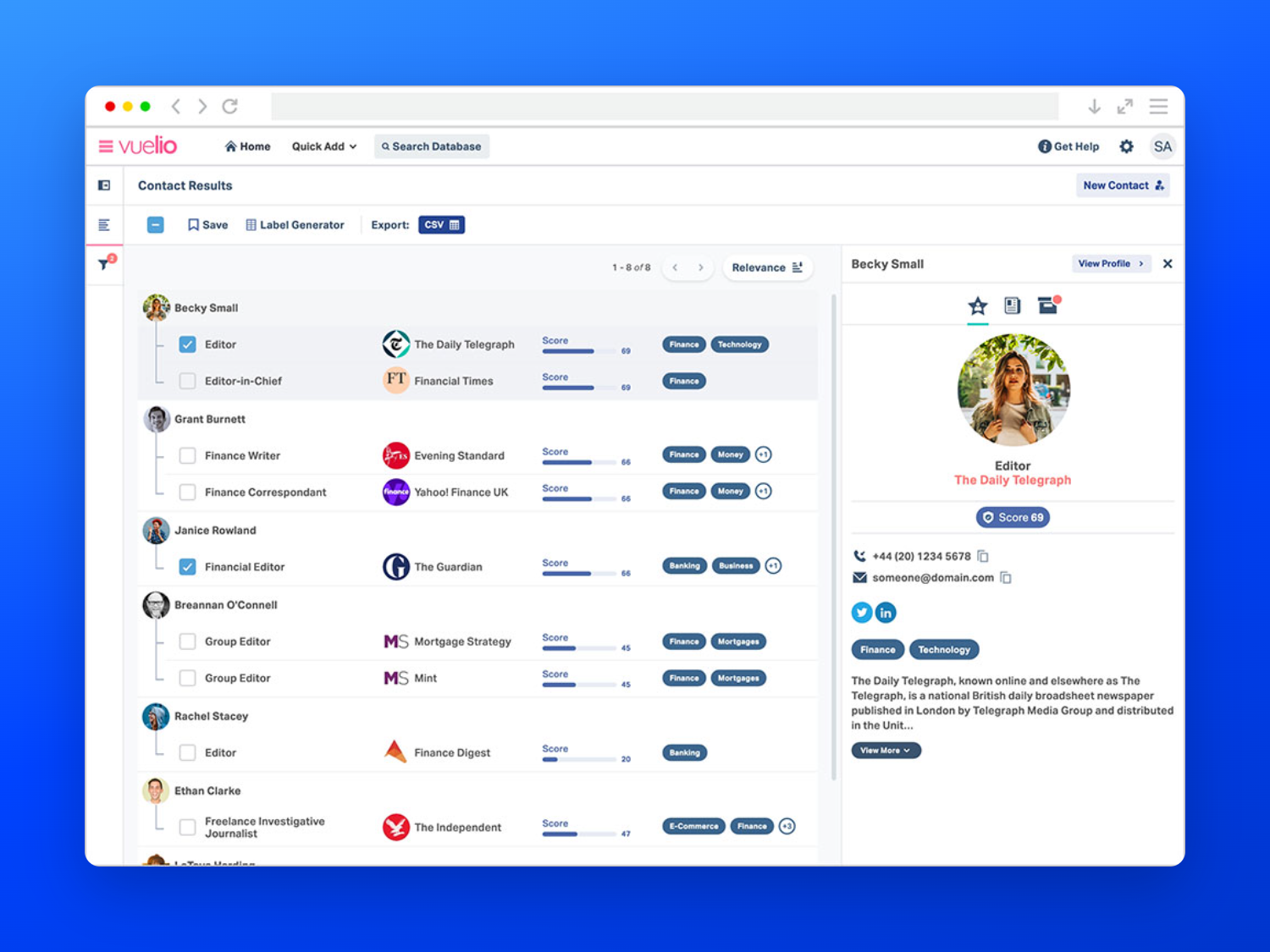
For public affairs teams, pairing this with Vuelio Political Monitoring shows when a story moves from the newsdesk to the committee room. Once you know which perspective you want to join, the Vuelio Media Database can help you reach the trade and specialist journalists already leading it.
Vuelio Media Database product shot

3) Track targeted slices of your sector, not the whole thing

Asking AI about ‘healthcare’ or ‘local government’ will confirm what you already know: the biggest names dominate. The answers you can realistically win, and learn from, are more specific: adult social care in the North West, accessible rail travel in London, energy advice for renters.

AI View can be scoped by topic and by place, enabling your team to measure the conversations that actually shape your reputation. See your share of each conversation, not just whether you appear.

Measurement also has to be repeatable. A one-off check in your own ChatGPT account is coloured by your history and phrasing. AI View sends clean, unpersonalised queries to ChatGPT, Gemini, Perplexity, and Claude, and builds a trend over time.

Why measurement tools need to be built for comms

Many AI visibility tools come from search and digital marketing, and focus on how often a brand gets mentioned – a narrower question than the one comms and public affairs teams are asked to answer. As Stuart Bruce said at our event ‘How AI is changing the way we communicate‘, tools from the PR space understand ‘the pressures, the trends, the type of information that we need to know’.

While comms teams can’t force an LLM to name their organisation, it is possible to find out which evidence is shaping answers, and what media coverage will be the most effective.

To see how your organisation shows up when AI is asked about your sector, get in touch about a Lumina AI View demo.

The paywall problem

The paywall problem: Why your best coverage could be invisible to AI

Nearly eight in ten of the biggest UK and US news websites block at least one AI training crawler. So when a stakeholder asks an LLM about your organisation, the national feature you snagged last quarter may not be in the answer at all.

While prestige is often seen as a shorthand for value in PR, it frequently comes with a paywall in the way. Can AI read your coverage and cite it in its answers when it’s locked behind a barrier?

AI can only cite what it can reach

When an LLM with live search answers a question, it retrieves pages in real time and builds its response from what it finds. But if a page sits behind a hard paywall, or its publisher has blocked AI crawlers, the model often can’t read it, and will start looking elsewhere for sources.

The impact on citations can be significant. The Paywall Penalty: The 2026 Everything-PR x 5W AI Communications Paywall Visibility Index found that hard-paywalled and metered titles, including the Financial Times, the Wall Street Journal and the New York Times, received no citations in a series of Claude enquiries, while open-web publishers took 91.3%. Research from Press Ranger and OtterlyAI found that access deals also have an impact – publishers with OpenAI licensing agreements received 48% more ChatGPT citations per cited page than those without.

Locked-down journalism isn’t completely unreachable by LLMs, but that comes with its own issues. The Tow Center for Digital Journalism found chatbots pointing to syndicated copies rather than originals – coverage may be credited to a different outlet entirely.

Social posts won’t entirely close the gap

Can social content fill in where paywalls block access? Not for most standalone AI engines. Claude draws around 65% of its citations from earned media and just 1% from social. In comparison, Google’s AI Overviews lean more heavily on social, according to Semrush’s 2025 AI Overviews study. Each model’s differences need to be taken into consideration.

Vuelio’s own research backs this up. In ‘The role of AI, LLMs, and earned media in shaping reputation‘, built on Lumina AI View data, around 94% of links cited by leading LLMs came from non-paid, earned, media.

LLM citations chart

Social media amplified conflict, whereas the AI citations leaned towards authority. And authority comes from earned media – the kind of coverage comms teams are already primed to achieve.

Credibility builds over time

The same Vuelio research found a large share of the content AI cited was months, or even years, old. Models don’t grab the newest story, but instead favour sources that have built up credibility over time – and credibility comes with access.

New coverage keeps a model’s picture current, but it’s the trusted sources accumulated that anchor it. As Ngaire Crawford, Executive Director of AI Strategy at Vuelio, put it: ‘The quality of the coverage will really inform whether the model uses it as a source’.

Quote card from Ngaire Crawford

Put together, a single paywalled Tier 1 piece, however prestigious, may do far less for your organisation’s AI visibility than a steady run of open, specialist, and well-sourced coverage.

Audit your coverage by accessibility

The front page of a national press title (imagine…) is still gold dust for a comms team, Tier 1 titles still set agendas and reach decision-makers directly, but media strategy now needs to include questions beyond ‘will this be visible on the newsstand’:

Can it be read?

Flag which pieces sit behind hard paywalls, metered walls, or registration.

Is it corroborated?

Is your key message carried by open sources a model can check it against? As Stuart Bruce, PR Futurist and Co-founder of Purposeful Relations, said during Vuelio webinar ‘AI as the new PR & comms stakeholder‘: ‘The more touchpoints the AI finds to verify a fact, the more likely it is to include it’.

Will it last?

Is it the kind of authoritative, fact-rich coverage models return to long after the news cycle moves on?

Plan outreach with accessibility in mind. Tier 2 titles (trade magazines, specialist websites and niche industry platforms) are often open to read, highly trusted in their field, and frequently cited. In Vuelio’s supermarket research for its latest report, trade titles such as The Grocer did much of the heavy lifting in LLM answers.

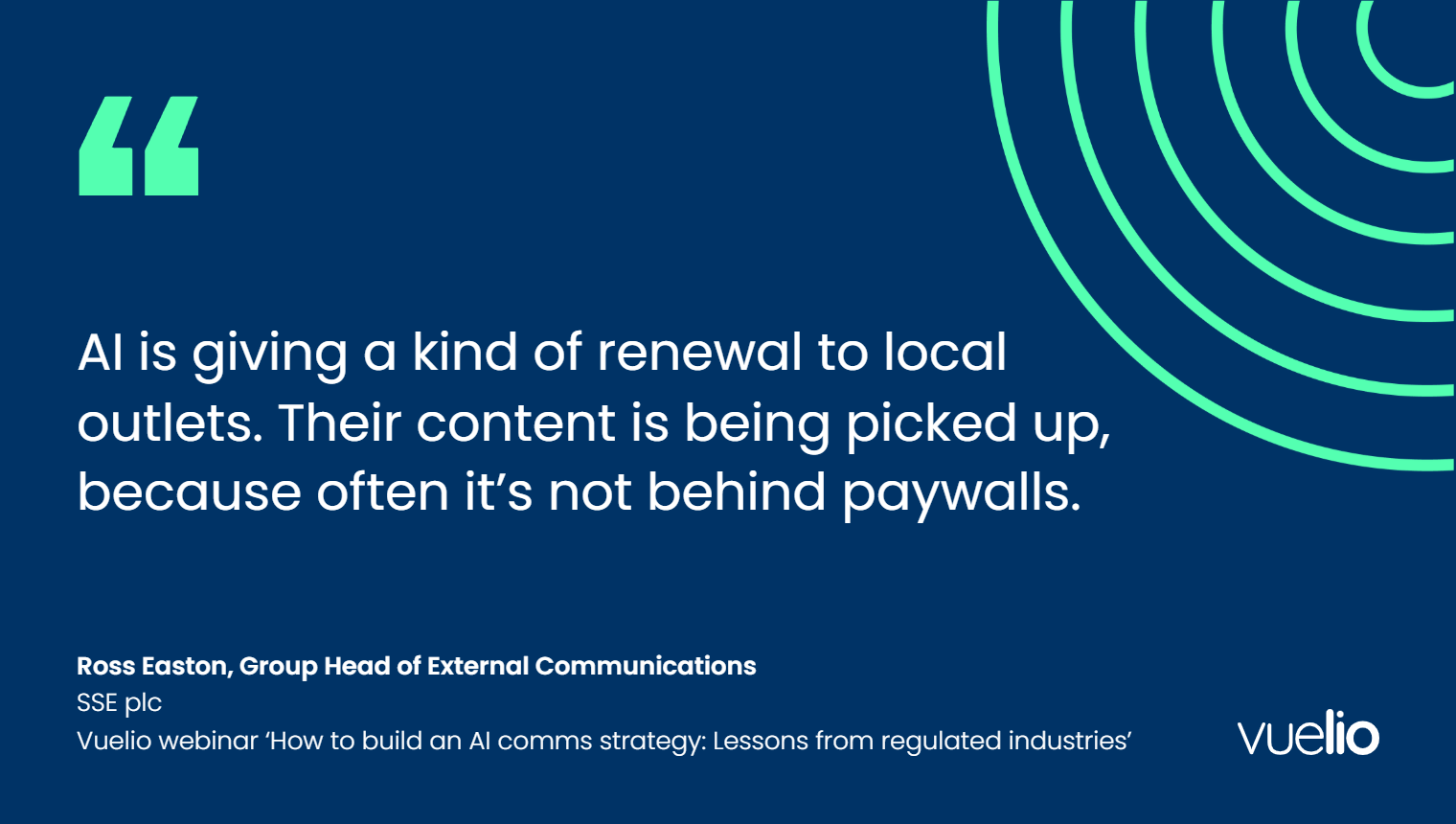
Local media matters, too. Ross Easton, Group Head of External Communications at SSE plc, shared during Vuelio webinar ‘How to build an AI comms strategy: Lessons from regulated industries‘ that ‘AI is giving a kind of renewal to those local outlets, because their content is being picked up, and often it’s not behind paywalls’.

Quote card from SSE's Ross Easton

Find the right media, and reach them the right way

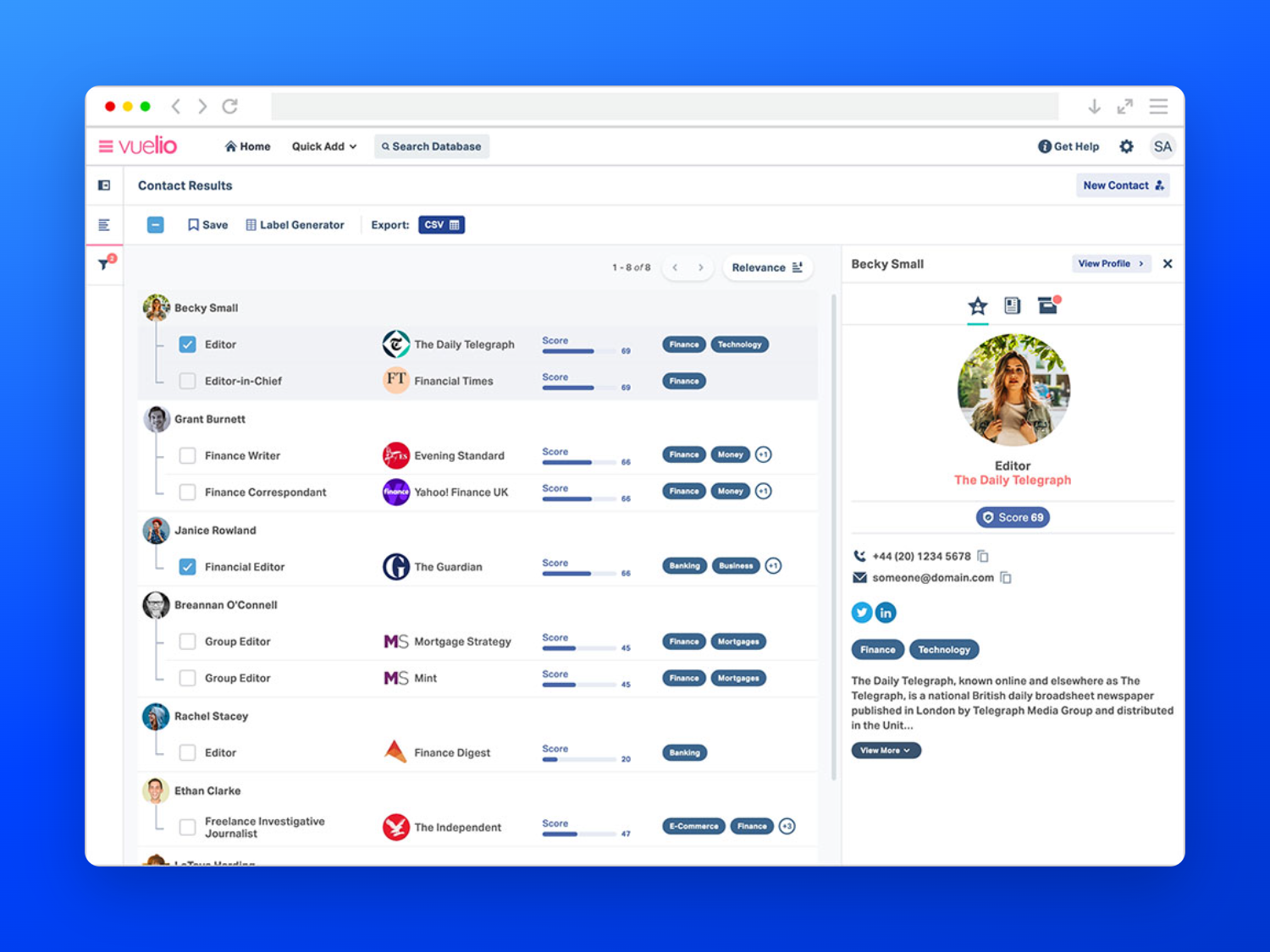
Planning by accessibility means knowing more about the media landscape than a Tier 1 wish list can tell. The Vuelio Media Database covers more than 1.3 million contacts, outlets, and opportunities – including the trade, specialist, and regional titles that feed AI answers and are less likely to be paywalled, alongside bloggers, podcasters, and influencers – all maintained by our in-house research team.

Vuelio Media Database screenshot

Contact profiles include journalists’ preferred contact and pitching methods and ways of working, so you can send the right content, in the right format, through the right channel – rather than a blanket release that could land badly. Forward features and live requests through the Journalist Enquiry Service can also help with spotting openings in specialist titles early.

Check what the models actually see

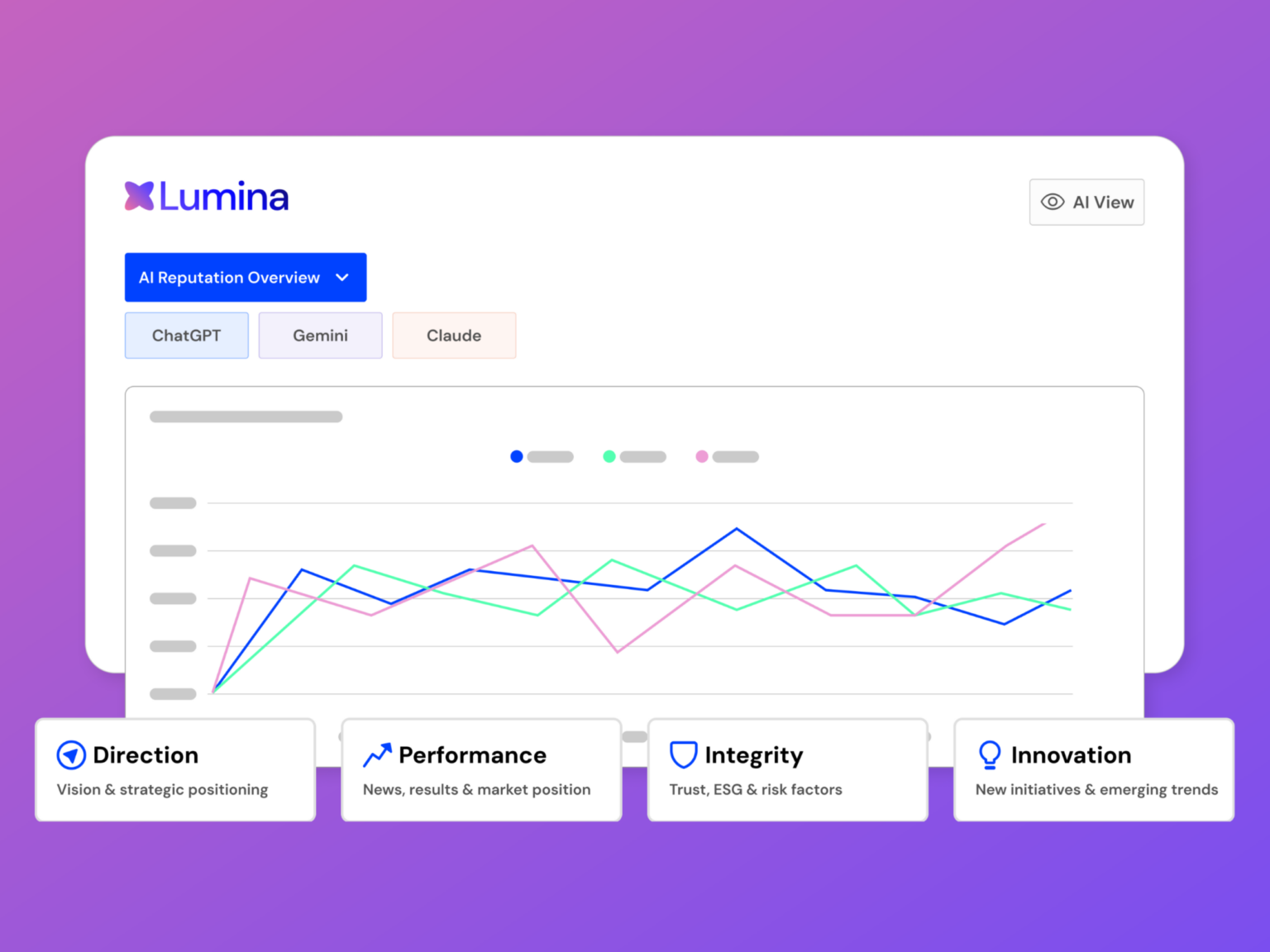
Initial research and outreach are just the first part of the process – measure how your message is landing with Lumina AI View, which tracks the sources that models such as ChatGPT, Gemini, and Claude cite when they describe your organisation. It breaks down your source mix, so you can see whether your coverage is being picked up, which outlets are doing the work, and where the gaps are. Benchmark citation strength and source quality against competitors, and get alerts when citation patterns shift.

AI View illustration

AI View is built for comms teams and connects AI visibility straight back to the media relations work you do every day. If your best coverage is invisible to AI, you’ll see it, and with the Media Database, you can do something about it.

Prestige still matters. But in the age of AI answers, coverage a model can’t read is coverage it can’t cite. Audit your coverage by accessibility and go beyond Tier 1 titles – and their paywalls – when planning outreach, checking the results in the models themselves.

Find out how Lumina AI View can show you which sources AI relies on to support your media outreach strategy.

AI visibility for public affairs comms teams

Why are public sector comms teams not tracking their AI visibility?

In May 2026, AI assistant GOV.UK Chat launched inside the GOV.UK app. Built on more than 80,000 pages of official guidance, it was designed to answer citizens’ questions on tax, driving, childcare, apprenticeships, and benefits. The soft launch saw great take-up, signalling to government departments, regulators, NHS trusts, and local authorities that a majority of the general public are now ‘AIing it’ versus ‘Googling it’.

But not every member of the UK public will be asking GOV.UK Chat for answers, instead going to ChatGPT, Gemini, Copilot, Perplexity, and Claude, which weren’t built on official government guidance. Answers from these LLMs will serve up whatever the web has indexed, regardless of whether that material is accurate, balanced, or years out of date.

The stakes are high for comms teams reckoning with this new AI-mediated information ecosystem, but even higher for public sector organisations with responsibilities to people across the country who depend on them.

When the ‘official’ answer is not fully reliable

Research from the Open Data Institute tested over 22,000 citizen-related queries against leading models including ChatGPT-4o, Gemini, and Claude, and the results found that multiple models were giving incorrect guidance on regulations including Guardian’s Allowance and Sure Start Maternity Grant eligibility. As Professor Elena Simperl of the ODI warned: ‘If language models are to be used safely in citizen-facing services, we need to understand where the technology can be trusted and where it cannot’.

What can Government agencies do to keep AI answers correct if the AI systems that supply them are drawing on sources of such diverse nature and reliability as local press, forums, campaign group websites, and out-of-date PDFs that happen to rank well?

Strategy for AI visibility needs to be different for public sector comms teams

For a consumer brand, AI visibility is primarily a matter of reputation and sales, but for public sector bodies, the stakes are whether people can access a service, meet a deadline, or continue to trust an institution.

Different types of public sector organisation carry different exposure:

  • Service-delivery bodies (DWP, HMRC, local councils running bins, council tax and planning, NHS trusts) depend on AI-generated answers being current. Eligibility criteria, rates and deadlines change; a chatbot repeating last year’s rules goes past inconvenience to real potential costs to a resident who acts on it.
  • Regulators (Ofgem, Ofcom, the FCA, the CQC, the ICO) need to be treated by AI systems as the primary, authoritative source on their own remit. If a chatbot leans more heavily on a consumer campaign site or a trade publication’s interpretation than on the regulator itself, this needs to be identified and mitigated.
  • Policy departments and ministries (DWP, DfE, Defra, the Cabinet Office) need policy explained with the caveats intact. Technical accuracy is not the same as genuine clarity, and AI systems can smooth away all-important nuance.
  • Councils, combined authorities, and devolved administrations need visibility into how residents are informed about local decisions, especially contentious ones like council tax rises or planning applications. Here, local papers, residents’ Facebook groups, and campaign pages often shape the AI-generated answer more than the council’s own statements.


Five questions for UK public sector comms teams to ask now

1) If a resident is not visiting the organisation’s website, where are they getting their answer instead, and is it correct?

2) How is the organisation’s most recent decision, incident, or policy change actually being described when someone asks an AI about it?

3) When new information is published, does it appear in AI-generated answers reasonably quickly, or is a chatbot still confidently repeating last year’s position?

4) Where is the gap between what has been published and what people are actually being told by these tools?

5) How much of the narrative is being shaped by campaign groups, opposition voices or local press, rather than by the organisation’s own primary sources?

Most comms teams currently have no reliable way of answering these questions. Traditional media can be monitored and social sentiment tracked, but few organisations have visibility into what ChatGPT or Gemini is telling people about them at any given moment, or which sources those answers are drawn from.

How Lumina’s AI View provides that visibility

AI View illustration

This is the gap that AI View, part of Vuelio’s Lumina suite, has been developed to address. It tracks what large language models such as ChatGPT, Gemini, and Claude are citing when they answer questions about an organisation — not only what they say, but which sources those answers are drawn from. For a public sector communications team, this means the ability to see, in one place:

  • Source footprint — whether AI answers are drawing on an organisation’s own official guidance, national press, trade and specialist titles, campaign sites, or forums, and how that mix shifts over time.
  • Competitive and peer benchmarking — how an organisation’s visibility compares with a neighbouring authority, special interest groups, a comparable regulator, or another department handling a similar issue.
  • Alerts when citation patterns shift suddenly — valuable when a policy announcement, an incident or a contentious local decision begins to change how AI systems discuss an organisation, allowing a comms team to respond before the narrative sets.

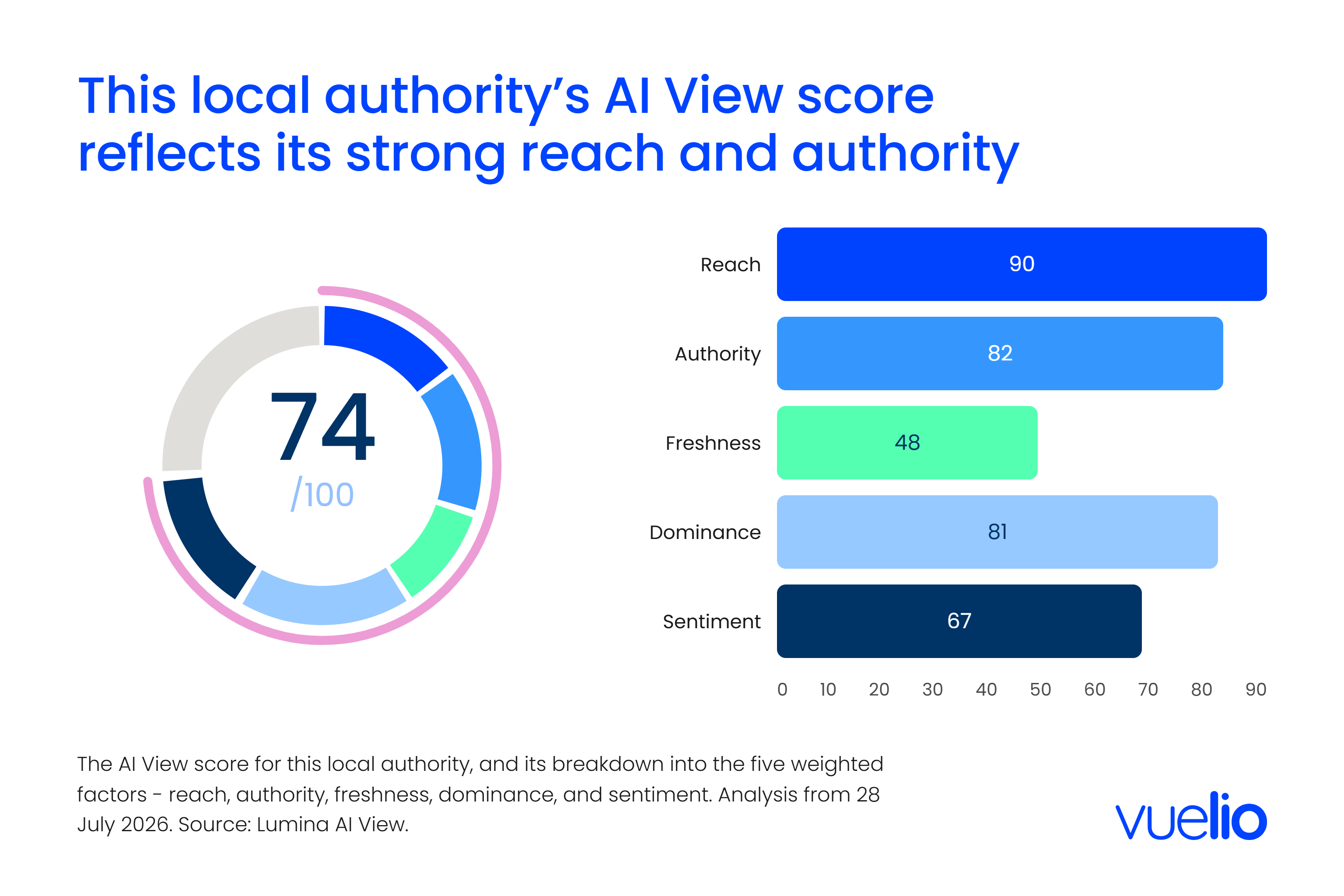
Local authority AI View score

Consider a county council approaching budget-setting season. AI View could reveal whether questions about a proposed council tax rise are being answered using the council’s own published rationale, or drawing almost entirely on an eighteen-month-old local newspaper article and a residents’ social media discussion. This is precisely the kind of gap an organisation would want to identify while there is still time to address it, rather than after a scrutiny committee meeting has already raised it.

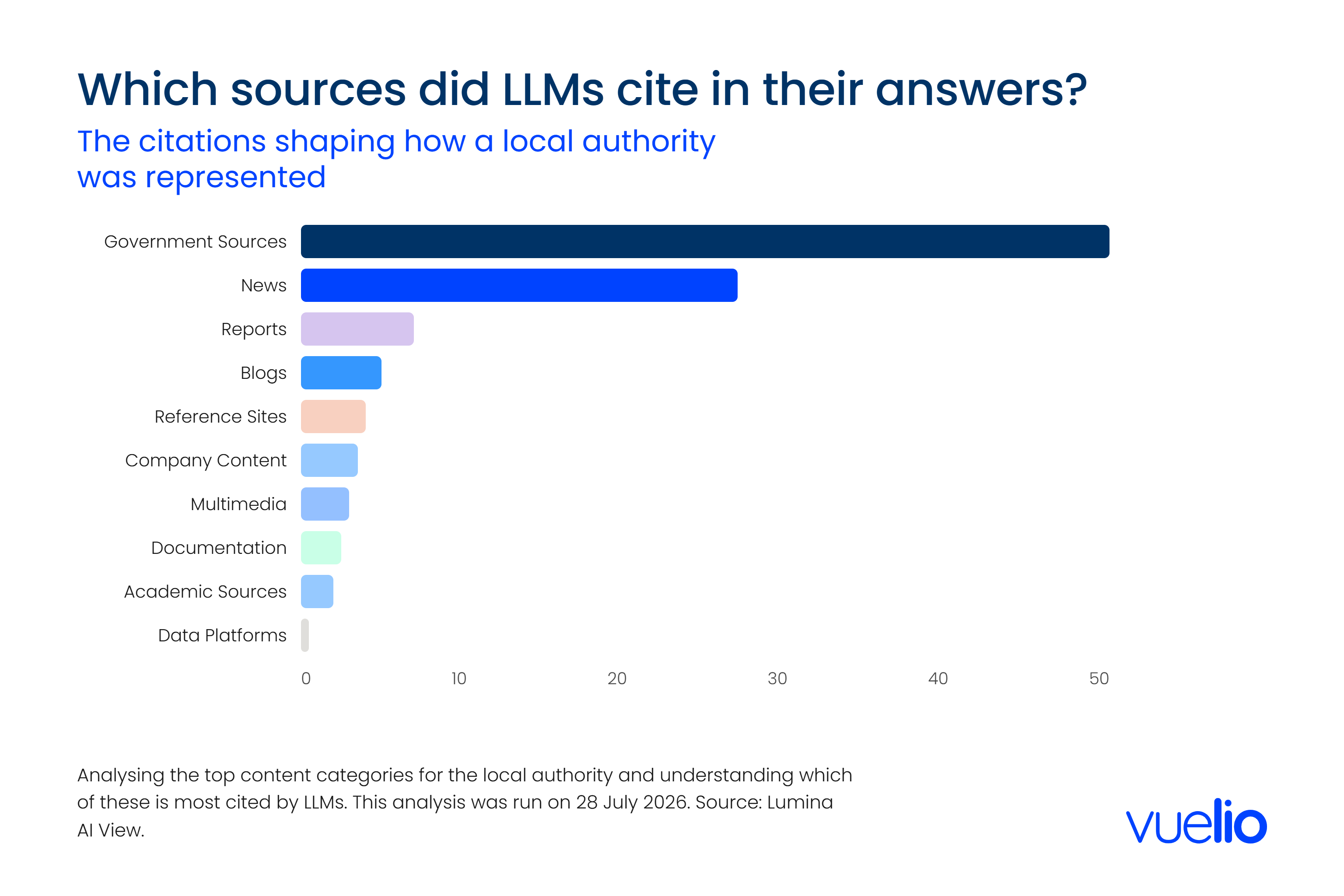
Sources cited in LLM answers for a local authority

The GCS’s own Assist tool demonstrates that government communications teams are already comfortable deploying AI internally, for drafting plans and reviewing content. AI View addresses the other half of that picture: understanding how AI represents an organisation externally, to the people it serves.

The public are going to LLMs for answers, but do organisations know what they are being told in response, and whether they are the ones providing that answer?

Find out more about Vuelio’s AI View to see what it can reveal about an organisation’s AI visibility.