
Not for profit media fragmentation

Advocacy in the media ecosystem: Today’s PR playbook for the charity sector

The third sector is built on driving change, raising awareness, and giving voice to the voiceless, and today’s media landscape has a plethora of platforms offering access to wider audiences. But with these platforms so fragmented, how can Not-For-Profit organisations connect with audiences spread across online forums, social media, national press, broadcast, and more?

Vuelio’s latest report ‘How news travels in today’s fragmented media environment’ tracks a number of major public interest and politically-driven news stories from the first half of 2025 to provide a map for comms teams in need of coverage for their campaigns.

Here are key insights for comms teams in the third sector:

1. Niche reach outlets are just as valuable as mass media

National news coverage might be impressive to the board, but a crucial lesson for health charities, research bodies, and policy-focused organisations is that tabloid coverage shouldn’t be the ultimate aim for every campaign.

Reaching a small, engaged group of clinicians, academics, or policymakers with a write-up in a specialist journal can be infinitely more impactful for your mission than a fleeting, 10-second mention on breakfast TV.

Have a story that would work for very distinct audiences? Try a two-track comms plan: one for your specialist stakeholders and one for your mainstream fundraising, without risking a generic multipurpose approach that is unlikely to be picked up by the press at all.

2. Politics adds unpredictability

For any charity involved in advocacy, the impact of politics in amplifying, or silencing, a campaign will be very familiar.

Kelly Scott, VP at Vuelio, describes the journey of public interest stories as a ‘pinball machine’ – either pinging to unexpected places from political realms, or quickly falling out of play.

If your issue gets politicised, picked up for party gain, or distorted, motivating third party stakeholders to speak on your behalf can be the most credible asset for the third sector.

Service users, your volunteers, and your academic partners can add credibility and balance to the public discourse.

3. Echo chambers can stop a story in its tracks

The UK media landscape is severely siloed, with one example from our latest report being coverage of surge pricing in the UK. Reporting on this issue was split, with audiences largely staying in their own echo chambers, experiencing further reinforcement of their own existing takes and opinions.

For the Charity sector, breaking through this is a critical challenge. A campaign on the cost-of-living crisis could be framed as a human-interest tragedy in one silo, and a complex economic policy failure in another.

The job of the comms team is to find the ‘connectors’ that break through these siloes – identifying and building relationships with figures and platforms that cut across barriers and build public trust.

4. Your advocacy is the story

Some of the most powerful stories that pick up speed in the press are public interest, and these often start life on social media. But also important are case studies – connecting the media with real people, who have real stories to tell.

This happens to be a superpower for the charity sector. Your work is built on personal experiences and advocacy for communities – amplifying voices, and engaging with people across platforms, can be the engine of an entire media strategy.

5. Adapting to mission-driven comms

This fragmented world requires a new strategy, one built on agility and insight. As Amy Chappell, Head of Insights at Vuelio, advises, comms professionals must ’embed adaptability into comms strategy’.

This means having spokespeople and expert commentators ready to engage. In this landscape, the most credible and authoritative voices will retain a degree of control.

Ultimately, your strategy must shift:

From Endpoint to Ecosystem: Stop treating a press release or a media hit as the “finish line”. Instead, anticipate how your story will evolve as it’s passed between different platforms and audiences.

From Counting to Navigation: Monitoring is no longer about counting clippings. It’s about understanding how narratives are reframed along the way, so you know exactly when to step in, clarify, or amplify.

This new environment is complex, but for charities, it’s a playing field filled with opportunity. Authentic stories can find their audiences in a myriad of ways.

For more on how stories move through the modern media landscape, read the full Vuelio white paper here

AMEC AI insight

AI in measurement: Counting, connecting, and getting attention in the algorithm

The world of visibility is changing fast. As large language models (LLMs) like ChatGPT become new information gatekeepers, PR is no longer just competing for audience attention. It’s competing for algorithmic inclusion.

In a digital landscape increasingly shaped by automated content, the quality, credibility, and authority of earned media have never mattered more. What cuts through now is not simply how much content exists, but which content is trusted enough to be cited, surfaced, and amplified by both humans and machines.

At the same time, the way we measure communications is evolving just as rapidly. Our Head of Insights Amy Chappell recently attended the AMEC AI Day, and one message stood out: AI isn’t here to replace human intelligence – it’s here to enhance it. Measurement professionals are no longer just counting the past; we’re connecting data to insight, outcomes, and influence in ways previously impossible at scale.

Together, these shifts point to a fundamental change in how PR and measurement work hand in hand in an AI-driven world: Credible storytelling fuels visibility, and intelligent measurement proves its impact.

Why earned media still dominates

Research presented at the AMEC AI Day suggests that around 90% of AI visibility comes from earned sources, not paid placements. That’s because LLMs favour content that is accessible, credible, and editorially independent. Paid content often falls short on two counts:
It sits behind paywalls or sponsorship disclosures, reducing citability.

It lacks the credibility signals that LLMs prioritise when determining trusted sources.

In an era when 60% of Google searches end without a click, visibility increasingly depends on being cited rather than clicked. AI-generated summaries pull from high-authority, earned sources, meaning quality and credibility of coverage matter more than ever.

The new role of qualitative metrics

If AI models prioritise credible coverage, it’s no longer enough to measure volume or sentiment alone. Understanding the authority and influence of sources, and how well your coverage aligns with your strategic narrative, becomes essential to assessing impact across both human and AI audiences.

In a landscape where automated content is multiplying, human-authored, well-sourced journalism carries greater weight.

That’s why the focus must shift from volume to value: not how many pieces you secured, but how credible, contextual, and influential those pieces are.

Emerging ideas like ‘share of answer’ (which explore how brands appear in AI-generated responses) hint at where measurement might go next. But these are still early indicators, not yet established metrics.

How we measure in the age of AI

Metrics like share of search and Generative Engine Optimisation (GEO) scores are early attempts to quantify visibility in AI environments. But as discussed at the AMEC AI Day, the industry is still testing and calibrating what “good” looks like.

The takeaway? Don’t measure for measurement’s sake.

Storytelling still drives machine understanding

AI is reshaping how visibility works, but not what makes it valuable. The best route to long-term visibility, with both audiences and algorithms, remains the same: authentic earned media, built on credible storytelling, relationships, and expertise.

As the line between human and machine audiences blurs, PR’s superpower endures, creating messages that are not only seen and read, but also trusted.

Where AI supports measurement

AI can assist across every stage of the workflow:

Collection and cleaning: unifying messy inputs from multiple sources.

Categorisation: speeding up tagging and sentiment analysis while ensuring consistency across languages.

Insight generation and prediction: highlighting emerging risks, narratives or audience shifts earlier.

AI’s strengths are clear: speed, scalability, consistency, and cross-market comparability. But its weaknesses are just as important to understand: opaque decision-making, bias in training data, false confidence in generative summaries, and the temptation to switch off human critical thinking.

That’s why we will see a shift from analysts acting less as ‘data producers’ and more as ‘insight curators’, allowing us to spend more time understanding, interpreting, and recommending than ever before. New skills are emerging: prompt engineering, validation, ethical reasoning, and bias checking. These sit alongside the fundamentals: empathy, relevance, and context.

Human accountability remains essential in measurement

Governance is catching up fast. AMEC is developing standards to ensure ethical use of AI in measurement. But the guiding principle is simple: AI can enhance, not replace, human judgment.

The best measurement programmes will use automation for efficiency, freeing up analysts to focus on interpretation, storytelling and strategy. The industry is shifting from manual counting to intelligent contextualisation, and AI is the accelerator helping us get there.

Preparing for the next era of visibility

AI is not a passing trend in communications and measurement; it’s a structural shift in how visibility, influence, and trust are created and understood. For PR teams, that means doubling down on what machines can’t replicate: credible relationships, meaningful narratives, and human judgment. For measurement professionals, it means evolving from trackers of activity to interpreters of influence.

The organisations that will lead in this next era will be those that combine high-quality earned media with intelligent, accountable use of AI, using technology to go faster and further, without losing sight of strategy, ethics, or impact.

Want help with measuring the success of your campaigns? Find out more about Vuelio Insights.

For more about the impact of AI tools on the media and measurement spaces, check out key takeaways shared at the 2025 Press Gazette Future of Media Technology Conference.

Beyond the front page

Beyond the front page: A playbook for agency PR in a fragmented media world

For agency professionals in public relations, communications, and public affairs, the old PR playbook is officially out, with the traditional, top-down method of disseminating information – pitching your press release to a national, getting a front-page splash, and watching your story spread – a thing of the past. Today, comms operates on a fragmented map with no clearly marked course forward.

This multi-platform media environment, defined by complex and unpredictable story journeys, is a fresh field of opportunity for comms professionals who understand its new rules. For agencies, it’s a time to update strategies, redefine what success means for clients, and integrate public affairs and media relations efforts more closely than ever before.

To help, here are key pointers for agencies:

1. Redefine ‘Success’: Niche is the new national

Despite the huge variety of platforms out there, plenty of clients continue to put pressure on agencies for a front-page splash. But a story doesn’t have to hit the front page of a national newspaper to reach a significant audience.

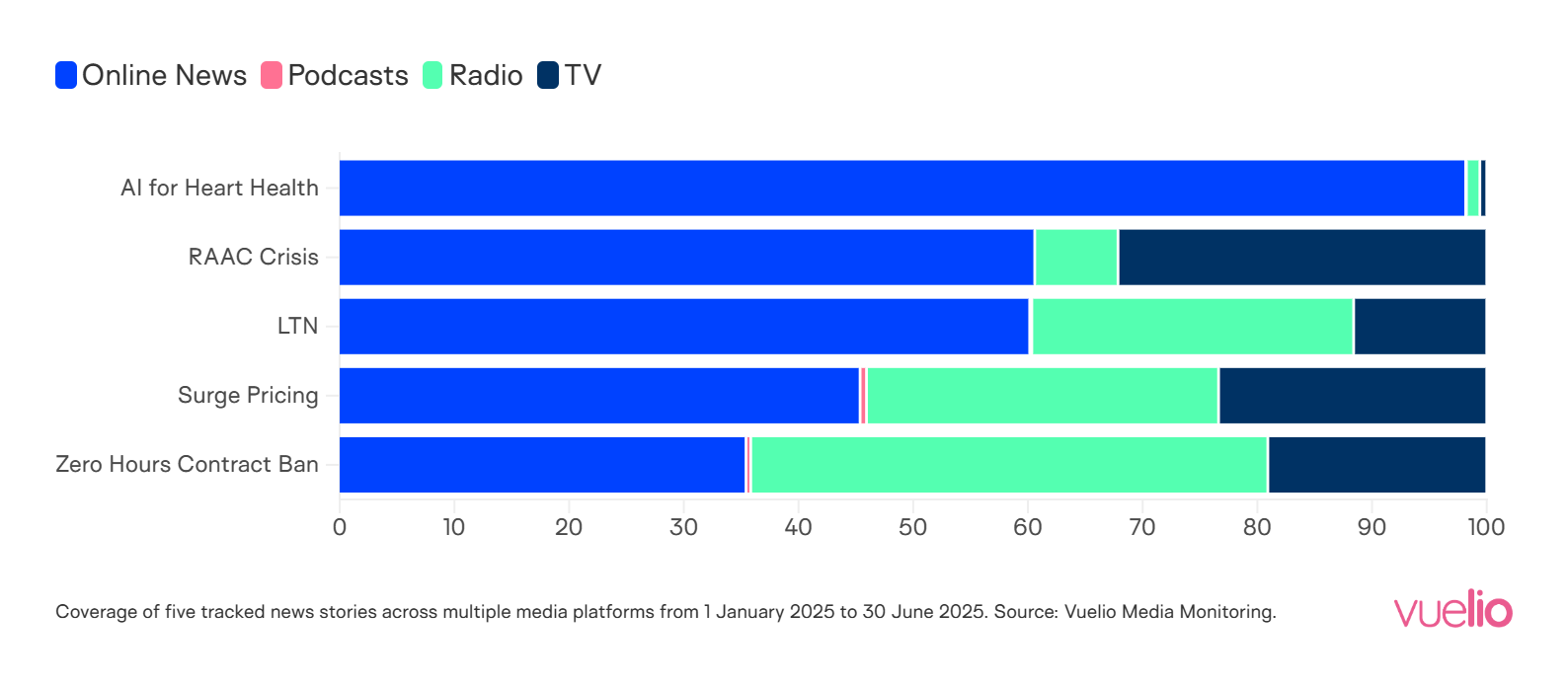
Analysing a specific story’s journey highlights the different routes available to agencies and their brands. Tracking coverage and conversation around the topic of ‘AI for Heart Health’, for example, shows that tabloid coverage shouldn’t be the ultimate aim for every campaign.

This story’s spread was rooted in organic, community-driven conversation, starting on forums, and moving to academic papers, journals, and websites, successfully reaching very specific, and highly valuable, stakeholder audiences.

A crucial distinction for agency client management – volume alone doesn’t tell the whole story. Reaching a small but highly-engaged audience of experts, academics, or policymakers can be far more valuable than a fleeting mention on a national broadcast.

This also applies to formats. While radio coverage volume might dwarf that of podcasts, for example, the latter has a dedicated audience of downloaders, much more likely to be engaged with the content. For our clients, landing that perfect niche podcast could be a more strategic win than a dozen scattered radio clips.

Which stories find a home on which platforms?

2. Manage the ‘pinball machine’ of politics

Public affairs and politics are now almost inseparable from PR, and should be considered as part of any campaign.

Vuelio’s Kelly Scott describes public interest stories as potential ‘pinballs’, that can ‘hit a political buffer, bouncing around further, racking up more coverage… potentially distorting the story if it becomes politicised for party gain.

Kelly Scott quote

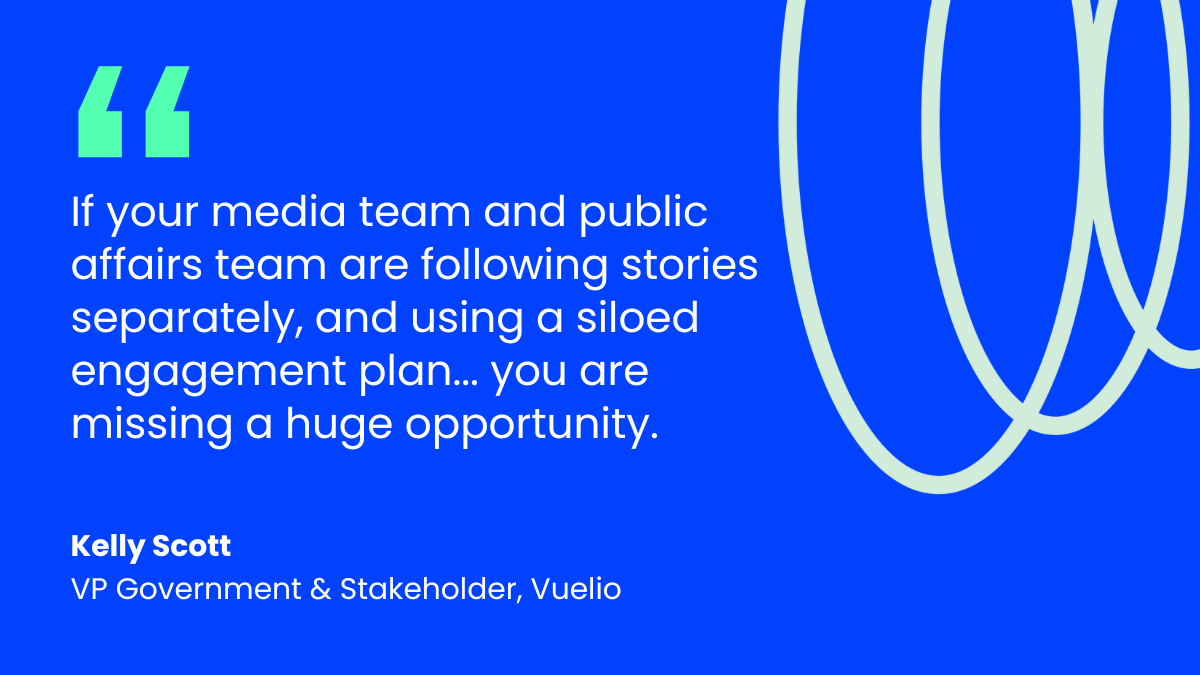
‘If your media team and public affairs team are following stories separately, and using a siloed engagement plan… you are missing a huge opportunity,’ she warns.

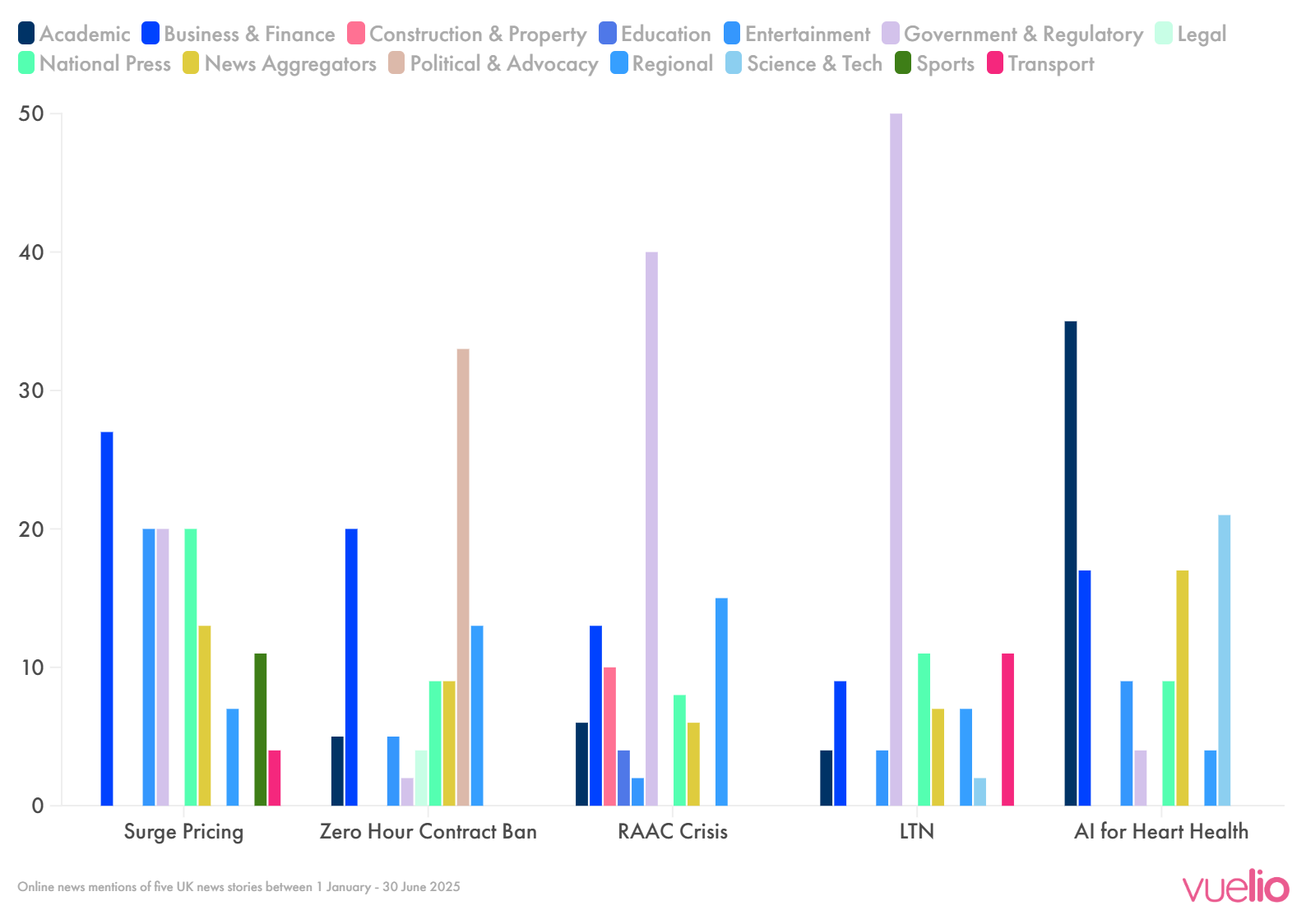
Political and regulatory attention – like CMA investigations – can prolong a narrative’s lifecycle significantly, and land them in unexpected sectors. Reporting around the RAAC crisis, for example, received more coverage in Regional outlets than in the expected Construction & Property sector. The story of surge pricing received surprisingly little coverage in law-focused outlets, despite questions from online audiences about its legality.

How stories spread across media channels

For agencies, mapping stakeholders is a solid starting point, but so too is being prepared for a story to be picked up by actors with their own agendas.

When a story becomes politicised, agencies must be ready to:

– Correct misinformation at pace and offer good data.
Engage directly with the media and political influencers involved.
– Motivate third-party stakeholder voices to add credibility and balance.

3. Find the connectors to break through the echo chamber

Despite all the interconnected platforms that make up the modern media landscape, it can still become severely siloed.

Coverage of surge pricing provides a clear example of this – broadsheets focused on issues around labour and fairness, alongside regulatory and market implications, while tabloids centred instead on drawbacks for the general public, with the price of concert tickets a recurring element.

Audiences for each largely stayed in their own echo chambers and weren’t exposed to diverse and different takes on the issue.

The value agencies can bring is bridging such silos by identifying the connectors. For the story of surge pricing, these are national broadcasters (which provide a shared space), specific interest publications (like LADBible or Sky Sports, that reach audiences across class lines), and influencers/experts (projecting a story across very different groups – Martin Lewis is just one example).

These connectors are a vital part of a modern media relations strategy, providing opportunities to break a story out of a single, self-reinforcing narrative.

4. Master the Two-Track Story

One of the curious parts of media fragmentation is how a single topic can spread in distinct ways that never intersect. AI for Heart Health coverage from the first half of 2025 did exactly this:

Track 1: The technical, medical story. This lived in academic or medical publications, and among niche communities and forums online. It reached a limited, but highly engaged, group of professionals, academics, and autodidacts.

Track 2: The mainstream story. When a specific angle of ‘smart pyjamas’ crossed over, it appeared in outlets including Daily Mail and The Mirror, but skipped spaces that ordinarily play host to more technical discussions.

Monitoring niche publications and social spaces to understand which stories have the capacity to break through into the mainstream is vital for agencies working with a variety of clients.

5. Ditch ‘Social First’

Still pitching ‘social first’ strategies? You could already be falling behind.

As Sean Allen-Moy, Head of Media Relations Strategy at Burson, puts it:

Sean Allen-Moy quote on media fragmentation

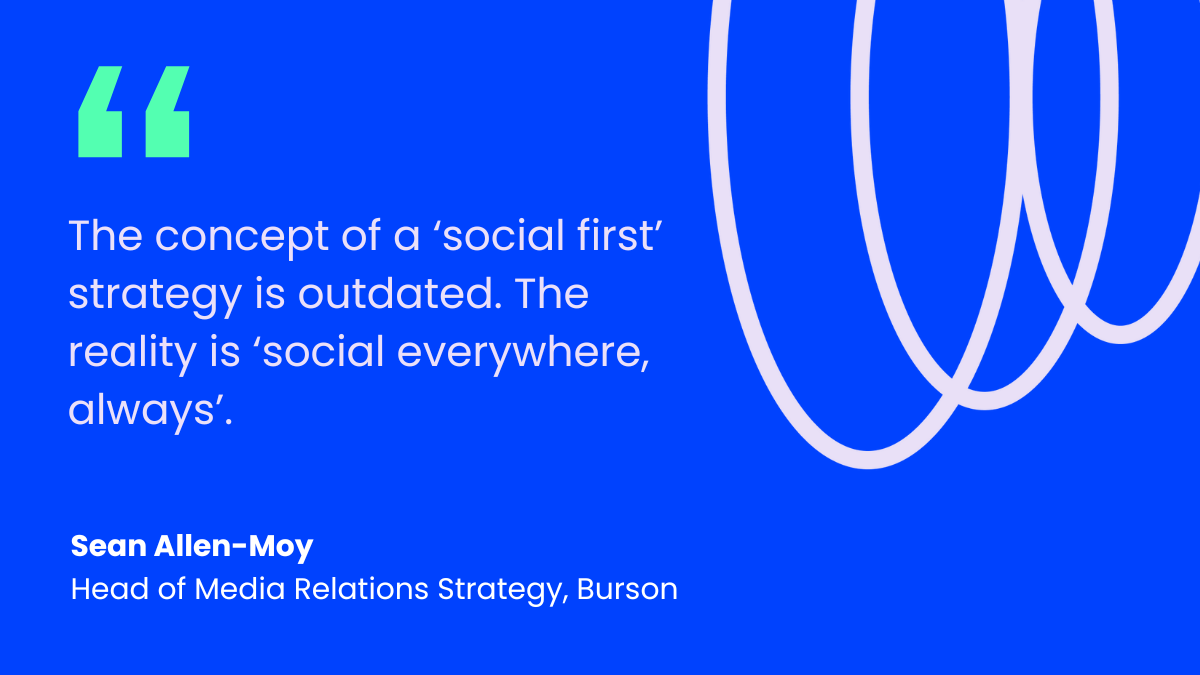
‘The concept of a ‘social first’ strategy is outdated. The reality is “social everywhere, always”.’

Tracking coverage of the zero hour contract ban in the UK bears this out. While the story was driven by personal experiences and work advocacy shared on social platforms, this fueled broadcast segments and column inches, which are always in need of case studies. Forget traditional media at your peril.

Monitoring and understanding the interplay between traditional coverage, social sharing, and forum-based discussion is a must – agencies must identify where audiences consume content and meet them there.

Andre Labadie quote

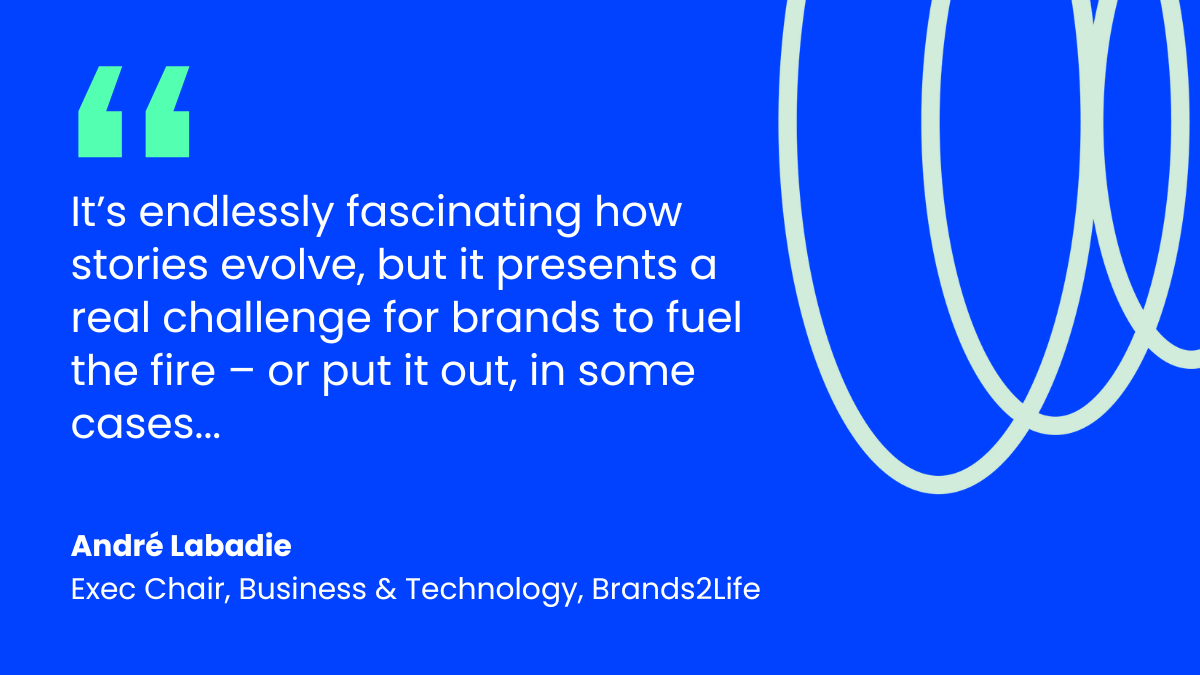
‘It’s endlessly fascinating how stories evolve, but it presents a real challenge for brands to fuel the fire – or put it out in some cases – across so many, constantly changing platforms and algorithms,’ says Brands2Life Exec Chair, Business & Technology André Labadie.

‘Using (increasingly AI-enhanced) listening and analytics tools to identify emerging trends through social is key so you can influence the narrative in its infancy. This is really changing how brands can take control of issues early and predict how they’re likely to evolve.

‘What definitely hasn’t changed is the need to add something new to the story, stay close to the media to develop new angles at the right time, and then use all the relevant platforms to amplify it.’

6. Follow the new PR playbook

This fragmented landscape demands a fluid strategy. As Amy Chappell, Head of Insights at Vuelio, puts it, a story is ‘no longer a fixed communication, but a fluid journey shaped by who picks it up and how it is retold’.

The agency playbook must be built on adaptability:

Think Ecosystem, Not Endpoint: Stop treating media coverage as the finish line. Instead, build responsive strategies that anticipate how stories will evolve across platforms.

Reframe Monitoring as Navigation: Tracking coverage isn’t about counting clips. It’s about understanding how narratives are reframed to know exactly when to step in, clarify, or amplify.

Embed Adaptability: Build flexibility into campaigns. This means having spokespeople and expert commentators ready to engage quickly to retain a degree of control in unpredictable times.

For agencies willing to embrace this complexity, the opportunities are immense. Moving from linear pitching to dynamic navigation can prove the indispensable value of agency support to clients and prospects.

Want more on navigating this new landscape? Check out the full story in Vuelio’s latest report ‘How news travels in today’s fragmented media environment’.

Getting media coverage in October 2025

Gift guides, keeping warm & half-term holidays: How to get UK press coverage in October

Deciding how to get coverage in the media in October? Halloween may be the immediate focus but there are plenty of other trending topics and issues that you can tie campaigns and experts into. Find out below what has been popular in September on the ResponseSource Journalist Enquiry Service and what this will mean for the rest of this month.

Gift guides in demand

Christmas is approaching quickly and journalists have been keen to get their gift guide features compiled in the last month. Over 7% of the total requests in September contained the words ‘gift guide’. This has resulted in some big increases for some of our more consumer-related categories with Men’s Interest rising by 60% compared to August, a 44% increase for Women’s Interest & Beauty and a massive 88% increase for Children & Teenagers.

Journalists at The Sun, Cosmopolitan, Health & Wellbeing, The Guardian, Saga, and GLAMOUR have all sent gift guide-related enquiries in the last month. These have been ‘for him’ and ‘for her’, as well for children, for pets, food & drink products, beauty items, wellness and much more.

Going forward? Gift guide requests will remain frequent throughout October and November as we build up to Christmas. In October 2024, nearly 10% of the total requests was for ‘gift guides’ so expect an increase in journalists from national press and major consumer magazines asking for product samples to test and feature in their reviews.

Staying warm is hot stuff

October marks the beginning of the colder months of the year and journalists have been keen to find out ways that people can stay warm during the Autumn and Winter. ‘Heat’ has appeared as a keyword in just over 1% of all requests in September and ‘warm’ in just under 2%. This also ties into the topical issue of concerns over energy bills and how this might impact people’s personal finance and budgets – with ‘budget’ also appearing as a keyword in nearly 3% of enquiries.

Requests have included looking for expert insights on how UK households are staying warm and cutting energy costs; a heating expert to share expertise on the best time of the day to put the heating on and the best electric blankets to help keep warm this Winter.

Going forward? With temperatures set to drop in October, then there will be more requests around ways that people can stay warm for less. This will increasingly link into the finance side of things as ‘budget’ appeared in over 4% of requests last October. Get heating and finance experts ready and you could be featured in outlets such as GB News, Ideal Home, or Homebuilding & Renovating.

Travel back in fashion

June and July are usually peak season for both the Travel category and ‘travel’ as a keyword but September has seen its popularity rise again. ‘Travel’ cropped up in over 6% of all enquiries last month and the Travel category as a whole increased by 35% compared to August.

This is in part due to journalists looking to get recommendations on where families can head to for the October half-term. However, there have been other topics too with requests for unusual travel experiences, staycations with a twist and trade-friendly tour operators that specialise in adventure travel. These have been sent by outlets such as PA Media, Selling Travel, National Geographic Traveller, and The Wall Street Journal.

Going forward? There will be requests for last-minute travel packages for the school break plus journalists will be looking further ahead with other Autumnal getaway destinations and information on Winter holidays, too. Be prepared with information on different escapes and travel experts to offer comment and there is potential for coverage in a national press title.

Other opportunities for PRs in October and beyond

While we aren’t that far into Autumn, ‘Winter’ becomes more popular on the Journalist Enquiry Service from this point onwards. Last year it appeared in over 4% of requests during October and we would expect to see a similar level of interest this year. This can vary in topic from gardening jobs to do during this period to looking to get information on the fashion and beauty trends for the Wintertime.

It doesn’t receive masses of requests but journalists spend this month gathering information on the best places to see firework displays to celebrate Bonfire Night. Around 1% of all enquiries in October 2024 were centred around this topic, so if you’ve got information on different locations putting on events to celebrate this occasion then have them ready if you want to get press coverage.

Want to get the most out of the ResponseSource Journalist Enquiry Service? Find out how here.

What are journalists writing about in August

Wellness, AI and gardening: How to get UK press coverage in August

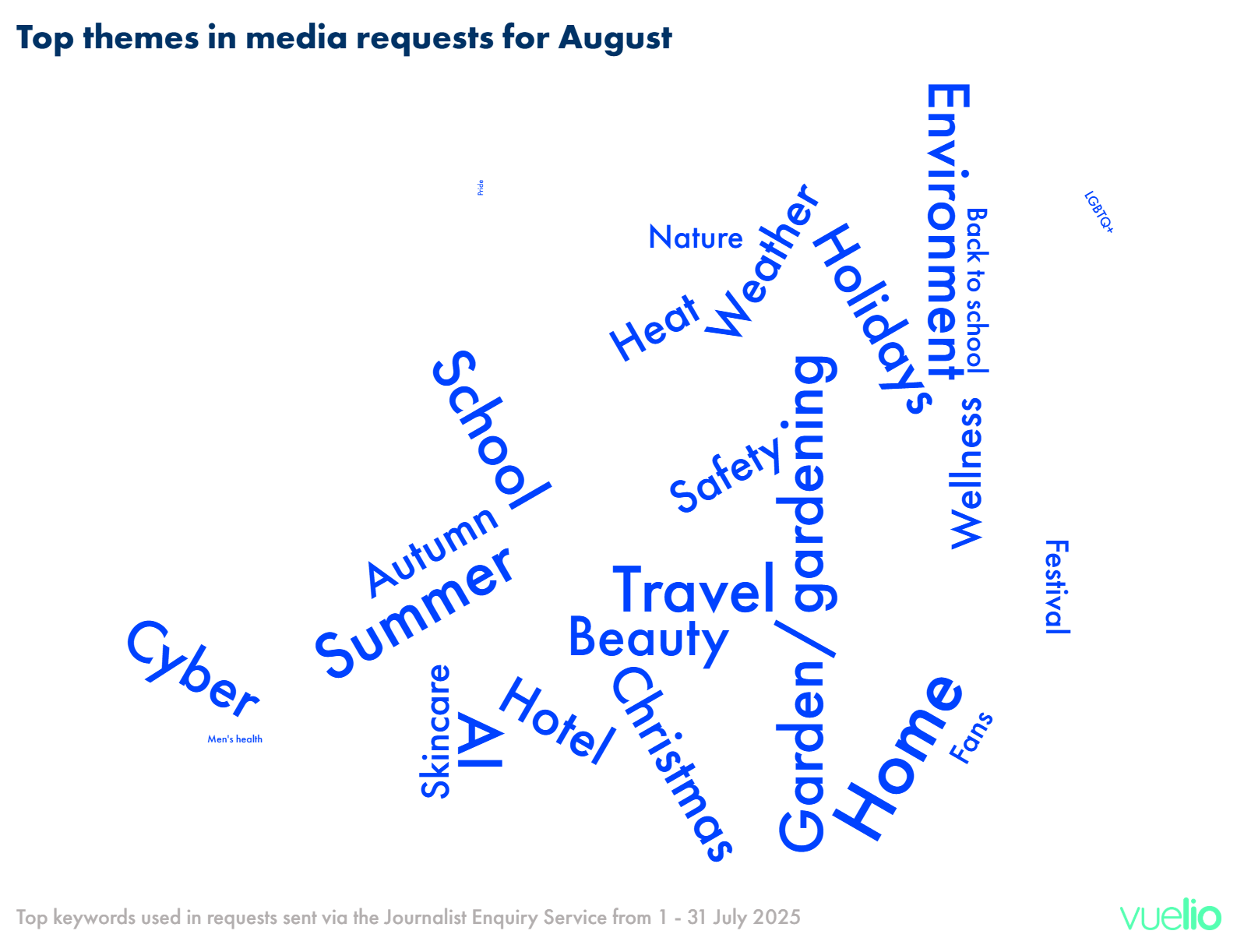
Looking to get featured in the media during August? The final month of the summer still presents plenty of opportunities to get expert comments, case studies and more out into the press. Below we provide insight into what journalists could be looking for based on trending words and themes from the ResponseSource Journalist Enquiry Service in July, and what that means they will be looking for this month.

Wellness is well-in

August is National Wellness Month and journalists have been looking to get ahead as just under 2% of all requests last month contained the word ‘wellness’.

Top themes for August

Enquiries have included looking to speak with business leaders about their top wellness tips, wellness retreats and spas to visit in the UK, and looking for high-profile health and wellness experts. These requests have come from outlets such as PA Media, SheerLuxe, MailOnline, City A.M. and Top Santé.

Going forward? Journalists will still be sending last-minute National Wellness Month requests – have experts and info ready and you could get yourself or your PR client featured in national press or a major consumer media title.

AI and new tech’s impact

Technology journalists have had a lot to cover in the last few years with the rise of artificial intelligence, and more recent news around cyber attacks and online safety. ‘AI’ continues to prove popular on the Journalist Enquiry Service, with just under 6% of requests in July. ‘Cyber’ has also been getting a lot of interest too with just under 2% of all enquiries last month.

Requests have been looking to cover how AI is impacting many different sectors including case studies on retailers trialling agentic AI and how it’s transforming the banking sector. Plus enquiries covering more general points such as how the UK’s AI action plan compares to Trump’s. While requests around cyber have been more focused on cyber security and also getting perspective on who handled the cyber attacks better – M&S or the Co-op.

Going forward? The amount of enquiries around AI were 35% higher in July this year compared to last, which is in line with what we have seen across the year. Journalists are constantly on the lookout for case studies and experts that can shed more light on the sector they cover. If you’ve got AI or cyber-related information then you could appear in IT Pro, the AI Journal, Retail Week, The Grocer, or Sifted – as they all sent requests last month.

Gardening continues to grow strong

The Spring and Summer season are the peak time for gardening requests and July saw another strong indicator of that as just under 5% of the total requests contained the keyword ‘garden’ or ‘gardening’.

Enquiries were sent from journalists at titles such as The Independent, GB News, Homes & Gardens, and Country Living. They ranged from covering topical issues such as how to keep your garden alive during a hosepipe ban, to looking for an expert to comment on building a patio on a sloping garden and the latest and best products and gadgets for the garden.

Going forward? August is probably the final month of the year where gardening is one of the more popular keywords on the service, with around 4% of the total requests in August 2024. Journalists will be looking for information on the on-going hosepipe ban in certain areas of the country, as well as looking for experts to share advice as we approach a change in season.

Other opportunities for PRs in August and beyond

In August 2024, ‘Autumn’ took over from ‘Summer’ as journalists sought to get ahead with content for the upcoming season. New fashion and beauty trends often tie in with these requests, as well as recommendations for Autumnal activities, Autumn decor, and places to visit during the fall as well.

This month sees the end of festival season with big music festivals like Reading & Leeds and Creamfields still to come over the Bank Holiday weekend. The Edinburgh Fringe festival is also currently taking place and the final few summer carnivals are also happening, with the most famous one being Notting Hill, still on the horizon. If you have information surrounding these events or tips on what festival goers should be taking with them, then you could get featured in a national press title.

Want to get the most out of the ResponseSource Journalist Enquiry Service? Check out this explainer.

How to get media coverage in July

Heatwaves, a summer of sport and back to school: How to get UK press coverage in July

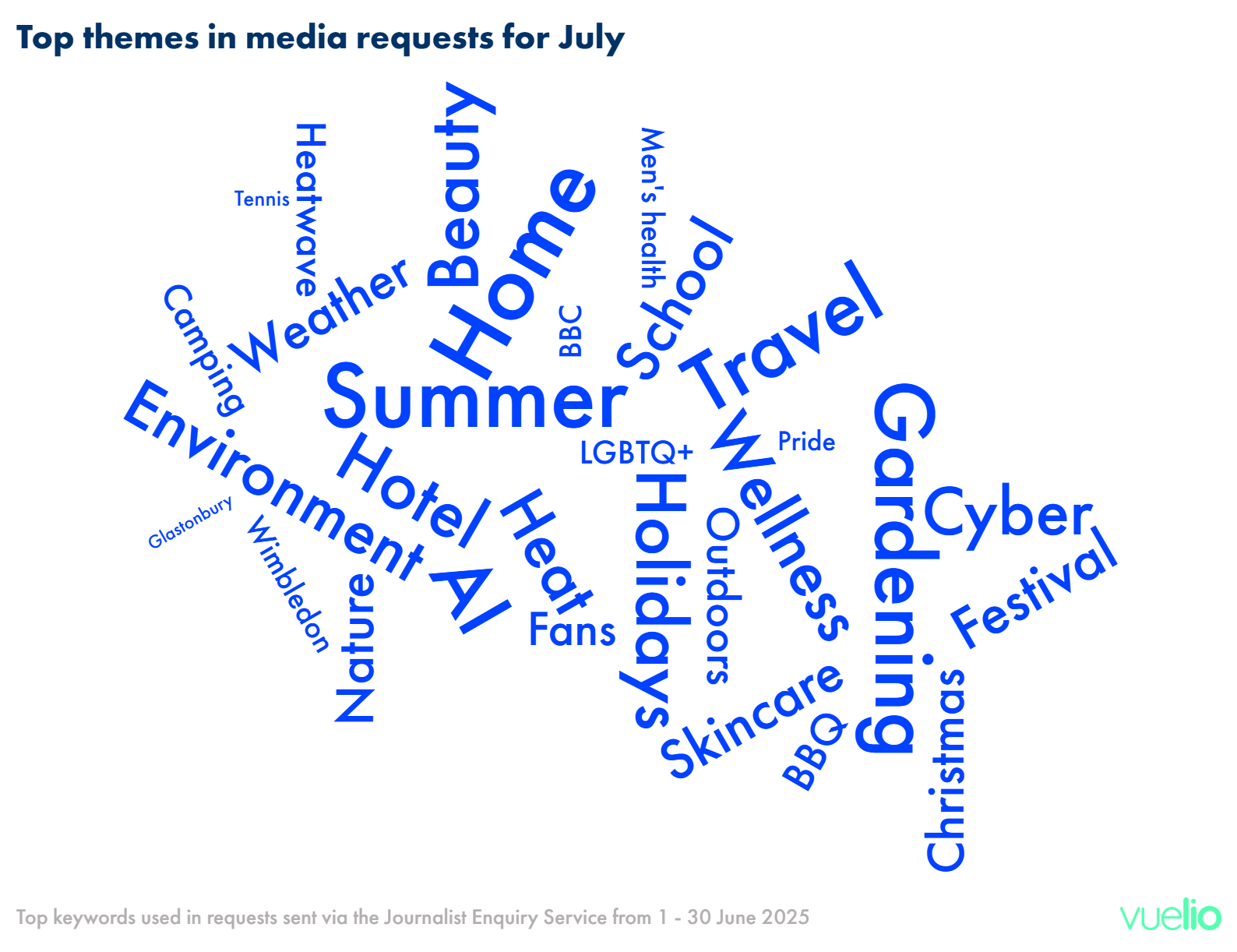
Want to secure media coverage in July? While the summer months may be quieter in many industries, the news cycle doesn’t stop. Journalists continue to need expert sources and information for articles and hundreds use the ResponseSource Journalist Enquiry Service each week to get it. Find out below what they were searching for in June and how you could help this month.

Summer at its peak

Enquiries from journalists about the different seasons are always popular and we are seeing the peak of the ‘summer’ requests at the moment, with just over 9% of the total enquiries last month containing this keyword.

Top themes for July

There’s a lot of variety in the requests with journalists looking for summer fitness gadgets and accessories, how to get peonies to produce more beautiful blooms in summer, and a health and safety expert or GP to talk about food health hazards in the summer. These were for titles including The Times, PA Media, The i Paper, and This Morning.

Going forward? July last year saw a small drop in the amount of ‘summer’ requests to 6% but that still presents lots of opportunities to get media coverage. With a big summer of sport ahead (Wimbledon, the women’s Euro’s, Tour De France, and more), plus last-minute requests for holiday getaways and gardening advice, have experts and info ready – you could get featured in the national press or on a broadcast outlet.

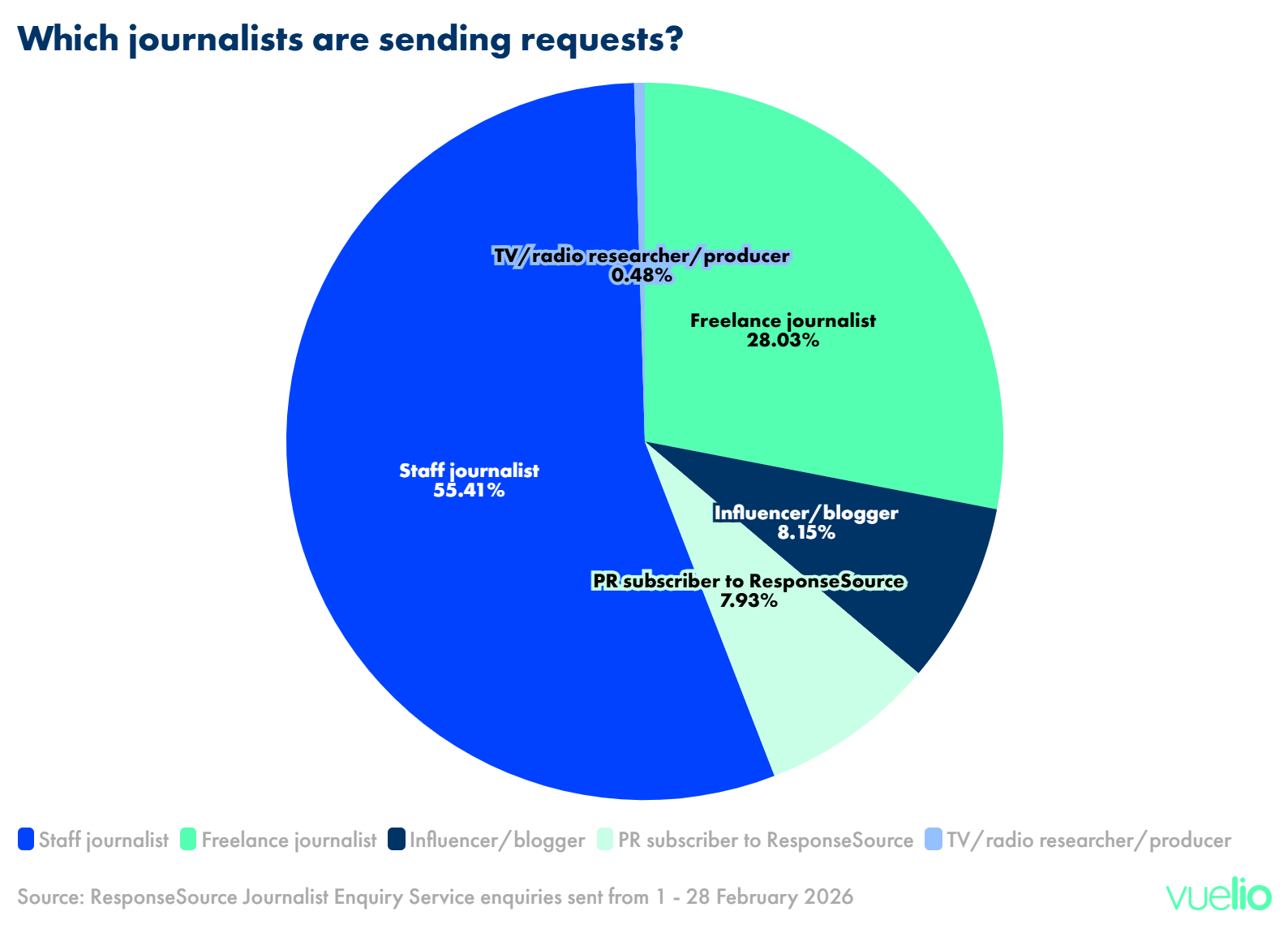
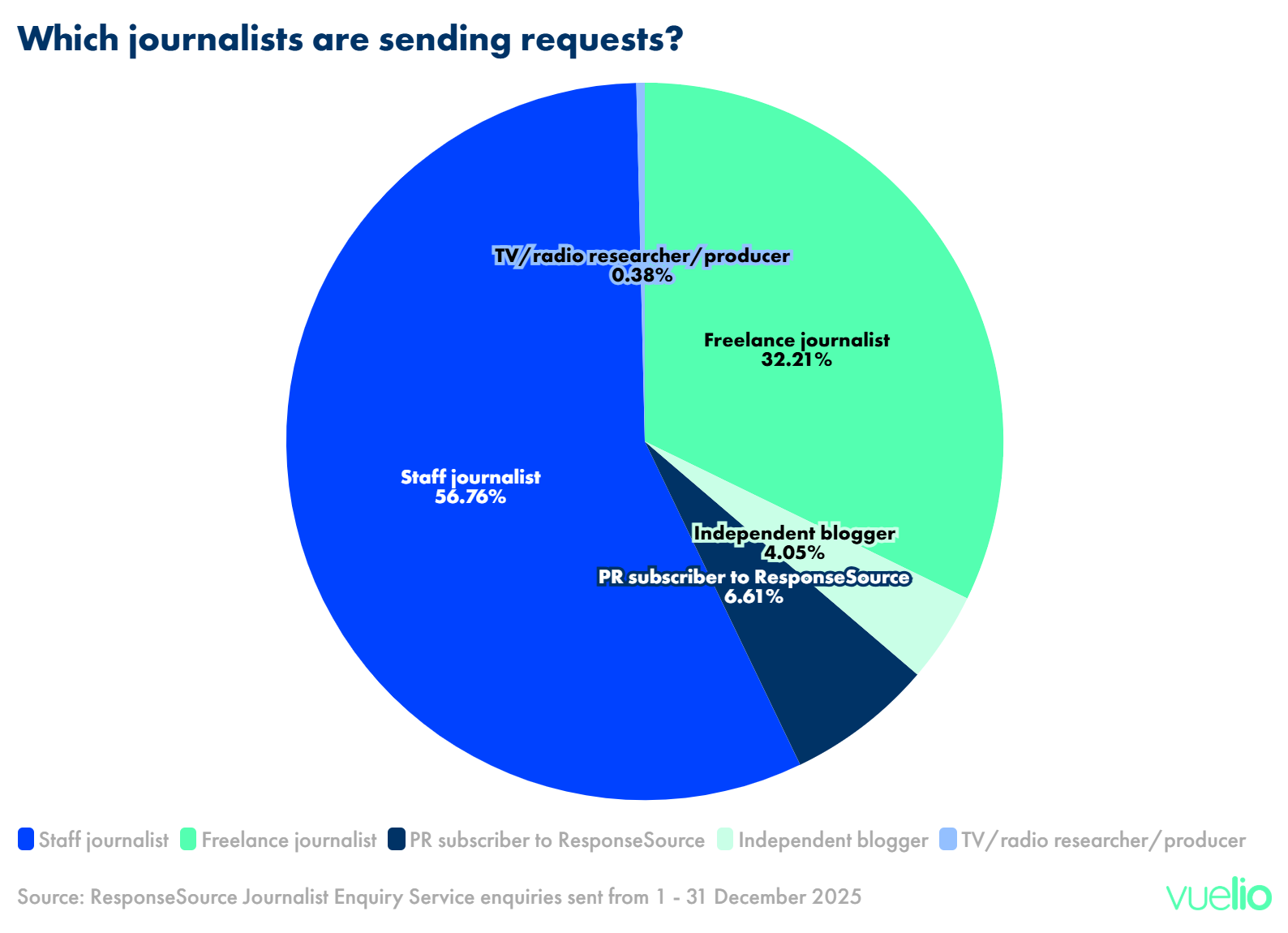
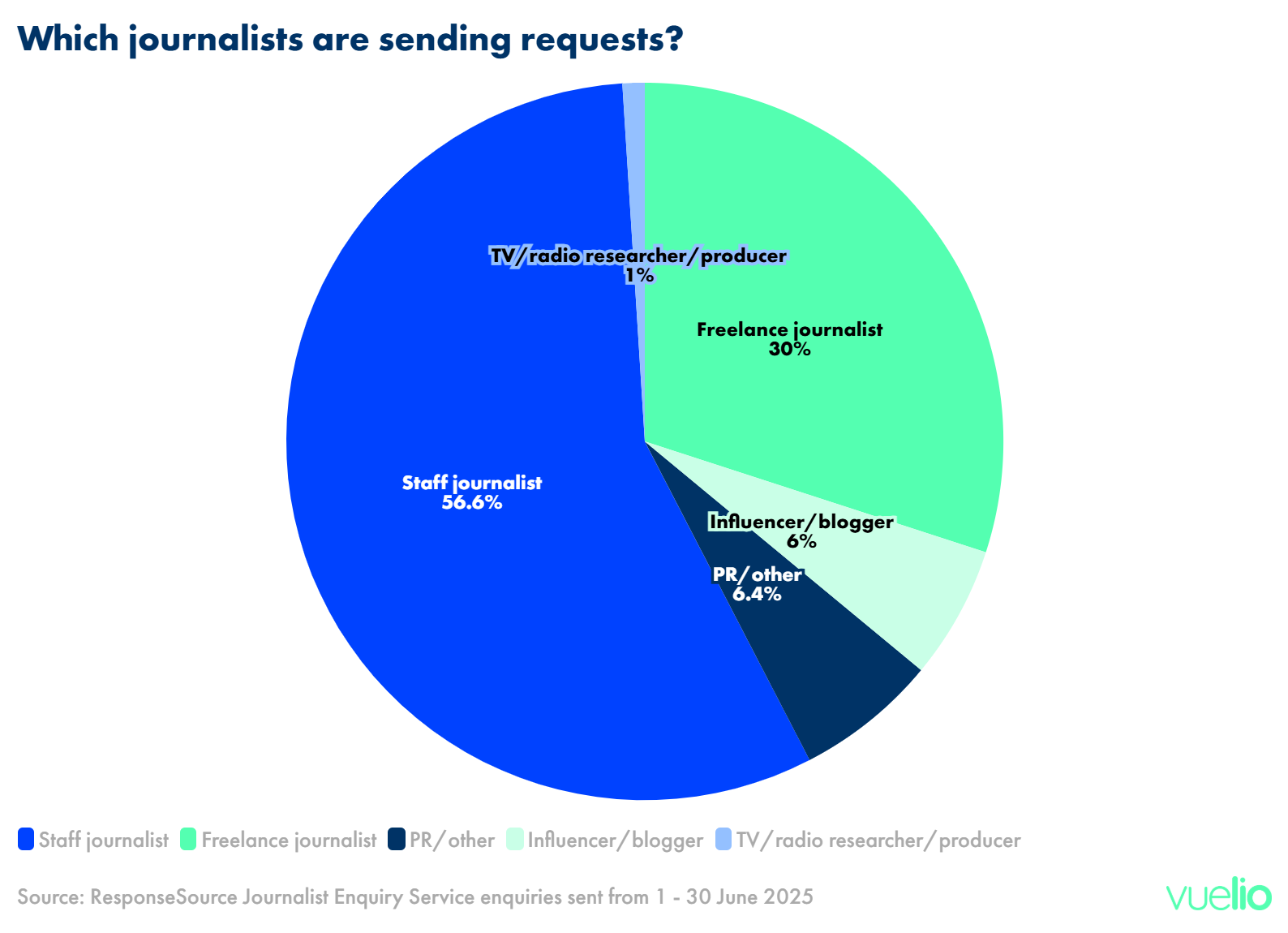
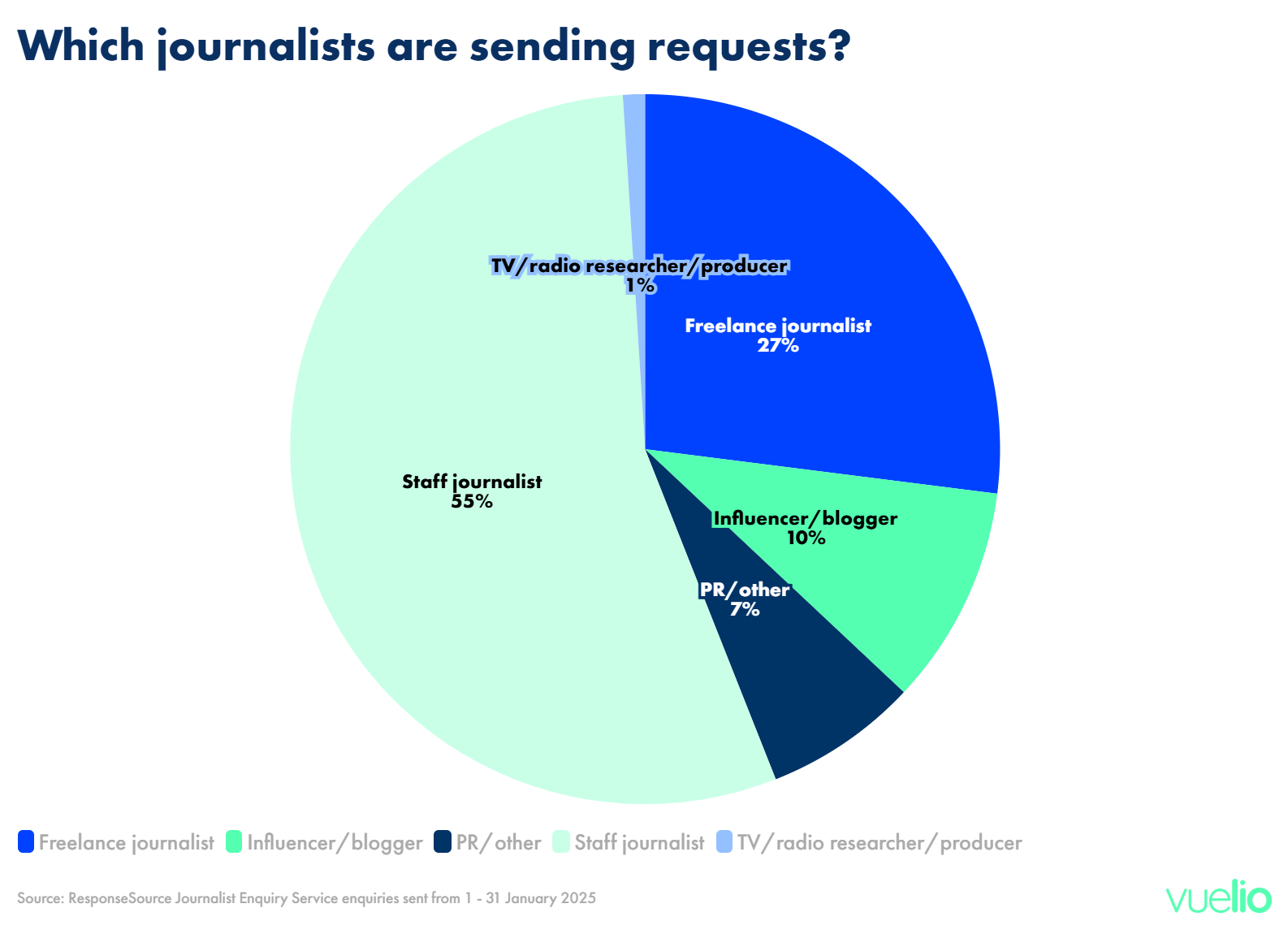
Which journalists are sending requests?

The heat is on

The UK has been enjoying an excellent summer weather wise (if you like the heat, that is) and with some high temperatures, both ‘heat’ and ‘heatwave’ have proved popular on the enquiry service. ‘Heat’ has appeared in over 2% of the total requests in June and ‘heatwave’ in 1%.

Journalists at The Sun, woman & home, MailOnline, and Men’s Health have mainly sent requests looking to find out ways to stay cool during the hot weather. But we have also seen enquiries around related topics including one for an UK-based employment lawyer to comment on heat in the workplace.

Going forward? With the hot weather set to continue, we expect to see more enquiries from journalists looking for health-related information. Many will also look to cover it from an environmental angle too or the effect it could have on other areas – on plants and pets, for example.

School’s out (and straight back in!)

There are only a couple of weeks left until schools break up for the summer but journalists are already looking to cover going back to school in September. ‘School’ appeared in just under 2% of the total requests last month, with ‘back to school’ cropping up in many of those enquiries.
Journalists from The Independent, LBC, The Guardian, and Daily Mail all sent requests around ‘school’. The back to school enquiries were mainly looking for products to review and recommend, but other requests covered end of term gifts for teachers and school staff and the lack of financial education in schools.

Going forward? Last year in July, ‘school’ related requests increased by 24% and ‘back to school’ by 70%. This will only increase further in August. If you have school uniforms or accessories that you want to get featured in the media, now is the time to engage with enquiries.

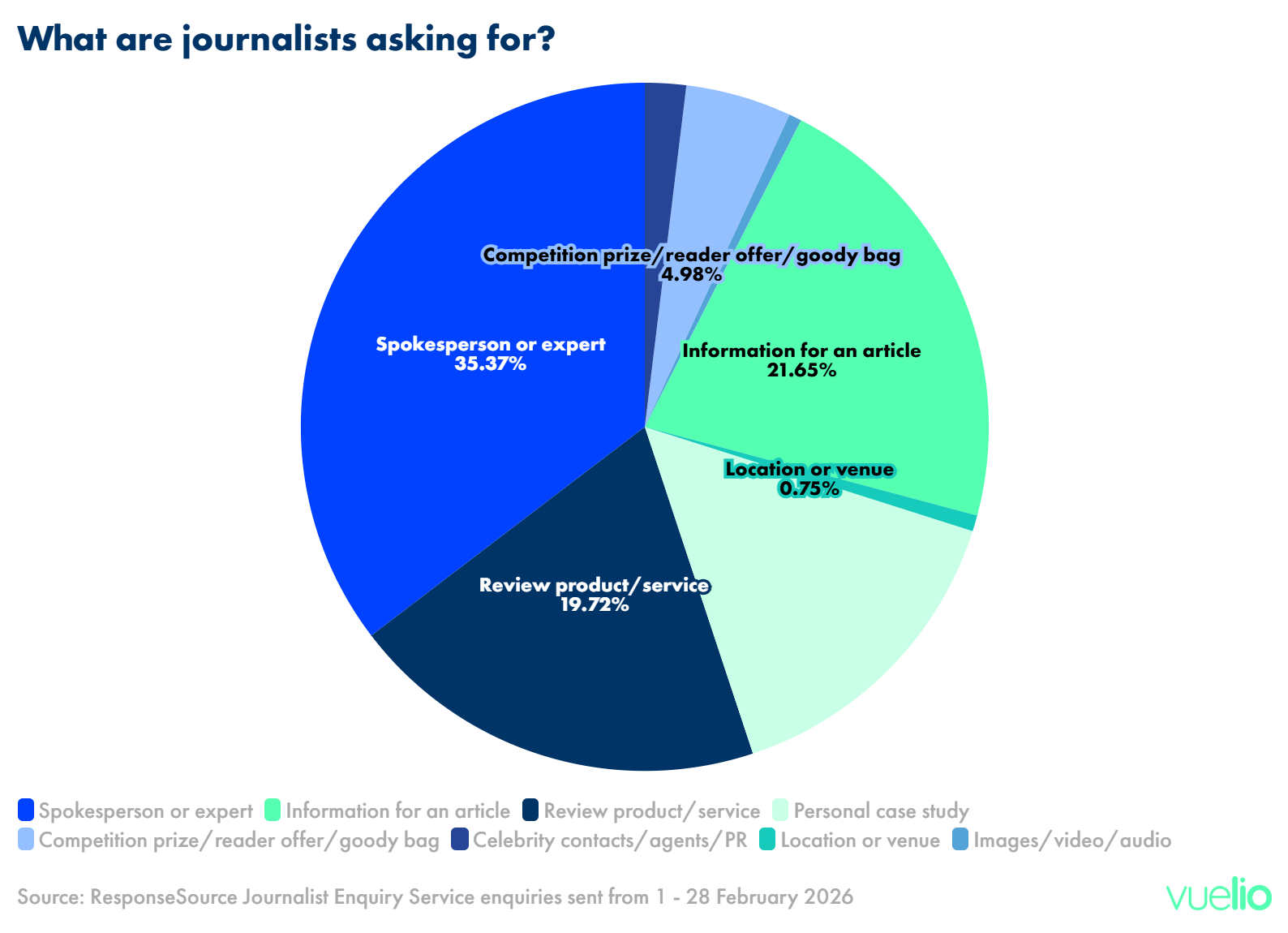
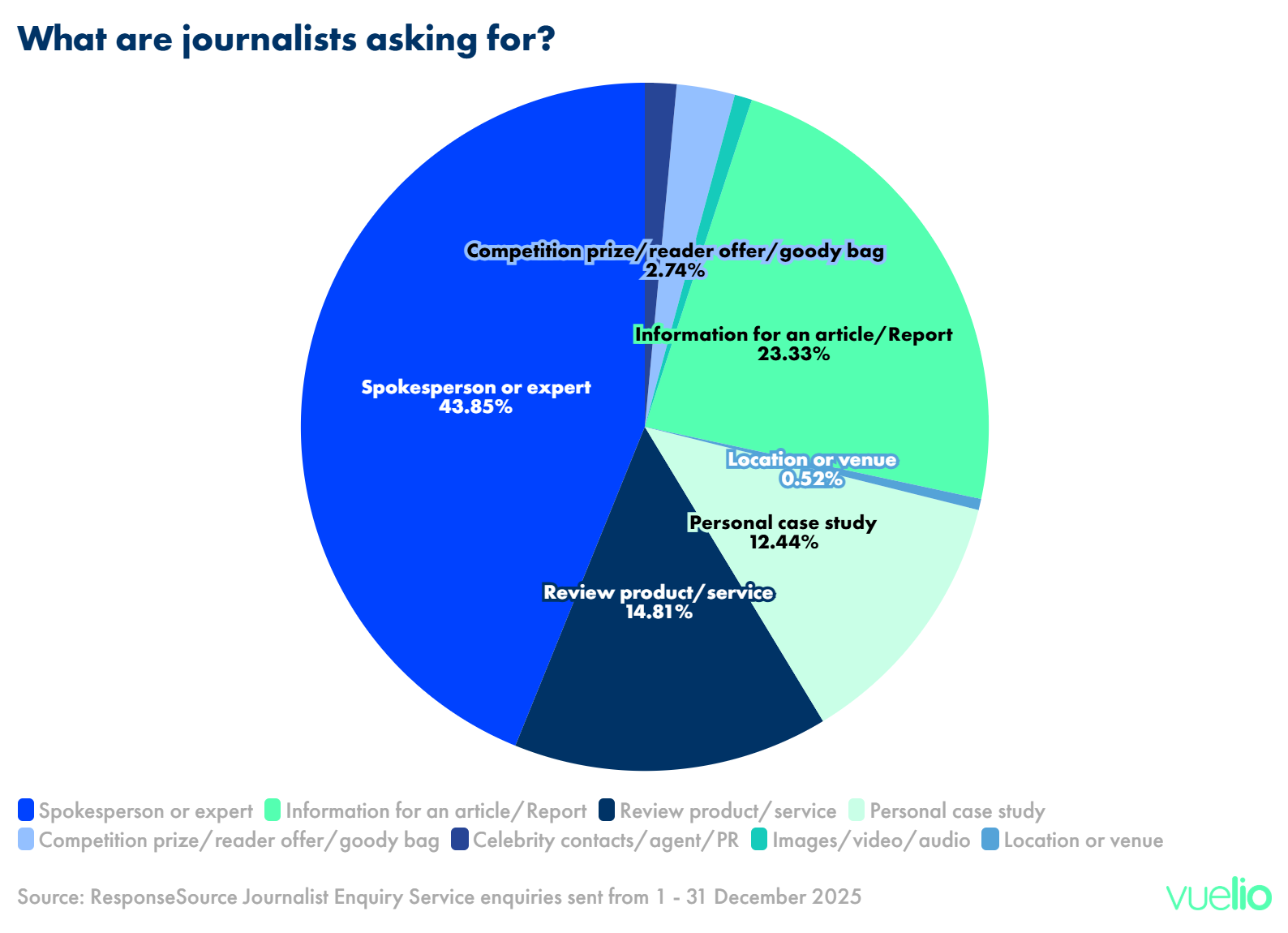
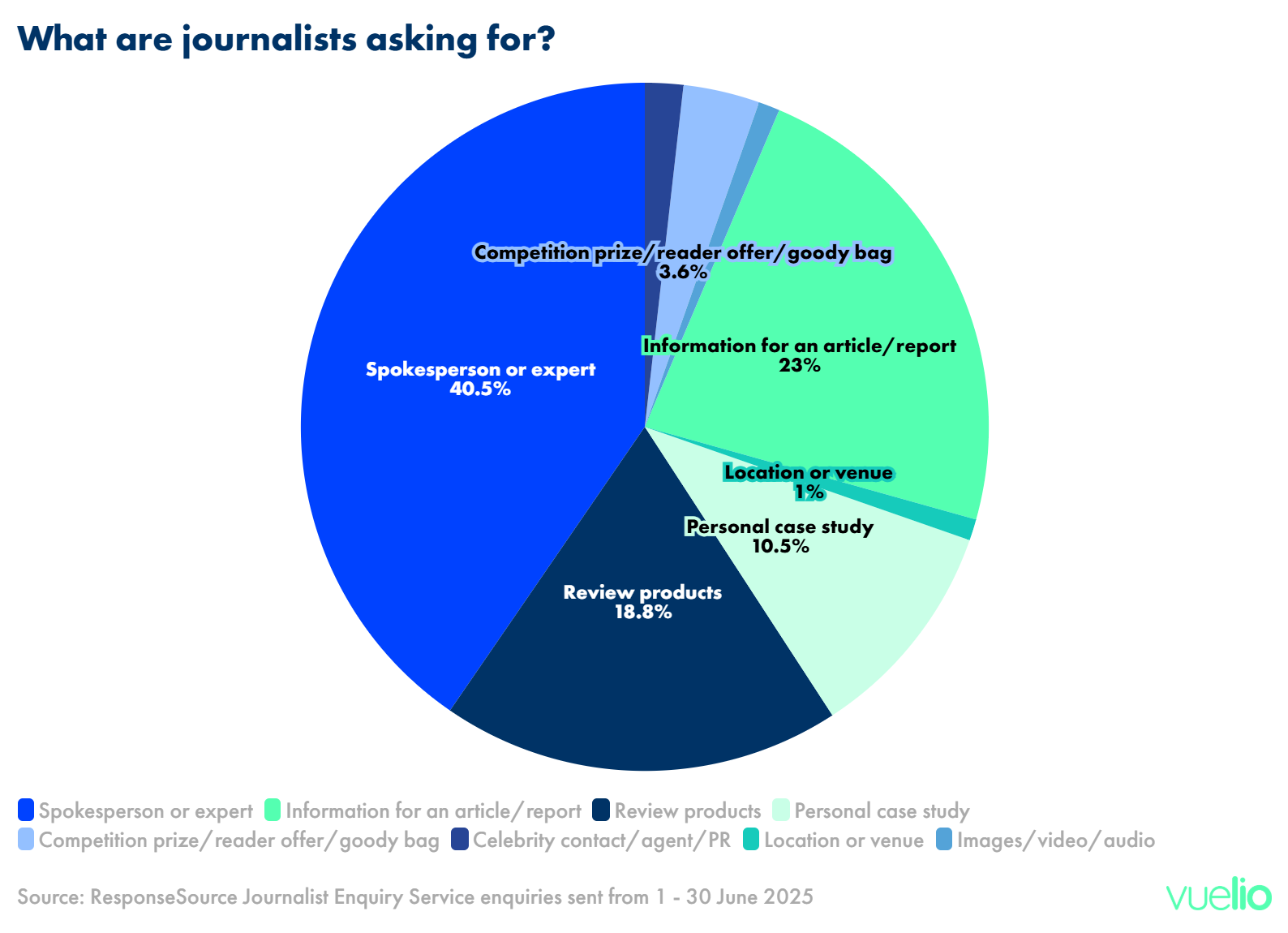
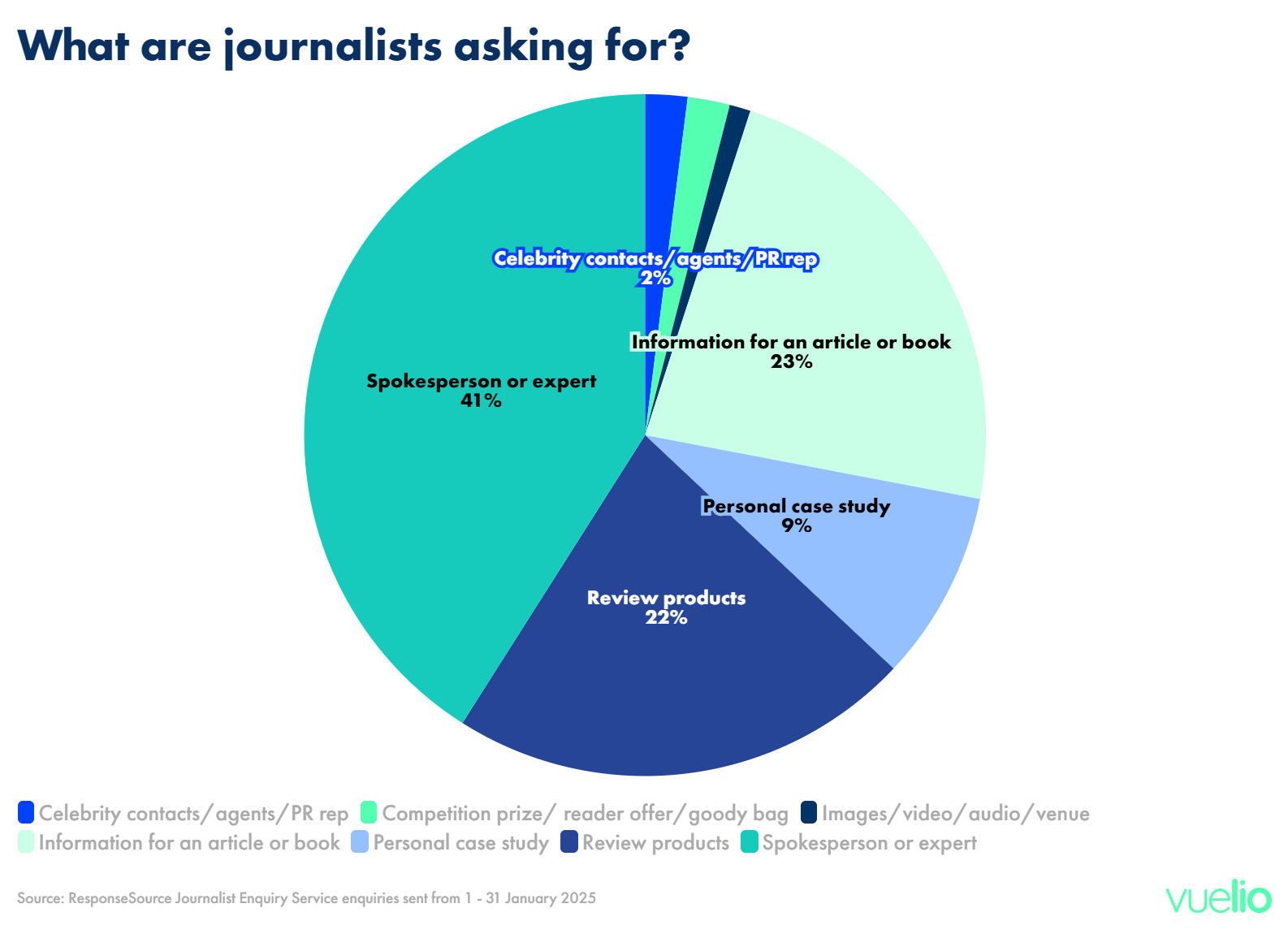
What are journalists asking for?

Other opportunities for PRs in July and beyond

While we may only be in the seventh month of the year, journalists are already starting to plan their Christmas content. ‘Christmas’ appeared in just over 1% of requests in June but in July last year that figure doubled to 2.5%. Festive gift guide enquiries will steadily increase from now on, meaning you could get some early media coverage.

‘Gardening’ is a near constant keyword on the service and it usually proves especially popular during the summer months with many garden shows and exhibitions. In July 2024, 5% of the total requests were gardening-related. Journalists are seeking out expert advice, so have comments ready and you could potentially secure coverage in a national press title or consumer magazine.

Want to get the most out of the ResponseSource Journalist Enquiry Service? Check out this explainer.

Media trends for April

Media trends: How to get UK press coverage in April

Want to spring into action and make the most of media opportunities at the start of the season? The ResponseSource Journalist Enquiry Service had a high percentage of requests interested in covering Spring during March.

Read on to find out what other topics proved popular last month and what you can do to help journalists with their content in April.

On the hunt for Easter info

The Easter weekend is fast approaching and has been a focus for journalists throughout March. Over 3% of the requests sent last month contained the word ‘Easter’ – a 19% increase compared to this time last year.

A large majority of the requests have been for Easter eggs and gift guide information. However, there has also been a number of enquiries looking for activities for the school holidays and travel destinations to jet off to. Both ‘activities’ and ‘holidays’ received around 2% of the total requests in March.

Going forward? While there is less than two weeks until Easter, journalists will continue to be looking for last minute products to review, so have these ready. Plus, expect more requests around ideas for days out during the two week break. If you’ve got a travel expert with comment,  they could get featured in The Sun Online, Daily Mail, or Sheerluxe.

The endless possibilities of Spring

Seasonal requests are always popular on the Journalist Enquiry Service and that was the case in March as ‘Spring’ appeared in over 5% of all requests. This is nearly double the amount that we received last year.

It could have been due to extra requests around the Spring Statement/budget as journalists at 5 News, The Times, and Daily Express all sent enquiries on this topic. However, there was a wide variety of areas covered mentioning Spring, like spring cleaning product reviews, must have travel gadgets for Spring break, and recipes and cocktails.

Going forward? Spring will remain a popular keyword on the service throughout April and we are likely to see more requests around beauty, fitness, fashion, food, drink, and healthy living. Journalists tend to look for expert comment to accompany these articles and you could get featured in outlets such as HELLO!, Yahoo! Life, Prima, PA Media, and The Telegraph.

Gardening requests in full bloom

With Spring now here, we have seen a big increase in the amount of gardening requests with just under 6% of the total in March being for ‘gardening’. This is a 34% rise from this time last year and 45% increase from last month.

Journalists at Ideal Home, Metro, Homes & Gardens, and woman & home all sent gardening requests last month. The majority of these were for expert comment on topics including pruning grape vines, the dos and don’ts of composting and how to grow blueberries.

Going forward? Gardening was the top performing keyword in April last year and is likely to be again this year. Expert advice is usually what journalists are in search of so if you have relevant experts, you could get featured in a consumer magazine or national press title.

Other opportunities for PRs in April and beyond

With the London Marathon taking place at the end of April (Sunday 27), expect to see requests around ‘running’ and looking for experts to give tips on taking up the sport or running longer distances/preparing for a marathon. This cropped up in nearly 2% of enquiries in April 2024.

2.5% of requests in April last year contained the word ‘outdoors’ as journalists looked to get information on activities and days out as the weather improves, and we would expect to see that again this year. Plus, journalists looking to get ahead with their content start asking for Father’s Day gift guide products and over 3% of the total requests last April were for this. If you have products ready to review, there is more chance of media coverage in national and consumer press.

For more about how the Journalist Enquiry Service can help you secure coverage in the media, check out this explainer.

Media trends for February

Media trends: How to get UK press coverage in February

Want to get media coverage in February? Despite being the shortest month of the year, there are still plenty of opportunities to get coverage throughout the month with Valentine’s gift ideas still in demand.

Find out what else journalists are after this month and what they were putting requests in for last month on the ResponseSource Journalist Enquiry Service.

AI back in focus

It’s been a topical issue for the last couple of years now and ‘AI’ has been cropping up on average each month in about 3% of enquiries. However, last month this increased to around 5% of the requests – likely due to the release of the new AI chatbot DeepSeek.

Journalists at IT Pro, The Next Web, The Daily Express, The Grocer, Vogue Business, and Schools Week all sent enquiries in January, looking for information and expert comment on how this new technology will, and currently is, impacting their respective sectors.

Going forward? There is a lot of noise right now about the cost of AI following DeepSeek entering the market. Many journalists will continue to cover this throughout February, likely looking for experts to give their views. If you have clients who cover this, or happen to be an expert yourself, have answers prepared, and you could get coverage in a major trade title or national press.

Which journalists are sending enquries

Winter travel ideas

Travel is usually pretty popular on the Journalist Enquiry Service and the category normally peaks in June. However, January has been a strong month for the category, and ‘travel’ has been a popular keyword. It appeared in 5.5% of the requests last month.

A lot of these enquiries were from journalists looking for travel trends for the year, but there have also been quite a few around Winter travel. This has included one for the world’s most beautiful ski chalet, skiing in Norway, and medium-haul destinations to escape the cold.

Going forward? The half term break for schools is fast approaching and we could see requests for last-minute family holiday breaks. Plus, we are already seeing enquiries about Spring and Summer destinations. Have your travel experts ready to provide comment and get featured in national press titles such as The Sunday Times, Metro, MailOnline, and The Independent.

What are journalists asking for?

Changing of the seasons

Many journalists, especially feature writers, are producing content two or three months in advance. That means despite it still being the middle of Winter, there were more requests in January containing the word ‘Spring’ (at just over 2%) than there were ‘Winter’ (2% exactly).
Some of these enquiries were around holidays and occasions, with just under 1% of the requests being for Mother’s Day and just over 1% being for Easter. Other Spring-related requests included tips to get your garden ready for spring, wellness retreats taking place in spring, and the best earbuds/headphones for the season.

Going forward? As the new season draws nearer, journalists’ requests around gardening, skincare and beauty, spring cleaning and home decor, and healthy living, will only increase. Journalists at consumer titles such as Top Sante, Good Homes, Stylist.co.uk, Take a Break, and Ideal Home all sent enquiries last month and are likely to again, so have information ready for them to use.

Other opportunities for PRs in February and beyond

Expect some last-minute requests for Valentine’s Day inspiration and presents, but attention will turn more towards Mother’s Day and Easter. Journalists tend to look for products to reviews or gift ideas, so have these ready.

The whole of February is LGBTQ+ History month and also National Heart Month as well, so if you have experts related to either of these, you could get media coverage this month. World Pizza Day (9 February) is coming up this weekend and Shrove Tuesday (4 March), also known as Pancake Day, is not far away. Journalists will likely be sending requests for interesting recipes or the best places to go, so have information and experts prepared.

For more about how the Journalist Enquiry Service can help you secure coverage in the media, check out this explainer

CEOs under pressure

CEOs in the news: What the era of increased accountability means for comms teams and their c-suites

Have a press-friendly chief exec to bolster your brand personality in the press? Telling the story of your business by aligning your company comms around members of your c-suite can be a smart strategy – but beware. Carefully constructed press releases form just part of the expanded conversation possible in today’s media landscape.

CEO-centred comms are a risky gambit in this era of call outs for bad behaviour, and criticism for connections with the wrong people or political factions.

Using data from Pulsar Trends and the ResponseSource Journalist Enquiry Service, we examine just how dangerous CEO controversies can be for comms teams tasked with protecting organisational reputation.

Trouble at the top means social media scrutiny

Chart showing conversation on CEO controversies on X

Tracking mentions of CEOs and chief executives with phrases including ‘controversy’, ‘disgraced’, and ‘cancelled’ shows a rise in conversation among the UK public on X since the start of 2020 – with spikes for specific stories of execs in trouble. Which stories got the most people talking and sharing?

US CEOs get the most attention from UK audiences

US-centred CEO stories gained the majority of interest from Britain-based users of X, with Musk’s take over of Twitter in October 2022 sparking the most social posting and sharing. Peaks also driven by news from overseas – OpenAI ousting CEO Sam Altman from his role (later rescinded) and the killing of UnitedHealthcare’s Brian Thompson. These stories eclipsed the large-scale UK-centred CEO scandals when it came to sharing on social media for Brits. So what did get their attention closer to home?

UK social sharing centred on stories that intersected with high-profile institutions and celebrity

Attention to UK-born stories went to the stepping down of NatWest CEO Alison Rose following a high-profile clash between the bank and Reform UK leader Nigel Farage, as well as the numerous controversies that fell into BBC CEO Tim Davie’s lap last year.

X post on Tim Davie

Harrod’s founder Mohammad Al-Fayed’s past impacted former exec Nigel Blow’s future, while events during Nick Read’s tenure at The Post Office continued to fuel furore on socials.

X post regarding Harrods

What they all have in common are connections to long-established institutions that come with prestige already attached – Coutts, Harrods, the Post Office, and the BBC.

X post regarding Nigel Farage

Could this be an element unique to the UK, with brands fully entrenched into our social fabric? The long history of these UK organisations come with unavoidable institutional weight – making any related human-wrought controversy yet more intriguing for the general public, ready to hold those in power to account.

It’s not just high-profile institutions that bring more attention on social media, however. Celebrity also helps. High-profile – and now also highly-controversial – author JK Rowling’s involvement in a CEO-related story heightened the spotlight on Rape Crisis Scotland CEO Sandy Brindley, who shared her experiences in a story for The Times in September 2024.

X post regarding JK Rowling

In comparison, the media spotlight on UK CEOs has dimmed – but why?

When examining coverage of UK ‘CEOs’ + ‘controversy’ in the media over the last few years, the data shows a decrease…

Is this cause for relief for comms teams stamping down CEO struggles behind the scenes? Don’t relax yet – business journalists and columnists have merely shifted their focus to include business-related political figures in the wake of the 2024 General Election. The Labour cabinet in particular has become prime fodder for right-leaning news outlets since its installation in July of 2024. Naturally, this has meant a slight downturn in UK CEOs being called out.

A catalyst for one peak in both news coverage and social conversation that featured a politician-CEO combination was former Secretary of State for Education Michelle Donelan’s clash with UK Research and Innovation chief exec Ottoline Leyser in October 2024:

Does the Third Sector buck the trend?

The UK public aren’t only interested in commercial brand CEO scandals that intersect with the glitter of celebrity or politics. Beyond US-born controversy, one thing that consistently engages the UK public is scandal concerning the Third Sector.

Stories that got reporters writing – and social users sharing – was the announcement of Shelter’s ‘divisive’ CEO Polly Neate CBE’s plans to step down; the resignation of Children in Need chair Rosie Millard regarding objections to grants for LGBT Youth Scotland (LGBTYS); and the firing of Embrace Child Victims of Crime (CVOC) chief exec Anne Campbell.

CEOs don’t have to be guilty of bad behaviour themselves to be the subject of negative reporting or social media speculation. Not-for-profit comms teams must be prepared for a comms crisis related to their c-suite by monitoring the mood among the public, and the press.

CEOs as a source of expertise and controversy for UK journalists

Highlighting the continuing media interest in CEOs and the c-suite were the almost 400 related enquiries submitted by journalist, broadcast, and influencer users of the Journalist Enquiry Service last year.

Which sections of the media are hungry for CEO stories? The majority of requests came from business-focused trade titles including Management Today, Business Age, and Verdict, but also national press outlets with business beats including The Times and PA Media. Many of these requests sought comment from CEOs on the big stories of that week’s news cycle… but others wanted comment on the actions of CEOs themselves – including high-profile marketing expert, and controversy-courter, Steven Bartlett. One such journo request:

‘The online lifestyle, fashion, and beauty magazine SheerLuxe has come under scrutiny for ‘hiring’ their first AI (artificial intelligence) employee as Fashion Lifestyle Editor, Reem.

‘However, business mogul and host of the Diary of a CEO podcast, Steven Bartlett, scrutinised critics of the marketing stunt in a LinkedIn post […] Does Bartlett actually mean what he says? Or is he just trying to go against the grain of the common opinion?’

The opinion of business leaders is still of great use to journalists who require quick expertise to back-up their reporting (impressive job titles still confer respect) but, as is spotlighted by the data above, they aren’t granted unquestioned authority anymore, and their missteps can be quickly mined for content.

UK social media users are ready to pick apart CEO scandals and extend the life of these stories – especially when a controversy intersects with established and ‘respectable’ institutions or well-known figures. While the majority of the media has shifted focus to politicians, this doesn’t mean CEOs are in the clear.

Increased demand for ethical business choices from the public, and journalists reporting with their interests in mind, means CEOs are now just as easy to target for criticism as for their expertise. ‘Higher-profile’ increasingly means ‘higher-risk’, and understanding the nuances of the conversation will be a vital part of the PR toolkit this year.

Find out how to monitor your organisation’s reputation in the press and on social media with Vuelio’s monitoring solutions

How to get press coverage in December 2024

Media trends: How to get UK press coverage in December

What are journalists looking for as 2024 draws to a close? Festive content is obviously prevalent, but the media are using the ResponseSource Journalist Enquiry Service for a lot more, too.

Find out below what was popular in November and what could get you featured in the press during December and into the New Year.

Last minute Christmas content

Unsurprisingly, ‘Christmas’ was the top keyword used by journalists for a third month running as it cropped up in 18.5% of the total requests sent in November. ‘Gift guide’ was prominent within this as nearly 8% of those journalist enquiries were for products and items to feature in a guide or round-up.

Some of the more unusual Christmas-related requests included a journalist looking to speak to someone who is giving some of their pension cash this Christmas, and another wanting to speak to interior designers about Christmas styles that remain popular every year.

Going forward? While there is relatively little time left until the ‘big day’, the media will still be looking for the best last minute gifts so have products ready to review. Fashion and food are also regular requests in December with advice on what to wear for the holidays and what to cook. The i paper, Ideal Home, Yahoo! Style, Good Housekeeping, and Stylist all sent an enquiry last month so there is the opportunity for national press or consumer magazine coverage.

What are journalists asking for?

2025 in focus

The end of one year traditionally gets journalists looking ahead to the next one and it’s proved no different this year with ‘2025’ featuring in just over 7% of the requests last month. ‘New year’ has similarly proved popular with just under 3% of enquiries containing that phrase.

Journalists at The Daily Express, PA Media and The Guardian sent enquiries in November with ‘2025’ in them including looking for new beauty launches for women, GenAI trends to watch out for, and new hotel and restaurant openings in the new year.

Going forward? December last year saw nearly 14% of journalists send enquiries for the year ahead, wanting information on travel, fashion, beauty, technology, and more. Have press releases ready on trends and predictions for 2025 and experts in areas such as fitness and wellness to tie in with events like Dry January and Veganuary.

Which journalists are sending requests?

Heating up for the Winter

We’ve mentioned in previous posts that seasonal requests are popular with journalists and ‘Winter’ has proved no different as it received 4.5% of the total enquiries last month. But there has been an increased focus recently on staying warm this winter with ‘heat’ or ‘heating’ cropping up in nearly 3% of requests.

Some specific enquiries included looking to speak to pensioners struggling to heat their homes, wanting to know the cheapest way to heat one room, and asking for comment from a health expert on the health risks of not putting your heating on.

Going forward? December and January are traditionally the coldest months of the year and journalists will be looking to get expert advice on what to do with your heating without spending too much. There will also likely be requests for case studies of clever techniques for staying warm and how the Winter fuel payment changes are affecting people.

Other opportunities for PRs in December and beyond

Returning to the Christmas theme again and journalists could be looking to cover Christmas Jumper Day and any other festive charitable events, so have information ready to send along these lines.

Get lists prepared for the best places and ways to see in 2025 to get potential media coverage. Plus, after the festivities of Christmas Day, Boxing Day brings with it the chance to get a bargain in the sales. Product reviews and round-ups will be in demand, as well as retail experts to pass comment on the state of the industry.

To connect with the media on these topics, and much more, check out the Journalist Enquiry Service and the Vuelio Media Database.

Find out more about how Vuelio can help you gain and track your coverage in the media here.
Campaign reporting for PRs

Best practice for campaign reports

Whether you’re launching a product, hosting an event, or raising organisational awareness, a campaign report is the best way to showcase the successes to stakeholders in an easy and digestible format. Measurement also helps teams to improve, compare strategies, and understand the true value of events and campaigns.

Campaign reporting isn’t only about evaluating what happened in the past, you can also use media analysis to support you before and during a campaign.

By following this framework for your campaign reporting, you’ll be able to:

  • Set meaningful KPIs and understand the media landscape (before)
  • Respond to the media and receive analytical support from a team of experts during a busy period (during)
  • Showcase your successes to stakeholders with insightful evaluation and a greater understanding of what worked well and what didn’t work to identify opportunities for future campaigns (after)

Before your campaign

Goals 

Before your new campaign begins, it’s time to set up clear goals and meaningful KPIs. This will help provide everyone with a clear direction of what is to be achieved and help with the future measurement of assessing the success of the campaign.

Consider the following:

  • Who do you want to target?
  • What message do you want to send, and what action do you want your audience to take?
  • Where does your target audience go to consume traditional media?
  • When is the best time to launch the campaign?

For example:

A mountaineering rescue charity may want to analyse its summer mountain safety campaign. They may want to target novice hikers with the key message to be prepared while hiking this summer. This charity have particular issues in the North of England,  so want to target local media in that region, during the summer heatwave.

SMART Goals

With goals in place, you can set realistic SMART KPIs that align with your overall campaign objectives (SMART: Specific, Measurable, Achievable, Relevant, and Time-bound).

For example:

The mountaineering charity would like to increase the volume of campaign coverage by appearing in 400 outlets between 5 June – 4 July.

Or, they would like to increase the amount of headline mentions from the previous year by 5%.

Using historical or Industry Data

Once you’ve established your campaign’s goals and KPIs, use data to establish benchmarks to ensure your targets are SMART. Effective comparisons could be to your competitors, yourself, or the industry, and without data, you’re basing decisions on nothing more than a gut feeling.

Using data allows you to:

  • Assess against industry standards or pre-determined goals
  • Track progress over time if you compare it against your own previous campaigns
  • Hold yourself accountable by setting measurable targets
  • Say no to ideas that have underperformed in the past

For instance, the mountaineering rescue charity may have run a similar campaign the previous year and found that they achieved coverage in 300 outlets and a key message penetration of 35%. It would be unrealistic to set a goal of 100% key message penetration if the previous year had a 35% penetration, so an organisation can use this information to set a realistic target against last year’s results.

Vuelio can support you during the pre-campaign period with analysis of competitors or previous campaigns that can allow you to identify opportunities and threats.

Choosing the right metrics

Deciding which metrics to include is important, as the campaign report needs to reflect your SMART goals in a simple way that stakeholders in the wider business can understand.

Base your metrics on what best demonstrates your SMART objectives. This is especially the case with sentiment and proactivity analysis. Unless your campaign is to combat a negative reputation, sentiment will generally be positive, and the campaign itself is proactive, so consider other metrics such as the following:

Campaign-Specific Messaging: Track whether your intended key messages are being portrayed in the media e.g. How much coverage was the key message ‘When hiking this summer, be prepared and take water’ featured in?

Calls-to-action: Analyse if the media has included your campaign actions e.g. Head to mountaineeringrescue.co.uk to find out more about hiking safely this summer.

Prominence: Assess not just the volume of coverage about the campaign, but also the quality – are you appearing in headlines or as passing mentions?

Target Media Analysis: If your goal is to gain attention from specific media outlets, a detailed analysis of these results is necessary, e.g. Mountaineering Rescue is targeting local charities in the North of England so have compiled a list of relevant outlets in the region. It’s worth utilising a media database, like Vuelio’s Media Database, if these are journalists you haven’t worked with before.

The Vuelio team can support you with choosing the correct metrics. The team also typically provides manually analysed metrics that will allow you to analyse bespoke campaign metrics such as campaign messages.

During the campaign

Establish a useful reporting framework

During the campaign, it is important to continuously assess progress with the use of snapshot reports. These reports can help your organisation showcase immediate success, or respond to media reactions that may not be favourable or in line with messaging.

While you may already produce a campaign report at the end of your campaigns, sometimes this can be time-consuming. Vuelio’s Insights team can provide support during busy campaign periods on an ad hoc and ongoing basis. Many of our clients enlist us to provide them with multiple campaign reports per year to utilise our expertise, while some clients require our services on an ad hoc basis.

After the campaign

Once the campaign has finished, it is time to assess if your organisation has met its KPIs. At its core, media measurement is a continuous improvement process.

It may also be useful to consider if any additional data sets would add value to your reporting. For example, it may be useful to understand if donations, sales, or website traffic increased during the campaign.

Finally, when your campaign has ended and all analysis has been completed, you can then use this report not just as a summary of your campaign but as a benchmark for future work.

Find out more about campaign reporting and how Vuelio can help here

Featured image for Seeking Audiences event

How do journalists find audiences in the platform era?

How has the emergence of new media platforms impacted journalism, and its audiences?

To explore the state of journalism today and how it’s evolving for the future, we invited two panels of industry experts to share their expertise with an audience of PRs and fellow media professionals for the Pulsar x Vuelio event: ‘Seeking Audiences: Journalism in the Platform Era’ event.

Seeking Audiences panel

Joining us to discuss the ‘new news’ landscape – including the challenges of capturing audience attention amid fragmenting forces like TikTok; the role of podcasts; and comebacks for local news – was Press Gazette UK Editor Charlotte Tobitt, ITV News Reporter and Producer Siham Ali, Polis Founding Editor and Director of The Journalism AI Project at the London School of Economics Professor Charlie Beckett.

Second panel for Seeking Audiences

Covering changes in audience perceptions, brands, and behaviours was CNN International Commercial Vice President, Audiences & Data Tini Sevak, The Economist’s Media Editor Tom Wainwright, and BBC News Journalist, Producer, and Presenter Kamilah McInnis.

Here are key points from the speakers, as well as extra answers we ran out of time for…

The new news: Reaching audiences with journalism today, from TikTok to podcasts, to local journalism

So many platforms, so little time for each: What are the biggest hurdles to reaching an audience for journalists?

‘Two main things – the fragmentation of the media landscape, and Google sending less traffic to them,’ was the verdict from Press Gazette’s Charlotte Tobitt, who covers the fortunes, and fluctuations, of the media as part of her daily beat.

Charlotte Tobitt

‘It’s rarer for someone to search for ‘The Telegraph’ to find their news now, and publishers are finding it harder to engage directly. They need to future-proof against the many other platforms out there by building brand connections – trust is at a real low in the UK and the US’.

Charlie Beckett, whose organisation Polis campaigned hard for amendments to the Online Safety Bill, highlighted just how much the media industry has been transformed by competing platforms pumping out information, 24/7:

‘I remember when it was just papers and TV. We were the only place you could get news – life was great!

Charlie Beckett and Siham Ali

‘Social media is the biggest thing to happen to journalism in a hundred years. You have incredible access to different sources, and that can be overwhelming. But as an audience, we don’t want to go back.

The problem for publishers is having to start from a place of what people want. But journalism has always been good at that.’

Is the plethora of platforms warring for audience attention actually an opportunity for journalism? ITV News’ Siham Ali, talking as a reporter with ‘boots on the ground’ across the UK, sees the positives:

‘I think finding an audience is easy with TikTok and Instagram. Especially with local news – Facebook has made our jobs easier.

Siham Ali

‘We have stories that perform well on TikTok. The trick is adapting our storytelling to this new way of sharing news. I don’t think it’s a bad thing. But then, I’m young, so…’

Another ‘newer’ format for storytelling is podcasting, a medium the publishing industry has invested in heavily over the last few years.

‘[The podcasting format] is infecting ‘traditional’ broadcasting and making it more casual,’ believes Charlie. ‘And they aren’t much different – they’re merging.

‘Podcasts are ambient. TikTok, you’re more focused on it. When we talk about audience attention, it’s skeletal – it doesn’t tell us everything we need to know.’

Rebuilding trust in the news industry when bad actors also have a platform

Vuelio’s head of insights Amy Chappell asked if the extra competition for audience engagement has meant more clickbait (and as a result, more misinformation).

Panel for Seeking Audiences

‘You have to be really careful where you get your news from,’ said Siham. ‘I’d like to think the big media names are the good actors. There’s clickbait everywhere.’

Charlie pointed out that this isn’t a phenomenon born from the digital age:

‘Audiences have a lot of agency – they consume “fake news” because they want to. People are driven by identity and emotions, by fear – they choose to consume what panders and pays attention to fears they have.

‘Clickbait wasn’t suddenly invented. Marketing and advertising people have known this for decades.’

Trust was also highlighted as a difficult part of the local journalism ecosystem –

‘People are at the heart of everything we do. In journalism – people are the story,’ said Siham.

‘I was only able to work on certain stories because of people in communities. I saw their need to be heard.’

The importance of time covering a local new beat on a journalist’s skillset was underlined by Charlie – not just for the journalist, but also for building loyalty with audiences:

‘Editorial diversity is what’s needed – knowing what it’s like to grow up on a council estate, for example.

‘Most national press get their stories from local news. The media have to be honest that we’ve messed this area up by reducing news teams – fewer journalists are left now in regional journalism.’

Is social media and vertical video making news accessible, and can it bring media success?

‘The news industry was slow to TikTok, and then a few individual journalists picked it up,’ explained Charlotte.

‘The Daily Mail is now one of the biggest news publications on TikTok, and it’s a good thing for the longevity of the brand.

‘People were hesitant initially because the monetisation wasn’t there. But for brand building, it’s worth it. The TikTok algorithm is so good that the right stuff should find the right people.’
But Charlotte also recommended caution regarding social platforms like TikTok:

‘It would be risky to rely on them completely – the platforms can change up the algorithms anytime. Publishers shouldn’t get too excited about one platform.’

‘Audiences that are underserved [by traditional media] are on TikTok,’ added Siham.

‘They might then come through to ITV at 6.30pm. An 18-year-old then knows what’s happened in Westminster today. They’re now able to pass that information to their friends at the pub.

‘TikTok used to be an afterthought, but now it’s part of the planning stage at ITV. The social team make up a chunk of our output on the platform’.

The opportunities for PRs and a bright future for journalism

‘I used to work in PR, and we didn’t think to add vertical assets – there’s a lot of potential in that space, said Siham. ‘Show that your content is multiplatform.’

‘I’ve seen politicians doing interviews directly with social teams, and not the digital news teams. That trend is quite interesting.’

‘I’m excited by the new platforms, adapting as a news organisation is exciting.’

‘If I wasn’t optimistic about the future of journalism, I would be in the wrong job,’ said Charlotte. ‘People are aware of the challenges, but there’s lots of innovation and cool stuff going on.’

‘The news industry is more aware than it’s ever been. News is incredibly resilient – the dogs won’t die,’ said Charlie.

Journalism in the platform era: Audience perceptions, brands, and behaviours

How worried should the media and comms industries be about increasingly polarised communities?

The Economist’s Tom Wainwright highlighted just how split media audience are along political lines – particularly in the election-heavy 2024:

‘More extreme takes travel further online than more moderate ones. That makes the space seem very polarised. And what you see in polling is that trust is very split along partisan lines in readerships and viewer bases. After Brexit, the big fallout between ‘leave’ and ‘remain’ audiences, for example.

‘It’s part of a broader mistrust from more conservative audiences with what they see as ‘elite’ institutions. This split is a hard thing to fix. Organisations need to increase their diversity of staff partly because of this. There’s a divide that’s baked in.’

Tom Wainwright

‘People still value credible and well researched journalism but news is dominated by organisations that focus on sensationalism and misinformation,’ added BBC News’ Kamilah McInnis.

Kamilah McInnis and Tini Sevak

‘Organisations should apologise when mistakes are made, listen to audiences and be consistent to rebuild trust. Respond to what audiences need. And remember that they also tune in for escapism and analysis.’

CNN’s Tini Sevak emphasised how vital established and non-partisan media organisations are for the public, whatever their political outlook:

‘When people are making big decisions, they’re still coming to news organisations.’

Tini Sevak

Bringing audiences back to engaging with news reporting, wherever it’s published, posted, or shared

The panel talked about the rise in news avoidance over the last few years, and how this is increasingly impacting audiences across demographics. It’s not just younger people who avoid hard news – not tuning in to ‘traditional’ news mediums like ITV News at 10, or picking up a daily print newspaper. Even those who had previously been avid news-followers are tuning out for a variety of reasons – the increase in global conflict; the ways awareness of this has seeped into all other mediums to become a constant in the background of modern lives; even the lack of censorship and inclusion of distressing images and updates.

Much has been made of this increase in news avoidance over the last few years – both at industry conferences for journalists, and in reports detailing challenges for publishers. Could a factor be a simple lack of visibility for ‘traditional’ news platforms?

As Tom pointed out: ‘As a child, I had to watch Newsbeat to get to Grange Hill. People are moving from a news-rich environment to a news desert. Maybe people are bored of news, but I think they’re just seeing less of it.’

Discussion also centred on the lack of news on the streaming channels now available – Tom mentioned Netflix as an example of a platform that doesn’t have an option for news updates. For many of the public, the only way they will encounter broadcasts devoted to news reporting specifically will be by seeking it out. How can new organisations build relationships so that audiences will search for them as sources?

For Tini, reputation and reliability are vital:

‘When you’ve got a brand that stands for something, you have a relationship with your audience. It’s about giving back – news has to be a reflection of life. Hard news, but also culture – reflecting what life is about’.

The impact of paywalls and subscription models

Tom pointed out the difference that a subscription model makes to an outlet’s overall focus, not just their audience:

‘Organisations that focus more on subscriptions are more likely to go niche. The New York Times has shifted to a subscription model and is aiming to be more in tune with their readers – for the good and bad.

‘If you’re funded by advertising, however, you’ll be more generalised and centrist. With subscriptions, readers want to engage with content they agree with. The way publications respond to that dilemma depends on their business model’.

‘The brand safety aspect is very real,’ added Tini.

‘Advertising within news doesn’t have to be a detriment to your brand. There’s an opportunity to engage with a tuned-in audience’.

For more on this topic, as well as the Pulsar and Vuelio research discussed during this event, check out our reports ‘TikTok journalism: The platform’s impact on news audiences’ and ‘Hold the homepage: How scoops circulation through the modern media landscape’.

How to get media coverage in November

Media trends: How to get UK press coverage in November

What will go off with a bang in the media in November? Many people will be celebrating Bonfire night with fireworks this evening, and journalists, broadcasters, and influencers have been using the ResponseSource Journalist Enquiry Service to source information about this and other topics.

Find out below what the media wanted from PRs over the last month, and how to get coverage in November.

An avalanche of Christmas content

‘Christmas’ has been the number one keyword used by journalists in enquiries for a couple of months now, and October was no different – the festive season featured in around 17% of the total requests. Nearly 10% of the enquiries included the words ‘gift guide’ with ‘advent calendar’ on 3%.

While the vast majority of requests were for products, journalists looked for different angles as well, including how to avoid social burnout in the lead up to Christmas, and for comment from a historian on British Christmas heritage.

Going forward? Have products ready to review for gift guides and information about the perfect Christmas dinner and events to get out to (amongst other topics). Journalists at The Sun Online, PA Media, Daily Mirror, and The Guardian all sent requests last month so you could get national press coverage.

What are UK journalists asking for?

Political interest and money matters

Rachel Reeves’ first budget announcement as Chancellor of the new Labour government was always going to be a big talking point, and so it proved with ‘budget’ featuring in 4% of all enquiries throughout October and ‘Government’ in 3% of those containing that word.

GB News, The Independent, The Sunday Times, The Daily Telegraph, and ITV News all sent requests around the budget. They asked for opinion on how the Autumn statement would affect different areas, such as pensions, tax rises, the bus fare cap, and specific industries including tech.

Going forward? Politics is always a popular news topic with the media and journalists are regularly using the Journalist Enquiry Service to get insight and information. They will also want expert reaction to and comment on the US Presidential election, plus the recent Conservative leadership race. Personal finance experts will also continue to be in demand for advice on the on-going cost-of-living crisis.

Winter is coming and so are more features on AI

Journalists regularly use the enquiry service for seasonal content but despite still being in Autumn, Winter is now their main focus. 4% of the total requests in October featured ‘winter’ in them, double the amount that had ‘Autumn’.

Another topic that regularly gets a good amount of requests each month is ‘AI’. Nearly 4% of the enquiries last month were from journalists covering artificial intelligence’s impact on businesses and people’s daily lives.

Going forward? AI has been a big topic of conversation for a while now but journalists continue to use the enquiry service to get expert comment. If you have someone that can provide a quote or advice then you could be featured in the Metro, IT Pro, Evening Standard, or BBC News Online.

Winter requests have ranged from choosing the best duvet and skincare products, to knowing the signs of norovirus. If you have winter-specific information or products, you’re very likely to find relevant media opportunities.

Other opportunities for PRs in November and beyond

Black Friday arrives at the end of the month, so journalists will be looking for information on the best deals, as well as products to try out and review themselves.

Health and medical specialists will be in demand ahead of World Diabetes Day (14 November) and environmental experts may be required for comment for National Tree Week (23 November – 1 December). The whole of November is also World Vegan Month, so have information ready on the benefits this can bring and you could get media coverage as a result.

To connect with the media on these topics, and much more, check out the Journalist Enquiry Service and the Vuelio Media Database.

Find out more about how Vuelio can help you gain and track your coverage in the media here.

How podcasts shared the story of water pollution

Listen up: News podcasts share the story of water pollution in the UK

Bad news has the ability to spread quickly in our hyper-connected modern world of multiple platforms. For PRs, this means more channels to monitor than ever before for signs of crisis… but it also provides extra ways to boost important stories, connecting audiences to vital information.

One crisis with far-reaching implications for the UK audience over the last few years has been polluted waterways. This issue was put to politicians in the run-up to our General Election this summer, discussed with frustration across social platforms, and covered by the media in print, online, and in podcasts.

To highlight the impact of the podcasting format as an increasingly useful way to connect with audiences, we tracked the story of water pollution in the UK, and internationally, across podcasts from 1 November 2021 to 29 September 2024.

So many podcasts… and for good reason

2022’s Interactive Advertising Bureau and PricewaterhouseCoopers’ report on podcasting projected that the industry would generate $2 billion in revenue in 2023, and $4 billion by 2024. The prediction of podcasting’s emergence as a format for storytelling has proved right – not just among friendship groups sharing anecdotes on their sofas (of which there are many), but for publishers, too.

The Daily Telegraph’s political editor Ben Riley-Smith highlighted podcasts as ‘a huge booming area for news consumption’ when speaking on the changing political landscape in the UK in 2023, and other publishers and big media brands have capitalised on this in 2024:

‘It makes sense for publishers to be moving towards the podcast space,’ believes Reach Studio’s head of content Yara Silva, whose team launched The Division Bell podcast to coincide with the UK General Election, and the Euro Thrash vodcast for Euro 2024.

‘People are just busier and busier – it’s so easy to consume a podcast while you’re doing other things. Podcasts are only going to get bigger and more important to publishers’.

The importance of news podcasts to audiences is also clear when tracking mentions of the format on X since 2021:

Mentions of news podcasts reached a zenith on X in June 2023 as the industry ‘boomed’, and it continues to be a source of discussion on social media. It’s now a firmly established format to turn to for news, with listeners/viewers no longer posting about a ‘podcast’, but specific shows, namechecking where they heard about certain topics.

Examining mentions of the two biggest podcasts in the UK – The Rest is Politics, which launched in March 2022, and The News Agents, launched in August 2022 – proves podcasting’s utility as a news source. Peaks occur around key events in the news cycle – the obvious example being the UK General Election causing a spike in mentions for both podcasts this summer.

The News Agents X post

Podcasts aren’t just for entertainment – they are also turned to by the public as a way to stay informed on events happening around the world, as well as closer to home.

How podcasts reached audiences with reports of water pollution

Water pollution is an issue faced across the world to varying degrees – tracking related news shows a firm focus on the topic in UK and US regions especially. Following mentions also shows how these stories reached further audiences with publisher-affiliated podcasts.

UK media outlets including BBC News and The Guardian have an outsized impact on the global conversation. Their influence on ‘greener’ socially progressive conversations is to be expected within their UK base, but this international dominance is surprising… Until the impact of their podcast brand extensions is considered. Both outlets reported on water pollution, and then took up the story in their podcasts to share extra information and delve deeper into the specifics. By contrast, US and Australian outlets like The Washington Post or ABC Australia produced a significant amount of written content, but did not fully utilise their podcast channels.

X post about BBC Indepth on water pollution

The ‘boom’ of podcasting as a format for news reporting isn’t just the result of a faddish focus within the publishing industry – audiences are listening (and watching, when there is accompanying video). PR and comms teams tasked with raising awareness by securing coverage in the press should expand their focus to aural formats alongside the traditional written word – important stories can reach audiences across every platform out there to engage with.

For connecting with podcasts relevant to your brand or niche, try Vuelio’s Podcast Monitoring – providing access to 65k podcasts as well as insight into audience sentiment and emerging trends within the world of audio content.

Not sure which platform is right for your next campaign? Check out the benefits of each social media platform – and how Vuelio can help you make the most of them – in this blog post.

Lifelines for local journalism

Lifelines for local journalism: How the media is reconnecting with communities

Aiming to engage local audiences with media outreach for an upcoming PR campaign? First for the bad news, and then for the good…

Fortunes have undoubtedly been rather bleak for local journalism in the UK for a while now. Newspapers relied upon by their local communities for generations have closed in favour of shiny new centralised news hubs. Long established publishers have been bought out and absorbed into larger organisations. Where did the readers go? Many to social media, joining private Facebook groups or following hashtags on X to find out what’s happening in their area – risking misinformation, and further increasing the pressure on existing local journalists.

But now for the good news: local journalism is fighting back. It’s the perfect time for comms teams tasked with connecting with communities across the country to take another look.

To examine the ways local journalism is making a comeback across the UK, we analysed mentions of the phrase across online news and social media from 2019 to 2024. The story told by the data – a more positive outlook for the UK in comparison to other regions across the world.

What renewed public interest in local journalism?

Local journalism trends in UK and US


Examining spikes in discussion of ‘local journalism’ across the UK in comparison to the US highlights commonalities in times of increased interest over the last four years.

To be expected – April 2020’s discussion of local journalism spiking as the effects of the pandemic on the job market also hit newsrooms. In the US, posts focused on job losses at papers including the Tampa Bay:

X post

Support from local journalism came from senators in Virginia and even Ben & Jerry’s in Vermont. Since then, interest has tended to taper off. That is not the case within the UK.

Back in 2020, #buyapaper trended as local outlets faced closures, with reminders to support local journalism coming from within the media itself, and the public:


X post supporting local journalism

January 2022 saw a huge spike in discussion around local journalism in the UK, driven in part by recognition for the stories it remained capable of breaking, even after successive years of declining budgets and readerships.

X post about local journalism


Political controversies and coverage in the wake of, and run up to, our respective election seasons in the UK and US are causing discussion of local journalism to rise in both regions again. While trust in ‘mainstream’ media channels has fallen, confidence in localised reporting appears, by comparison, to have strengthened.

A ‘continued rise in community journalism’ was how Sefton Council’s senior communications officer Ollie Cowen described this trend when talking about his team’s task to raise awareness of changes in UK voting laws across the UK in 2023. They reached out to local reporters to do this, also making the most of ‘geographically centred pages on social media that had either been created or grown exponentially as a result of the increase in “good neighbour” behaviour during lockdown.’ As the pandemic kept people apart physically, it would eventually bring local communities back together – this has been a boon for local journalism, too.

Publishers and journalists have had to find news ways to connect with audiences and rebuild followings in the wake of how the world changed – advocating for communities across the UK with targeted, audience-first reporting.

For an example, let’s head to Manchester…

‘What local journalism should be about’: The Manchester Mill finds its community online

X post about Manchester Mill


The Manchester Mill was launched in June of 2020 by Joshi Herrmann, a journalist with experience at national outlets including The Times, The Guardian, The Independent, The Telegraph, the Evening Standard, and The Spectator. Unlike these publications, the Manchester Mill is not available on newsstands to pick up in person, but is instead accessible online on Substack, a newsletter platform.

‘The Mill is my attempt to build a media company around readers rather than advertisers,’ reads Herrmann’s mission statement. ‘We won’t copy and paste press releases. Instead, we will dig deeper into local stories that matter – whether they are about crime, culture, business, or new ideas.’

The Manchester-focused Mill publishes one in-depth article via email and online daily to paying members (also known as ‘Millers’), and provides a free option in the form of a weekly digest email. This is paying off in both engagement and revenue. Meanwhile, its journalists have become part of the local ecosystem, helping to spur engagement with other localised reporters and continually grow the audience for the publication.

Influential voices in Manchester local news

In terms of the most influential local voices, Herrman himself drives much of the conversation, generating the most engagement overall with almost as many posts as the main Mill account.

Manchester Mill employees actively share news articles and express positivity about their contributions to local journalism and the work the Mill is doing – something its community of ‘Millers’ are also grateful for. Subscribers number 50k so far, with reader reaction to its success highlighting commitment to community ‘collaboration’ and its focus on breaking important stories, including its Sacha Lords scoop.

Summing up this commitment to localised reporting, senior editor Sophie Atkinson said ‘Nowhere else do you get this level of engagement, comments, emails, tips. It’s exciting and rewarding’. And, from looking at the numbers, it’s working.

Nichification: Success in Suffolk?

Centralised news hubs dolling out automated updates to readers living across the country removed journalism from its audience in other ways than the physical. How can local news publications reconnect with locals? By tapping into existing loyalties through coverage of local heroes – their sports teams.

By analysing how often audiences (and other media outlets) link to these publications, we can get a sense of what’s driving growth or re-engagement among audiences.

Themes in Suffolk news engagement

Clearly, sport is playing an outsized role here – and the story becomes clearer still when we break things down on a topic-by-topic basis.

News themes in Suffolk journalism


Outside of the football pitch, engagement goes to reporting on the local environment, including stories on crime (with spikes for fox hunting and a local criminal case) and amenities (road closures, criticism of Anglian Water, and the construction of a local solar power plant).

It could be argued that the extra interest – and potential revenue – driven by engagement with a local team (one experiencing its greatest success in decades) is in some senses underwriting more traditional local journalism topics. Recent promotional campaigns from The East Anglian Daily Times suggests they certainly view it this way, touting a subscription model that appears closest to that of The Athletic (which sells subscriptions based on unparalleled attention on local teams).

However, this comes with two potential problem points. Firstly, the financial implications of this engagement (whether it is truly able to support dedicated local journalism over a prolonged period) is yet to be tested, Likewise, a local team enjoying back-to-back promotions to the Premier League is hardly a model for all local journos.

Similarly, some would point to the Mill’s success and suggest it could only work within parcels of the wider country – namely those boasting large, youthful populations.

Whether or not these approaches could work for the local journalist scene at large, it proves that publishers and journalists are continuously finding ways to breathe new life into a sector long neglected. A local football team cannot be counted on to drive a mass of feelgood engagement – but it does provide a model for nichification, around sporting or cultural institutions. Likewise, the Mill shows the opportunity latent in an increasingly tech-savvy population, used to getting its news via non-traditional means.

The story told by the data – people care about what’s happening in their local community. News teams that make the effort to find their communities where they share and consume news – and pay attention to what they genuinely want to read and react to – are providing a lifeline to local journalism as a whole, as well as a place for longer-term loyalty and connection.

To connect with local communities through media outreach, find out about the Vuelio Media Database and the ResponseSource Journalist Enquiry Service.

Want to know more about the state of journalism in 2024? Check out our analysis of audience attitudes across the globe.

The state of journalism

The state of journalism in 2024: What do audiences think?

PRs will always need journalists, and journalists – in turn – will always need an audience. But how do audiences across the world see journalism in 2024?

While the media has always had to evolve to meet the changing needs and expectations of its audiences, this requirement has only accelerated in recent years. The changing role of journalists in our fast-moving modern climate presents challenges – for society as a whole, media organisations, and for the PR and comms industry professionals who navigate the media landscape.

How has citizen and independent journalism on platforms including TikTok, and in increasingly popular formats like podcasting, impacted the way news is shared? How are international news brands and local reporters each effected by these alternatives to ‘traditional’ news sources? And how do stories spread across media, platforms, and audiences in this climate?

Journalism is…

These are all questions we’ll be exploring over the coming months, as we conduct our research into journalism and news audiences. But first, to investigate the current perception of journalism across the world, we’ve analysed over 1.2 million media and social data points internationally, tracking mentions of ‘Journalism is…’ from May to September 2024.

Let’s begin with a look at the differing attitudes towards journalism across the world, and specifically, the UK…

How is journalism perceived in the UK in comparison to other regions?

How audiences around the world perceive journalism

The short answer – not in a particularly positive light. When tracking words commonly used following the phrase ‘Journalism is…’ online, ‘dead’ tracked the highest in the UK, followed by ‘biased’, and ‘corrupt’.

The source of this negativity isn’t hard to find, with press coverage of this summer’s UK General Election sparking criticism from the public across social media en masse. As debates, interviews, and analysis filled television schedules and column inches, the people watching and reading at home went online to share their frustrations, with high-profile journalists bearing the brunt.

The US audience shared a similarly dim view of journalism across social and online media – also unsurprising, perhaps, considering the political unrest stirring in the light of their own leadership race.

While the US and UK are aligned on attitudes towards the media, the ways in which they are expressed in public spheres and the media is where they differ (and not just in the UK audience’s willingness to share opinions with a sprinkling of swear words in their X posts).

So which audience of those we tracked considers journalism most important? Those in Australia and New Zealand. ‘Journalism is important’ was a more popular opinion shared online than ‘journalism is dead’ in these regions. A higher number also believed journalism to be ‘crucial’ than in the US and UK.

Is journalism ‘dead’?

Aside from UK fans disagreeing with reporting regarding their favourite sports team, celebrity, or other niche personal interest, the sharing of the view that journalism is ‘dead’ among UK news audiences has been rampant.

2023’s Edelman Trust Barometer found that the UK is one of the countries with the lowest faith in the media. Of the 27 countries surveyed, respondents were only less trusting of the news industry in Japan and South Korea.

While trust was up by 2% from Edelman’s previous survey in 2022, regaining confidence from the public is going to be hard going for the UK news industry. A consideration being taken seriously, as shown by the debates happening at media industry events across the country, including last year’s Society of Editors’ Media Freedom Conference.

The past year has also seen criticism of media reporting on the ongoing Gaza conflict, with disconnects between images and video shared on social media, public protests happening across the world, and the choices made in media coverage sparking further distrust.

Is journalism still ‘crucial’, ‘essential’, and ‘important’?

While use of positive descriptors by those sharing their view of journalism in the UK was much lower than use of the more negative ones, news reporting – in all of its different formats – continues to be cited as ‘important’…by invested communities. Journalists themselves, and those in adjacent industries, see and share reasons for optimism, but how can this be transmitted to audiences who have become distrustful, and disconnected?

Among the challenges facing the news industry – misinformation, lowering revenues, and distrust – audiences still seek information, and reporters, broadcasters, and content creators of all kinds are adapting to provide this.

Media brands making the effort to stay attuned to changing audience needs are building back loyalty and trust. For some recent examples: The Independent has doubled its profit and revenue over the last five years; the Financial Times is adopting data-driven personalisation as part of an audience-first strategy; and Reach plc’s launch of its Reach Studio hub is bringing each of its brands to new viewers in new formats.

The current state of journalism in the UK is in flux, and the prognosis can perhaps seems bleak. But there are causes for optimism to be found in emerging audience behaviours, platforms, and brands, which we’ll be exploring as part of our continued State of Journalism series.

Interested in how the media is evolving? Sign up for the 23 October Vuelio and Pulsar webinar ‘The New News Audiences’.

Press Gazette Future of Technology Conference

How newsrooms are changing and what this means for the PR industry

Newsrooms are always looking for ways to improve their processes, and the PR industry needs to keep up as they evolve. Press Gazette’s Future of Media Technology Conference featured a panel discussion dedicated to exactly that – newsroom transformation.

Here are insights shared by David Dinsmore, COO of News UK, Graham Page, sector lead for media, tech, telco & sports at Q5 Partners, Paul Rowland, editorial director at Reach plc and Nina Wright, chair of Harmsworth Media and the Professional Publishers Association…

AI’s impact on the newsroom

While AI might still be in its infancy, it’s already having an impact on the newsroom. Paul Rowland spoke about how Reach plc have been using Guten:

‘It’s a rewriting tool which makes a piece of content written in house, and reversions it for another title in that style of that publication, therefore eliminating the need for journalists to do things which aren’t distinct to their particular beat or their particular patch.’

Other publishers also mentioned different tools they are using to make the more mundane parts of a journalist’s job quicker. But David Dinsmore stressed the important role of humans for research – ‘The journalist is still going to go and dig up the proper stories, and that’s the stuff that the customers are interested in.’

The impact on PRs: Remember early predictions that AI could one day be turning your press releases into articles? Should this come to pass, journalists will have more time to dedicate to writing in-depth articles. Getting these stories will continue to require a lot of research, and the media will be reliant on expert opinion and case studies to give news and features colour and credibility. PRs – get your clients ready to be featured regularly, and in more detail.

The importance of brand

PRs and publishers both have this in common – the importance of brand and brand reputation. The problem for a lot of publishers in the current climate is that younger audiences, especially Gen Z, don’t recognise news brands. As Graham Page explained:

‘When people come across your content, they don’t recognise who it is and whether it should be trusted or not. We run a youth panel – when we talk to people, around 16 to 18, their knowledge of news industry brands is very light.’

Newsrooms are adapting to make sure that their brand is standing out. Nina Wright shared that ‘Brands need to be alive and sing on a whole number of different platforms, and your revenues need to do that as well.’

She gave the example of the New Scientist which, as well as having several revenue streams and being on all the social media platforms, also has an extensive live event programme. This helps to further its connection with communities and make the brand more memorable.

The impact on PRs: Publishers could well be shifting from their traditional platforms and PRs must be ready for these industry changes. News organisations won’t be interested in pitches that don’t align with their current branding. Make sure that you understand their brand, and that your own brand is also trusted and reputable. With publishers also more likely to be getting on the newer platforms, such as TikTok, make sure the content you are suggesting can work on a myriad of mediums.

Platform changes affecting publishers

Google’s algorithm changes have been impacting publishers, as we highlighted in this round-up of the conference on our sister ResponseSource blog. Nina said that many publishers are currently ‘at the mercy of the platforms’ as ‘you never know when they are going to change their algorithms, and then you have to scramble around and react and respond to that.’

Newsrooms have had to be even more savvy to make sure that their content is performing well on search and that the right audience is reading it. This is a particular challenge for smaller newsrooms. Paul spoke about Reach plc’s CornwallLive, which aims to be ‘a local, trusted, relevant news source in Cornwall, but also wants to thrive and scale.’ With a story about a new bypass, the team there were able to use the platforms to their advantage. As Paul explained:

‘The Google Discover algorithm knows that lots of people have an interest in Cornwall, and if they optimise that through headlining it in a clever way, then it can reach a huge audience, beyond the core audience of loyal Cornwall users it wants to get to.’

Impact on PRs: While Paul was able to recount a positive story for Reach plc, a lot of publishers are struggling due to Google’s changes. As PRs, stay on top of what changes the platforms are making – algorithms are no longer the same. Be aware of what is going to perform well on Google, and where SEO can be optimised – journalists will be more likely to want to work with you.

For more on the ins and outs of the publishing industry, and how you can work with journalists, broadcasters, and influencers to gain coverage in the media, check out the Vuelio white paper ‘From pitching to getting published: A PR’s guide to media relations‘.