Request a Quote
We are a modular product meaning you only pay for what you need. Request a call back by filling in the form.
In January of this year, Prime Minister Keir Starmer shared his plans to position the UK as an AI ‘superpower’.
As his fellow political and business leaders across the world grapple with the challenges that come with innovation, excitement for promised efficiencies mixes with questions regarding longer-term impacts.
How much has the Labour Government’s keen focus on this evolving technology influenced the conversation around artificial intelligence in the UK so far?
Our latest Vuelio report ‘When politicians talk about AI, is anyone listening: Innovation and regulation in the UK’ tracks the political, media, and public conversation to find out just how much influence our ruling party has on this topic.
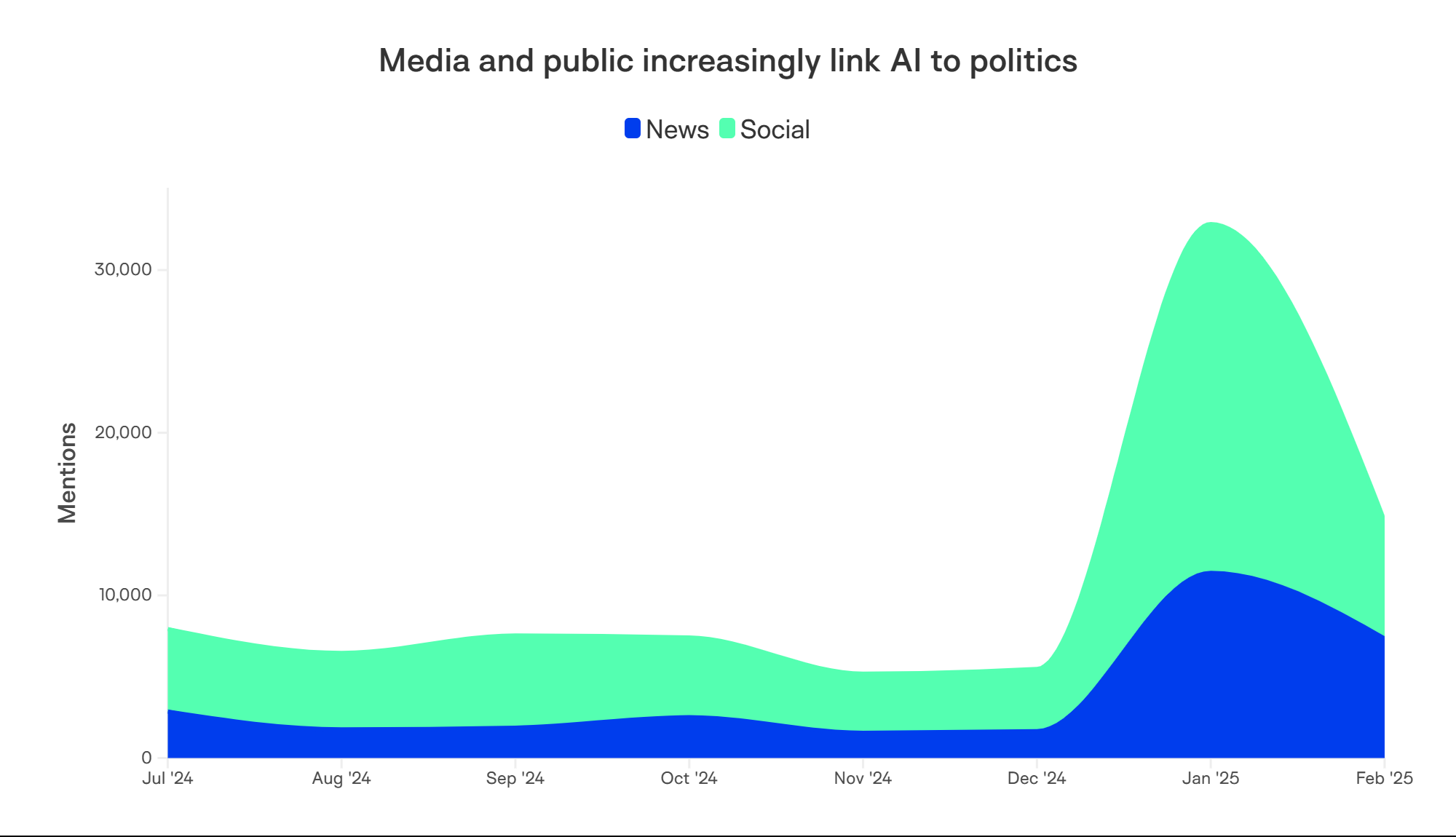
Using Vuelio Political and Media Monitoring; insight from the ResponseSource Journalist Enquiry Service; and social listening, we examine:

Telling interesting stories, and making sure they reach the right people, is one of the key responsibilities of PR and comms professionals. To do this effectively, media monitoring is a must.
The ability to track conversations and coverage, and fully understand the landscape where your comms will land, is a vital tool for planning campaign strategy. But the usefulness of media monitoring doesn’t end there. Understanding how your communications have been received by the media, the public, and your key stakeholders can prove the impact of your efforts, help with measuring your successes, and provide insight into approaches for future campaigns, also.
But which platform is right for you and your organisation? To help, here are the top media monitoring platforms for PR and communications, public affairs, and marketing professionals.
Vuelio is a multi-platform provider of PR and media solutions including media monitoring, an international media database, press release distribution, and campaign analysis solutions, alongside political monitoring, a political database, and stakeholder management.
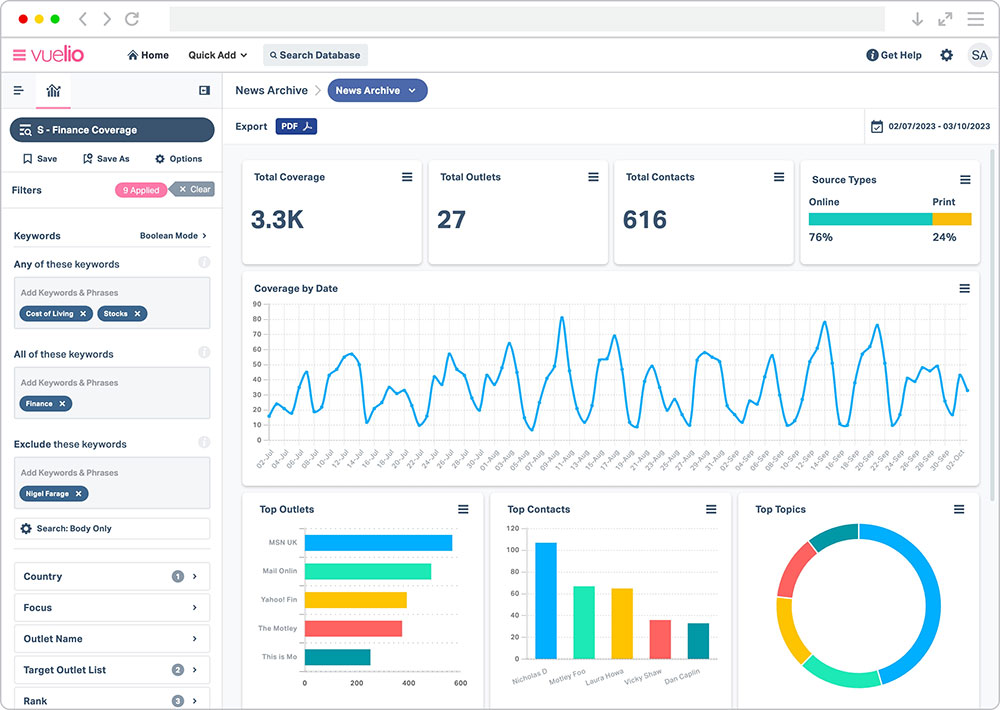
Monitoring is available for all media sources including social, print, and online media – newspapers, magazines, trade and industry publications, television, radio, news websites, blogs, podcasts, and more.
Trusted by PR, comms, and public affairs teams across the world, its services are fully integrated, making its media monitoring even more powerful.

Understand how campaigns and comms have been received by the media with its comprehensive selection of media monitoring, listening, and evaluation tools, in real time.Teams can zone in on what’s happening across multiple platforms, and compare media coverage against social media mentions. More than two million pieces of coverage are shared daily with clients who rely on Vuelio to keep them informed.
Alongside social media, online news, print media, and broadcast monitoring, Vuelio Media Monitoring comes with Executive News Briefings that deliver easy to digest summaries of the top news stories, industry headlines, and competitor intelligence. And for internal reporting, the platform has customisable dashboards, with bespoke tagging. Not sure how to make the most of the service? The team of dedicated account managers are on hand to help.
Isentia’s integrated media monitoring, intelligence, and insights solution aims to support top-performing PR and comms teams in decision making, parsing the world’s conversations in real-time.
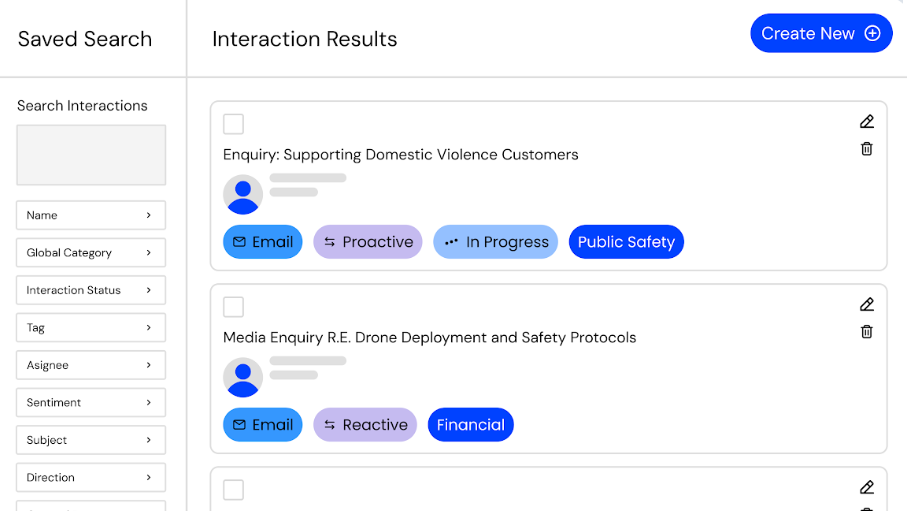
Used by thousands of businesses across the globe, this platform aims to have monitoring solutions for everyone, including agencies, communications, marketing, Government, legal, and research industries, granting them the context to navigate the ever-changing media landscape.
Like Vuelio, Isentia’s Media Monitoring solution is customisable and provides a holistic overview of monitored topics in one place, with the ability to filter, sort, and summarise coverage in a way that works for your team. Print, broadcast, online, and social media is covered, and is shared in a personalised way – users can pick real-time alerts of important coverage, or manageable digests. Isentia is the go-to brand for the Asia-Pacific (APAC), with operations in 11 markets across the region.
Alongside the platform, Isentia’s account management team promises to help users navigate the industry’s landscape with proactive support. Alongside monitoring, Isentia provides Stakeholder Relationship Management, analytics, and reports.
Cision’s CisionOne media monitoring tool aims to make sense of media mentions with the help of AI-powered summaries.
Focusing on automation, this platform offers the ability to turn media noise into quick insights to save time. Clients can track their coverage by building targeted searches.
Alongside real-time alerts, users can get access to the stories that will impact them via the platform. In times of increasing misinformation, CisionOne also flags potentially harmful or misleading content, including fake news and hate speech so that PR and comms teams can act quickly.
Promising ‘robust and real-time data’, Onclusive Media Monitoring manages media mentions and competitor activity across a variety of channels.

Clients can filter their coverage by a number of options in the platform, which takes in online, broadcast, and print content in multiple languages.
Teams can create benchmarks and reports comparing metrics of importance to your business, which can be downloaded and shared.
As well as delving into monitored topics in-platform, updates are provided via insights delivered to team devices via email or mobile notifications. News alerts span keywords, brand mentions, as well as other topics that may be useful to your organisation.
Roxhill Media Monitoring services promise to go beyond mention tracking, offering media intelligence in your given industry.
Matching technology promises that important stories regarding your brand, spokespeople, the wider industry, and your competitors won’t get missed. Mentions can be organised within its Smart Folders, with categorisation for mentions across core themes, pillars, and more.

AI is utilised for tracking brand sentiment, with tone analysis for understanding the wider conversation. Each piece of coverage picked up is measured with a ‘salience’ score of AAA, AA, or A. Alongside Roxhill’s own measurement, users can pick their own custom metrics via their dashboard, to translate data into digestible visuals for showcasing impact to internal and external stakeholders.
Meltwater Media Monitoring offers businesses the ability to monitor and analyse mentions across print, online news, social media, broadcast and podcasts.
This news monitoring tool tracks topic keywords and compiles public online and editorial content that mentions them. Content is captured from international news sources, social media platforms, blogs, forums, and broadcasts.
Search results and real-time analysis can be accessed via the platform as well as a mobile app for teams on the move.
Brandwatch Insights includes media monitoring, but with a focus on social listening and digital media analysis. Social platforms, online news and blogs, and forums and reviews are tracked, with trend and sentiment analysis provided with the help of AI.

Like the above media monitoring solutions, customisable dashboards and reports are available for reporting back to the c-suite, or tracking the success of your campaign as it runs, and alerts can be set up for brand, competitor, or keyword mentions.
Brandwatch may not specialise in ‘traditional’ media including print like Vuelio and Cision, but does offer Stakeholder Management, Market Research, and Brand Management alongside its insight and monitoring software.

One industry forging ahead with AI integration – and battling the risks and opportunities that automatically come with the breaking of new ground – is beauty.
A sector identified with youth and innovation is once again acting as a bellwether for a broader societal trend, and is already playing host to questions around safeguarding and what this means for society.
These questions are especially relevant for the PR, Comms and Public Affairs pros responsible for charting the tides of media and public opinion – and for creating messaging that lands.
Our report ‘AI in beauty equals risk – and opportunity – for the PR & comms industry’ uses Vuelio Media Monitoring, social listening, and insight from the ResponseSource Journalist Enquiry Service to track how AI in beauty sparked both public conversation and press coverage.
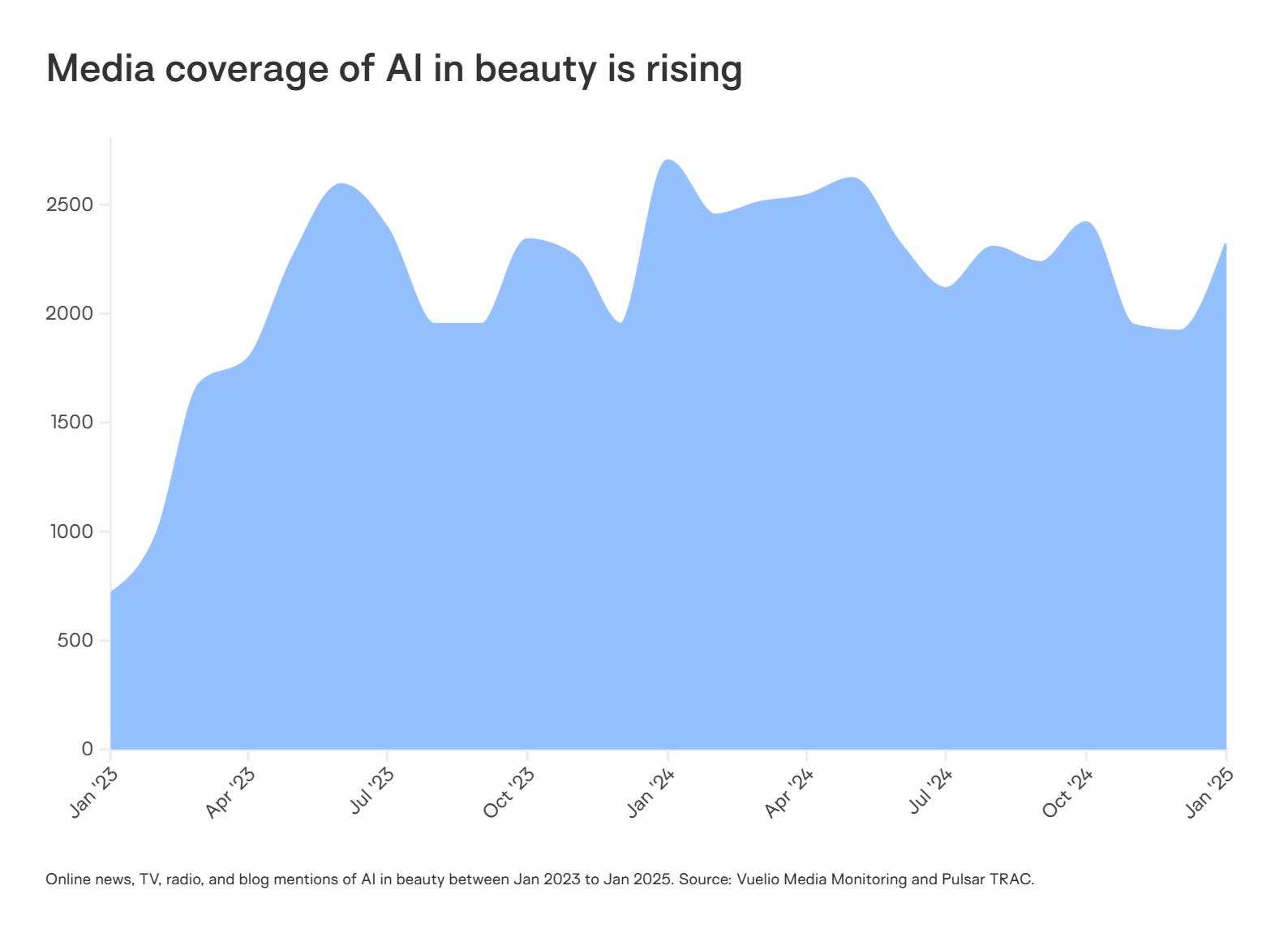
As the UK’s Online Safety Act impacts organisational strategy on AI, and the Labour Government increases its focus on artificial intelligence in business, this report aims to offer a roadmap for sectors tasked with navigating the challenges.
Download the full report for…

Have a press-friendly chief exec to bolster your brand personality in the press? Telling the story of your business by aligning your company comms around members of your c-suite can be a smart strategy – but beware. Carefully constructed press releases form just part of the expanded conversation possible in today’s media landscape.
CEO-centred comms are a risky gambit in this era of call outs for bad behaviour, and criticism for connections with the wrong people or political factions.
Using data from Pulsar Trends and the ResponseSource Journalist Enquiry Service, we examine just how dangerous CEO controversies can be for comms teams tasked with protecting organisational reputation.
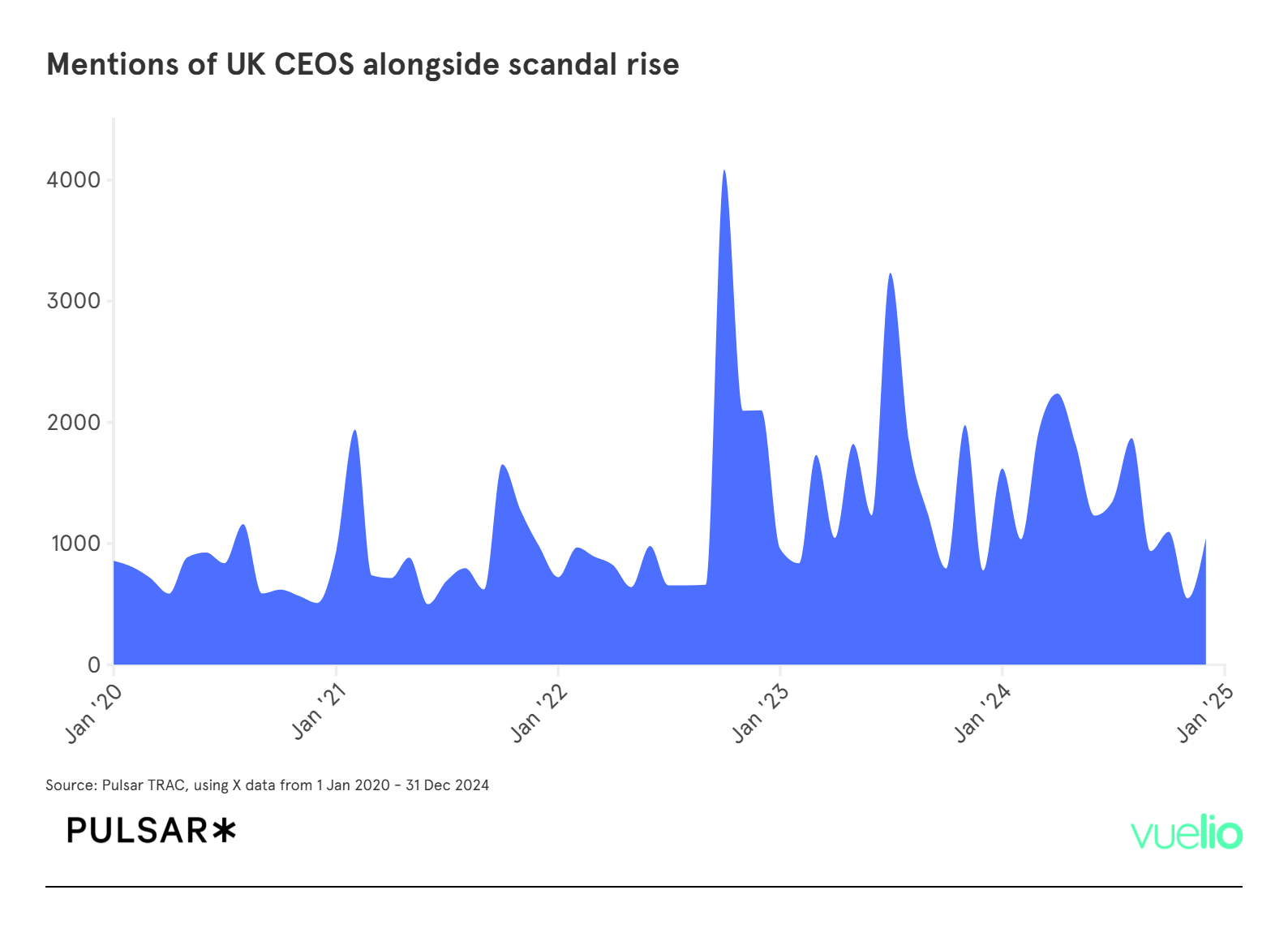
Tracking mentions of CEOs and chief executives with phrases including ‘controversy’, ‘disgraced’, and ‘cancelled’ shows a rise in conversation among the UK public on X since the start of 2020 – with spikes for specific stories of execs in trouble. Which stories got the most people talking and sharing?
US-centred CEO stories gained the majority of interest from Britain-based users of X, with Musk’s take over of Twitter in October 2022 sparking the most social posting and sharing. Peaks also driven by news from overseas – OpenAI ousting CEO Sam Altman from his role (later rescinded) and the killing of UnitedHealthcare’s Brian Thompson. These stories eclipsed the large-scale UK-centred CEO scandals when it came to sharing on social media for Brits. So what did get their attention closer to home?
Attention to UK-born stories went to the stepping down of NatWest CEO Alison Rose following a high-profile clash between the bank and Reform UK leader Nigel Farage, as well as the numerous controversies that fell into BBC CEO Tim Davie’s lap last year.
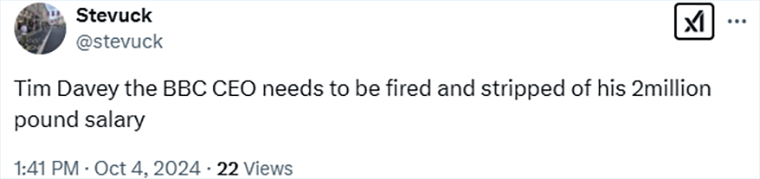
Harrod’s founder Mohammad Al-Fayed’s past impacted former exec Nigel Blow’s future, while events during Nick Read’s tenure at The Post Office continued to fuel furore on socials.
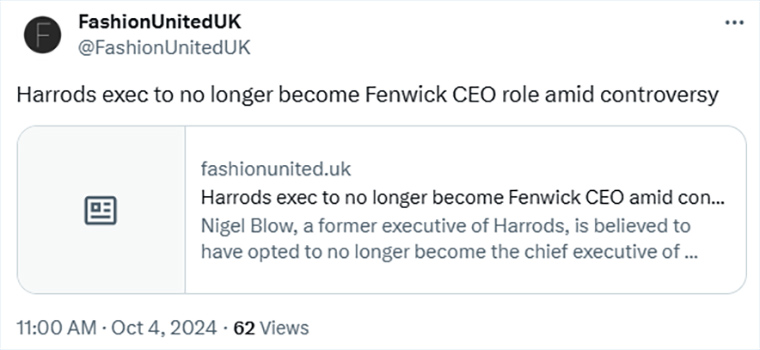
What they all have in common are connections to long-established institutions that come with prestige already attached – Coutts, Harrods, the Post Office, and the BBC.

Could this be an element unique to the UK, with brands fully entrenched into our social fabric? The long history of these UK organisations come with unavoidable institutional weight – making any related human-wrought controversy yet more intriguing for the general public, ready to hold those in power to account.
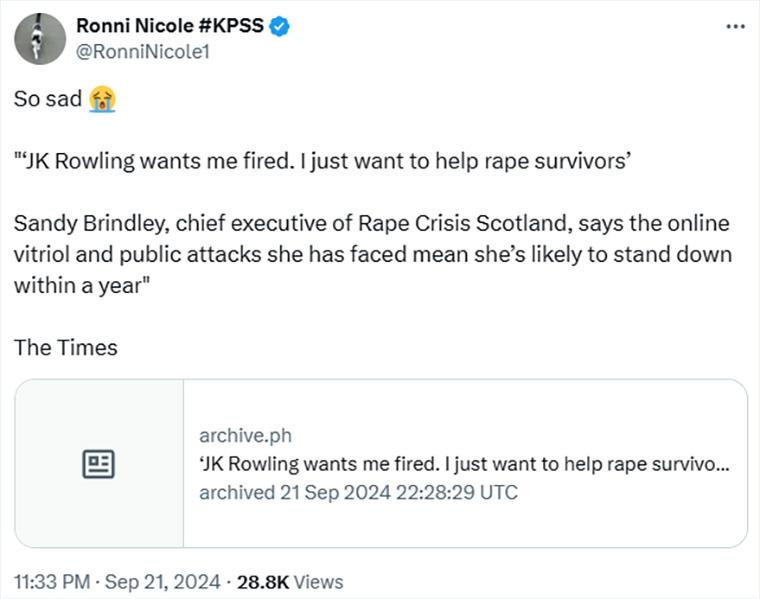
It’s not just high-profile institutions that bring more attention on social media, however. Celebrity also helps. High-profile – and now also highly-controversial – author JK Rowling’s involvement in a CEO-related story heightened the spotlight on Rape Crisis Scotland CEO Sandy Brindley, who shared her experiences in a story for The Times in September 2024.
When examining coverage of UK ‘CEOs’ + ‘controversy’ in the media over the last few years, the data shows a decrease…
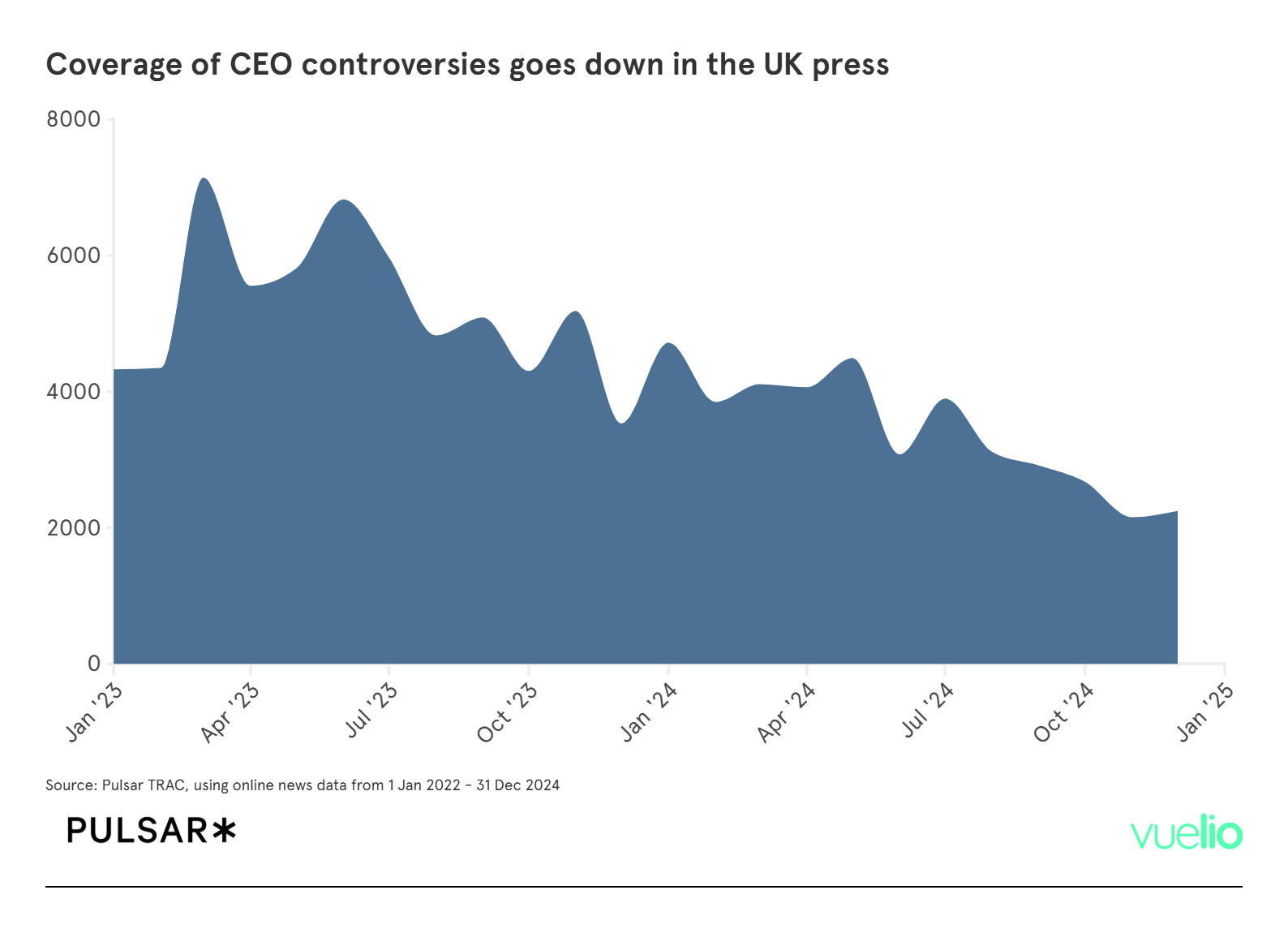
Is this cause for relief for comms teams stamping down CEO struggles behind the scenes? Don’t relax yet – business journalists and columnists have merely shifted their focus to include business-related political figures in the wake of the 2024 General Election. The Labour cabinet in particular has become prime fodder for right-leaning news outlets since its installation in July of 2024. Naturally, this has meant a slight downturn in UK CEOs being called out.
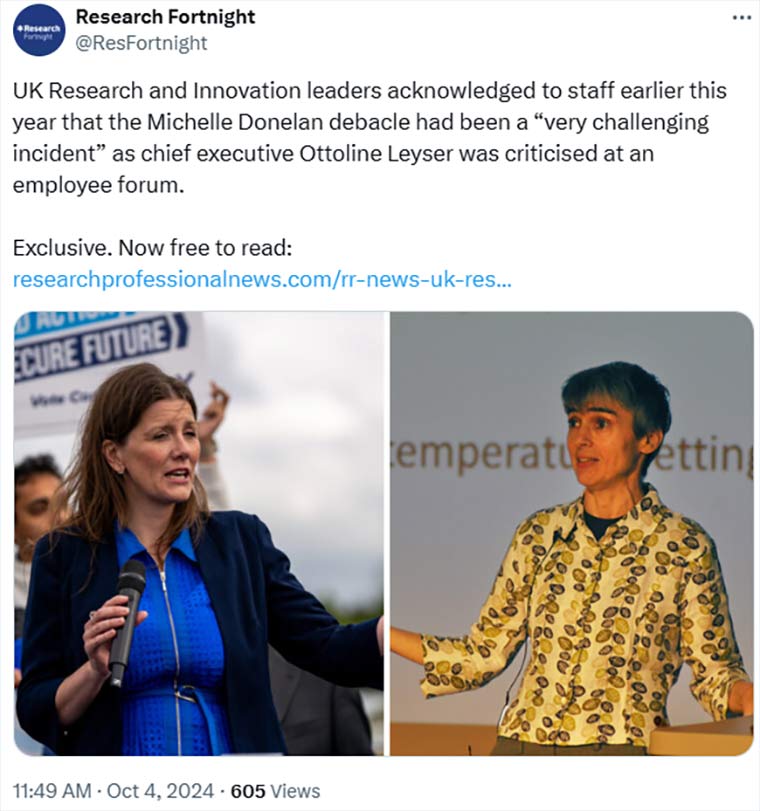
A catalyst for one peak in both news coverage and social conversation that featured a politician-CEO combination was former Secretary of State for Education Michelle Donelan’s clash with UK Research and Innovation chief exec Ottoline Leyser in October 2024:
The UK public aren’t only interested in commercial brand CEO scandals that intersect with the glitter of celebrity or politics. Beyond US-born controversy, one thing that consistently engages the UK public is scandal concerning the Third Sector.
Stories that got reporters writing – and social users sharing – was the announcement of Shelter’s ‘divisive’ CEO Polly Neate CBE’s plans to step down; the resignation of Children in Need chair Rosie Millard regarding objections to grants for LGBT Youth Scotland (LGBTYS); and the firing of Embrace Child Victims of Crime (CVOC) chief exec Anne Campbell.
CEOs don’t have to be guilty of bad behaviour themselves to be the subject of negative reporting or social media speculation. Not-for-profit comms teams must be prepared for a comms crisis related to their c-suite by monitoring the mood among the public, and the press.
Highlighting the continuing media interest in CEOs and the c-suite were the almost 400 related enquiries submitted by journalist, broadcast, and influencer users of the Journalist Enquiry Service last year.
Which sections of the media are hungry for CEO stories? The majority of requests came from business-focused trade titles including Management Today, Business Age, and Verdict, but also national press outlets with business beats including The Times and PA Media. Many of these requests sought comment from CEOs on the big stories of that week’s news cycle… but others wanted comment on the actions of CEOs themselves – including high-profile marketing expert, and controversy-courter, Steven Bartlett. One such journo request:
‘The online lifestyle, fashion, and beauty magazine SheerLuxe has come under scrutiny for ‘hiring’ their first AI (artificial intelligence) employee as Fashion Lifestyle Editor, Reem.
‘However, business mogul and host of the Diary of a CEO podcast, Steven Bartlett, scrutinised critics of the marketing stunt in a LinkedIn post […] Does Bartlett actually mean what he says? Or is he just trying to go against the grain of the common opinion?’
The opinion of business leaders is still of great use to journalists who require quick expertise to back-up their reporting (impressive job titles still confer respect) but, as is spotlighted by the data above, they aren’t granted unquestioned authority anymore, and their missteps can be quickly mined for content.
UK social media users are ready to pick apart CEO scandals and extend the life of these stories – especially when a controversy intersects with established and ‘respectable’ institutions or well-known figures. While the majority of the media has shifted focus to politicians, this doesn’t mean CEOs are in the clear.
Increased demand for ethical business choices from the public, and journalists reporting with their interests in mind, means CEOs are now just as easy to target for criticism as for their expertise. ‘Higher-profile’ increasingly means ‘higher-risk’, and understanding the nuances of the conversation will be a vital part of the PR toolkit this year.
Find out how to monitor your organisation’s reputation in the press and on social media with Vuelio’s monitoring solutions.

What are journalists looking for as 2025 begins? The new year may have only just started but hundreds of requests have already been sent out via the ResponseSource Journalist Enquiry Service.
Read onto see what journalists were looking for in December for this month’s features and how to get media coverage in January and beyond.
Apart from last minute Christmas content, journalists spent December looking ahead to the new year. ‘2025’ appeared in 26% of the total requests last month and ‘new year’ in just under 9% of them.
A lot of journalists are looking for ‘trends’, which cropped up in 18% of the enquiries they sent. Subjects varied greatly, with requests for nutrition/health trends, wedding trends, interior design experts to comment on office trends, and a dating expert to dish on relationship trends for 2025.
Going forward? The new year content and trends pieces remain a focus for the media throughout January – now is your time to get in touch with them. Topics like health, fashion, beauty, travel, and home/interiors are of particular interest, especially for top tier media outlets such as Sky News, Metro, PA Media, and The Independent. Have experts ready to talk to the media, and trend forecasts and predictions prepared to share, to secure national press coverage now.
January features two health-oriented initiatives – Dry January and Veganuary. Both have been popular with media professionals sending enquiries for PRs (featuring in around 2% and 3% of them, respectively) and more general words like ‘fitness’, ‘wellness’ and ‘healthy’ also crop up more frequently around this time of year. ‘Fitness’ reached nearly 8% in December, ‘wellness’ appeared in 6% of enquiries, and ‘healthy’ featured in 5%.
‘Fitness’ requests tend to focus on getting expert opinion, while ‘wellness’ and ‘healthy’ are for more general information. Journalists at the Express.co.uk, Fabulous magazine, The Daily Mail, Prima and Women’s Fitness all sent enquiries last month.
Going forward? The focus on a healthy lifestyle will remain popular this month, judging by last year’s figures, where over 10% of requests contained the word ‘healthy’. Journalists will tend to focus on getting expert quotes from people such as personal trainers, running coaches, nutritionists, doctors, and GPs – so have them prepared to provide comments.
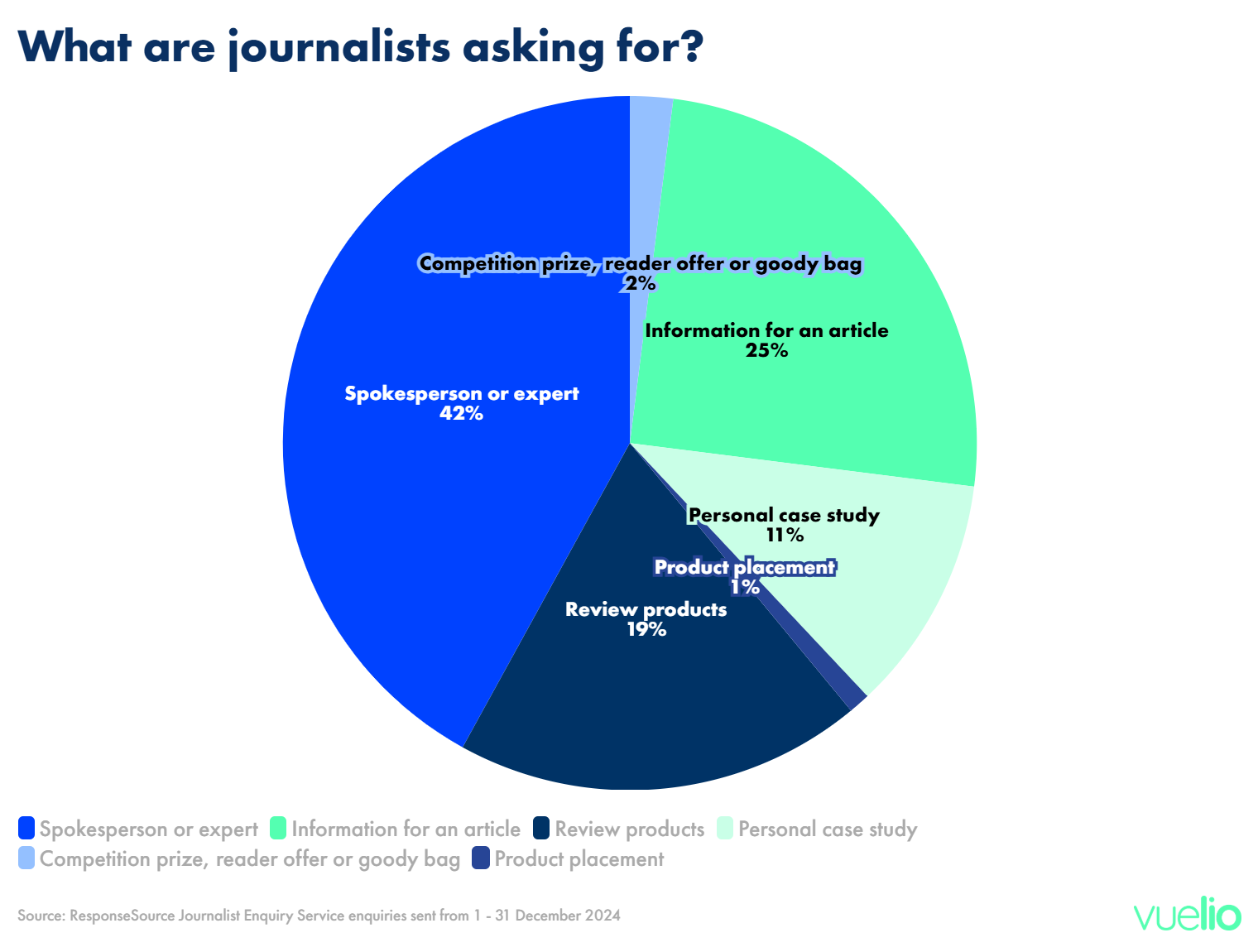
The concerns around winter fuel payments have been well-documented in the media, and money and heating remained a key topic for journalists to cover last month. 10% of the requests in December contained ‘money’ as a keyword, while over 6% were for heating.
Journalists at The Sun, Yahoo! News, and The I Paper sent enquiries looking for heating experts and the cheapest ways to heat your home. Journalists at The Sunday Times, The Daily Telegraph, and Saga looked for money-saving experts and case studies of people’s financial situation.
Going forward? January and February are two of the coldest months of the year so journalists will continue to seek heating experts to provide advice on staying warm for less. Personal finance and money experts are often in demand too, especially during the first few months of the year as journalists share expertise on saving money after the expenses of Christmas.
Valentine’s Day is now just over a month away and the media will be busy compiling lists of products and gifts, as well as date night ideas. 6% of requests in January 2024 were for Valentine’s, and some journalists were looking further ahead with 2% around Mother’s Day.
More events to have experts ready for in January are National Obesity Awareness week (10-16 January), Blue Monday (20 January), and National Cheese Lover’s Day, and don’t forget Chinese Lunar New Year (29 January).
Happy New Year, and happy pitching!
To connect with the media on these topics, and much more, check out the Journalist Enquiry Service and the Vuelio Media Database.
Find out more about how Vuelio can help you gain and track your coverage in the media here.
In a busy and high-pressure year for PR, the industry stepped up with creative comms for brand and awareness campaigns alike.
We asked PR experts to share their favourite PR and comms campaigns of 2024 – here are shout outs for great work from McDonald’s, Led By Donkeys, the UK Black Comms Network, and Sesame Street (to name just a few)…
Estelle Boon, group managing director – brand, social & influence, Ketchum
‘For me it’s a person. Elmo. Yes, Elmo. Yes, he’s a person.
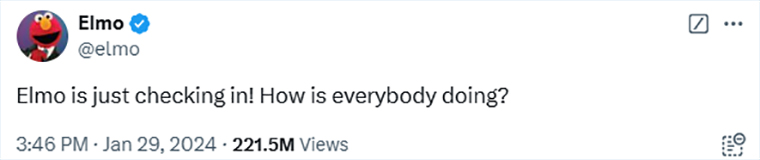
‘In January, he (okay, Sesame Street’s social team) posted on X, asking how everybody was doing. As of December that post has had more than 360k active engagements. While we know the virality of a social media post cannot be predicted, the simplicity of this human-first approach that stayed true to “brand Elmo” and his fandom, gave it a running start.’
Gorki Duhra, press manager, Royal National Institute of Blind People RNIB
‘With immigration a General Election issue, and the widespread abuse suffered by black players at Euro 2020 fresh in the mind, a poster for the Migration Museum that pondered what the England team would look like without immigration was simple and powerful. Only Pickford, Stones and Foden remain in the starting 11, while the names of stars such as Bellingham, Saka, Walker and Kane are all struck out.’
Stephen and Sarah Waddington, directors of Wadds Inc. and founders of Socially Mobile
‘Led by Donkeys is well-known for its political activist campaigns. The National Covid Memorial Wall of hearts is a lasting legacy for the people who died during the pandemic. In February, it laid out more than 11,000 sets of children’s clothing on Bournemouth beach in protest at the war in Gaza. The clothing stretched for five kilometres and was a powerful visual representation of the children killed on both sides of the conflict since 7 October 2023.’
Ronke Lawal, PR and communications consultant, Ariatu Communications
‘As Chair of The Women’s Group for UK Black Comms Network I am biased, but the ‘One Step Forward Two Steps Black’ report in collaboration with Opinium was a powerful and meaningful campaign that the industry at large should continue to pay attention to. We cannot continue to allow such huge disparities to prevail if we wish to nurture talent from across diverse communities.’
Jonathan Curtis, chief commercial officer, Grayling Global
‘For me the standout was the McDonald’s ‘The Meal’.
‘The campaign removed the iconic Happy Meal smile to help children understand it’s okay not to be happy. As a Dad of two kids going through the trials and tribulations of schools and friendships this was particularly pertinent and was executed with a simple but brilliant bit of creative thinking that only McDonalds could do.’
Gareth Hoyle, managing director, Coveragely
‘Back in July, Budgy Smugglers and Transport for London partnered for a fun, but cheeky, campaign (pardon the pun). The swimwear brand got together with the country’s most talked about travel network and launched a new collection of swimming trunks featuring some of London transport’s most iconic moquette seat designs. And it worked. Unsurprisingly, the media and social media lapped up this news and the brands were able to secure plenty of coverage in a variety of titles, such as the Evening Standard, Retail Times, TrendHunter and Famous Campaigns.
‘It was able to generate a buzz on social media, the quirky campaign came with some interesting pictures of models looking freezing on the tube and in front of various famous London locations and it had a great regional angle.’
Rachel Humphreys, PR lead, Digital Hub, Motorpoint
‘One of my favourite campaigns of the year was British Heart Foundation’s ‘Streams of (un)consciousness’. The campaign targeted Gen Zers through gaming and streaming platforms to educate them on CPR, as there was a significant lack of CPR knowledge specifically in this age group. This is a great example of how digital campaigns can have a real-world impact, raise awareness and educate.’
Alice Regester, CEO and co-founder, 33Seconds
‘There have been some great purpose driven campaigns so far this year, encouraging consumers to live more sustainably, spend time in nature and appreciate our planet. The Woodland Trust and Adam Buxton partnering up to encourage us to plant more trees and The National Trust’s ‘Space to Feel’ campaign are a couple that spring to mind.
‘As well as this, there have been some great industry-led campaigns to encourage communications professionals to be more ethical. This has included the Clean Creatives pledge against working with fossil fuel companies – over 1,000 agencies and practitioners have signed up so far already.‘
Rachel Irvine, founder and CEO, Irvine Partners
‘A notable mention is CALM’s ‘Missed Birthdays‘ campaign, which aimed to raise awareness for youth suicide in the UK.
‘The initiative included call to actions, kits, and resources to help those in need, and personal stories through screens and audio in the exhibit and online. It took something celebratory (a balloon) and spun it on its head to show the opposite, which resulted in a creative, poignant and memorable campaign.’
Pippa Brindley, managing director, The Comms Collective
‘Ryanair is just so good at keeping everyone talking. Their no-filter, daring approach to marketing makes them impossible to ignore. Their online presence shows that they know exactly how to grab attention without taking themselves too seriously. They’ve built a hilarious, self-aware personality that works because it feels authentic. Even if you don’t fly Ryanair, you’re probably following their socials because they’re just that entertaining.’
Jane Hunt, co-founder and CEO, JBH The Digital PR Agency
‘Over the summer, Domino’s capitalised on their iconic garlic and herb sauce by bottling it in a travel-sized format. This playful product innovation captured consumers’ imaginations, creating buzz and reinforcing brand loyalty. It was a brilliant mix of product PR and a light-hearted nod to customer demand.’
Kelly Pepworth, managing director, Speed Communications
‘My favourite was the CPR Bra for St John Ambulance. The campaign was based on a simple gender disparity insight that one in three people are afraid to give CPR to a woman.
‘Great execution with the creation of an educational bra, sharing insight on what action to take when dealing with a cardiac emergency. It was worn and endorsed by key female influencers from the world of football, music and broadcast creating great visuals as well as reach. Simple but very effective.’
Ed Sheldon, account director, Tank
‘The PR campaign that got the Tank team talking the most this year is a recent one. Premier Inn’s What’s Occur Inn campaign to rename its Barry Island hotel ahead of the Gavin and Stacey finale was inspired. It’s a great example of a reactive campaign that puts a brand at the heart of wider cultural conversations.’
Jo Preston, group board director, Teamspirit
‘O2’s AI Granny was a genuine phenomenon this year – created to keep scammers on the phone and waste their time, it really tapped into the zeitgeist.
‘You know you’ve done something right when you’re mentioned on ‘Have I got News for You’ and Chrissy Teigen’s Instagram!’
Nick Owens, founder, Magnify PR
‘Specsavers’ campaign in Edinburgh stands out. The creators made it look like one of their vehicles had smashed into a bollard with their now iconic “Should Have Gone to Specsavers” slogan alongside it. Funny, simple and clever – three of the things campaigns often fail to be.’
Riley Gardiner, founder, No Strings Public Relations
‘In 2024, Dove’s extension of its “Real Beauty” ethos stood out. Featuring women from diverse backgrounds, including Michaela Coel’s powerful portrayal of unfiltered skin, it challenged beauty norms.
‘This wasn’t just an ad—it became a movement, driven by its commitment to inclusivity and sincerity, tapping into deeper social currents.’
Fiona Scott, managing director, Scott Media
‘I loved the Paralympics (I do declare an interest, as I work with Paralympian), Channel 4 did a great job of making it exciting, funny, engaging and didn’t focus on disability, but focussed on elite athletes.’
Joseph Hagan, founder, Streamline PR
‘Another highlight was Adidas’ “Impossible is Nothing” campaign, which told inspiring stories while embracing inclusivity.’
Damon Culbert, digital PR manager, Add People
‘I’m a horror movie fan and there has been some real success stories in terms of marketing and PR through 2024. ‘The Substance’ has put a lot of effort into promotion on social media and taken advantage of user-generated content to keep conversations around the film going long after its release.
‘The best campaign I saw, however, was for ‘Longlegs’. Its promotion was definitely behind its box office success and releasing news about lead actress Maika Monroe’s heart rate when she saw the antagonist for the first time was an interesting and unique use of a tried and tested format.’
Want to make a start on your own winning PR and comms campaigns for the year ahead? Check out these 25 PR and communications trends for 2025.

Whether you’re launching a product, hosting an event, or raising organisational awareness, a campaign report is the best way to showcase the successes to stakeholders in an easy and digestible format. Measurement also helps teams to improve, compare strategies, and understand the true value of events and campaigns.
Campaign reporting isn’t only about evaluating what happened in the past, you can also use media analysis to support you before and during a campaign.
By following this framework for your campaign reporting, you’ll be able to:
Goals
Before your new campaign begins, it’s time to set up clear goals and meaningful KPIs. This will help provide everyone with a clear direction of what is to be achieved and help with the future measurement of assessing the success of the campaign.
Consider the following:
For example:
A mountaineering rescue charity may want to analyse its summer mountain safety campaign. They may want to target novice hikers with the key message to be prepared while hiking this summer. This charity have particular issues in the North of England, so want to target local media in that region, during the summer heatwave.
SMART Goals
With goals in place, you can set realistic SMART KPIs that align with your overall campaign objectives (SMART: Specific, Measurable, Achievable, Relevant, and Time-bound).
For example:
The mountaineering charity would like to increase the volume of campaign coverage by appearing in 400 outlets between 5 June – 4 July.
Or, they would like to increase the amount of headline mentions from the previous year by 5%.
Using historical or Industry Data
Once you’ve established your campaign’s goals and KPIs, use data to establish benchmarks to ensure your targets are SMART. Effective comparisons could be to your competitors, yourself, or the industry, and without data, you’re basing decisions on nothing more than a gut feeling.
Using data allows you to:
For instance, the mountaineering rescue charity may have run a similar campaign the previous year and found that they achieved coverage in 300 outlets and a key message penetration of 35%. It would be unrealistic to set a goal of 100% key message penetration if the previous year had a 35% penetration, so an organisation can use this information to set a realistic target against last year’s results.
Vuelio can support you during the pre-campaign period with analysis of competitors or previous campaigns that can allow you to identify opportunities and threats.
Choosing the right metrics
Deciding which metrics to include is important, as the campaign report needs to reflect your SMART goals in a simple way that stakeholders in the wider business can understand.
Base your metrics on what best demonstrates your SMART objectives. This is especially the case with sentiment and proactivity analysis. Unless your campaign is to combat a negative reputation, sentiment will generally be positive, and the campaign itself is proactive, so consider other metrics such as the following:
Campaign-Specific Messaging: Track whether your intended key messages are being portrayed in the media e.g. How much coverage was the key message ‘When hiking this summer, be prepared and take water’ featured in?
Calls-to-action: Analyse if the media has included your campaign actions e.g. Head to mountaineeringrescue.co.uk to find out more about hiking safely this summer.
Prominence: Assess not just the volume of coverage about the campaign, but also the quality – are you appearing in headlines or as passing mentions?
Target Media Analysis: If your goal is to gain attention from specific media outlets, a detailed analysis of these results is necessary, e.g. Mountaineering Rescue is targeting local charities in the North of England so have compiled a list of relevant outlets in the region. It’s worth utilising a media database, like Vuelio’s Media Database, if these are journalists you haven’t worked with before.
The Vuelio team can support you with choosing the correct metrics. The team also typically provides manually analysed metrics that will allow you to analyse bespoke campaign metrics such as campaign messages.
Establish a useful reporting framework
During the campaign, it is important to continuously assess progress with the use of snapshot reports. These reports can help your organisation showcase immediate success, or respond to media reactions that may not be favourable or in line with messaging.
While you may already produce a campaign report at the end of your campaigns, sometimes this can be time-consuming. Vuelio’s Insights team can provide support during busy campaign periods on an ad hoc and ongoing basis. Many of our clients enlist us to provide them with multiple campaign reports per year to utilise our expertise, while some clients require our services on an ad hoc basis.
Once the campaign has finished, it is time to assess if your organisation has met its KPIs. At its core, media measurement is a continuous improvement process.
It may also be useful to consider if any additional data sets would add value to your reporting. For example, it may be useful to understand if donations, sales, or website traffic increased during the campaign.
Finally, when your campaign has ended and all analysis has been completed, you can then use this report not just as a summary of your campaign but as a benchmark for future work.
Find out more about campaign reporting and how Vuelio can help here.

Trawling social media posts from journalists for requests, taking a chance on emailing, or even cold calling – media outreach doesn’t have to be this difficult. The ResponseSource Journalist Enquiry Service has been connecting PRs with journalists since its launch back in 1998 and is relied upon by the UK media industry every day.
Media professionals sending requests to PRs via the service span leading national and regional press, broadcast, magazines, podcasts, and much more.
Looking for media coverage? Tap into the Journalist Enquiry Service’s huge network to connect with journalists and broadcasters directly with what they need. Here are just five reasons to dip back into the service ( or try it for the first time!) to secure coverage in the press…
Rather than receiving a deluge of potentially irrelevant asks from the UK media to slowly sift through, PRs signing up for the Journalist Enquiry Service have 25 categories to pick from and filter requests with – what you get is what you need.
Categories span from Entertainment & Arts to sector-specific subjects like Medical & Pharmaceutical, and journalists using the service to source PR contributions choose the most relevant categories for their requests.
The Journalist Enquiry Service is also powered by a dedicated team of researchers who ensure each journalist request is clear and is being sent to the right categories.
Cutting out the need for extra outreach almost entirely, the Journalist Enquiry Service shares requests from the media directly to PR inboxes. You can choose how often these come through to you depending on your workload and preferred way of splitting up your day.
Sign up for a daily digest of useful requests for review products, case studies, expert comment, statistics and survey results, new research, or filming locations to peruse when you’re ready, or receive each request as and when they’re submitted by media professionals in need of your help, skillset, and contacts.
Each request you receive will include the elements you need to ensure your reply is of use for the journalist. Alongside a short enquiry summary, the submitter will include a longer description of what they need in the dedicated Query box – these can include links to previous pieces in a series they’re working on, or extra context for the story the enquiry concerns.
A set deadline is included, as well as a link to more information on the outlet they are writing/filming/recording for. Enquiries drop off from the system once the deadline is passed to prevent any accidental sends for news or features that have already been filed for publication or release.
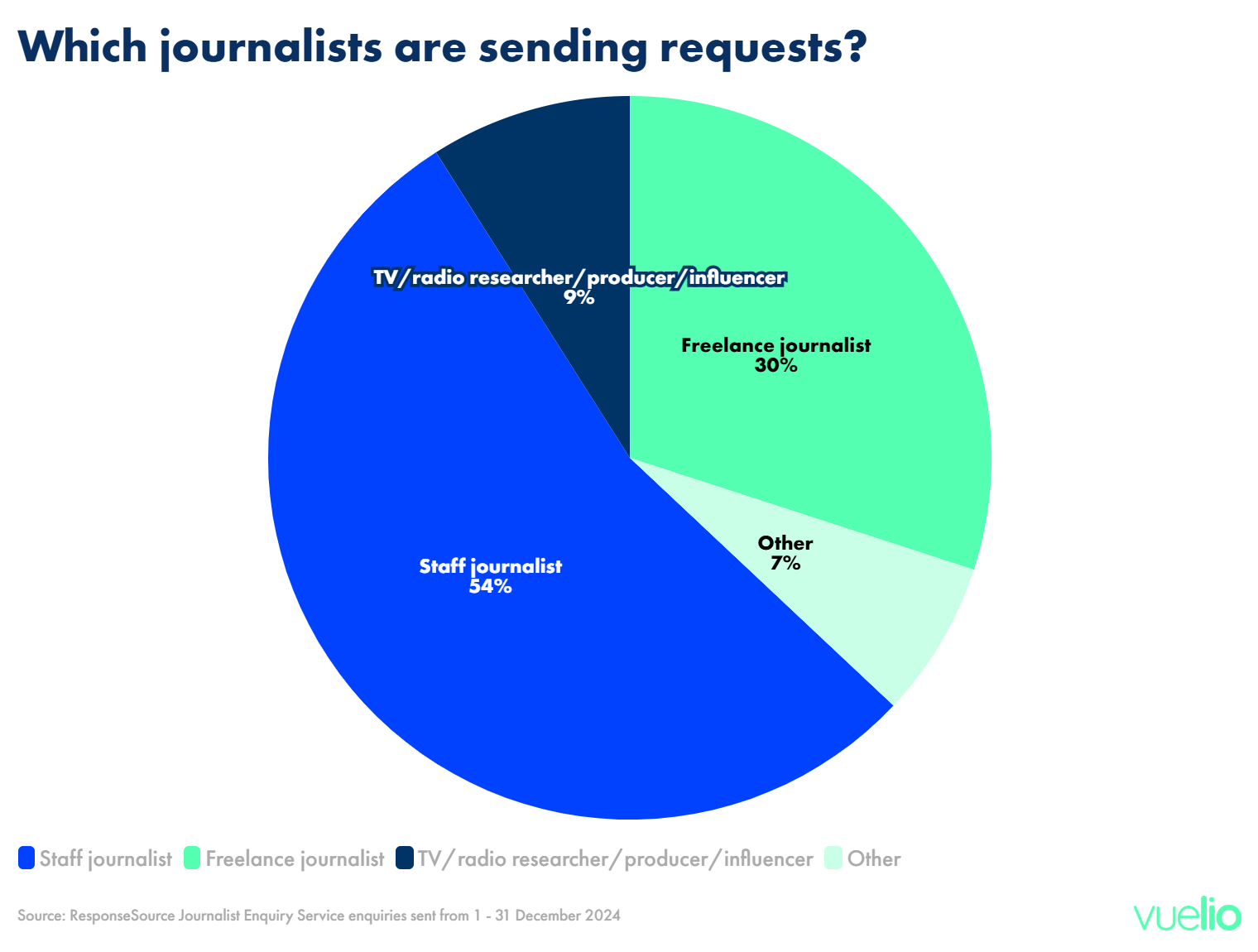
With a quarter of a decade-long track record of trust built with the UK media, the Journalist Enquiry Service is utilised by media professionals across the country’s biggest publishing organisations to source information.
Alongside staffers in newsrooms and on editorial teams across the country, freelancers who work for a variety of top publications rely on the service for the extra information they need for their commissions. And the interaction between a journalist and the public relations professional who offers help with their enquiry doesn’t have to end there. While interactions are managed within the platform for each request, many long-term PR and journalist working relationships have started with contact via the Journalist Enquiry Service.
The Journalist Enquiry Service platform exists as a place for the media and PR industries to share useful information and build relationships – a neutral meeting space with benefits for both.
A journalist sending a request via the service genuinely wants to hear back from PRs with relevant contributions, removing the need to source contact details, or reaching out without knowing for sure if your offering will be useful or even well-received. Contact begins through the internal network, with email replies coming via a generic address until both sides are ready to share their contact details directly.
Ready to start receiving requests from the UK media? Sign up for a trial.

How has the emergence of new media platforms impacted journalism, and its audiences?
To explore the state of journalism today and how it’s evolving for the future, we invited two panels of industry experts to share their expertise with an audience of PRs and fellow media professionals for the Pulsar x Vuelio event: ‘Seeking Audiences: Journalism in the Platform Era’ event.
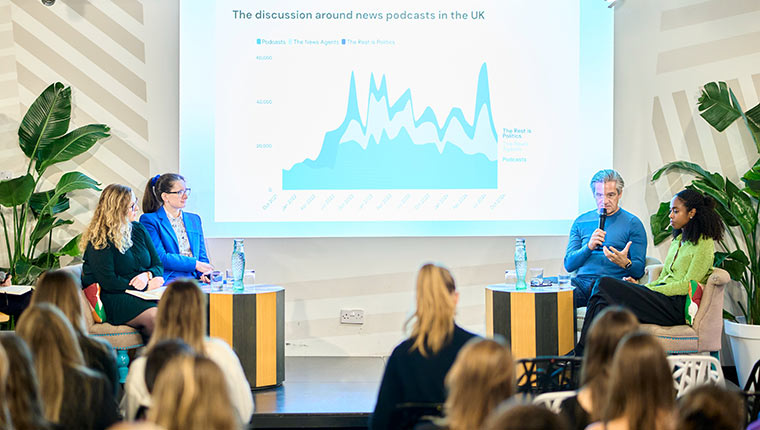
Joining us to discuss the ‘new news’ landscape – including the challenges of capturing audience attention amid fragmenting forces like TikTok; the role of podcasts; and comebacks for local news – was Press Gazette UK Editor Charlotte Tobitt, ITV News Reporter and Producer Siham Ali, Polis Founding Editor and Director of The Journalism AI Project at the London School of Economics Professor Charlie Beckett.

Covering changes in audience perceptions, brands, and behaviours was CNN International Commercial Vice President, Audiences & Data Tini Sevak, The Economist’s Media Editor Tom Wainwright, and BBC News Journalist, Producer, and Presenter Kamilah McInnis.
Here are key points from the speakers, as well as extra answers we ran out of time for…
So many platforms, so little time for each: What are the biggest hurdles to reaching an audience for journalists?
‘Two main things – the fragmentation of the media landscape, and Google sending less traffic to them,’ was the verdict from Press Gazette’s Charlotte Tobitt, who covers the fortunes, and fluctuations, of the media as part of her daily beat.

‘It’s rarer for someone to search for ‘The Telegraph’ to find their news now, and publishers are finding it harder to engage directly. They need to future-proof against the many other platforms out there by building brand connections – trust is at a real low in the UK and the US’.
Charlie Beckett, whose organisation Polis campaigned hard for amendments to the Online Safety Bill, highlighted just how much the media industry has been transformed by competing platforms pumping out information, 24/7:
‘I remember when it was just papers and TV. We were the only place you could get news – life was great!

‘Social media is the biggest thing to happen to journalism in a hundred years. You have incredible access to different sources, and that can be overwhelming. But as an audience, we don’t want to go back.
The problem for publishers is having to start from a place of what people want. But journalism has always been good at that.’
Is the plethora of platforms warring for audience attention actually an opportunity for journalism? ITV News’ Siham Ali, talking as a reporter with ‘boots on the ground’ across the UK, sees the positives:
‘I think finding an audience is easy with TikTok and Instagram. Especially with local news – Facebook has made our jobs easier.

‘We have stories that perform well on TikTok. The trick is adapting our storytelling to this new way of sharing news. I don’t think it’s a bad thing. But then, I’m young, so…’
Another ‘newer’ format for storytelling is podcasting, a medium the publishing industry has invested in heavily over the last few years.
‘[The podcasting format] is infecting ‘traditional’ broadcasting and making it more casual,’ believes Charlie. ‘And they aren’t much different – they’re merging.
‘Podcasts are ambient. TikTok, you’re more focused on it. When we talk about audience attention, it’s skeletal – it doesn’t tell us everything we need to know.’
Rebuilding trust in the news industry when bad actors also have a platform
Vuelio’s head of insights Amy Chappell asked if the extra competition for audience engagement has meant more clickbait (and as a result, more misinformation).

‘You have to be really careful where you get your news from,’ said Siham. ‘I’d like to think the big media names are the good actors. There’s clickbait everywhere.’
Charlie pointed out that this isn’t a phenomenon born from the digital age:
‘Audiences have a lot of agency – they consume “fake news” because they want to. People are driven by identity and emotions, by fear – they choose to consume what panders and pays attention to fears they have.
‘Clickbait wasn’t suddenly invented. Marketing and advertising people have known this for decades.’
Trust was also highlighted as a difficult part of the local journalism ecosystem –
‘People are at the heart of everything we do. In journalism – people are the story,’ said Siham.
‘I was only able to work on certain stories because of people in communities. I saw their need to be heard.’
The importance of time covering a local new beat on a journalist’s skillset was underlined by Charlie – not just for the journalist, but also for building loyalty with audiences:
‘Editorial diversity is what’s needed – knowing what it’s like to grow up on a council estate, for example.
‘Most national press get their stories from local news. The media have to be honest that we’ve messed this area up by reducing news teams – fewer journalists are left now in regional journalism.’
Is social media and vertical video making news accessible, and can it bring media success?
‘The news industry was slow to TikTok, and then a few individual journalists picked it up,’ explained Charlotte.
‘The Daily Mail is now one of the biggest news publications on TikTok, and it’s a good thing for the longevity of the brand.
‘People were hesitant initially because the monetisation wasn’t there. But for brand building, it’s worth it. The TikTok algorithm is so good that the right stuff should find the right people.’
But Charlotte also recommended caution regarding social platforms like TikTok:
‘It would be risky to rely on them completely – the platforms can change up the algorithms anytime. Publishers shouldn’t get too excited about one platform.’
‘Audiences that are underserved [by traditional media] are on TikTok,’ added Siham.
‘They might then come through to ITV at 6.30pm. An 18-year-old then knows what’s happened in Westminster today. They’re now able to pass that information to their friends at the pub.
‘TikTok used to be an afterthought, but now it’s part of the planning stage at ITV. The social team make up a chunk of our output on the platform’.
The opportunities for PRs and a bright future for journalism
‘I used to work in PR, and we didn’t think to add vertical assets – there’s a lot of potential in that space, said Siham. ‘Show that your content is multiplatform.’
‘I’ve seen politicians doing interviews directly with social teams, and not the digital news teams. That trend is quite interesting.’
‘I’m excited by the new platforms, adapting as a news organisation is exciting.’
‘If I wasn’t optimistic about the future of journalism, I would be in the wrong job,’ said Charlotte. ‘People are aware of the challenges, but there’s lots of innovation and cool stuff going on.’
‘The news industry is more aware than it’s ever been. News is incredibly resilient – the dogs won’t die,’ said Charlie.
How worried should the media and comms industries be about increasingly polarised communities?
The Economist’s Tom Wainwright highlighted just how split media audience are along political lines – particularly in the election-heavy 2024:
‘More extreme takes travel further online than more moderate ones. That makes the space seem very polarised. And what you see in polling is that trust is very split along partisan lines in readerships and viewer bases. After Brexit, the big fallout between ‘leave’ and ‘remain’ audiences, for example.
‘It’s part of a broader mistrust from more conservative audiences with what they see as ‘elite’ institutions. This split is a hard thing to fix. Organisations need to increase their diversity of staff partly because of this. There’s a divide that’s baked in.’

‘People still value credible and well researched journalism but news is dominated by organisations that focus on sensationalism and misinformation,’ added BBC News’ Kamilah McInnis.

‘Organisations should apologise when mistakes are made, listen to audiences and be consistent to rebuild trust. Respond to what audiences need. And remember that they also tune in for escapism and analysis.’
CNN’s Tini Sevak emphasised how vital established and non-partisan media organisations are for the public, whatever their political outlook:
‘When people are making big decisions, they’re still coming to news organisations.’

Bringing audiences back to engaging with news reporting, wherever it’s published, posted, or shared
The panel talked about the rise in news avoidance over the last few years, and how this is increasingly impacting audiences across demographics. It’s not just younger people who avoid hard news – not tuning in to ‘traditional’ news mediums like ITV News at 10, or picking up a daily print newspaper. Even those who had previously been avid news-followers are tuning out for a variety of reasons – the increase in global conflict; the ways awareness of this has seeped into all other mediums to become a constant in the background of modern lives; even the lack of censorship and inclusion of distressing images and updates.
Much has been made of this increase in news avoidance over the last few years – both at industry conferences for journalists, and in reports detailing challenges for publishers. Could a factor be a simple lack of visibility for ‘traditional’ news platforms?
As Tom pointed out: ‘As a child, I had to watch Newsbeat to get to Grange Hill. People are moving from a news-rich environment to a news desert. Maybe people are bored of news, but I think they’re just seeing less of it.’
Discussion also centred on the lack of news on the streaming channels now available – Tom mentioned Netflix as an example of a platform that doesn’t have an option for news updates. For many of the public, the only way they will encounter broadcasts devoted to news reporting specifically will be by seeking it out. How can new organisations build relationships so that audiences will search for them as sources?
For Tini, reputation and reliability are vital:
‘When you’ve got a brand that stands for something, you have a relationship with your audience. It’s about giving back – news has to be a reflection of life. Hard news, but also culture – reflecting what life is about’.
The impact of paywalls and subscription models
Tom pointed out the difference that a subscription model makes to an outlet’s overall focus, not just their audience:
‘Organisations that focus more on subscriptions are more likely to go niche. The New York Times has shifted to a subscription model and is aiming to be more in tune with their readers – for the good and bad.
‘If you’re funded by advertising, however, you’ll be more generalised and centrist. With subscriptions, readers want to engage with content they agree with. The way publications respond to that dilemma depends on their business model’.
‘The brand safety aspect is very real,’ added Tini.
‘Advertising within news doesn’t have to be a detriment to your brand. There’s an opportunity to engage with a tuned-in audience’.
For more on this topic, as well as the Pulsar and Vuelio research discussed during this event, check out our reports ‘TikTok journalism: The platform’s impact on news audiences’ and ‘Hold the homepage: How scoops circulation through the modern media landscape’.

With trust in the media increasingly fragmented, how is the journalism industry re-engaging with audiences?
Two approaches emerge. First, building brand reputation around journalism’s vital role as a civic good. And secondly, centring the role journalism has in making its readers smarter and able to make better decisions.
To explore what this means for some of the UK and US’s leading brands, we analysed over four million online conversations, revealing the degree to which audiences identify brands including BBC, New York Times, Reuters and The Wall Street Journal with high-quality reporting.
Read the report to find out:

Good news can travel quickly across the variety of platforms that make up the modern media landscape, but bad news often spreads just as fast.
How and why do certain stories make the leap from news columns to widely-shared social posts? And what do organisations and their comms teams need to know to push the positive stories further, and address negative narratives?
Our latest report ‘Hold the homepage! How scoops circulate the modern media landscape’ tracks two major reputational crises from the last year to uncover the forces at play. Using data points from traditional and social media – alongside public statements from UK political heavy-hitters – we examine how news reports evolve as they travel through different platforms & audiences.
Download the report to explore:

Bad news has the ability to spread quickly in our hyper-connected modern world of multiple platforms. For PRs, this means more channels to monitor than ever before for signs of crisis… but it also provides extra ways to boost important stories, connecting audiences to vital information.
One crisis with far-reaching implications for the UK audience over the last few years has been polluted waterways. This issue was put to politicians in the run-up to our General Election this summer, discussed with frustration across social platforms, and covered by the media in print, online, and in podcasts.
To highlight the impact of the podcasting format as an increasingly useful way to connect with audiences, we tracked the story of water pollution in the UK, and internationally, across podcasts from 1 November 2021 to 29 September 2024.
2022’s Interactive Advertising Bureau and PricewaterhouseCoopers’ report on podcasting projected that the industry would generate $2 billion in revenue in 2023, and $4 billion by 2024. The prediction of podcasting’s emergence as a format for storytelling has proved right – not just among friendship groups sharing anecdotes on their sofas (of which there are many), but for publishers, too.
The Daily Telegraph’s political editor Ben Riley-Smith highlighted podcasts as ‘a huge booming area for news consumption’ when speaking on the changing political landscape in the UK in 2023, and other publishers and big media brands have capitalised on this in 2024:
‘It makes sense for publishers to be moving towards the podcast space,’ believes Reach Studio’s head of content Yara Silva, whose team launched The Division Bell podcast to coincide with the UK General Election, and the Euro Thrash vodcast for Euro 2024.
‘People are just busier and busier – it’s so easy to consume a podcast while you’re doing other things. Podcasts are only going to get bigger and more important to publishers’.
The importance of news podcasts to audiences is also clear when tracking mentions of the format on X since 2021:
Mentions of news podcasts reached a zenith on X in June 2023 as the industry ‘boomed’, and it continues to be a source of discussion on social media. It’s now a firmly established format to turn to for news, with listeners/viewers no longer posting about a ‘podcast’, but specific shows, namechecking where they heard about certain topics.
Examining mentions of the two biggest podcasts in the UK – The Rest is Politics, which launched in March 2022, and The News Agents, launched in August 2022 – proves podcasting’s utility as a news source. Peaks occur around key events in the news cycle – the obvious example being the UK General Election causing a spike in mentions for both podcasts this summer.
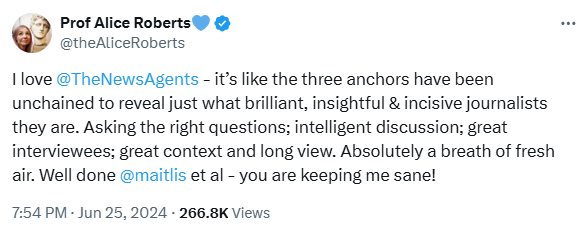
Podcasts aren’t just for entertainment – they are also turned to by the public as a way to stay informed on events happening around the world, as well as closer to home.
Water pollution is an issue faced across the world to varying degrees – tracking related news shows a firm focus on the topic in UK and US regions especially. Following mentions also shows how these stories reached further audiences with publisher-affiliated podcasts.
UK media outlets including BBC News and The Guardian have an outsized impact on the global conversation. Their influence on ‘greener’ socially progressive conversations is to be expected within their UK base, but this international dominance is surprising… Until the impact of their podcast brand extensions is considered. Both outlets reported on water pollution, and then took up the story in their podcasts to share extra information and delve deeper into the specifics. By contrast, US and Australian outlets like The Washington Post or ABC Australia produced a significant amount of written content, but did not fully utilise their podcast channels.
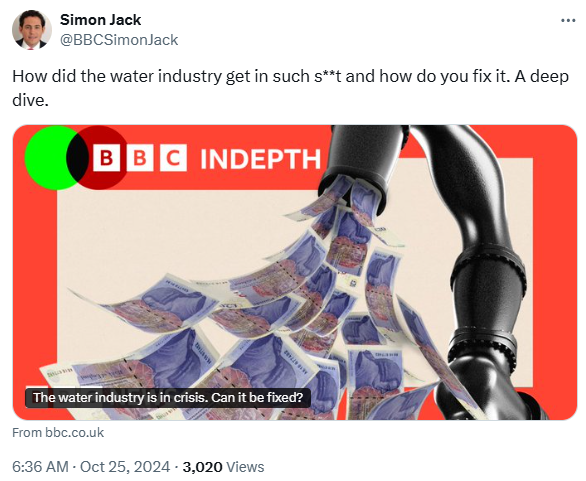
The ‘boom’ of podcasting as a format for news reporting isn’t just the result of a faddish focus within the publishing industry – audiences are listening (and watching, when there is accompanying video). PR and comms teams tasked with raising awareness by securing coverage in the press should expand their focus to aural formats alongside the traditional written word – important stories can reach audiences across every platform out there to engage with.
For connecting with podcasts relevant to your brand or niche, try Vuelio’s Podcast Monitoring – providing access to 65k podcasts as well as insight into audience sentiment and emerging trends within the world of audio content.
Not sure which platform is right for your next campaign? Check out the benefits of each social media platform – and how Vuelio can help you make the most of them – in this blog post.
The emergence of short-form video has forced an evolution in news rooms and editorial teams across the publishing industry at large. Media organisations big and small have adapted to audience appetite for quick updates across apps, and PRs must be prepared to switch platforms when necessary.
Our new report ‘TikTok Journalism: the platform’s impact on news audiences’ uncovers audience patterns and the impact this is having on journalism by analysing online news and social media data from 1 January to 20 October 2024.
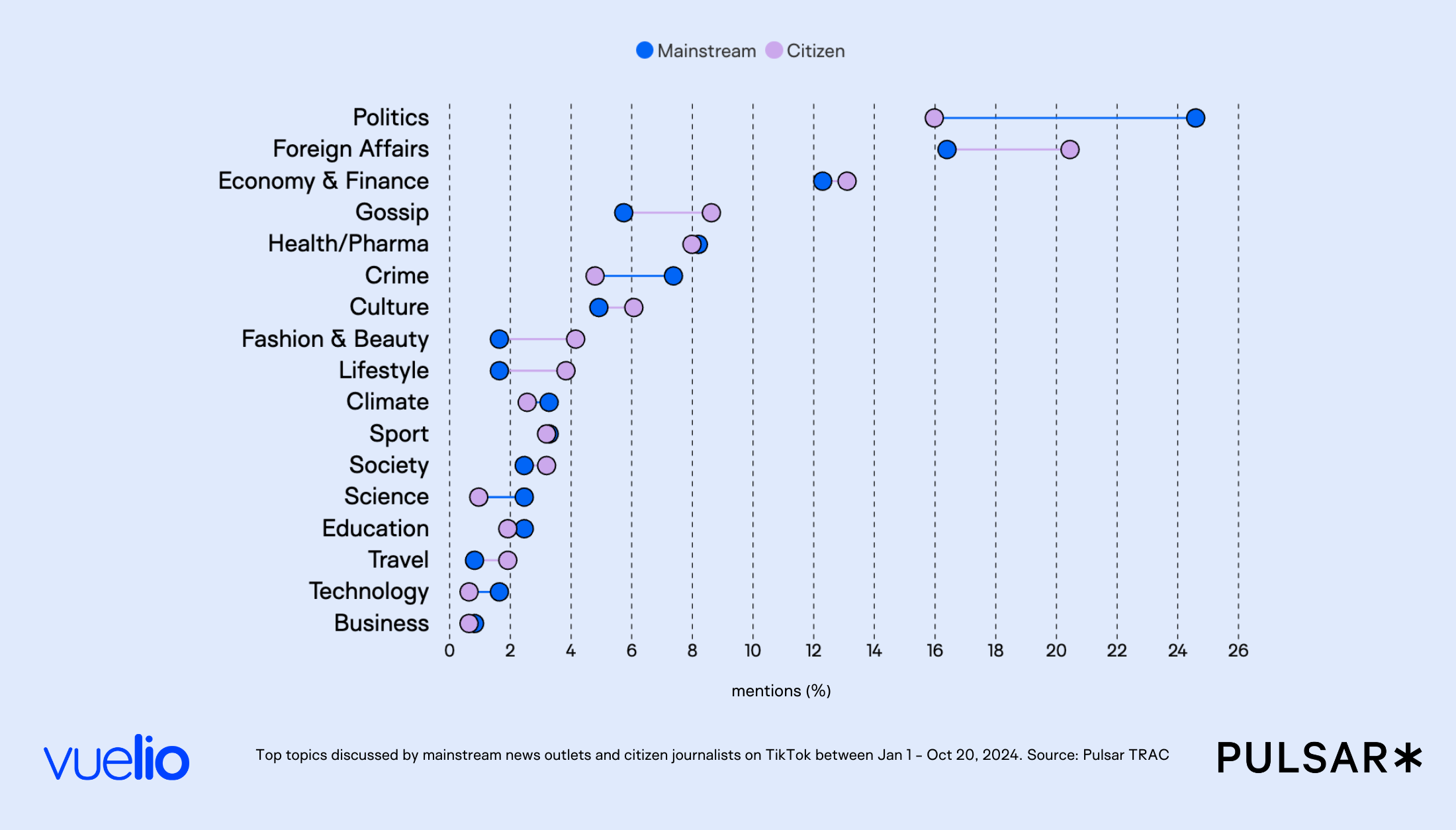
We examine how mainstream media channels are utilising video to reach new audiences, and the rising influence of independent ‘citizen’ journalists sharing news in vertical formats.
This report covers:
Fill in the form below to download the report

Aiming to engage local audiences with media outreach for an upcoming PR campaign? First for the bad news, and then for the good…
Fortunes have undoubtedly been rather bleak for local journalism in the UK for a while now. Newspapers relied upon by their local communities for generations have closed in favour of shiny new centralised news hubs. Long established publishers have been bought out and absorbed into larger organisations. Where did the readers go? Many to social media, joining private Facebook groups or following hashtags on X to find out what’s happening in their area – risking misinformation, and further increasing the pressure on existing local journalists.
But now for the good news: local journalism is fighting back. It’s the perfect time for comms teams tasked with connecting with communities across the country to take another look.
To examine the ways local journalism is making a comeback across the UK, we analysed mentions of the phrase across online news and social media from 2019 to 2024. The story told by the data – a more positive outlook for the UK in comparison to other regions across the world.
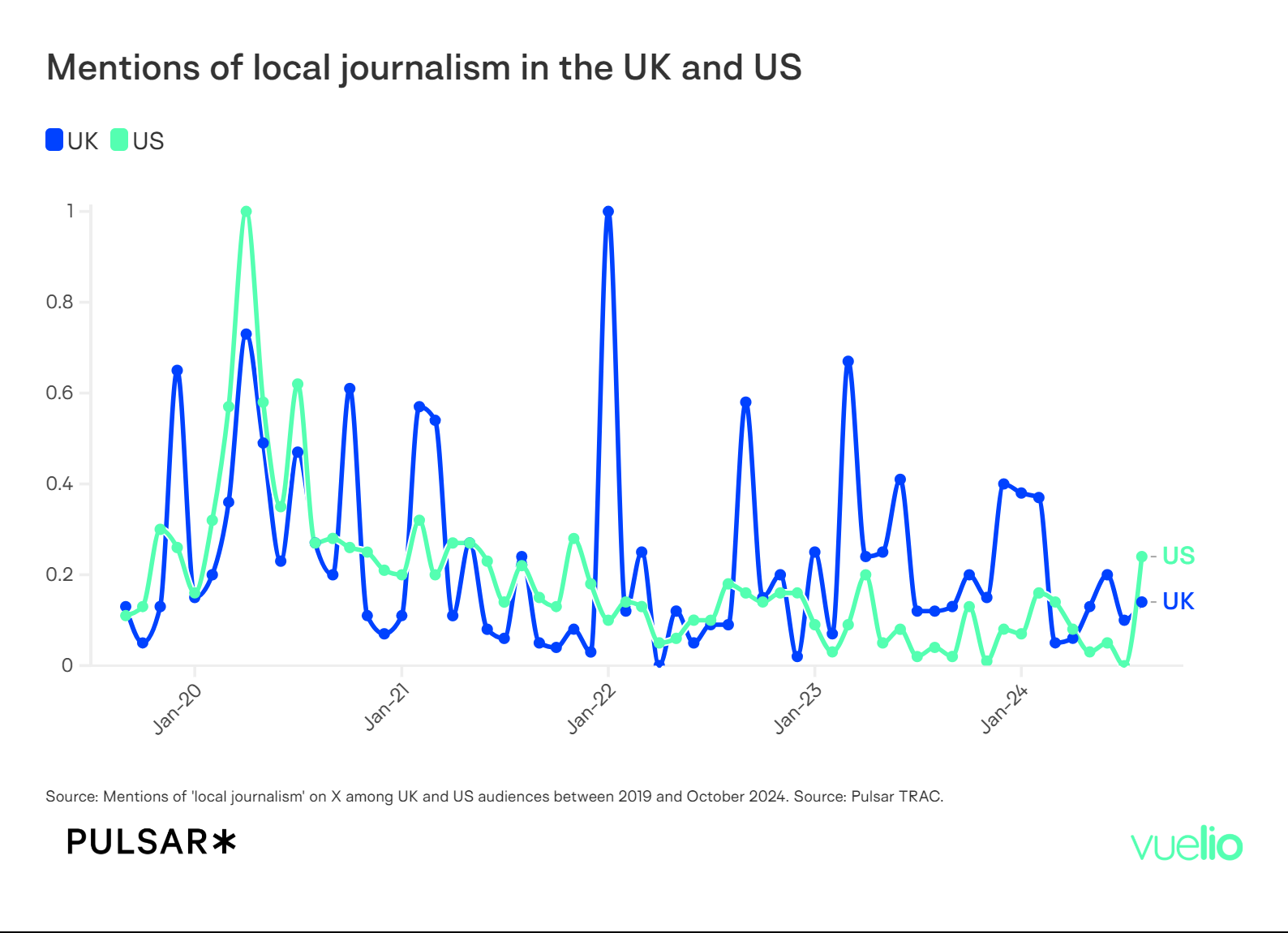
Examining spikes in discussion of ‘local journalism’ across the UK in comparison to the US highlights commonalities in times of increased interest over the last four years.
To be expected – April 2020’s discussion of local journalism spiking as the effects of the pandemic on the job market also hit newsrooms. In the US, posts focused on job losses at papers including the Tampa Bay:
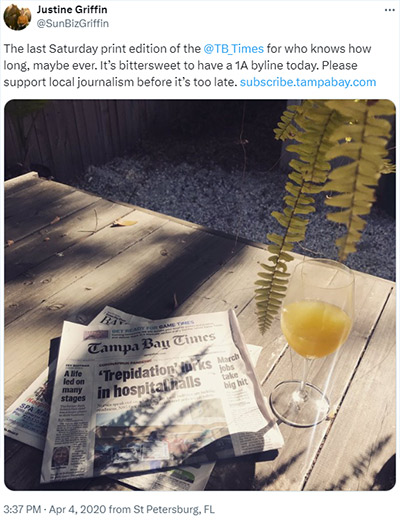
Support from local journalism came from senators in Virginia and even Ben & Jerry’s in Vermont. Since then, interest has tended to taper off. That is not the case within the UK.
Back in 2020, #buyapaper trended as local outlets faced closures, with reminders to support local journalism coming from within the media itself, and the public:
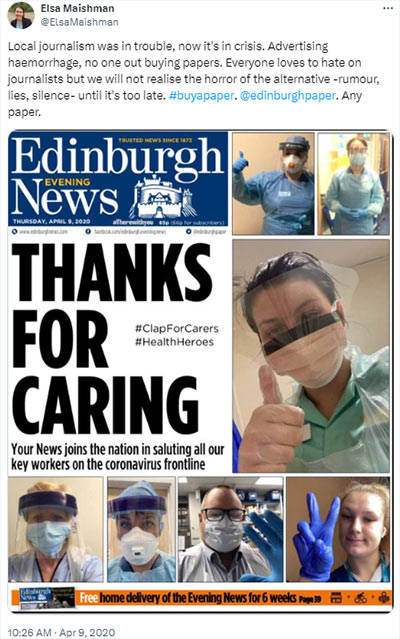
January 2022 saw a huge spike in discussion around local journalism in the UK, driven in part by recognition for the stories it remained capable of breaking, even after successive years of declining budgets and readerships.
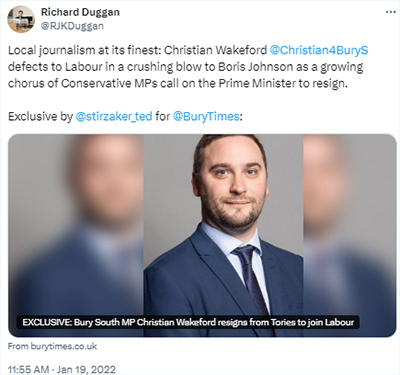
Political controversies and coverage in the wake of, and run up to, our respective election seasons in the UK and US are causing discussion of local journalism to rise in both regions again. While trust in ‘mainstream’ media channels has fallen, confidence in localised reporting appears, by comparison, to have strengthened.
A ‘continued rise in community journalism’ was how Sefton Council’s senior communications officer Ollie Cowen described this trend when talking about his team’s task to raise awareness of changes in UK voting laws across the UK in 2023. They reached out to local reporters to do this, also making the most of ‘geographically centred pages on social media that had either been created or grown exponentially as a result of the increase in “good neighbour” behaviour during lockdown.’ As the pandemic kept people apart physically, it would eventually bring local communities back together – this has been a boon for local journalism, too.
Publishers and journalists have had to find news ways to connect with audiences and rebuild followings in the wake of how the world changed – advocating for communities across the UK with targeted, audience-first reporting.
For an example, let’s head to Manchester…
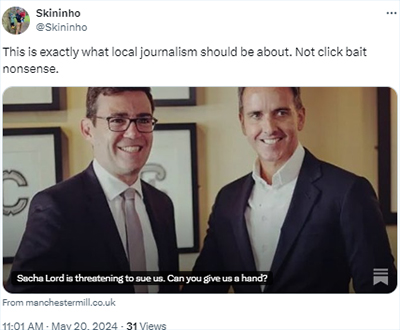
The Manchester Mill was launched in June of 2020 by Joshi Herrmann, a journalist with experience at national outlets including The Times, The Guardian, The Independent, The Telegraph, the Evening Standard, and The Spectator. Unlike these publications, the Manchester Mill is not available on newsstands to pick up in person, but is instead accessible online on Substack, a newsletter platform.
‘The Mill is my attempt to build a media company around readers rather than advertisers,’ reads Herrmann’s mission statement. ‘We won’t copy and paste press releases. Instead, we will dig deeper into local stories that matter – whether they are about crime, culture, business, or new ideas.’
The Manchester-focused Mill publishes one in-depth article via email and online daily to paying members (also known as ‘Millers’), and provides a free option in the form of a weekly digest email. This is paying off in both engagement and revenue. Meanwhile, its journalists have become part of the local ecosystem, helping to spur engagement with other localised reporters and continually grow the audience for the publication.
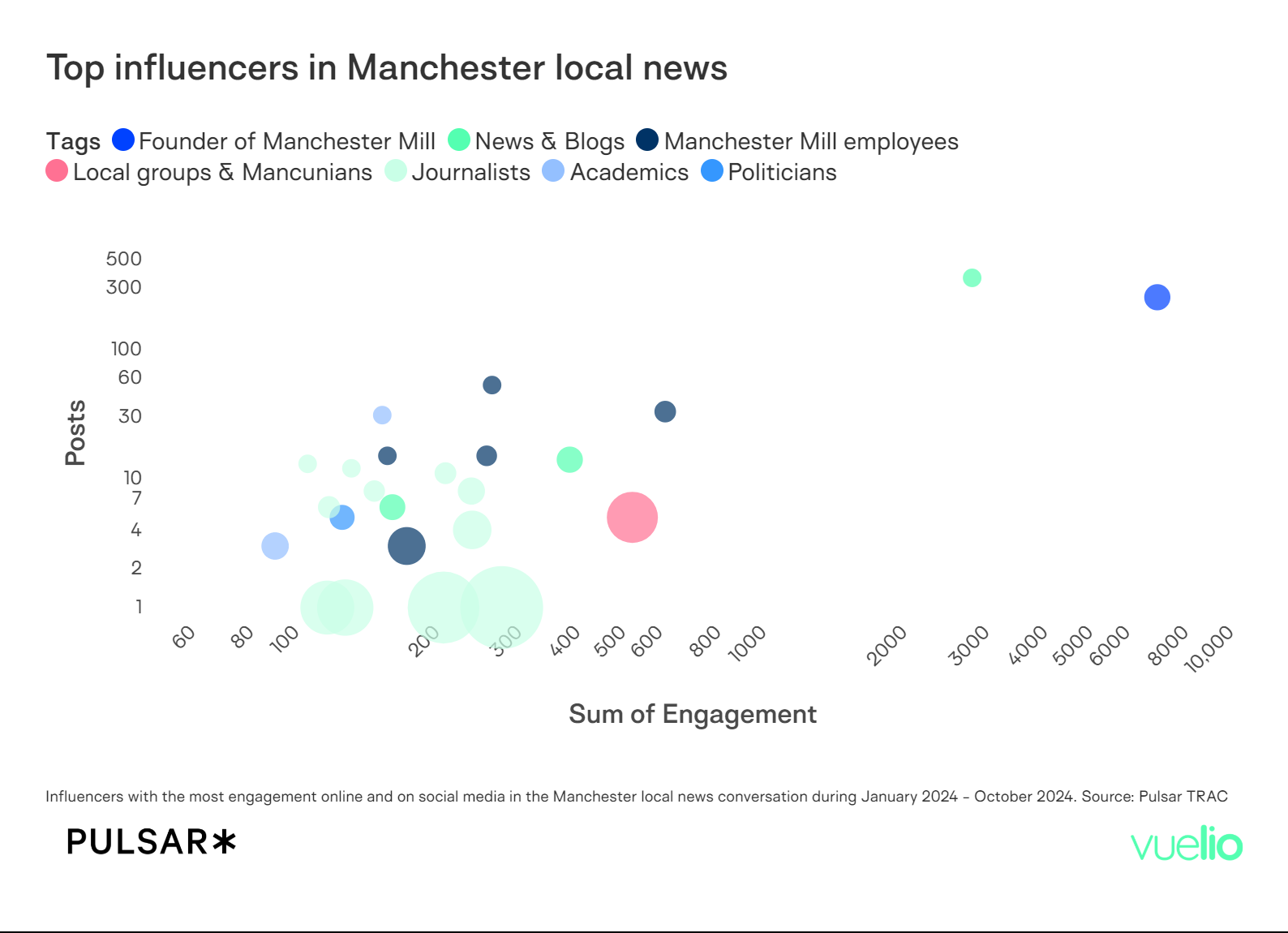
In terms of the most influential local voices, Herrman himself drives much of the conversation, generating the most engagement overall with almost as many posts as the main Mill account.
Manchester Mill employees actively share news articles and express positivity about their contributions to local journalism and the work the Mill is doing – something its community of ‘Millers’ are also grateful for. Subscribers number 50k so far, with reader reaction to its success highlighting commitment to community ‘collaboration’ and its focus on breaking important stories, including its Sacha Lords scoop.
Summing up this commitment to localised reporting, senior editor Sophie Atkinson said ‘Nowhere else do you get this level of engagement, comments, emails, tips. It’s exciting and rewarding’. And, from looking at the numbers, it’s working.
Centralised news hubs dolling out automated updates to readers living across the country removed journalism from its audience in other ways than the physical. How can local news publications reconnect with locals? By tapping into existing loyalties through coverage of local heroes – their sports teams.
By analysing how often audiences (and other media outlets) link to these publications, we can get a sense of what’s driving growth or re-engagement among audiences.
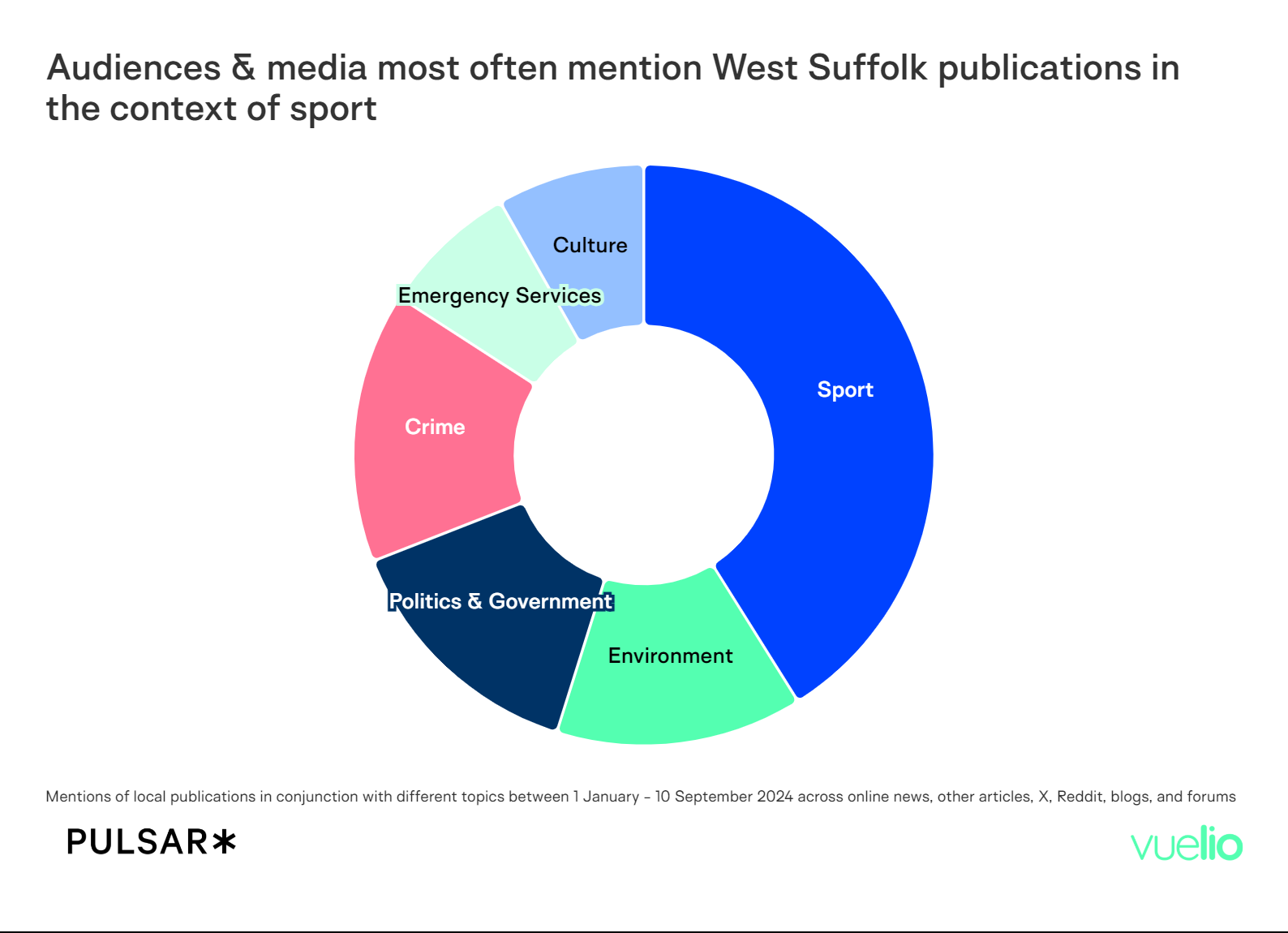
Clearly, sport is playing an outsized role here – and the story becomes clearer still when we break things down on a topic-by-topic basis.
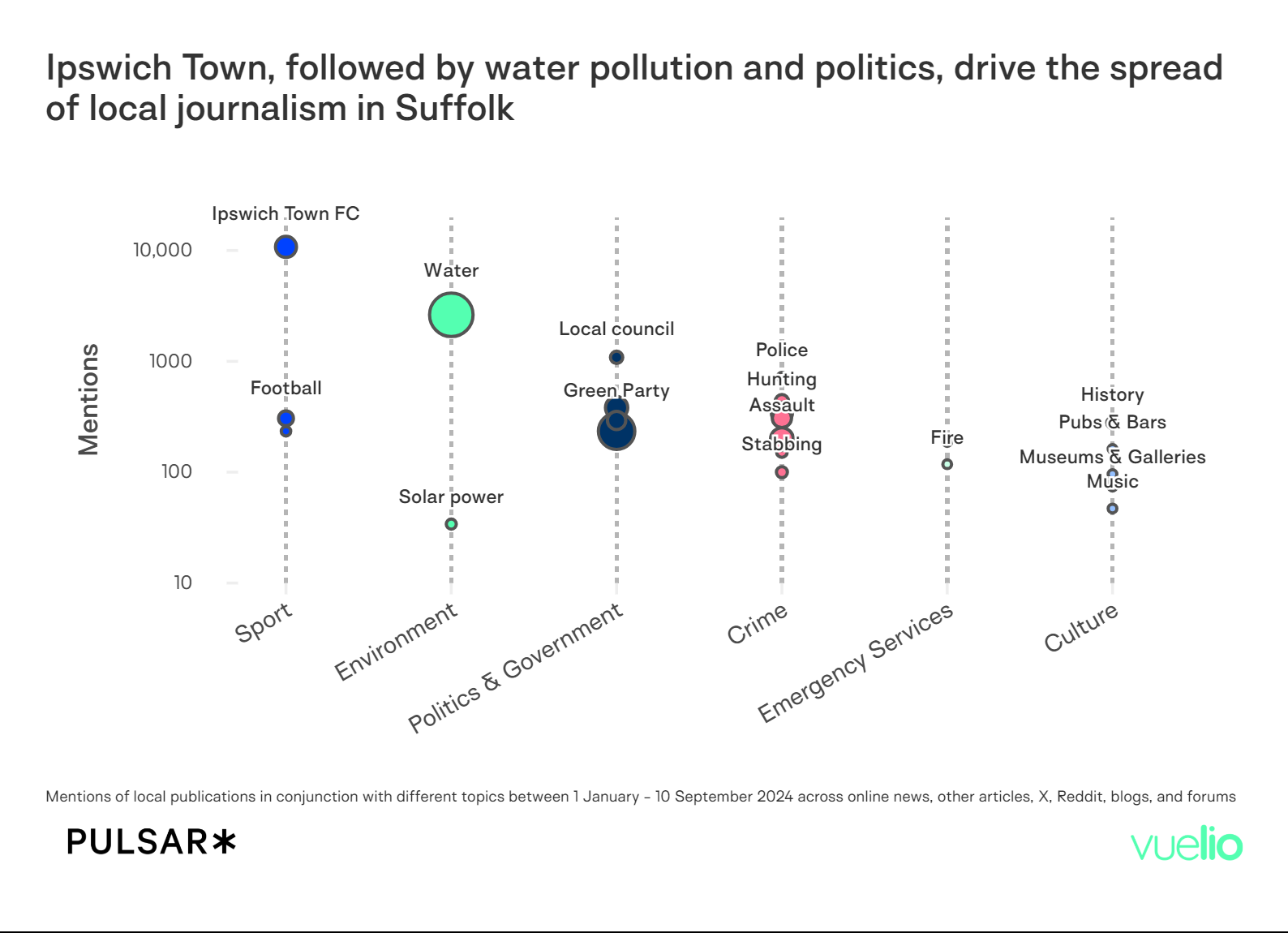
Outside of the football pitch, engagement goes to reporting on the local environment, including stories on crime (with spikes for fox hunting and a local criminal case) and amenities (road closures, criticism of Anglian Water, and the construction of a local solar power plant).
It could be argued that the extra interest – and potential revenue – driven by engagement with a local team (one experiencing its greatest success in decades) is in some senses underwriting more traditional local journalism topics. Recent promotional campaigns from The East Anglian Daily Times suggests they certainly view it this way, touting a subscription model that appears closest to that of The Athletic (which sells subscriptions based on unparalleled attention on local teams).
However, this comes with two potential problem points. Firstly, the financial implications of this engagement (whether it is truly able to support dedicated local journalism over a prolonged period) is yet to be tested, Likewise, a local team enjoying back-to-back promotions to the Premier League is hardly a model for all local journos.
Similarly, some would point to the Mill’s success and suggest it could only work within parcels of the wider country – namely those boasting large, youthful populations.
Whether or not these approaches could work for the local journalist scene at large, it proves that publishers and journalists are continuously finding ways to breathe new life into a sector long neglected. A local football team cannot be counted on to drive a mass of feelgood engagement – but it does provide a model for nichification, around sporting or cultural institutions. Likewise, the Mill shows the opportunity latent in an increasingly tech-savvy population, used to getting its news via non-traditional means.
The story told by the data – people care about what’s happening in their local community. News teams that make the effort to find their communities where they share and consume news – and pay attention to what they genuinely want to read and react to – are providing a lifeline to local journalism as a whole, as well as a place for longer-term loyalty and connection.
To connect with local communities through media outreach, find out about the Vuelio Media Database and the ResponseSource Journalist Enquiry Service.
Want to know more about the state of journalism in 2024? Check out our analysis of audience attitudes across the globe.

PRs will always need journalists, and journalists – in turn – will always need an audience. But how do audiences across the world see journalism in 2024?
While the media has always had to evolve to meet the changing needs and expectations of its audiences, this requirement has only accelerated in recent years. The changing role of journalists in our fast-moving modern climate presents challenges – for society as a whole, media organisations, and for the PR and comms industry professionals who navigate the media landscape.
How has citizen and independent journalism on platforms including TikTok, and in increasingly popular formats like podcasting, impacted the way news is shared? How are international news brands and local reporters each effected by these alternatives to ‘traditional’ news sources? And how do stories spread across media, platforms, and audiences in this climate?
These are all questions we’ll be exploring over the coming months, as we conduct our research into journalism and news audiences. But first, to investigate the current perception of journalism across the world, we’ve analysed over 1.2 million media and social data points internationally, tracking mentions of ‘Journalism is…’ from May to September 2024.
Let’s begin with a look at the differing attitudes towards journalism across the world, and specifically, the UK…
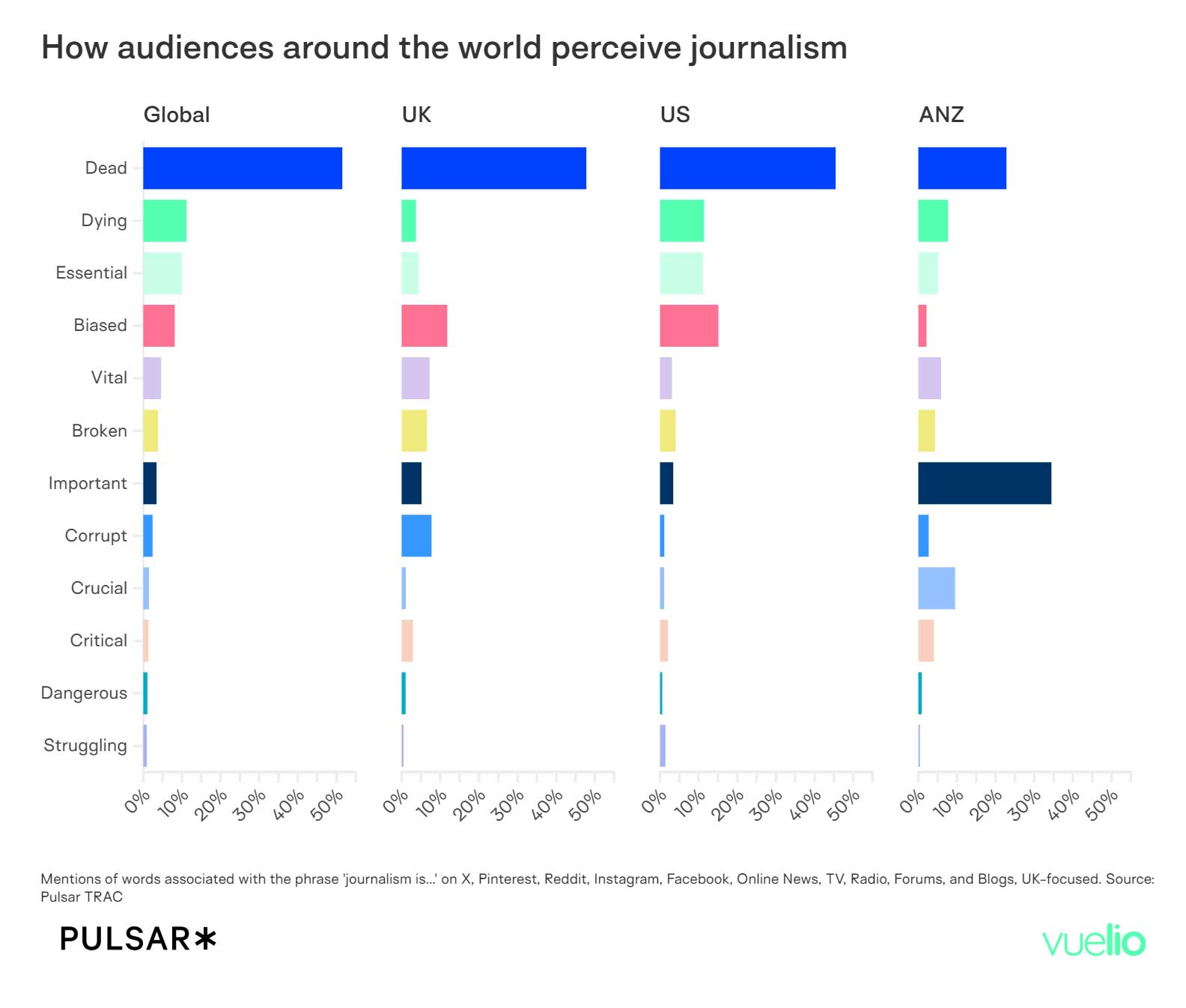
The short answer – not in a particularly positive light. When tracking words commonly used following the phrase ‘Journalism is…’ online, ‘dead’ tracked the highest in the UK, followed by ‘biased’, and ‘corrupt’.
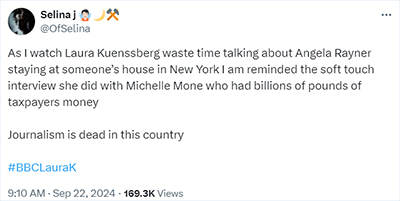
The source of this negativity isn’t hard to find, with press coverage of this summer’s UK General Election sparking criticism from the public across social media en masse. As debates, interviews, and analysis filled television schedules and column inches, the people watching and reading at home went online to share their frustrations, with high-profile journalists bearing the brunt.
The US audience shared a similarly dim view of journalism across social and online media – also unsurprising, perhaps, considering the political unrest stirring in the light of their own leadership race.
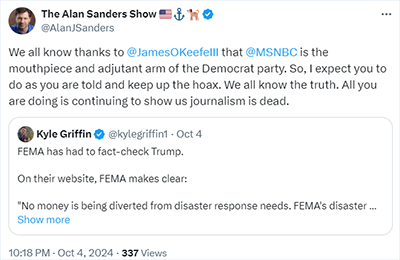
While the US and UK are aligned on attitudes towards the media, the ways in which they are expressed in public spheres and the media is where they differ (and not just in the UK audience’s willingness to share opinions with a sprinkling of swear words in their X posts).
So which audience of those we tracked considers journalism most important? Those in Australia and New Zealand. ‘Journalism is important’ was a more popular opinion shared online than ‘journalism is dead’ in these regions. A higher number also believed journalism to be ‘crucial’ than in the US and UK.
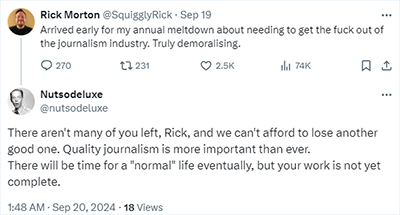
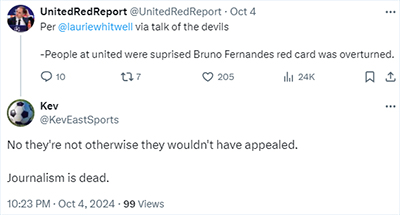
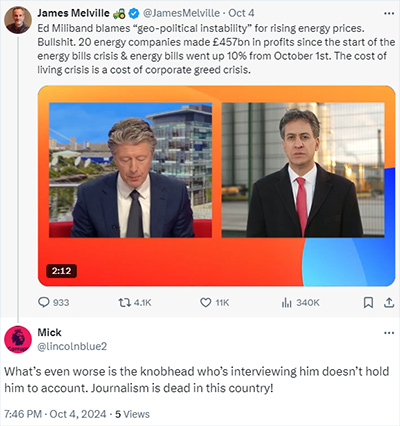
Aside from UK fans disagreeing with reporting regarding their favourite sports team, celebrity, or other niche personal interest, the sharing of the view that journalism is ‘dead’ among UK news audiences has been rampant.
2023’s Edelman Trust Barometer found that the UK is one of the countries with the lowest faith in the media. Of the 27 countries surveyed, respondents were only less trusting of the news industry in Japan and South Korea.
While trust was up by 2% from Edelman’s previous survey in 2022, regaining confidence from the public is going to be hard going for the UK news industry. A consideration being taken seriously, as shown by the debates happening at media industry events across the country, including last year’s Society of Editors’ Media Freedom Conference.
The past year has also seen criticism of media reporting on the ongoing Gaza conflict, with disconnects between images and video shared on social media, public protests happening across the world, and the choices made in media coverage sparking further distrust.
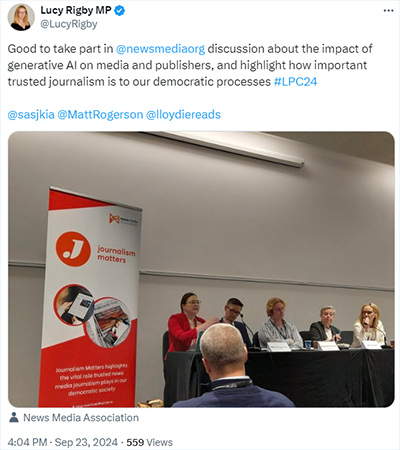
While use of positive descriptors by those sharing their view of journalism in the UK was much lower than use of the more negative ones, news reporting – in all of its different formats – continues to be cited as ‘important’…by invested communities. Journalists themselves, and those in adjacent industries, see and share reasons for optimism, but how can this be transmitted to audiences who have become distrustful, and disconnected?
Among the challenges facing the news industry – misinformation, lowering revenues, and distrust – audiences still seek information, and reporters, broadcasters, and content creators of all kinds are adapting to provide this.
Media brands making the effort to stay attuned to changing audience needs are building back loyalty and trust. For some recent examples: The Independent has doubled its profit and revenue over the last five years; the Financial Times is adopting data-driven personalisation as part of an audience-first strategy; and Reach plc’s launch of its Reach Studio hub is bringing each of its brands to new viewers in new formats.
The current state of journalism in the UK is in flux, and the prognosis can perhaps seems bleak. But there are causes for optimism to be found in emerging audience behaviours, platforms, and brands, which we’ll be exploring as part of our continued State of Journalism series.
Interested in how the media is evolving? Sign up for the 23 October Vuelio and Pulsar webinar ‘The New News Audiences’.
HFSS (High Fat, Sugar, and Salt) public health initiatives are complex to navigate, with regulation for food and drinks communications and advertising in the UK in flux.
As food and drink brands prepare for the UK Government’s upcoming ban of HFSS food adverts on television before 9pm, what do PRs need to know about public perceptions, political maneuvering, and media interest around sugar and health?
Our latest report ‘Sugar & health: A PR guide to healthy FMCG and HFSS comms’ uses political intelligence from Vuelio, audience insights from Pulsar, and media expertise from ResponseSource to gain a complete picture of how the topic is discussed and understood. Featuring insights from social media, online news sources, the press, and journalist enquiries, uncover key information for crafting impactful comms, generating positive media coverage, and supporting stakeholder engagement.
Download the full white paper to learn….
Download the report by filling in the form below 👇

Wondering what the media are covering as we ‘fall’ into October? The change of season and weather is often a popular angle for journalists and requests sent to PRs via the ResponseSource Journalist Enquiry Service this month backs that up.
Read on to find out what else journalists were asking for in September, and what you can do to catch their attention, and gain press coverage, in October.
Journalists have been getting their Halloween content sorted early – just over 2% of the total enquiries in September were around ‘Halloween’.
PA Media, The i paper, Bella, and Stylist.co.uk have all sent requests to PRs via the Journalist Enquiry Service, looking for a variety of things, from Halloween snacks to home decor, costumes, and spooktacular themed days out for families.
Going forward? With Halloween at the end of the month, journalists will likely be making short deadline requests to get information and products. Be prepared to have product samples to send over with easy-to-read information, and you could get featured in a national press title or consumer magazine.
Requests for Christmas content have been coming in since July, and September saw a significant increase with ‘Christmas’ appearing in just under 14% of all enquiries. This is over double the amount we saw in August and a 3% rise on this time last year.
A lot of the festive requests are for ‘gift guides’, with that phrase cropping up in nearly 9% of enquiries last month. ‘Advent calendars’ are also popular, with 3.5% of journalists looking to review them. It also meant big increases for the consumer-focused categories on the Enquiry Service with Children & Teenagers seeing a 44% increase between August and September, 39% for Men’s Interest, 31% for Food & Drink, and 21% for Women’s Interest & Beauty.
Going forward? October is usually the most popular month for ‘Christmas’ content on the Journalist Enquiry Service. Last year, 18% of enquiries were for festive material. The majority of journalists will be looking for gift guide products and advent calendars, as well as Christmas events, decorations, and recipes. You could get media coverage in The Guardian, Good Housekeeping, The Independent, or The Sun.
Seasonal content is frequently requested on the Journalist Enquiry Service and the change of season has seen nearly 4% of journalists in September including the keyword ‘Autumn’. The topics have varied from interiors to wellbeing, to staycations, and beauty products for the new season.
Fashion has also featured in the Autumn requests and on its own as a keyword appeared in just under 4% of the requests. This is possibly linked to the London Fashion Week taking place. 2% of enquiries in October were also for ‘mental health’, with journalists looking to get expert opinion and advice ahead of World Mental Health Day on 10 October.
Going forward? Now that we are firmly into Autumn, journalists often send requests about heating and how to stay warm in colder months, plus skincare advice, and what to do with your garden during this season. Have expert commentary ready and there is the potential to feature in The Metro, The Times, Ideal Home, and The Daily Telegraph – journalists from all of these outlets sent requests last month about ‘Autumn’.
While both still a little way off, Bonfire night (5 November) and Black Friday (29 November) are approaching. Journalists will be looking for the best places to watch fireworks and any related events, plus the best deals and offers on at different retailers for Black Friday.
The Health category, which had an 8% increase between August and September, could rise further as October is Breast Cancer Awareness Month and includes World Menopause Day (18 October). Experts in these fields could get media coverage as a result. Food & Drink should also perform well again as a category with International Chefs Day (20 October) and World Pasta Day (25 October). Have chefs ready to interview, and pasta recipes to share.
To connect with the media on these topics, and much more, check out the Journalist Enquiry Service and the Vuelio Media Database.
Find out more about how Vuelio can help you gain and track your coverage in the media here.