
Party Conferences 2025: Health in focus

Party Conferences 2025: Health in focus

The last month brought the annual rendition of party conferences and it wouldn’t be controversial to say that health took a back seat this year, in the wake of wide-spread political discourse on immigration, free speech and the war in the Middle East. This state of play is an indictment of how Reform UK, a party with five seats in Parliament, have been able to warp the political and media landscape in their interests; keeping the ball in their court as they lead some polls by over ten points.

This absence of health in political commentary can be encapsulated by Shadow Secretary of State for Health Stuart Andrew’s speech to the Conservative Party Conference. Andrew offered little in regard to policy alternatives but used his speech to hold a debate with four interested members in the health space, including a former swimmer, a former minister, a GP, and a think tank chief executive. The panel spoke on technological innovation, prevention, primary care prioritisation and social care reform respectively. Interestingly, the first three causes are positions championed by the Government in the 10-Year Health Plan, occupying all three of the symbolic shifts. Andrew also affirmed that the Conservatives were prepared to agree and work to form cross-party solutions with Labour, with his vision of a patient-centred and innovation-harnessing health service. In this sense, Andrew, at least from this speech and the content of his panel, would struggle to differentiate himself from a junior minister at the Department of Health and Social Care.

A more interesting insight from the Conference was a fringe event titled Realising the Potential of Life Sciences: How can the UK compete. As a member of the panel, Shaun Grady, Chair of AstraZeneca UK, took aim at the UK’s life sciences landscape, in particular, its aversion to the adoption of innovation. He said that the NICE threshold budget was out-dated and appalling, and other competitors both in Europe and across the world offer a better environment and incentives for innovative investment. Grady’s comments come amid a row between the Department of Health and Social Care and big pharma over drug prices. Recently, MSD, an American pharmaceuticals company, scrapped its investment in a £1bn expansion in London, citing that the UK government had undervalued life sciences investment for too long. With Lord Vallance, Science Minister, calling for ‘necessary’ price increases, and now reports confirming that Ministers are preparing increases, it seems like the big business may have got its way. No doubt Wes Streeting will be committed, especially given the constrained state of public finances, to not be held to ransom.

Elsewhere, in September, the Liberal Democrats passed a policy motion titled ‘Getting Emergency Care Back on Track’ which calls on the Government to end corridor care by the end of the parliament, fix the social care system, tackle staff shortages, and guarantee safer emergency services through more qualified clinicians and mental health crisis services. For the Liberal Democrats, social care is a dominant issue, with Helen Morgan, Health Spokesperson, saying that the Casey Commission being published in 2028 is far too late, an absence of leadership, and is the most important issue she would raise to the Prime Minister.

In Zack Polanski’s speech at the Green Party’s conference he promised to protect the NHS. Besides this, health featured little at their conference, with the only potential explanation for solving the NHS being found in a wealth tax to help fund better care. Critics, including the Labour Government, would argue that this would just be supplementing the status quo that has put the NHS into disarray in many areas of the UK. Further substance to their ‘eco-populist’ health ambitions will have to be seen. Reform UK, the leading party in the polls, have been laser-focused on issues away from health. In a similar capacity to the Greens, there are promises to fix the health service, with little policy substance to back it up from the conference. Nigel Farage has almost become synonymous with privatising the NHS; where this has gone from, in cases, a mere rumour to now being peddled by Labour ministers on social media and the Prime Minister in PMQs. Reform have tried to shut this down previously, including in a social media post released in April; but it would be no surprise to see this line repeated in the coming months ahead of the upcoming Senedd and Holyrood elections, in hopes to deter voters from Reform and the slippery slope that a change in the funding model could create.

At the Labour Party conference, Wes Streeting pushed this exact line again, warning against an insurance-based system and condemning the ‘post-truth’ politics and ‘con artist’ antics that are pushed by the right of politics and Farage. He also warned against Reform’s immigration stance which could see NHS workers deported even after decades of service. Rather, voters should vote for the successes of the current administration in line with the three shifts, ones that Streeting has unambiguously heralded; whether that is through AI innovation, which can be seen in recent announcements on breast cancer screening and smart glasses, or the extra emphasis and resourcing of community primary care services to drive prevention and early treatment.

With the 10-Year Health Plan growing more distant, emphasis has turned to delivery, and just last week, Streeting appointed a new special adviser, Matthew Hood OBE, to assist on this in the department’s delivery unit. The last month also saw a host of new announcements, including procurement shifting from ‘cost-first’ to ‘patient-first’, the publication of NHS trust league tables, GP appointments to be opened up to all hours of the day, and the announcement of NHS Online by the Prime Minister. The aim is to begin the action set out in the Plan and its three shifts, and deliver clear improvements. In this case, an overachievement in productivity to 2.7% is a strong sign for Streeting. Success in the health sector could be a potential saving grace for the Labour party, acting as a key vehicle in leveraging the success of a Labour Government in the upcoming devolved elections.

Elsewhere, Streeting took aim at the British Medical Association (BMA) again, who have resisted reforms and pay offers. He sharply warned that clinging to conservatism could turn the NHS into a ‘museum’. Earlier in September, Streeting spoke at a meeting of the BMA asking for them to take an ‘olive branch’ and form a ‘partnership’ to save the NHS. Streeting has got a difficult task of juggling two seemingly competing forces, expansive innovation and a constrained workforce, and currently, accounting for both in the maximum seems unlikely. Inevitably, social care sits on the margins in the political space, but the announcement of a fair pay agreement, backed by £500m investment, could prove pivotal in solving workforce tensions and has been welcomed as a positive step forward by the sector. However, with a final report expected from the Casey Commission in 2028, it does not seem that social care will move at the speed and certainty that Streeting has commanded the health service to do so.

With political focus and attention elsewhere and opposition to his policy plans few and far between, the party conference season highlighted how Streeting has a clear mandate to deliver. His success in turning around the ‘broken’ NHS and social care system could be crucial to Labour’s future in Government. But, as some might argue, it may also be an opportunity for Streeting to prove himself to be a formidable replacement for the struggling Starmer.


Why comms can't ignore politics

The impact of regulation on reputation: Why comms teams can’t ignore politics

The Online Safety Bill, the Digital Markets, Competition and Consumers Act, upcoming HFSS legislation changes, and Net Zero targets – did you factor these legislation updates into comms strategies for your business, and clients?

As made clear by the impacts of these regulations on the UK business landscape, staying out of politics is not a viable option for comms teams. Being aware of what’s happening in Westminster isn’t just a bonus skill – it’s a core competency that’s essential for risk management, opportunity spotting, and strategic counsel.

For practical advice for staying ahead in these politically-charged times, check out this round-up of advice from those in the industry successfully weaving political know-how into their brand and client strategies.

How politics permeates PR

Politics influences and intersects with every aspect of our daily lives, and this is no different for organisations.

Kerry Parkin, founder of the Remarkables, believes the issue is two-fold for comms:

1) Politics drives the agenda. The geopolitical world is moving faster than ever, often dictating the speed and direction of media and stakeholder conversations. Take tariffs as an example: a major political decision, well signposted in advance, can suddenly make or break something as straightforward as a tequila launch. If your product, business or brand is touched by political or geopolitical events, it must be factored into your mindset, planned for, and executed around, even through, the disruption.

2) Timing is everything. If you are pitching stories on the very day a budget lands, you can kiss goodbye to any meaningful coverage. Without political awareness, teams risk wasting opportunities and undermining credibility by being out of sync with the national conversation.’

In fact, a lack of political know-how can be poison for public relations, as Anton Greindl, director, public affairs, at the Tilton Consultancy explains:

‘Without a working grasp of the political agenda, agencies can drift away from their clients’ real priorities. If you don’t track policy and regulation, you mistime launches, miss stakeholder expectations, and risk using messages that are about to become politically toxic or legally constrained.

‘You also lose earned opportunities, such as select committee calls for evidence, regulator consultations, media windows, because you’re reacting after the fact. Policy literacy is the difference between PR being a noticeboard and PR being a strategic lever for revenue, risk, and reputation.’

Reputation could be the first casualty of a lack of awareness:

‘Without political awareness of the now and what’s upcoming, PR teams risk aligning their clients with narratives that are outdated, or even damaging,’ says Claire Crompton, commercial director at TAL Agency.

‘Politically and socially, society evolves daily – the political sphere is continuously shifting. Managing a brand must be timely in the wider context of society, without anticipating what’s ahead, PR teams are essentially navigating blindfolded.’

The role of political monitoring

While it’s impossible to be present for every PMQs, there are tools to help you keep on top of what’s happening in politics.

Laura Moss, managing partner, Parisi explains what political monitoring can do:

‘A good example of monitoring in practice came when we picked up on emerging Home Office policy proposals to ban critical national infrastructure (CNI) owners and operators from making ransomware payments.

‘We immediately flagged this to a client, the cybersecurity specialist team at a global law firm, and worked with them to provide rapid legal and policy analysis. Within hours, we were able to take their expert commentary to targeted media outlets, ensuring they were among the first voices shaping the debate. This not only positioned the client as a go-to authority on ransomware policy but also strengthened their relationships with journalists covering cyber and national security.’

Monitoring can provide the warning signs for potential crises on the horizon, believes Kerry:

‘It allows PR teams to anticipate rather than react. I saw this first-hand during my time at Costa, when Hugh Fearnley-Whittingstall launched his campaign against paper cups. At the time, we treated it as purely a media issue. What we did not realise was that the subject had been raised at Prime Minister’s Questions a month earlier.

‘Political monitoring would have flagged that in advance and given us the chance to prepare the business and the narrative more effectively.’

Another example with huge ramifications for comms and wider industries – the uncertainty around TikTok’s continuing availability in the United States earlier this year:
‘In one fell swoop, this would have disenfranchised millions of young Americans from a channel that they could identify with, and would have cost the platform and its advertising partners, and brands that rely on it, millions in revenue,’ explains Yasper founder Julian Pearce.

‘Businesses from all corners need to be aware of the threats, and the potential fragility of their relationships.’

Political awareness is needed globally, nationally, but also locally, adds Katie Nelson, director and head of construction at Cartwright:

‘Recent months and years demonstrate this perfectly with a power change in Number 10, new housing targets and national infrastructure strategies, and changing cabinets. By being tapped into that political space, we’re able to work with clients on how best to navigate changes from a communications perspective – which as PR pros, we know the role comms has to play.’

Moving from passive observation to proactive strategy

What comms teams do with the information is what makes the difference – reacting to what’s happening in the political sphere, but also taking a proactive stance:

‘On its own, data is useful,’ says Laura. ‘But the real value comes from PR consultants interpreting it and adding their knowledge and insights on the potential business impact, then advising clients on how they may or may not wish to respond. By turning monitoring into actionable insight, PR teams can help clients shape communications strategies and identify opportunities for engagement with policymakers or industry bodies.’

Anton agrees:

‘Too many consultancies follow the same pre-packaged newsletters from a narrow set of public affairs – specific outlets, which limits scope and insight. While these are extremely useful in our day to day, every practitioner should skim the key national and international papers each morning, plus at least one business title, one sector trade and the relevant regulator feeds. Go to the source, such as government portals, consultations, committees and statistical releases, rather than relying solely on pre-focused summaries. And I believe we should close the loop weekly with a short, internal, client-specific briefing that covers what changed, why it matters, and the recommended actions.’

In summary, ignore what’s happening in Parliament at your peril…

Your stakeholders will care, so should you, says Jan Christoph Bohnerth, CEO of Life Size.

‘Communications teams can and should go beyond simply tracking when a new bill or regulation is introduced. It’s now also about anticipating how different stakeholders are likely to move, and communications has an important role to play in influencing and shaping public discourse. Done well, this gives PR teams the intelligence to stay ahead, guide strategy and achieve the best possible outcomes for their clients or organisations.’

‘Those that fall short tend to be the ones cutting back in political and communications engagement,’ warns Kerry.

‘In today’s environment, that is short sighted. Now is the time to be investing in these capabilities, not retreating from them, because the political and media landscape is only becoming more complex and uncertain.’

‘The takeaway for PR is simple,’ adds Anton. ‘When politics moves, lead with substance, consistency and implementation detail.

‘Treat policy milestones like a content calendar, make your spokespeople useful to the debate, and ensure every message is anchored to actions the organisation is taking next.’

Tap into what’s happening in politics with Vuelio Political Monitoring and our Political Database. Want help with stakeholder management? Check out Vuelio Stakeholder Relationship Management

Getting media coverage in October 2025

Gift guides, keeping warm & half-term holidays: How to get UK press coverage in October

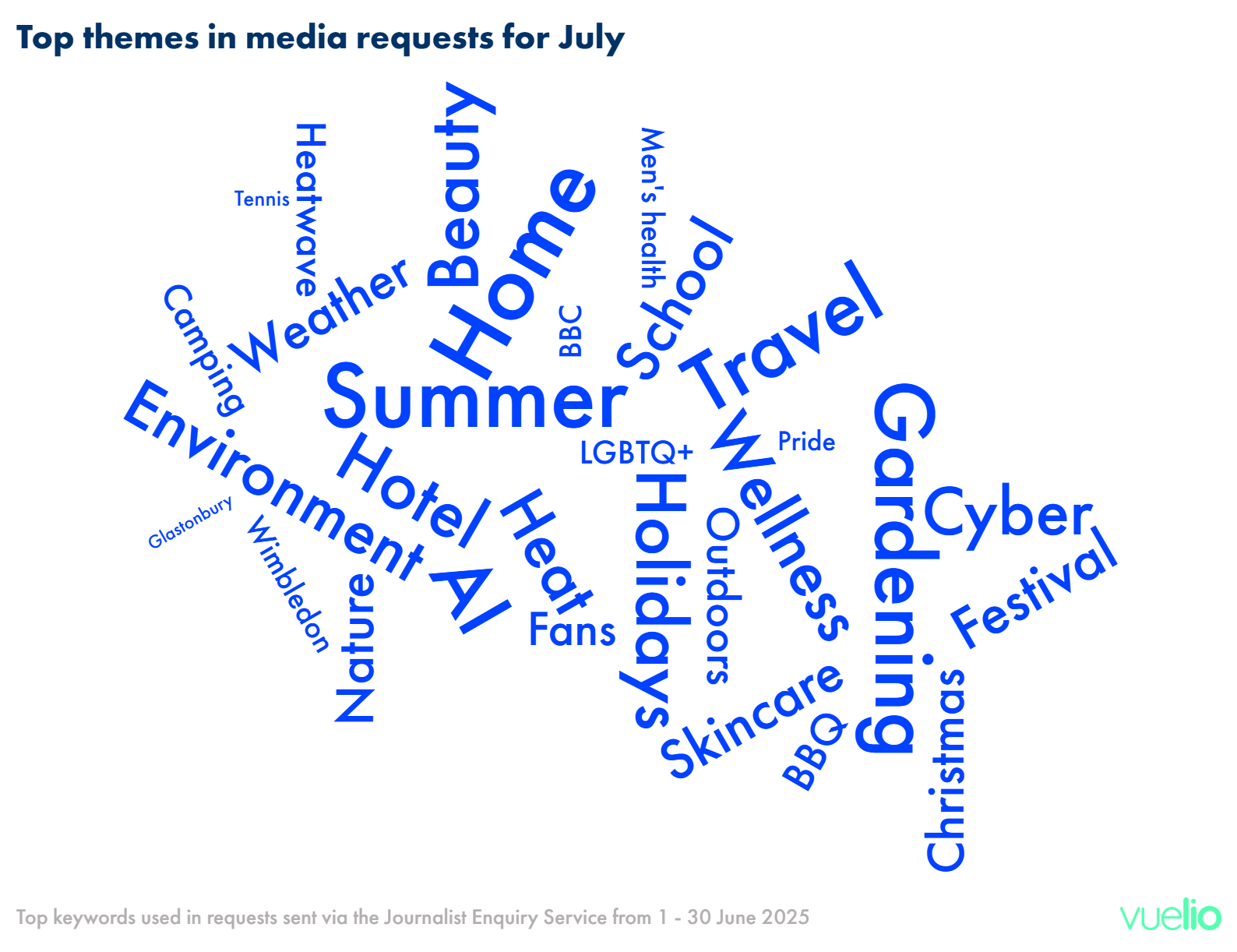
Deciding how to get coverage in the media in October? Halloween may be the immediate focus but there are plenty of other trending topics and issues that you can tie campaigns and experts into. Find out below what has been popular in September on the ResponseSource Journalist Enquiry Service and what this will mean for the rest of this month.

Gift guides in demand

Christmas is approaching quickly and journalists have been keen to get their gift guide features compiled in the last month. Over 7% of the total requests in September contained the words ‘gift guide’. This has resulted in some big increases for some of our more consumer-related categories with Men’s Interest rising by 60% compared to August, a 44% increase for Women’s Interest & Beauty and a massive 88% increase for Children & Teenagers.

Journalists at The Sun, Cosmopolitan, Health & Wellbeing, The Guardian, Saga, and GLAMOUR have all sent gift guide-related enquiries in the last month. These have been ‘for him’ and ‘for her’, as well for children, for pets, food & drink products, beauty items, wellness and much more.

Going forward? Gift guide requests will remain frequent throughout October and November as we build up to Christmas. In October 2024, nearly 10% of the total requests was for ‘gift guides’ so expect an increase in journalists from national press and major consumer magazines asking for product samples to test and feature in their reviews.

Staying warm is hot stuff

October marks the beginning of the colder months of the year and journalists have been keen to find out ways that people can stay warm during the Autumn and Winter. ‘Heat’ has appeared as a keyword in just over 1% of all requests in September and ‘warm’ in just under 2%. This also ties into the topical issue of concerns over energy bills and how this might impact people’s personal finance and budgets – with ‘budget’ also appearing as a keyword in nearly 3% of enquiries.

Requests have included looking for expert insights on how UK households are staying warm and cutting energy costs; a heating expert to share expertise on the best time of the day to put the heating on and the best electric blankets to help keep warm this Winter.

Going forward? With temperatures set to drop in October, then there will be more requests around ways that people can stay warm for less. This will increasingly link into the finance side of things as ‘budget’ appeared in over 4% of requests last October. Get heating and finance experts ready and you could be featured in outlets such as GB News, Ideal Home, or Homebuilding & Renovating.

Travel back in fashion

June and July are usually peak season for both the Travel category and ‘travel’ as a keyword but September has seen its popularity rise again. ‘Travel’ cropped up in over 6% of all enquiries last month and the Travel category as a whole increased by 35% compared to August.

This is in part due to journalists looking to get recommendations on where families can head to for the October half-term. However, there have been other topics too with requests for unusual travel experiences, staycations with a twist and trade-friendly tour operators that specialise in adventure travel. These have been sent by outlets such as PA Media, Selling Travel, National Geographic Traveller, and The Wall Street Journal.

Going forward? There will be requests for last-minute travel packages for the school break plus journalists will be looking further ahead with other Autumnal getaway destinations and information on Winter holidays, too. Be prepared with information on different escapes and travel experts to offer comment and there is potential for coverage in a national press title.

Other opportunities for PRs in October and beyond

While we aren’t that far into Autumn, ‘Winter’ becomes more popular on the Journalist Enquiry Service from this point onwards. Last year it appeared in over 4% of requests during October and we would expect to see a similar level of interest this year. This can vary in topic from gardening jobs to do during this period to looking to get information on the fashion and beauty trends for the Wintertime.

It doesn’t receive masses of requests but journalists spend this month gathering information on the best places to see firework displays to celebrate Bonfire Night. Around 1% of all enquiries in October 2024 were centred around this topic, so if you’ve got information on different locations putting on events to celebrate this occasion then have them ready if you want to get press coverage.

Want to get the most out of the ResponseSource Journalist Enquiry Service? Find out how here.

Journalist Enquiry Service integration into Vuelio

Communicating in a world redefined by AI

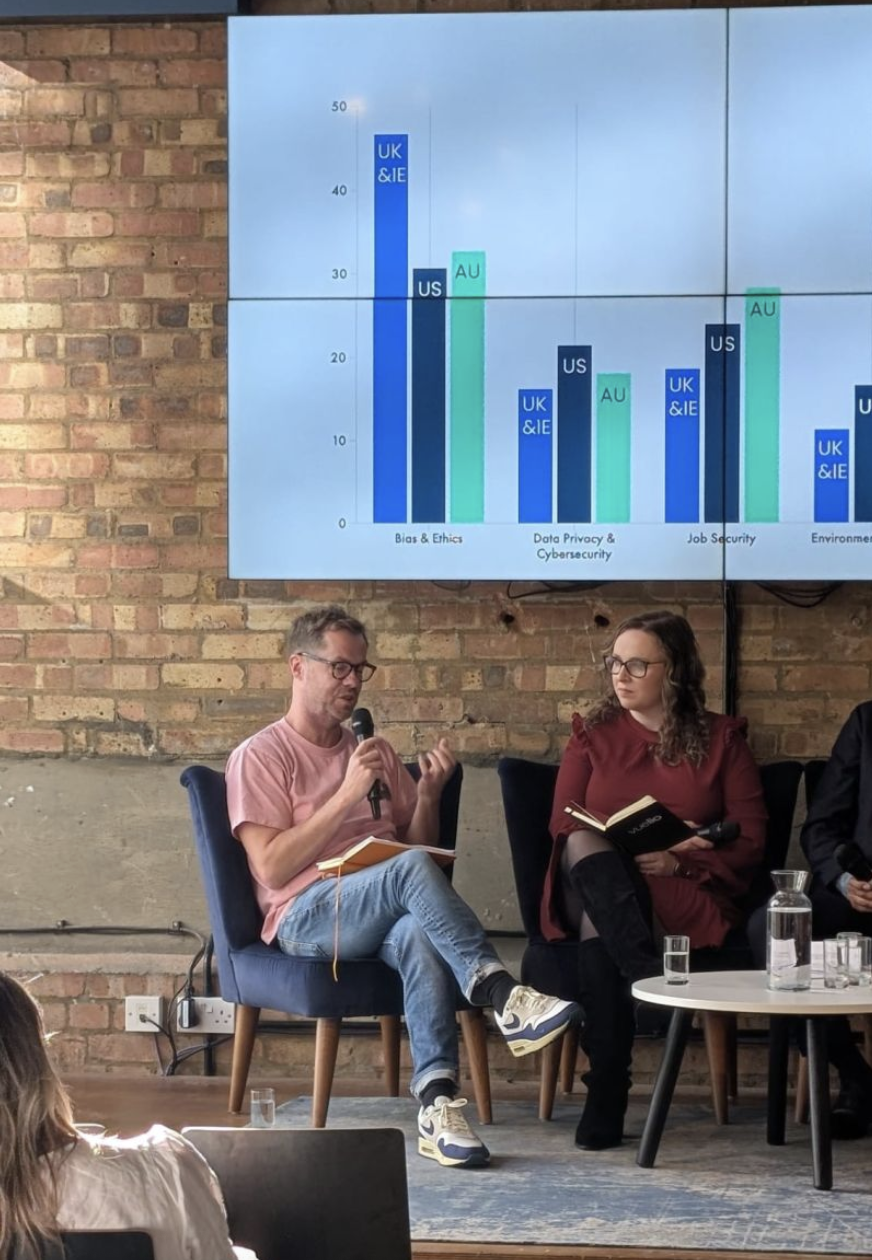
Artificial intelligence has quickly moved from futuristic promise to present-day reality, reshaping how we work, connect and communicate. That shift was at the centre of Vuelio’s recent event, Communicating in a world redefined by AI, which brought together comms leaders to explore the opportunities and risks of this new era.

The discussion highlighted the dual narratives currently shaping AI: on one side, optimism about its role as the driver of a new industrial revolution, fuelling productivity and growth; on the other, scepticism about its potential to erode trust, creativity and even democracy.

We interviewed André Labadie Exec Chair, Business & Technology for Brands2Life and Vuelio’s Head of Insights Amy Chappell after the event to unpack their perspectives further.

Andre Labadie and Amy Chappell talking about communicating in a world redefined by AI

The narratives defining AI today

The event began by asking a simple but pressing question: how is AI being framed in our conversations right now? 

According to André, two narratives dominate. On one side, there is enormous enthusiasm: AI as the driver of the next industrial revolution, promising growth, productivity and creativity at scale. “It’s the idea that AI is going to power the next industrial revolution, a major engine of productivity, creativity and economic growth. Technology firms, consultancies, governments all want to push that message, and there’s real substance behind it.”

On the other, there is caution that recognises that these technologies also come with risks to trust, creativity, and even democratic processes. “We’ve moved on from the Robocop-style stories of killer robots,” André explained, “but there are still concerns. Whether around misinformation, ethical use, or how reliant on automation we should allow ourselves to become.”

This tension of optimism versus scepticism is playing out across media coverage, political debate, and popular culture. Communicators now face the challenge of addressing both sides with honesty and balance.

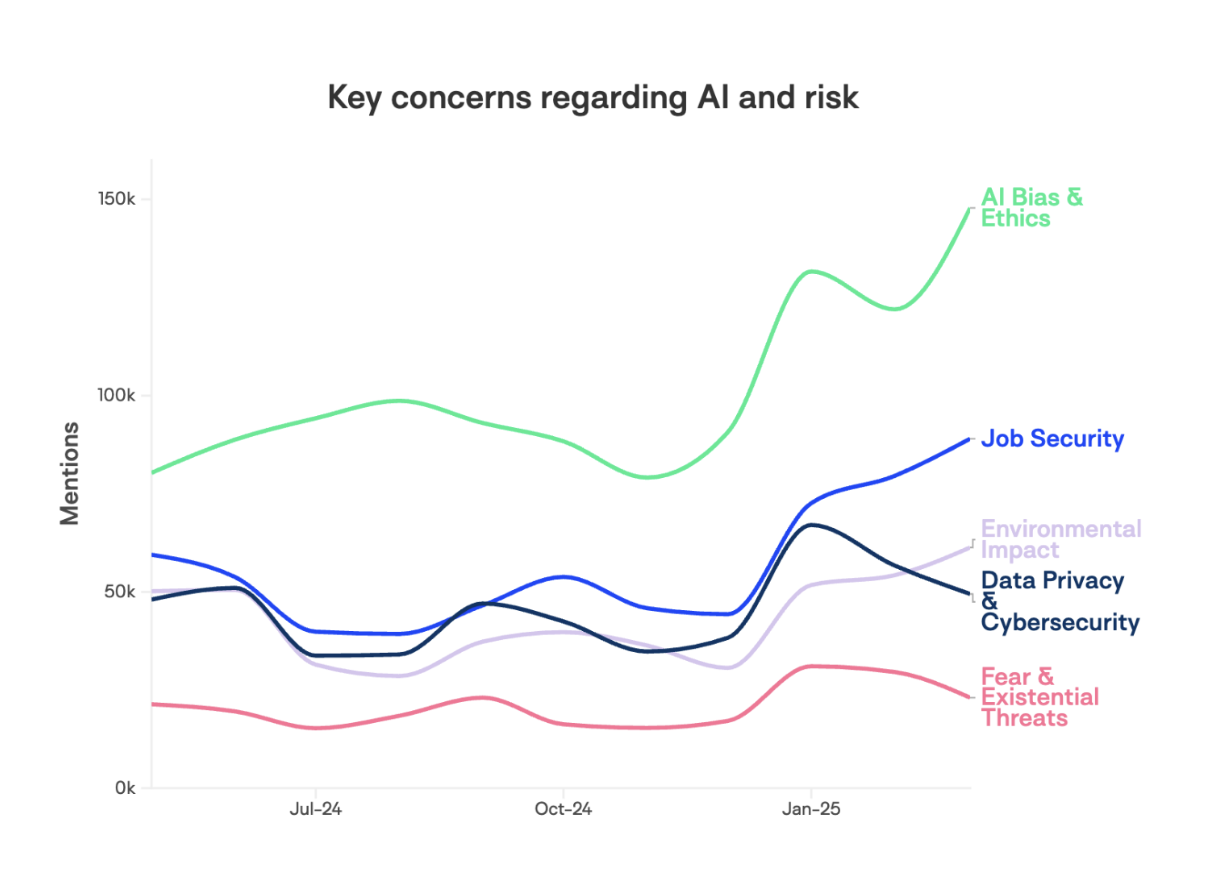
Chart showing rise of AI conversation in different categories, Vuelio Pulsar

Where media and public diverge

The event also explored where media and public opinion align on AI, and where they diverge.

At a macro level, both groups are aligned on jobs and ethics: whether roles will be displaced or reshaped by AI, and whether its applications are ethical. But beyond that, priorities differ.

“From a media lens, there’s a preoccupation with big-picture risks,” André says. “But the public, as employees or consumers, are more concerned with pragmatic and personal issues — can my child use AI safely for homework? Can I trust the reviews I’m reading online?”

This divergence matters for communicators. Messaging that plays well in the press may not resonate with employees or customers. Equally, public anxieties that appear small-scale can quickly become reputational flashpoints.


AI as solution as well as risk

Amy added an important counterpoint: AI may cause problems, but it can also be part of the solution. “It’s almost ironic, isn’t it — using AI to fix AI problems,” she reflected. “But AI can help detect misinformation, catch fake quotes, and verify sources. We’ve seen misquotes in the media around medical advice, and being able to use AI to spot and correct those quickly is vital.”

She also pointed to AI’s ability to process vast volumes of data: “From an analyst perspective, it can help us act quicker. If there’s a narrative playing out in the media, AI can help us understand what’s going on and deal with issues before they escalate.”

This dual role — both a risk factor and a potential safeguard — is central to how communicators should frame AI internally and externally.


Key challenges for communicators

For communicators trying to find their footing, André outlined three key challenges:

  1. Avoiding sensationalism. The hype cycle means every brand feels pressure to make statements on AI. “There are a lot of so-called thought leaders with strong opinions,” André noted. “The challenge is cutting through with something grounded and valuable.”
  2. Adding substance. Research shows most major companies now reference AI in their annual reports, but few explain how it has genuinely improved their operations. That gap between rhetoric and reality risks hollowing out trust.
  3. Maintaining credibility. Brands that present themselves as human-first but secretly rely on automation risk being caught out. Transparency, he argued, is the safest strategy.

André highlights Puma, the sportswear brand, faced criticism for releasing an AI-generated campaign despite its identity being rooted in human performance. Outsourcing to automation felt discordant and undermined credibility. By contrast, LinkedIn rolled out AI-generated job descriptions and career advice with clear labelling and careful positioning. “They presented it as a co-pilot rather than a replacement,” André says. “Consumers knew it was AI-driven, they understood its limitations, and they were more forgiving when mistakes occurred.”


The rise of new comms channels

As AI changes not just messaging but also the information ecosystem, the question of channels is increasingly pressing.

For André, executive communications remain key for signalling authenticity. Employees, too, are crucial — often the first to amplify or critique how AI is used internally.

And interactive forums matter more than ever. “Reddit AMAs, Q&As — those have a double benefit,” he explained. “Not only do they engage audiences directly, but AI-powered search engines and large language models are increasingly over-indexing on content from those spaces.”

This led to wider discussion on phenomena like “Google Zero”, where AI-driven summaries reduce traffic to news websites. As André pointed out, this is a business model crisis for publishers — but also a challenge for communicators, who must ensure brand content surfaces in the discursive spaces where AI is now sourcing information.


Keeping humans in the loop

Both panellists stressed the importance of human oversight.

Amy highlighted the need for governance and scepticism when working with vendors: “Don’t use AI outputs as the finished article. Keep humans involved in verification, and don’t overtrust vendors who overpromise.”

She also emphasised the role of human spokespeople: “If you have a person quoted in an article or broadcast, you maintain a level of trust that an AI output alone can’t offer.”

André echoed this, pointing to the risk of “slop” — AI-generated work that looks polished but lacks depth. “The differentiator is still judgment,” he argued. “What makes communication stand out is originality, cultural awareness and human connection.”


The future of junior comms roles

The conversation turned to how AI will reshape entry-level and mid-level roles. André was clear: junior communicators must still be trained in the fundamentals. “Graduates are tomorrow’s middle managers. If we don’t train them properly now, we’ll face a crisis later,” he warned.

He also predicted new skillsets: “We’ll all become orchestrators of agents. Rather than going to a colleague for help, you’ll go to AI agents. So junior staff will need to understand how to stitch technologies together and manage processes as well as people.”

Amy agreed, emphasising the need for critical thinking: “If we don’t train graduates, they won’t know how to interrogate AI outputs. Critical thinking and strategic oversight are going to be essential skills.”


Pitfalls to avoid

Over-reliance was a recurring theme. Amy warned against being dazzled by tools that overpromise: “If it seems too good to be true, it probably is. No tool can do everything — so don’t integrate anything you can’t fully trust.”

André added that organisations often try to move too fast: “Don’t boil the ocean. Start with a subset of workflows, experiment, and build from there.”

Both panellists agreed that while AI can streamline workflows, it cannot replace human creativity, judgment and accountability.


Experiment boldly, communicate authentically

The overarching takeaway from the event is that AI is here to stay — but its impact will be defined by how organisations choose to use it.

Experimentation is important, but so are transparency and authenticity. As Amy noted, combining AI-driven monitoring with human oversight is key to managing fast-moving narratives. As André stressed, an “okay” AI-generated pitch won’t win new business — originality and distinctiveness still matter most.

Artificial intelligence may be redefining the landscape, but it is human judgment that will continue to shape the stories worth telling.

Liberal Democrat Conference 2025

Liberal Democrat Conference overview: A pushback against the infiltration of ‘Trumpian’ politics

Written by Aidan Stansbury and Billy Barham, Vuelio Political Team. 

The Liberal Democrat Conference saw no halt in Sir Ed Davey’s relentless bombardment of the right wing of politics. In fact, it reinvigorated his arguments, as he pushed against what he described as Trumpian-style politics infiltrating, by proxy, across the Atlantic.

In his closing speech, Davey did not hesitate to call out the US president, challenging him on the flight of medical researchers from the US, and his claims regarding autism in children caused by paracetamol. Further, Spokesperson for Foreign Affairs Callum Miller’s speech was dominated with anti-Trump rhetoric, accusing the UK of bending over backwards for the US. Davey also used the conference to further take aim at Elon Musk, lengthening their public dispute from X to the shores of Bournemouth. The party has called for criminal charges against Musk for the language used at the Unite the Kingdom march a few weeks ago. The anti-Trump notion was reiterated by Sir Nick Clegg, who confirmed he would not be returning to politics after leaving Meta as President of Global Affairs earlier this year. In a fringe event on Big Tech, AI and Political Conflict, the former Deputy Prime Minister did not hold back on his criticisms of the ‘special relationship’, branding the UK’s dependence on the US as embarrassing and increasingly ‘cringey’. He warned that the UK would soon have to choose between the US and the EU to protect its values and sovereignty.

It would be hard to argue that Nigel Farage, Reform UK Leader, was not a contending protagonist of the conference, absorbing the closing speech titled ‘Don’t let Trump’s America become Farage’s Britain’. The Liberal Democrats have worked to jointly connect the attitudes of Donald Trump and his ‘number one cheerleader’ Nigel Farage, accusing him of being anti-democratic and anti-patriotic, with little interest in advancing the UK. Given that Reform UK only has five seats in Parliament, it is clear the party is looking to the future, guided by opinion polls, where Reform UK could sweep up country-wide disillusionment with the current establishment. Davey’s ploy here is to challenge the UK’s cosying up to the US administration, both through Labour’s desire ‘to do everything to appease Trump’ and Reform UK’s Trumpian political ambitions. To supplement this argument, Liberal Democrats gave out toy lego characters of Farage named ‘Plastic Patriotic’, complete with a MAGA hat and a boot for the Farage figure to lick. Davey has said the Liberal Democrats have a moral obligation to tackle Reform UK and are unwilling to back down to the bullies on the right, positioning the party as a centrist ‘pro-business’ alternative.

In regard to the incumbent Government, the Liberal Democrats’ rhetoric has become
increasingly critical. Davey, in his closing speech, argued that the Government was testing the patience of voters, lurching from one crisis to another. The Government, he said, was hurting pensioners, carers, and farmers across the UK. He implied that the damage to public trust was irreparable, suggesting that the decisions of voters would now be between the Liberal Democrats or Reform UK. A bold move to completely disassociate the established parties, looking to capitalise on shifting opinion polls and public disillusionment.

The former minister for schools David Laws and the Liberal Democrat Spokesperson (Education, Children and Families) Munira Wilson both questioned the Government’s political strategy. They claimed that caution and a lack of strategic vision had meant that the Government’s stuttering start to power was focused on minimal evolution rather than revolution. They believed the public could feel this tension and that it was the party’s duty to present an optimistic vision of the future to challenge the right.

Further, a key theme across the conference was the shared belief in the importance of community and that locally-led solutions were critical to deep rooted political issues and as a vehicle for systemic change. Baroness Pinnock, Liberal Democrat Lords Spokesperson for Housing, Communities and Local Government went further, directing criticism towards the Government’s stance on devolution. She argued that the Government’s interpretation of devolution is fundamentally flawed and lacked key democratic principles, warning against the assumption that devolution will automatically lead to a more prosperous future on a local and national level. Separately, Angus MacDonald criticised the Government direction on energy and the just transition, arguing that it had alienated the rural economy and had been done to the public rather than with them.

Fundamentally, the Liberal Democrat conference showed a key signal that the party is willing to stand up and fight off the right of politics; whether that is tackling the Conservatives in a hope to outmuscle them at the next election, or, more prominently, warn potential voters away from the perceived dangerous Trumpian ambitions of Nigel Farage. In doing so, the Liberal Democrats aim to offer an optimistic future for the UK, one which they believe Labour is unable to provide.

For more on UK politics, sign up to our Point of Order newsletter

How to get press coverage in September 2025

Christmas content, money issues and fitness fanatics: How to get UK press coverage in September

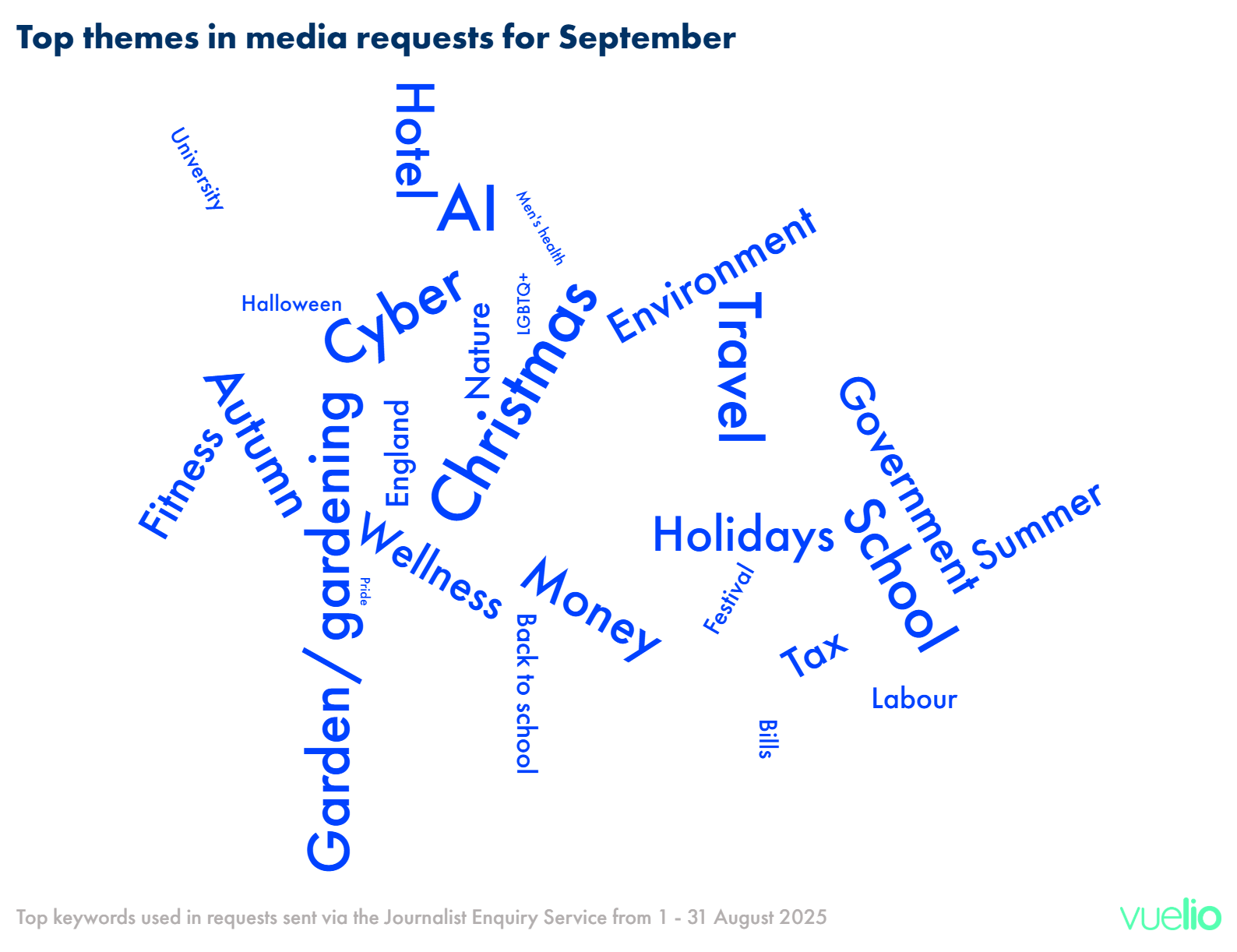
Wondering how you can get expert comment into the press in September? With the kids heading back to school and a new season beginning, there is plenty of new topics and issues for journalists to cover. Find out below what they have been looking for in August from requests sent via the ResponseSource Journalist Enquiry Service and how this will impact what they are looking for this month and beyond.

Holidays are coming

Whether you’re a fan of Christmas or not, journalists are already looking to get ahead with their gift guides. In July, ‘Christmas’ appeared in just over 2% of enquiries and this figure more than doubled to just under 7% of requests in August.

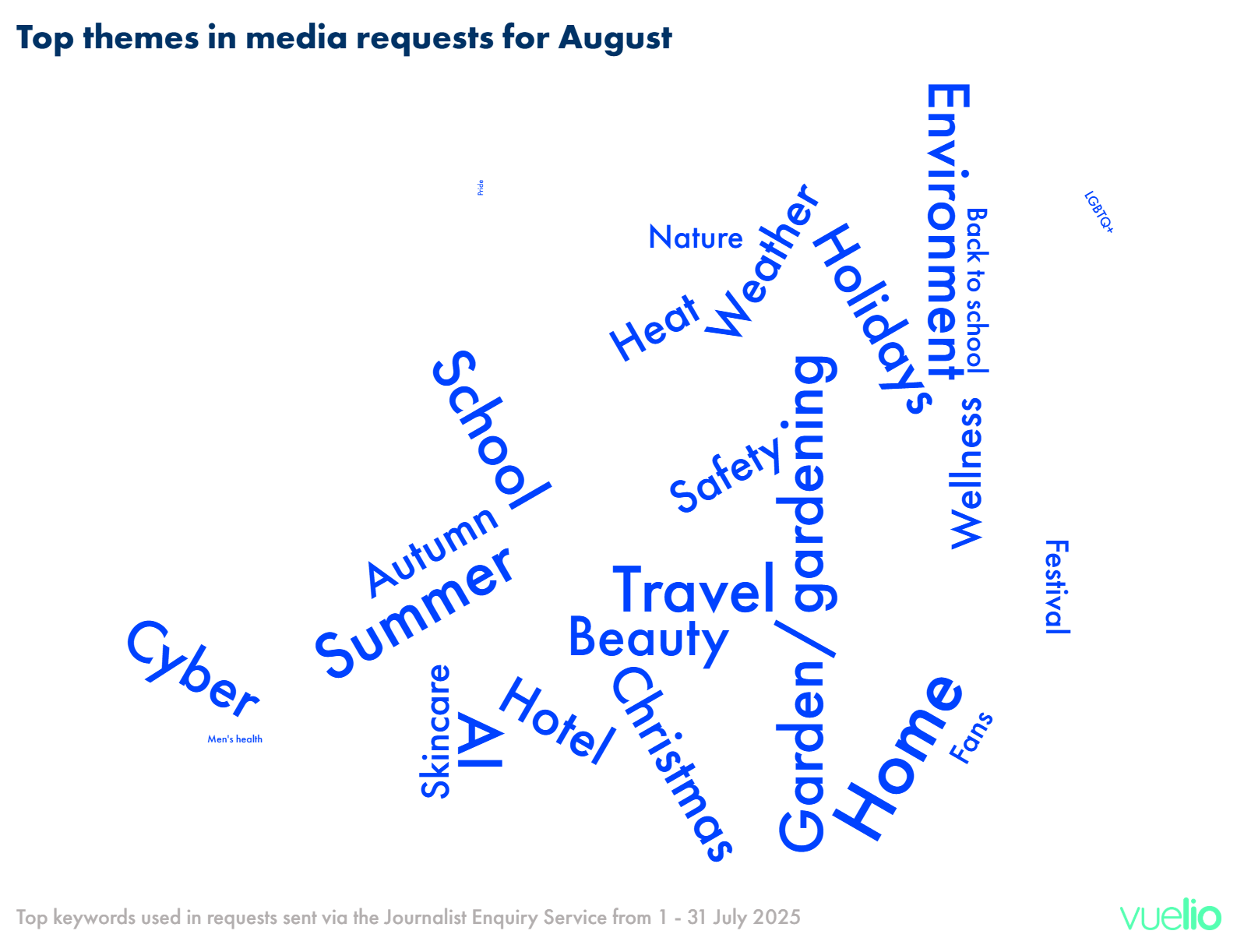
What are journalists writing about in September?

It’s not all been gift guide requests, though. There have been enquiries for festive/winter feature ideas and celeb interviews, historic houses decorated for Christmas, and winter books. Journalists at The Telegraph, The Independent, House Beautiful, and Bella all sent requests in August.

Going forward? September is likely to see the amount of Christmas requests double again. Last year, 14% of enquiries in September were for Christmas, with about 9% for gift guide products and 4% for advent calendars. Be prepared with samples to send out for review, and you could be featured in the national press.

Money issues a concern again

Both energy bills and food prices are set to rise over Autumn and Winter meaning that money concerns are once again high on the news agenda. This was seen on the Journalist Enquiry Service in August, with just over 3% of the total requests featuring ‘money’.

Outlets such as Raconteur, Sifted, Saga Money, Money Marketing, and The Sunday Times all sent enquiries around this topic last month. Many of these were looking for case studies, with asks for single people to chat about managing finances, a business owner who is worried about business rates, and for someone who has inherited a decent amount of cash because of IHT reasons.

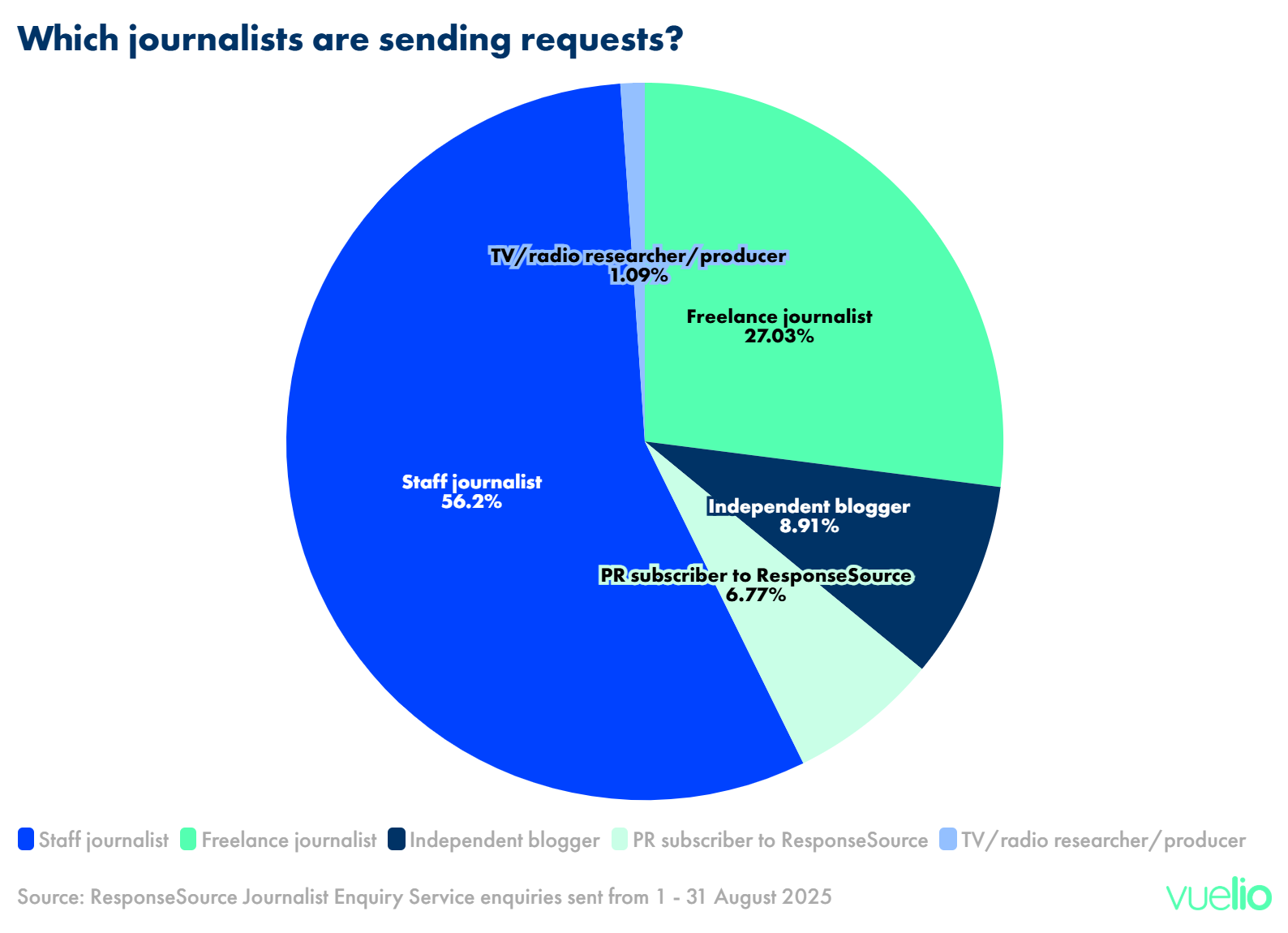
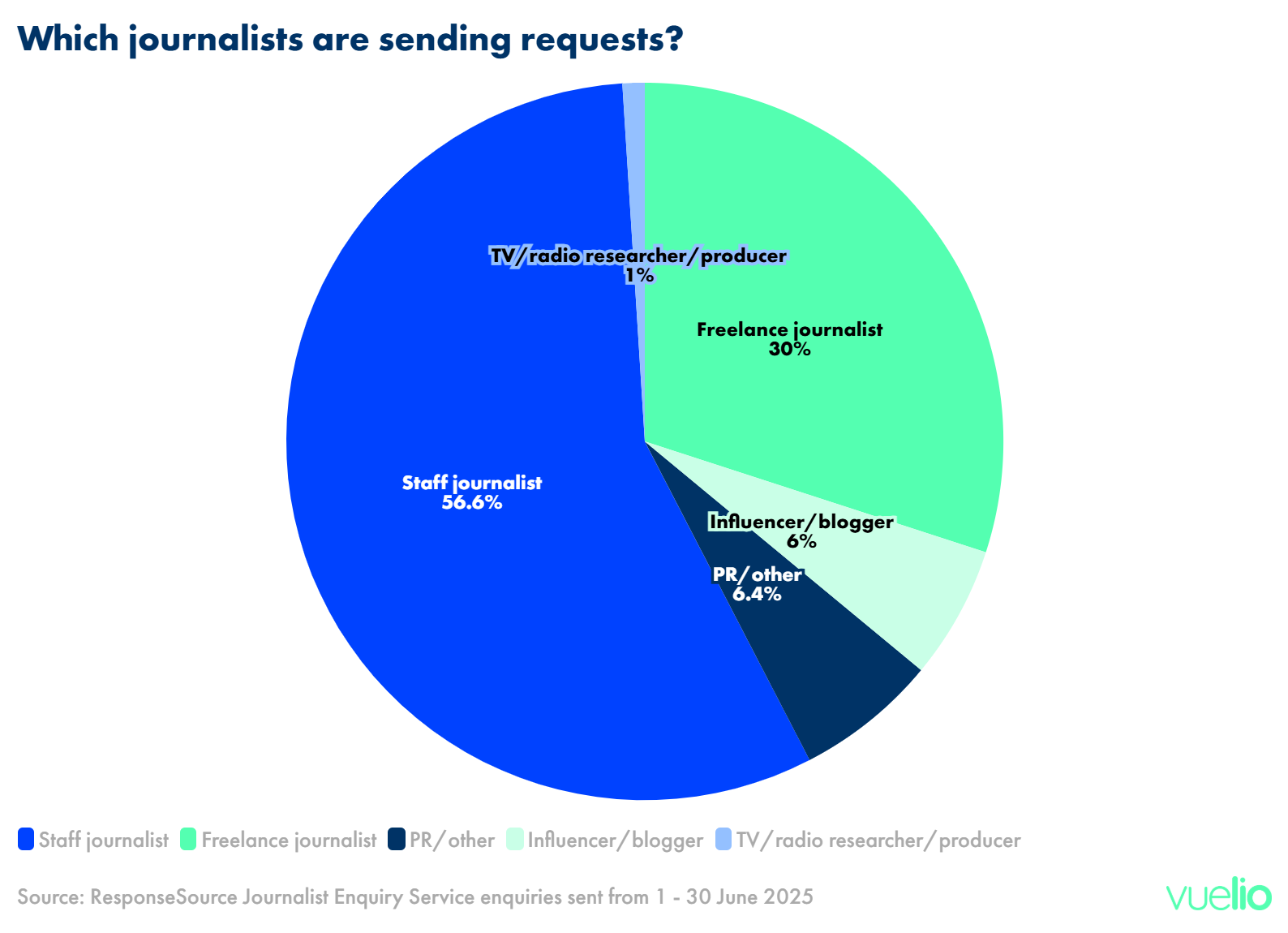
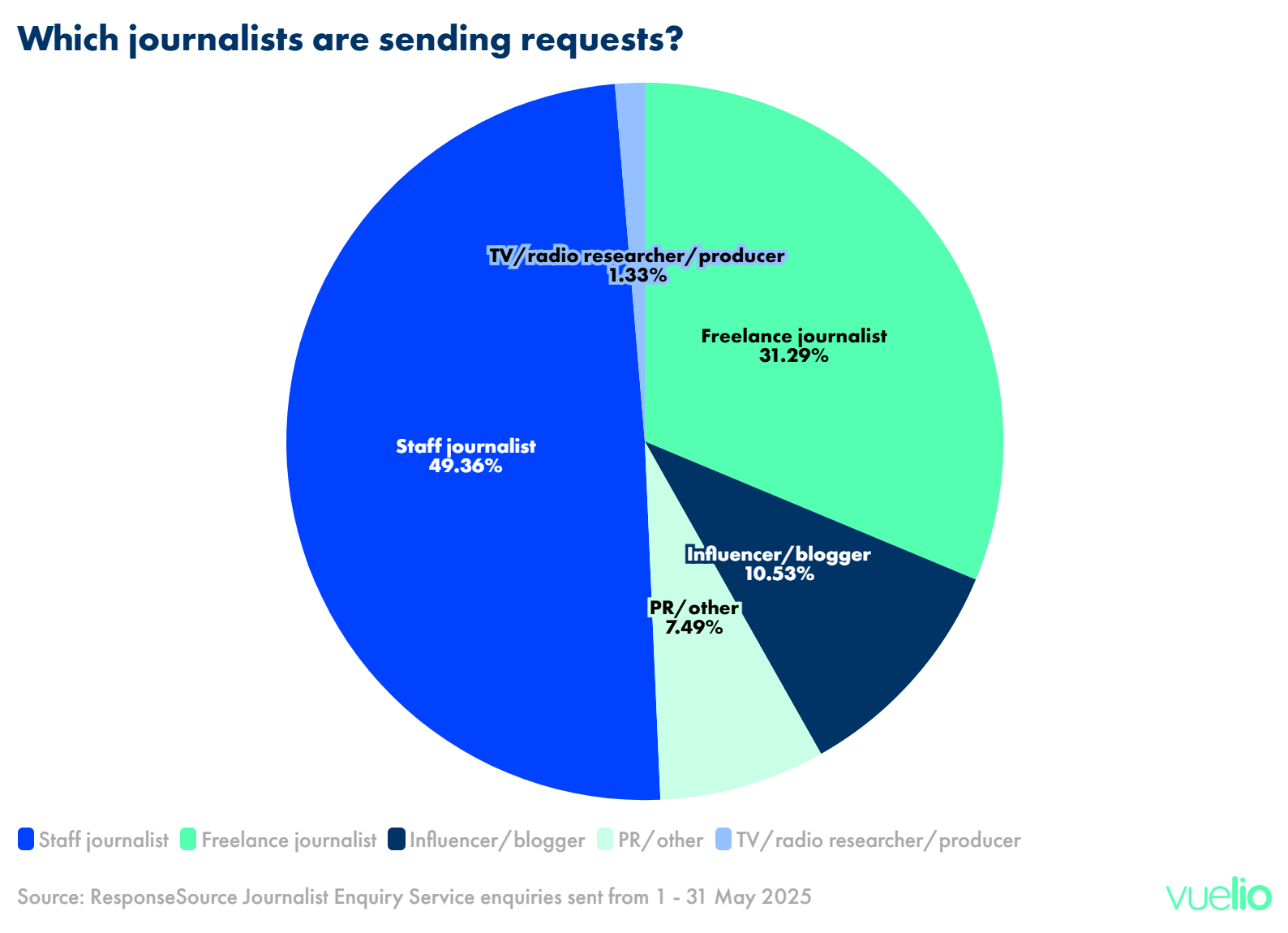
Which journalists are using ResponseSource for their Sept 2025 features?

Going forward? Journalists are likely to be writing advice pieces over the coming weeks and months about how people can save money during Autumn/Winter. We will see a lot of requests for money and personal finance experts. Plus, the Autumn Budget isn’t too far away, so journalists will need experts to explain any changes that will affect household budgets, and possibly case studies of people that will be impacted.

Fitness in fashion

The peak time for fitness is usually in early January, which we saw earlier this year with nearly 4% of requests containing the word ‘fitness’. However, we have seen another spike in August, with 2.5% of enquiries looking to cover this topic.

Outlets such as Men’s Fitness, Fabulous, The London Standard, and Cosmopolitan all sent requests last month. The majority were looking for fitness experts to share their advice and opinions but we also had enquiries looking for fitness bootcamps, home gym equipment, and fitness etiquette.

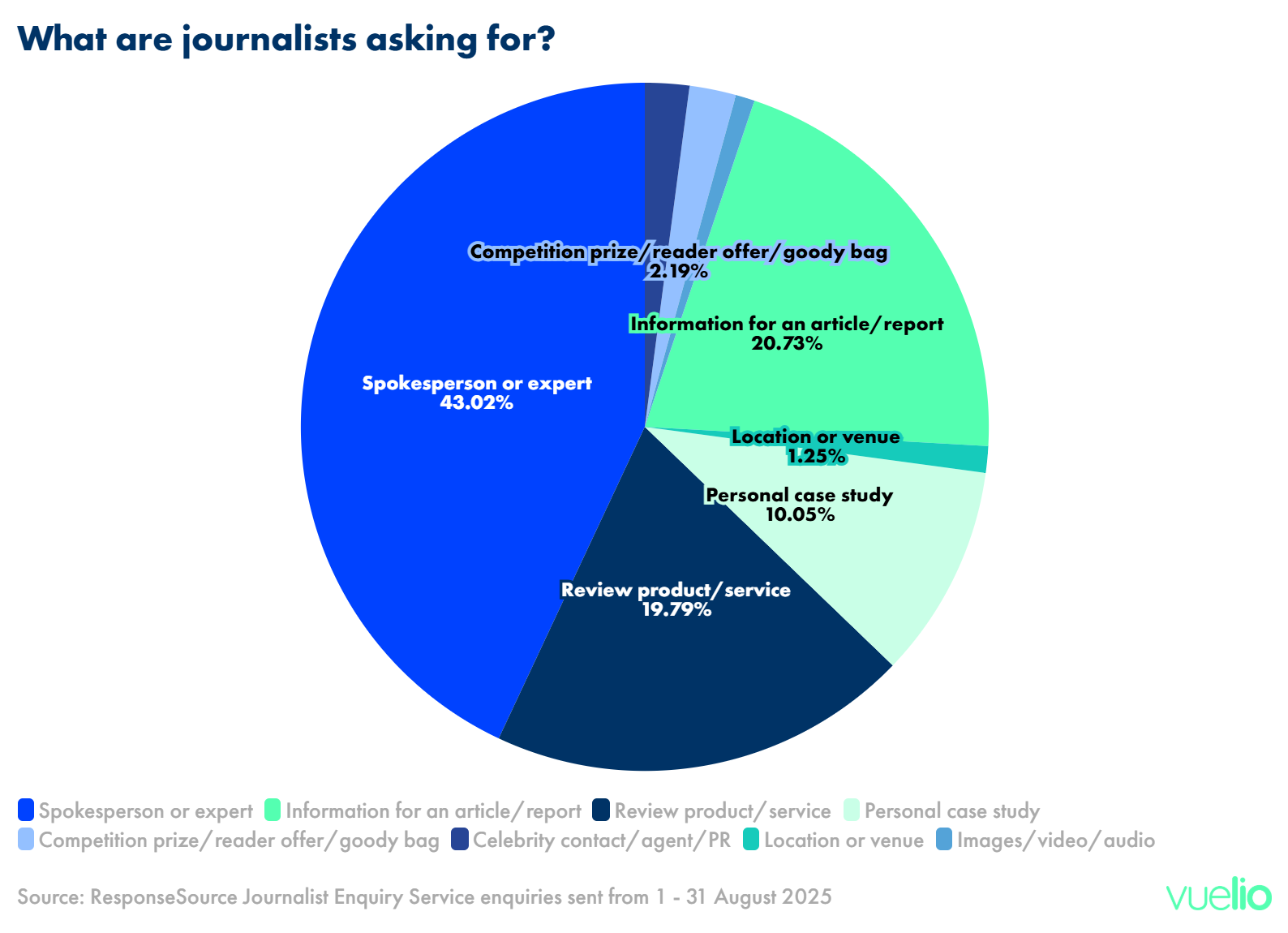
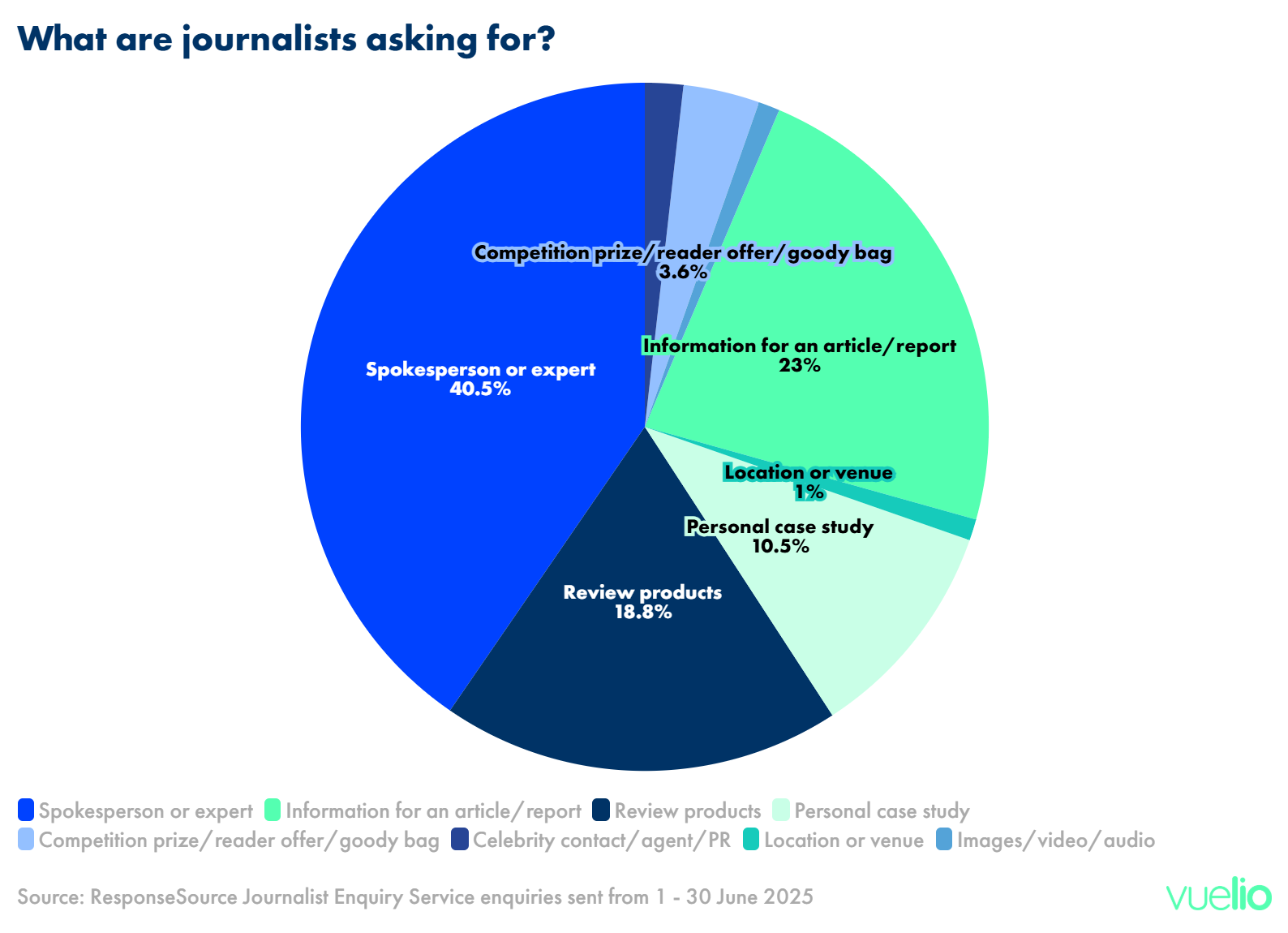
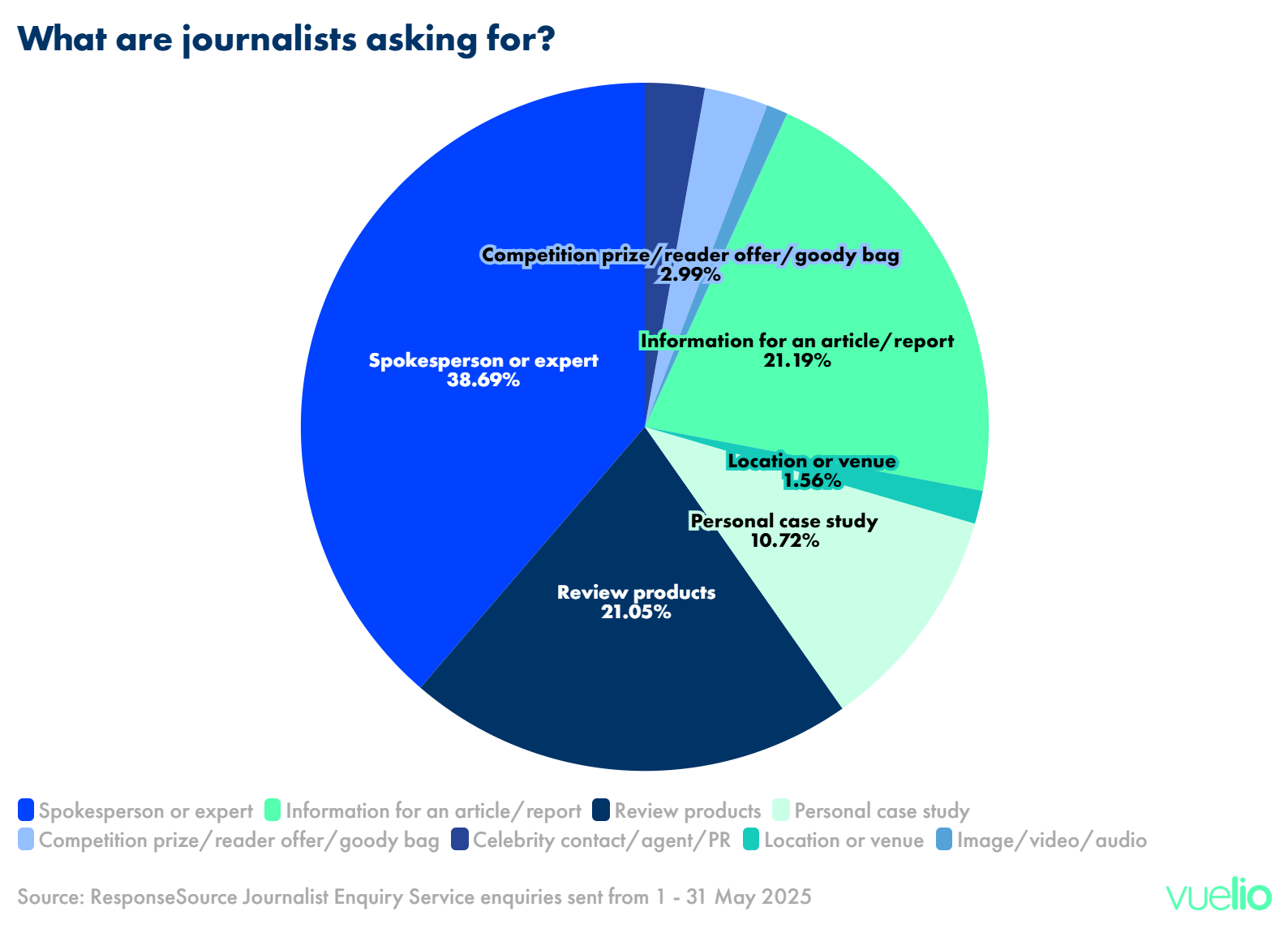
What journalists are asking for in September 2025

Going forward? National Fitness Day is coming up on 24 September, so we are likely to see more requests for experts and information on different exercises and classes that people can take up to get fit. Have comments ready to send out and you could get featured in a consumer magazine.

Other opportunities for PRs in September and beyond

Party conference season is nearly upon us and journalists have been looking to get ahead of this with 2.5% of requests containing ‘government’ and 1% for ‘Labour’. Enquiries are likely to focus on getting expert opinion on new policy announcements, and speeches, and conventions from the major party conferences. You can also keep up with the developments from the party conferences by subscribing to our newsletter.

Peak holiday season may now have passed but the media are already looking to get ahead and cover Autumn and Winter travel ideas and holidays. ‘Travel’ appeared in 5% of the total enquiries in August with the majority looking for experts to share their tips and advice on places to go. This is likely to continue throughout September with journalists seeking information on half-term holiday suggestions.

Want to get the most out of the ResponseSource Journalist Enquiry Service? Check out this explainer.

Preparing for a cyber crisis

‘Cyber crisis is a completely different animal’: Advice on planning a cyber secure comms strategy

‘The thing to remember: it’s not a normal crisis’ – that’s Joanne Gill’s advice for comms teams. And Joanne would know: her organisation Cyber Crisis Readiness & Response is geared towards helping comms teams who are faced with cyber security crises.

And in today’s climate, every comms team is at risk. Any organisation with an internet connection could be subject to a cyber attack, a data leak, or a deep fake of their c-suite in today’s climate of increased danger. According to Panorama report ‘Fighting Cyber Criminals’, there were an estimated 19,000 ransomware attacks on UK businesses in 2024, and that number is only set to grow.

‘You have to have a separate part of your crisis comms plan, a separate process, a separate mind map. Don’t fall back on your usual muscle memory, because it’s not going to work for you,’ adds Joanne, who equips organisations across the UK with the confidence to withstand and recover from the dangers of a cyberattack.

Read on for what to learn from recent crises that hit the headlines; practical steps for getting started on your plan; and where comms can get particularly complicated…

Lessons to learn from the 2025 summer of cyberattacks

‘All comms teams need to be prepared for something like this to happen to them, and other organisations in their sector. Identify stakeholders, have statements that are ready to go,’ advises Joanne.

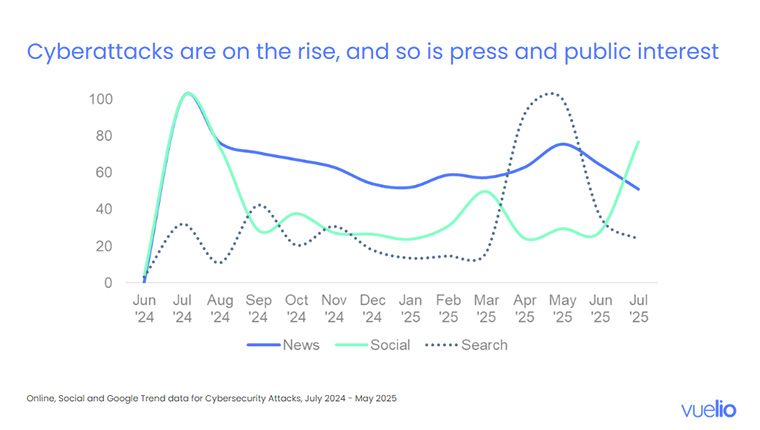
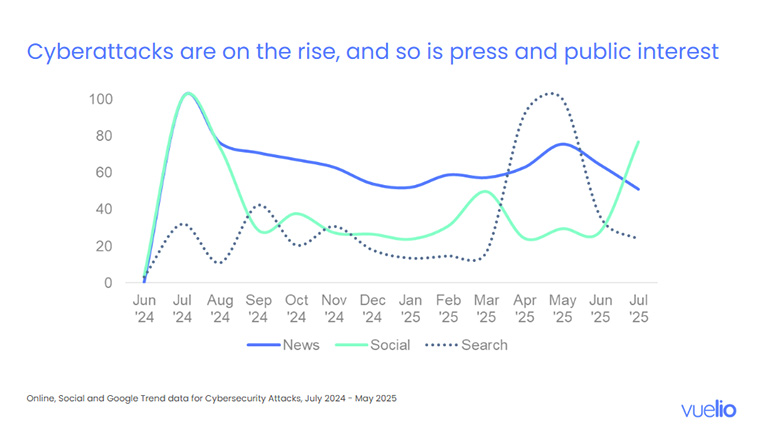
Cyberattacks are on the rise

‘The key thing that’s different with a cyber crisis is, how do you actually distribute that? If all of your systems are down (for example, M&S had to revert to pen and paper), how do you distribute your statement to journalists?

‘There’s that added complication of having a distribution list that is not attached to a system which might go down. Ask yourself – do I know how I’m going to contact people? Where am I keeping that information? If I’ve got a crisis communication plan, do I have a paper copy of that? Do the people who are involved in that have a paper copy of it? And how are we going to communicate and actually do our jobs, get approvals for things that we put out when our systems are all down?’

Cyber crisis versus crisis

‘The additional element with a cyber crisis is that you need to be a good corporate citizen. With a cyber crisis, you’re not the sole victim. Your suppliers are potentially victims – it’s going to cost them money, one way or another.

‘All the usual things that you would do in a crisis need to be considered – how do we shore up the reputation of the company? How do we reassure people? How do we say sorry? But you also need to also look at how to be a good corporate citizen, preventing further harm to all of the people who are in your business ecosystem.

‘That is about communicating with CISOs (Chief Information Security Officers), telling them what the solution is to this problem, and how they can prevent contagion to their own systems. You’ve got a whole load of communication that has to happen before anybody even thinks about what to say to the media.

‘The media isn’t going to drive how a company recovers. That’s going to be how you deal with your stakeholders – the media is just a route to communicate with those stakeholders.

‘A cyber crisis is a different animal to other crises.’

Practical steps for planning your response

‘Ensure that you have those stakeholder distribution lists and that you’ve done some analysis in advance about who you need to communicate with, and what to do if all your systems are down.

‘Make sure that you’ve got all of the suppliers, all of your ecosystems, chief executive security officer details so that you can contact them, so your technical people can write to them. And that’s very different messaging to that of reassuring your customers.

‘It’s about segmenting, making sure that you’ve got that information available outside of your usual systems.’

CEO statements: Always a solid comms strategy?

‘As a comms team, you know whether your chief exec is somebody that you want to put forward – it’s what companies traditionally do for crisis comms. You do the media training, emphasing the need to be apologetic, to be empathetic.

‘But I don’t know… the other element with cyber issues is that the more content you have of your senior team in the public domain, the more opportunity there is for criminals to use AI deep fake tech. To do some social engineering, and then use that to get access to your systems. Nobody is going to argue with the CEO if they call a help desk in the middle of the night and say “reset my password”.’

Extra complications to consider

‘It’s so complicated because you’ve got things like GDPR, there are potential fines coming further down the line. Cyber crisis is a multi-layered, complicated thing.

‘Comms teams who come into this thinking that it’s going to be like a regular crisis will come unstuck very quickly.’

For more on planning your strategy, watch Vuelio’s webinar ‘Cyberattack Crisis Comms’, or read our overview of the key points covered here.

Clean energy and net zero

Labour Milestones Review: Home-grown energy and net zero goals

Labour came to power in July 2024 with a clear ambition: to make Britain a clean energy superpower. It promised that the benefits of this mission would be felt across all parts of the UK, from lower bills and protection from volatile fossil fuel markets, to the creation of jobs and greater investment and growth opportunities in British industries and industrial heartlands. Labour has insisted that its clean energy ambitions are achievable and has undertaken actions to change the face of the UK’s energy landscape already. However, confronted with an increasingly fractured consensus around net zero and an unstable geopolitical backdrop, achieving the clean power mission will be no small feat. So, one year on, how much progress has Labour made since its election?

Labour’s flagship target of clean power by 2030 is arguably one of its most ambitious. With 2030 just five years away, achieving the target will require radical reforms to the UK’s energy system, to be delivered at pace. Labour’s first few months in office saw the party hit the ground running. Within days of coming to power, the Government lifted the de facto ban on onshore wind introduced by the Conservatives in 2016, and announced a new partnership between the Crown Estate and Great British Energy, the Government’s publicly-owned energy company, to support the development of clean energy infrastructure. Last year also saw Labour deliver a record budget allocation for the next Contracts for Difference auction round, and the Government’s clean power delivery unit, Mission Control, published its Clean Power Action Plan, outlining the roadmap to 2030. Other significant milestones during Labour’s tenure have included the closure of the UK’s last coal-fired power station and Scotland’s only oil refinery, as well as the Government’s commitment of over £14bn to build the first nuclear power station in over three decades, Sizewell C.

However, these milestones, while historic, have not come without challenges, and have been beset with criticism from across the spectrum. The last year has seen a shift in the Conservative Party’s stance towards net zero, with its leader Kemi Badenoch now describing the net zero by 2050 target as ‘impossible’, and one that cannot be achieved ‘without a serious drop in [living standards].’ Reform UK has been equally as vocal in its opposition to the Government’s clean energy ambitions, arguing that ‘net stupid zero’ is ‘destroying’ jobs, and leading to higher energy bills and deindustrialisation in the UK.

A report from the Tony Blair Institute in April captured this breakdown in the political consensus around net zero, highlighting the ‘widening credibility gap’ at the heart of climate change policies and that the current climate debate is ‘broken.’ Despite this political noise around net zero, recent polling revealed that the public’s support of climate action is holding strong. However, with Brits currently paying some of the world’s highest electricity prices; an increasing loss of jobs in oil and gas industries; and the NIMBY argument looming large, Labour face a challenge in keeping the public onside as it moves full steam ahead towards net zero. The question remains whether the promise of lower energy bills and benefits for communities hosting clean energy infrastructure will be enough to garner support for the net zero transition, and whether the rise of the Reform party will derail the Government’s plans and steer the public towards a different path.

Looking ahead, Labour has a task on its hands to drive forward the momentum behind its clean energy mission, and ensure that the public, industry and investors are brought along with it. Will the UK become a clean energy superpower, or will Labour’s net zero policies, in the words of Badenoch, ‘bankrupt’ British industries and its people?

For more on how the Labour Government is delivering on its promises, read the Vuelio Political team’s take on housing, children’s wellbeing, the NHS, living standards, and policing

Raising living standards

Labour Milestones Review: Raising living standards

As the summer of 2025 draws to a close, the Government’s milestone to ‘raise living standards so working people have more money in their pockets’ sits in a complex economic landscape. Polling patterns suggest that inflation continues to weigh heavily on public perceptions of economic competences and while inflation has eased from the peaks of the cost-of-living crisis it remains at around 3.6%, above the Bank of England’s 2% target. Moreover, for many households, the modest GDP growth of 0.3% in the last quarter offers little tangible relief when combined with rising unemployment, now at its highest level in four years.

Labour’s central interventions have focused on wage policy. In April, the National Living Wage rose by 6.7% to £12.21, with projections to reach at least £12.71 by next spring. Moreover, the Low Pay Commission’s remit has been expanded to consider cost-of-living measures when it makes future recommendations to the Government on the minimum wage.

However, surveys from Lancaster University suggest that almost half of workers have little left after covering essential bills, with low-income households especially doubtful that wages will keep pace with rising costs. Similarly, the Joseph Rowntree Foundation calculates that average disposable incomes remain £400 below pre-pandemic levels, with the poorest fifth of households on course to see a 6% drop by 2030. The Resolution Foundation notes that for higher earners, apparent gains can be offset once the value of public services and tax changes is factored in, making any perception of improvement more reliant on service delivery than on disposable income alone.

A turning point came in the spring when the Government was forced to row back on some of its proposed reforms to disability benefits after a sharp backlash from campaigners, charities, and backbench MPs. Although the U-turn avoided a Labour rebellion, it created a gap in the Government’s fiscal plans; as planned savings from welfare reform were baked into the Budget’s forecasts. This gap will need to be filled, and attention is turning to the possibility of further tax rises in the autumn, a move that could complicate Labour’s narrative of helping working people keep more money in their pockets. According to the National Institute of Economic and Social Research, the Chancellor may now need to find more than £40bn of tax rises or spending cuts in the autumn budget to meet her fiscal rules.

Moreover, business groups warn that higher employer costs, from the NLW to National Insurance and the Employment Rights Bill currently going through Parliament, risk dampening investment and hiring. The CBI projects growth of just over one percent this year, enough to avoid recession but not enough to produce the rising tide needed to lift all boats.

The milestone of raising living standards was never going to be achieved within a single year, but by mid 2025 Labour’s progress feels somewhat incomplete. The challenge heading into the autumn spending round is to deepen and accelerate measures that deliver direct, visible benefits.

For more on how the Labour Government is delivering on its promises, read the Vuelio Political team’s take on its housing, policing, healthcare, and education commitments.

Labour Milestones Review: Education

Labour Milestones Review: Giving children the best start in life

During the 2024 General Election campaign, the Labour Party raised concerns that too many children arriving at primary school were not ready to learn. Across England, 33% of all children in the 2022/23 academic year were considered not school ready when starting reception. This included a quarter not having basic language skills and 30% being unable to communicate their needs to teachers. While the long-term implications of low school readiness are well researched, stakeholders called for the Government to act quickly to reduce the effects of poor spoken language, literacy and numeracy. They also noted that children from less affluent backgrounds face a high risk of low educational attainment, which could entrench intergenerational disadvantages.

In December 2024, the Government committed to increasing school readiness as part of its six key milestones for this parliament. The term ‘school readiness’ often refers to a child’s preparedness and their ability to succeed in school through cognitive, social, and emotional skills. It most commonly refers to children around the age of five and the start of formal education. A child’s development is considered ‘good’ if they meet the expected requirements across five early learning categories. These include communication, personal, social and emotional development, literacy, mathematics, and physical development. Assessments are made at the end of the Early Years Foundation Stage.

In its pledge, the Government has committed to increasing school readiness to 75% of all five-year-olds by 2028. Progress will be measured against children reaching a ‘good level of development’ across the five areas of learning in the Early Years Foundation Stage, and would mark an increase of 40,000 to 45,000 a year reaching the standard. In November 2024, the Department for Education reported that 67.7% of children in 2023/24 met a good level of development at the start of the academic year.

To meet this milestone, the Government has rolled out multiple initiatives across early years education, targeting improvements in accessibility, quality, family support and local services. The Government’s commitment to early childhood is centred around collaboration and partnership with parents, teachers, and communities. The Government’s strategy has included a £1.5bn commitment to structural reform across family services and early years education, and will work in tandem with broader Government strategies, including the 10-Year Health Plan.

Firstly, the Government has committed to reforming family services, critical to supporting early development. It is launching over 1,000 Best Start Family Hubs across the country by the end of 2028, ensuring that there is a hub situated in every local authority by April 2026. These services will also be integrated by a new national digital service, which will centralise information and guidance from local service providers for families.

The Government has also targeted accessibility and affordability for early education and care. This has included Government funded childcare which is reported to save families an average of £7,500 a year by providing 30 hours of childcare a week. The Government has stated that over 500,000 children are currently benefitting from the initiative. There have also been efforts to expand access to the early years sector, with up to 6,000 new places opening in school-based nurseries. The expansion marks efforts to reduce a regional attainment gap, with the majority of new nurseries opening in phase one in the North and the Midlands.

The strategy has also centred on inclusion and accountability. The Government has raised the Early Years Pupil Premium to its ‘highest level’ to increase support for low-income families, increased accountability through reforms to the frequency of Ofsted inspections and focused training support on evidence-based programs that support those identified with SEND. Broader reforms to the early years system are further being supported by targeted skills development and teacher retention to tackle a broader teaching ‘crisis’.

As the Government enters its second year in power, stakeholders have acknowledged the Government’s strategy as both wide-reaching and ambitious, with many noting the complexity and importance of improving school readiness. However, concerns have been raised about the plausibility of the ‘75%’ goal and the financial stability that is required to ensure a sustained and progressive rise in early years development. A survey by Schools Week indicated that 80% of teachers believe that the Government will miss its target.

The Sutton Trust, similarly to the Institute for Government, emphasised the scale of disparities in school readiness between different demographic groups. They noted that targeted intervention must be focused on the most deprived areas, where 51.5% of children from disadvantaged backgrounds reach school readiness by the age of five. The gap between children who are eligible for free school meals and their peers has widened since 2017 and poses a complicated challenge for the Government to address.

While there remains an acknowledgement of support in the Government’s efforts to reform early years education, how the Government tackles an increasing attainment gap will be crucial in reaching its milestone. The Government’s ability to resolve the issue at speed, whilst ensuring sustained financial support, will be critical to supporting vulnerable children and its overarching ambition of raising school readiness to 75% for all children at the age of five.

For more on how the Labour Government is delivering on its promises, read the Vuelio Political team’s take on its housing and policing commitments.

Labour milestones review hospital waiting lists

Labour Milestones Review: Clearing hospital waiting lists

Labour has placed fixing the ‘broken’ NHS at the core of its pre- and post-election political messaging, connecting this milestone intrinsically in its mandate; failure to improve the state of the NHS and the wider health sector would epitomise its governmental failure.

To prevent this, political messaging has been supplemented by policy. In the Autumn Budget, Spring Statement and Spending Review, the NHS and the Department for Health and Social Care emerged the real ‘winners’ with other departments picking up the scraps of funding left. Equally, in a June and July which saw strategies and sector plans published frequently, the 10 Year Health Plan was a key point of attention, taking large expansive steps hoping to revitalise the NHS through ‘major surgery, not sticking plasters’.

The dire state of the NHS is unequivocally clear, and Lord Darzi’s report, published in September 2024, found waiting lists at an all time high, up 200% since 2010. In 2020, there were 720,000 people waiting over 18 weeks for elective treatment. Following the pandemic spike and a steady increase since, in July 2024, upon Labour’s election, 2.85m people were waiting between 18 and 52 weeks, with a further 290,000 waiting over a year. This amounts to 58% of patients meeting the 18 week target, 34 percentage points shy of the milestone. Therefore, Labour’s challenge was and is still to inversely reflect this backlog, reversing the steady increase and going further to reach the 92% target, last met over ten years ago.

So far, as of May 2025, 60.9% of patients are waiting less than 18 weeks, thus, early signs point to a failure to reach this milestone, where the moderate improvements over the last year would reflect an eventual 75% rate, falling short of the target. Rebuttals to this will cite that the policies have had little time to bed in and are in the process of delivering the changes needed to innovate service, harness doctors’ capabilities, recruit new staff and tear through the backlog.

The 10 Year Health Plan sets out these changes. Firstly, one of the triad of core shifts is moving care from hospital to community. This involves reforming the NHS to the Neighbourhood Health Service, functioning as a one-stop shop for community-based care. This move, backed and called for by the sector, hopes to shift the culture of the operating model by directing the correct need and care into the community, freeing up NHS staff to deal with pertinent issues and tackle the backlog. Despite this, moving health to the community is nothing new, and has circulated health ministers’ discourse since the Blair Government. Thus, this calls into question, as highlighted by the Chief Executive of the Health Foundation Dr Jennifer Dixon DBE, whether ‘lessons have been learned’ from past failures. Further, harnessing technological innovation, another core shift, hopes to relieve the administrative burden placed on staff. Mechanisms such as the Single Patient Record, to store all patient data in one transferable place, should work to relieve staff of administrative duties and allow them to focus on providing care and working through the backlog.

Ultimately, as many large multi-year targets do, any improvements will have to be seen. But, with a clear mandate, health and care at the nucleus of Labour’s mission and clear policy put in motion, convincing excuses will be needed to explain any stalling improvements.

For more on how the Labour Government is delivering on its promises, read the Vuelio Political team’s take on its housing and policing commitments.

Labour milestones - policing

Labour Milestones Review: Law and order

Back in May last year, Keir Starmer and members of the then Shadow Cabinet launched the Labour Party’s ‘Steps for Change’, outlining actions their government would take towards achieving Starmer’s five missions. One of these steps was to ‘crack down on antisocial behaviour’, by having more police presence on our streets and introducing tougher new penalties for offenders. Then Shadow Home Secretary, Yvette Cooper, noted that 90% of crime was essentially going unsolved under the Conservatives and pointed out that community confidence in policing was plummeting. In saying this, Cooper framed Labour not only as a party of law and order, but also as one capable of restoring trust. By promising visible action on antisocial behaviour, Labour sought to connect policing policy with broader public concerns about safety and social cohesion.

Less than a month after attaining office, riots broke out across the country following the Southport stabbings. The events served as an early stress test of the Government’s capacity to deliver on its law and order commitments. While the unrest highlighted the case for stronger police powers, it equally demonstrated that enforcement alone cannot address the root causes of disorder without parallel investment in community trust-building.

In October, Home Secretary Yvette Cooper made a statement following the acquittal of Sergeant Martyn Blake in the Chris Kaba case, setting out measures to improve accountability, standards, and public confidence in policing. She stressed the need to respect the jury’s verdict while recognising reduced public trust (particularly among Black communities) and long-standing problems in the police accountability system. These comments signalled an attempt to defuse tensions while maintaining political credibility with both police and minority communities.

Two major reports followed in late 2024 and early 2025 that painted a complex picture of public trust in policing. A YFF survey found that while Black teenagers were the most likely to say their local police do a good job, they and their mixed ethnicity peers were far less likely than White children to believe officers treat everyone fairly or use force only when necessary. In contrast, a Policy Exchange study suggested that ethnic minorities overall reported significantly higher levels of confidence and satisfaction in the police than White respondents. Taken together, these findings suggest that general perceptions of police effectiveness can coexist with deep concerns about fairness, particularly in day-to-day interactions.

In order to present the Labour Government as a guarantor of religious freedom and public order, the Government announced in March that they would be introducing new powers to protect places of worship from disruptive protests, as part of the Crime and Policing Bill. These measures aimed to help police manage protests near synagogues, mosques, churches, and other religious sites by setting clear conditions on protest routes and timings to prevent intimidation. Then in May, the Government also introduced new rules to ensure that police officers found guilty of gross misconduct are automatically dismissed (barring exceptional circumstances).

In terms of funding, Chancellor Rachel Reeves announced in last year’s Autumn Budget new measures changing employer national insurance contributions (NICs). In response, the Conservatives accused the Treasury of not conducting an impact assessment or consulting police forces on the changes prior to the announcement. Despite this, the Government announced in August that police officers across England and Wales would receive a 4.2% above-inflation pay rise, covering all ranks up to chief superintendent. It was also confirmed later that month that, for the financial year ending 31 March 2026, funding for policing in England and Wales would be up to £19.9bn.

This all comes as we still await the Government’s White Paper on police reform, which is due to be published at some point this year, focusing on governance, efficiency, and resource allocation. In the autumn, the Public Accounts Committee will also begin its inquiry on police productivity, questioning Home Office officials on financial constraints and how the department ensures police forces will deliver value for money going forward. The timing of the White Paper and the PAC inquiry could prove politically sensitive, as both will likely set the terms for future debates on whether the Government’s early interventions in policing have delivered measurable improvements, or whether its approach remains more rhetorical than results-driven.

For more on how the Labour Government is delivering on its promises, read the Vuelio Political team’s take on housing commitments. 

Labour Milestones Review: How is the Government doing on housing?

Labour’s return to power in last year’s election (their first win since 2005) came with a strong mandate to deliver meaningful change. Central to Labour’s manifesto was a commitment to build 1.5 million new homes, alongside immediate reforms to the National Planning Policy Framework (NPPF). The party also promised a generational investment in social housing and long-overdue reforms to fix the broken leasehold system and the private rented sector. Framing the new approach, Angela Rayner stated that ‘this Labour Government are on the side of the builders, not the blockers’—a clear signal of intent to move beyond the planning inertia and delivery shortfalls seen in recent years.

The Government’s flagship policy on housing was its pledge to build 1.5 million homes in this Parliament. While deemed a ‘stretch’ by Housing Minister Matthew Pennycook, shortly after the election, the Government established a New Homes Accelerator to take direct action on individual sites. This was later backed by the creation of a new National Housing Bank. Central to delivery has been reforming the planning system: restoring housing targets via an updated NPPF, reallocating poor-quality ‘grey belt’ land, and requiring councils to maintain a five-year land supply and an up-to-date local plan. Further measures in the Planning and Infrastructure Bill aim to modernise planning committees, delegate more decisions to officers, and streamline approvals for Nationally Significant Infrastructure Projects (NSIPs). To boost capacity, 300 additional planning officers are also being recruited. In addition to this, more support has been provided for SME builders through establishing a new ‘medium site’ category with reduced planning rules, and establishing a Small Sites Aggregator to unlock small sites which otherwise would not be developed.

However, planning reform alone won’t be enough. Industry leaders have consistently warned that without a significantly larger construction workforce, housing targets will remain out of reach. According to the Construction Industry Training Board (CITB), the sector needs to recruit around 47,860 additional workers each year between 2025 and 2029—amounting to nearly 240,000 new workers over five years. The Home Builders Federation (HBF), alongside major developers like Barratt Redrow, point to skills shortages, an ageing workforce, and the effects of Brexit as key challenges behind the shrinking labour pool.

In response, the Government has acknowledged a ‘dire shortage’ of construction workers and introduced a series of measures to address it. These include the creation of Skills England, a new national body focused on tackling skills gaps; a £600m investment in construction training; and the launch of a Construction Skills Mission Board with an ambition to recruit 100,000 new workers annually. While these initiatives signal a clear intent to turn the tide, many in the industry are waiting to see whether they will translate into meaningful change on the ground.

As mentioned, all of these commitments signal serious intent—but tracking their progress and ensuring their delivery will be key to turning policy into real change. It could also be argued that more needs to be done to make the political case that these changes will genuinely improve voters’ lives. Beyond boosting supply, the Government is also battling with deep-rooted challenges across the housing system. From tackling poor-quality existing stock—particularly in social housing and high-rise blocks—to rolling out the Warm Homes Plan, addressing homelessness, and reforming outdated rental and leasehold laws through the Renters’ Rights Bill, the scale of the task ahead remains vast.

Vuelio's approach to cybersecurity

Why cyber security is non-negotiable in today’s digital world

In an era defined by digital transformation, the threat of cybercrime looms larger than ever. For businesses of all sizes, understanding and mitigating these risks isn’t just good practice – it’s essential for survival and growth.

The Evolving Threat

The landscape of cyber threats is shifting at an alarming pace. Cybercriminals are becoming increasingly sophisticated, leveraging advanced technologies to their advantage.

Artificial intelligence is empowering malicious actors to generate highly convincing phishing emails, develop new malware variants at an unprecedented rate, and rapidly identify vulnerabilities in systems. AI can also facilitate the swift and cost-effective creation of spoof websites and automate the connection of exploit kits to discovered weaknesses.

The impact of a data breach extends far beyond operational disruption. Regulatory bodies, such as the Information Commissioner’s Office (ICO) in the UK under GDPR, can levy substantial fines. Beyond financial penalties, breaches can severely damage reputation, erode customer trust, and lead to significant business losses.

Demystifying the Solution

Many small and medium-sized enterprises (SMEs) perceive cybersecurity as a complex challenge due to confusing standards, high costs and a lack of internal expertise. However, robust cybersecurity doesn’t have to be out of reach.

A pragmatic approach begins with foundational principles. The NCSC’s 10 Steps to Cyber Security provides an excellent framework for organisations to build their defences.

At its core, a cybersecurity program involves implementing “controls” – safeguards designed to reduce risk. Consider these accessible starting points:

Asset Management: Knowing what you need to protect is paramount. Maintain a comprehensive inventory of all devices, systems, and data, assigning clear ownership. Ensure these assets are regularly updated, equipped with anti-virus software, encrypted, and password-protected.

Access Management: Control who can access what, and at what level. Regularly review user permissions to ensure they align with current roles and responsibilities. Implement Multi-Factor Authentication (MFA) for all users and, crucially, extend this security measure to your third-party suppliers where possible.

Risk Management: Proactively identify the internal and external risk to your business. Assess each risk by scoring the Likelihood and Impact of the risk out of 5. Multiply the Likelihood score by the Impact score to get the overall Risk Score. Develop strategies to reduce these risks, focusing on the highest risks first.

Staff Training: Your people are your strongest defence. Regular security awareness training, even as simple as familiarising staff with the NCSC’s 10 Steps, is vital. Tailor content to address your organisation’s highest identified risks, such as spotting phishing emails or securing remote working environments.

Being hacked often just means that someone else has logged in as you. Logging in with your password may not be as hard as you think. Passwords often contain data which is easily collected from social media, e.g. family or pet names, sports teams, birthdays etc. Enabling MFA for all of your user accounts significantly reduces this risk.

Vuelio’s Proactive Approach to Security

At Vuelio, part of the Pulsar Group, we take a holistic and proactive stance on cybersecurity, integrating these principles into our comprehensive Information Security Management System (ISMS). Our ISMS safeguards information offline and online, consistently achieving and maintaining ISO 27001 certification. This international standard demonstrates our unwavering commitment to applying the most rigorous risk management models to protect data for both Pulsar Group and our valued clients.

Our ISMS encompasses:

Asset Management: Maintains a comprehensive inventory of all assets, with dedicated owners ensuring their confidentiality, integrity, and availability. All company laptops are secured with hard drive encryption, user lockout policies, strong password rules, Endpoint Detection & Response (EDR) software, anti-virus, VPN, and disabled removable media, restricting standard users from installing software. URL and email scanning, along with regular patching, further strengthen our device security.

Supplier Management: We meticulously review new suppliers to ensure their security and privacy postures align with Pulsar Group’s Information Security Policy, conducting annual reviews post-onboarding.

Access Control: We adhere to the principle of least privilege, providing users with only the minimum access required for their roles. Our Vuelio product includes standard password complexity rules, and clients can enhance their security further by enabling:

MFA – this will apply to all users and will involve them being sent a SMS/TOTP code to their mobile phone when they login

SSO – enables clients to apply their own authentication policies and user control to the products (supporting OAuth via Microsoft Entra ID/AAD)

Workforce Commitment: Every member of the Pulsar Group team is dedicated to the security and privacy of information. All colleagues understand their responsibilities, are bound by confidentiality agreements, and participate in ongoing training programmes covering topics like phishing detection, secure remote working, GDPR compliance, and incident reporting.

Physical Security: Our London-based offices benefit from robust physical security measures, including CCTV, 24-hour security guards, secure lifts, an occupied reception desk for visitor sign-in and lanyards, and staff access card systems.

Network Security: All data transferred to Vuelio is encrypted with TLS 1.2 or higher, and client data stored within Vuelio is encrypted with AES 256.

Product Development: Our engineers are trained in common vulnerabilities (e.g., XSS, SQL injection) and regularly consult the OWASP Top 10 and guidance from NCSC and other security experts. All source code changes undergo multi-stage peer review by developers and product managers before deployment.

Vulnerability Management: Our online products undergo regular vulnerability scans and annual penetration tests. Findings are categorised by severity and swiftly mitigated within agreed timeframes (e.g., critical vulnerabilities within 14 days).

Patch Management: We maintain a rigorous patch management process, ensuring all devices are updated with the latest security patches from vendors and the wider tech community. Obsolete devices no longer receiving security updates are promptly replaced.

Backups: We implement robust backup strategies for products and critical business data, with regular restoration testing. Backups are stored on separate, immutable, encrypted systems with privileged, MFA-protected access, safeguarding them from ransomware. Vuelio maintains point-in-time backups for 7 days, weekly backups for a month, replicated to an alternative Azure UK-West region and retained for 30 days.

Logs and Monitoring: We utilise third-party tools for enhanced monitoring, and cloud hosting provides built-in monitoring for access and changes.

Business Resilience: In the event of a suspected or actual security incident, our Incident Response Team is immediately alerted. We maintain comprehensive documentation for incident management, disaster recovery, and business continuity, with plans tested annually. Clients receive incident notifications via email within 24 hours, followed by a full report within 5 days.

Key Takeaways for Your Organisation:

Cybersecurity is achievable and vital: It doesn’t have to be complex or expensive.

Start with the basics: If you’re an SME, begin by reviewing the UK government’s NCSC 10 Steps to Cyber Security.

Build incrementally: Document your security controls for each step and review them regularly. This consistent effort forms the foundation of a strong cybersecurity program.

Vuelio clients, enhance your security: If you haven’t yet configured MFA or SSO for your Vuelio users, contact our support team. We’re here to help you strengthen your security posture immediately.

For more on the rising risk of cyberthreats, and what PR, comms, and public affairs need to know to prepare for the event of a crisis, watch Vuelio webinar ‘Cyberattack Crisis Comms‘. 

What are journalists writing about in August

Wellness, AI and gardening: How to get UK press coverage in August

Looking to get featured in the media during August? The final month of the summer still presents plenty of opportunities to get expert comments, case studies and more out into the press. Below we provide insight into what journalists could be looking for based on trending words and themes from the ResponseSource Journalist Enquiry Service in July, and what that means they will be looking for this month.

Wellness is well-in

August is National Wellness Month and journalists have been looking to get ahead as just under 2% of all requests last month contained the word ‘wellness’.

Top themes for August

Enquiries have included looking to speak with business leaders about their top wellness tips, wellness retreats and spas to visit in the UK, and looking for high-profile health and wellness experts. These requests have come from outlets such as PA Media, SheerLuxe, MailOnline, City A.M. and Top Santé.

Going forward? Journalists will still be sending last-minute National Wellness Month requests – have experts and info ready and you could get yourself or your PR client featured in national press or a major consumer media title.

AI and new tech’s impact

Technology journalists have had a lot to cover in the last few years with the rise of artificial intelligence, and more recent news around cyber attacks and online safety. ‘AI’ continues to prove popular on the Journalist Enquiry Service, with just under 6% of requests in July. ‘Cyber’ has also been getting a lot of interest too with just under 2% of all enquiries last month.

Requests have been looking to cover how AI is impacting many different sectors including case studies on retailers trialling agentic AI and how it’s transforming the banking sector. Plus enquiries covering more general points such as how the UK’s AI action plan compares to Trump’s. While requests around cyber have been more focused on cyber security and also getting perspective on who handled the cyber attacks better – M&S or the Co-op.

Going forward? The amount of enquiries around AI were 35% higher in July this year compared to last, which is in line with what we have seen across the year. Journalists are constantly on the lookout for case studies and experts that can shed more light on the sector they cover. If you’ve got AI or cyber-related information then you could appear in IT Pro, the AI Journal, Retail Week, The Grocer, or Sifted – as they all sent requests last month.

Gardening continues to grow strong

The Spring and Summer season are the peak time for gardening requests and July saw another strong indicator of that as just under 5% of the total requests contained the keyword ‘garden’ or ‘gardening’.

Enquiries were sent from journalists at titles such as The Independent, GB News, Homes & Gardens, and Country Living. They ranged from covering topical issues such as how to keep your garden alive during a hosepipe ban, to looking for an expert to comment on building a patio on a sloping garden and the latest and best products and gadgets for the garden.

Going forward? August is probably the final month of the year where gardening is one of the more popular keywords on the service, with around 4% of the total requests in August 2024. Journalists will be looking for information on the on-going hosepipe ban in certain areas of the country, as well as looking for experts to share advice as we approach a change in season.

Other opportunities for PRs in August and beyond

In August 2024, ‘Autumn’ took over from ‘Summer’ as journalists sought to get ahead with content for the upcoming season. New fashion and beauty trends often tie in with these requests, as well as recommendations for Autumnal activities, Autumn decor, and places to visit during the fall as well.

This month sees the end of festival season with big music festivals like Reading & Leeds and Creamfields still to come over the Bank Holiday weekend. The Edinburgh Fringe festival is also currently taking place and the final few summer carnivals are also happening, with the most famous one being Notting Hill, still on the horizon. If you have information surrounding these events or tips on what festival goers should be taking with them, then you could get featured in a national press title.

Want to get the most out of the ResponseSource Journalist Enquiry Service? Check out this explainer.

Are you ready for a cyber crisis?

Is your team ready to respond to a cyber comms crisis?

Cyber incidents are a growing risk for organisations across all sectors in today’s digitally-connected landscape. Comms team must be prepared for the possibility of a malicious hack, an accidental leak, or a phishing attempt that could not only impact their organisation’s reputation and bottom line, but also the trust and safety of their stakeholders.

To help comms teams with readying a strategy, Vuelio’s latest webinar ‘Cyberattack Crisis Comms’ offered an overview of the dangers as well as practical pointers on how to plan a response.

Watch the webinar recording here.

Read on for insight and advice shared by Vuelio’s Head of Insights Amy Chappell and Comms & Content Manager P-J Boyd.

Cyber crisis: A growing problem for organisations, across every sector

This has been a summer of cyberattacks for the UK retail sector, with high-profile stories surrounding the bad fortunes of a number of high street brands. But cyber crime isn’t just a problem for retail.

It’s a problem for the Government. ‘The battlements are crumbling’ was the summary from Public Accounts Committee chairman Sir Geoffrey Clifton-Brown when speaking on findings from the ‘Government cyber resilience’ report, which estimated that outdated IT systems make up 28% of the public sector’s IT estate.

Cyber crisis is a risk for public bodies, with the London Borough of Hackney, Oxford City Council, and Glasgow City Council all experiencing their own crises over the last few years. And these dangers don’t just come from outside of organisations (as highlighted by reporting around the Afghanistan Response Route – and what led to the need for its creation) – accidental leaks from within teams are also a possibility, and can lead to real danger.

Speaking to Panorama for its recent ‘Fighting Cyber Criminals’ report, Jamie MacColl from the Royal United Services Institute predicted that ‘‘If [cyber crime] continues on its current trajectory, there is probably the risk of a national emergency incident at some point’.

The National Crime Agency’s Suzanne Grimmer also had sobering words for organisations without a cyber crisis plan in place, warning that 2025 will be ‘the worst on record for ransomware attacks in the UK’.

To highlight the increasing risk, and the growing concern among the press and public, Vuelio tracked mentions of cybersecurity attacks in online news, on social media, and on Google Search over the last year:

Cyberattacks are on the rise

As to be expected, the media, social media, and Google Trends lines all mirror each other — especially during high-profile incidents. Together, they indicate how visible this topic is across both public and press spheres.

Google Trends data can signpost whether an issue has broken through to mainstream public interest, and all three indicators sharply rose around the time of the UK retail cyber incidents. The message for comms teams is clear – a topic can move from a niche concern to a national talking point quickly… and that’s when your response needs to be ready, visible, and consistent.

And crises can spread. What we’ve seen repeatedly this year is that when one organisation experiences a cyberattack, the ripple effects often extend far beyond them.

We call this crisis contagion — not because the breach itself spreads, but because the fear of it does. Once a high-profile attack hits the headlines, media coverage quickly shifts from what happened to that company to what this means for everyone else like them. In Co-op’s cyber incident media coverage, M&S was name-checked in over 70% of articles — partly because M&S was the first victim and was referenced for context, but also because journalists were already telling the wider story.

It’s a pattern the Vuelio Insights team has tracked repeatedly in media analysis: one incident quickly becomes the lens through which an entire sector is examined.

And this has big implications for comms. Even if your organisation hasn’t experienced a breach, you might still be expected to comment, to proactively reassure, or to explain what protections you have in place.

This is where monitoring matters. Knowing what’s being said about your sector — and whether you’re being mentioned by association — helps you respond before a narrative takes shape without you.

What does the media want now, and which comms approaches are working?

When working on the Vuelio report ‘Retail cyberattacks & the UK press reaction’ back in May of this year, we found that over 70 requests related to cyberattacks and cybersecurity had been sent to comms people via the ResponseSource Journalist Enquiry Service since April. Interest in the topic has only grown—since the start of June, over 300 cybersecurity-related requests have been submitted by UK journalists researching stories.

Where the cyber crisis story sparked interest and press coverage in the national press, and business and technology trade titles earlier this summer, it has since been picked up by a variety of sector-specific outlets – from HR to maritime, travel and logistics to consumer lifestyle. The media will continue to care about this story, as will the public, and your stakeholders.

BBC Breakfast also featured one of the impacted organisations recently, inviting Co-op’s group CEO Shirine Khoury-Haq onto the sofa. Following write-ups showed that the interview struck the right tone: calm, transparent, and focused on both customer reassurance and action.

Here, Co-op was shown to be transparent, available to the media, and consistent with messaging — three qualities that our analysis shows make a big difference in the recovery phase of a crisis. This helped the organisation move the narrative forward, from ‘what went wrong’ to ‘how we’re responding’ — a transition that doesn’t happen on its own. It is driven by leadership and comms working in sync.

Comms checklist for a cyber crisis

1. Create a Cyber Crisis Comms Team
Define everyone’s roles and responsibilities in the event of a cyber crisis, and empower them with the information and tools they’ll need to do their job. You might not have a full team, you might be the only PR person at your organisation – make sure you have what you need before a problem arises.

2. Ready your assets
Press releases, spokespeople, and media lists – have templates ready to go, and know which sectors of the media your stakeholders will be paying attention to.

We have seen plenty of examples where press coverage has not only been neutralised when assets are easy to use and readily available, but also where publications engaged with tend to report more positively.

3. Assess crisis metrics that will work best in the heat of the moment
Which metrics are you regularly reporting on that your internal stakeholders will understand? And which metrics are relevant in a crisis, helping you contextualise coverage and, importantly, understand how the issue is playing out across the media landscape?

Set up a crisis coverage dashboard in advance to be able to quickly track coverage spread, tone, messages and social reaction as the story unfolds.

4. Keep your different stakeholders front of mind
One approach won’t work for everyone. Pre-segment your stakeholders and make sure your strategy will work for all of them.

Want more on mapping your stakeholders? Check out our previous webinar on building a stakeholder playbook and this downloadable guide.

5. Monitor for potential crisis
Track media and sentiment around competitors, regulators, and critical partners. Contagion risk is real — especially if your sector is being discussed as a whole.

6. Take a proactive approach to the press
Remember just how quickly journalists need to get their stories out – monitor how quotes are being picked up and make sure journalists that utilise LLMs aren’t using them incorrectly, or spreading misinformation with your spokesperson’s name attached.

7. Consider collaborations with other organisations working towards a more cyber-secure future
Like Co-op partnering with The Hacking Games – this can help to build back trust, highlight proactivity, and fight against a future of cyber crime.

8. Assess whether to proactively communicate your cybersecurity position
You may want to consider whether your organisation should proactively speak about cyber security, instead of waiting for a breach to talk about your commitment to it. With consumer trust low, transparency builds credibility – not with technical jargon, but with clear, confident messaging that shows leadership.

Get prepared: Extra homework for comms teams

It’s not all doom and gloom – there are plenty of resources to help you tool up for a potential cyber crisis.

– Check out the National Cyber Security Centre’s cyber essential scheme and get your organisation certified.
– Take notes from the NCSC’s ‘Guidance on effective communications in a cyber incident
– Test your team on its readiness for a crisis – organisations like the PRCA, CIPR, and Polpeo offer crisis simulations and extra training.
– Monitor for potential issues before they arise: Knowing what’s being said about your sector — and whether you’re being mentioned by association — helps you respond before a narrative takes shape without you. Make the most of media monitoring solutions and media intelligence at your disposal.

Check out more Vuelio webinars for the PR and comms, public affairs, political, and media industries here

Media monitoring what makes Vuelio different

Media monitoring platforms for PR and comms – what makes Vuelio different?

With a number of media monitoring platforms boasting AI-optimised integration and constant streams of real-time coverage, how can you tell which one will actually meet the practical needs of your team on a day-to-day basis?

For those in PR, comms, public affairs, politics, or marketing, here’s how the Vuelio platform provides straightforward support with media outreach, brand building, scanning (and planning) for potential trouble, stakeholder management, and much more.

1) A fully integrated communication suite

With no need to click out of the platform, Vuelio offers the ability to access your news on journalist and outlet profiles, alongside their wider coverage. Track your company mentions, coverage about competitors, your industry, or the wider trends you’re watching.

You can also click straight through to contact profiles from your news records to interrogate the related coverage, quickly. Vuelio’s Media Database is fully integrated with its monitoring solutions, meaning it’s really simple to create targeted lists based on news coverage.

2) Automatically link coverage to your press releases

Leverage Vuelio’s ability to link coverage directly to your releases, making it simple to see which of them have been most successful when it comes to engaging your stakeholders – whether it be the press, the public, or high-profile people and organisations in your industry. Uncover who has opened them (with specific time and date stamps), and where your story has shaped coverage and conversation.

3) Create target media lists to reach the right audience

With Vuelio’s Media Database, not only can you create bespoke target media lists, you can also overlay them onto dashboards to gauge your share-of-voice versus that of your competitors’ within your key publications.

Vuelio empowers you to proactively measure the impact that you’re having with key publications, allowing you to replicate what’s working, or make adjustments before your next release; leveraging insights based on what is working within key target media.

4) Make use of automatic unlimited tagging in-platform

Vuelio will surface bespoke tags within your coverage, ensuring you’re able to identify and understand the narrative and related themes across your coverage.
These tags will be current and tailored to your company and campaigns – comprising brands, products, categories, spokespeople, issues, topics, and much more.

5) Unlimited bespoke analytics

Uniquely, Vuelio offers the ability to analyse bespoke and filtered datasets. What this means in practice: filtering down by keyword or by any of our flexible filters (Date, Reach, Outlet, Target Media List, Tags, Competitors, for example) and gaining insight on what matters most, all in real-time.

6) Going beyond traditional media

Vuelio’s Media Database includes voices from across the widening media landscape – not just newspapers, magazines, and trade titles, or broadcasters in television and radio. It also includes podcasters, TikTokers, and more – influencers across social platforms and new media that can help you connect with audiences outside of ‘traditional’ media.

With news avoidance on the up, audiences are getting their information and entertainment from a wide variety of sources, which Vuelio monitors, and offers a way in to.

7) AMEC-accredited media insights

The Vuelio Insights team have experience and deep knowledge of the industries they work with, and conduct in-depth research to highlight media opportunities, potential risks, and performance trends via bespoke and easily-digested reports.

Featuring clear analysis, tailored recommendations, and actionable next steps, these reports are human-curated – not AI generated – ensuring unparalleled levels of nuance and personalised contextualisation. They are also delivered on a basis that works for you and your team – not spat out from the platform, but regularly scheduled, or delivered on a campaign or ad-hoc basis.

8) Hands-on support from the Vuelio team

From day one of using the Vuelio platform, whether mixing a number of services from its fully-integrated suite or just one of our solutions, you’ll receive dedicated support from both a Customer Success and an Account Manager, ensuring smooth setup, and real-time training from our wider expert team.

Quick turnaround support is available from your dedicated Account Manager, who is on hand to help you. Regularly upskilled with training, Vuelio’s in-house team are embedded within specific sectors to build a fluency and depth of knowledge. This allows the team to not only provide generalised platform knowledge, but also to answer the questions you care most about. Not sure how to put a boolean string together, or how to utilise an LLM to brainstorm a campaign email? The Vuelio team, as well as its platform, is ready to help.

Find out more about Vuelio Media Monitoring here

10 Year Health Plan

Optimism and opportunity? The Government’s 10 Year Health Plan for England

On Thursday, Secretary of State for Health and Social Care Wes Streeting published the Government’s 10 Year Health Plan for England. Predicated by the Lord Darzi report published in September, the Plan sets out to offer both an optimistic vision of the future and opportunity for the NHS on the backdrop of a concrete diagnosis of the current state of play that the NHS must ‘reform or die’. The plan sets out to fix these issues, placing science and technological innovation at the core of its Plan, hoping to propel the NHS from behind the curve to leading from the front.

The Plan is structured on three big shifts. The first, from hospital to community, rewords the NHS to Neighbourhood Health Service, shifting service from hospital to community care. Neighbourhood Health Centres are the beginning of this, functioning as a ‘one-stop shop’ with centralised patient care harnessed by AI and technological advancements. According to the NHS Confederation, support is there for this move, with health leaders committed to a more preventative, community-based NHS. This offers a complete restructure and cultural shift in the operating model, where success could be a ‘real win’ as described by The King’s Fund in reaction to the plan. However, having been long argued for by the sector, the Chief Executive of the Health Foundation Dr Jennifer Dixon DBE says she is unsure whether ‘lessons have been learned’ from past failures. The shift to community care is welcomed by the sector overall, with the British Geriatrics Society highlighting the need for co-produced neighbourhood services that provide good outcomes for older people. Picker welcomes the Plan’s emphasis on placing patients at the centre, through improved feedback routes, ‘Patient Power Payments’, and personalised care plans, and ARCO who says the move will leave patients ‘better off’.

This shift also sets out how dentistry, community pharmacy, and mental health provision will be further localised in community hubs and health centres. In reaction, the British Psychological Society say bringing mental health services to the community will lead to better outcomes, helping people at the earliest access point. Going beyond, Mind has called for more to be done including a further comprehensive plan that places mental health at the centre of the new NHS in order to truly tackle its deterioration in society.

For the second shift, taking the NHS from ‘analogue to digital’ involves the innovation of NHS technology. This includes the introduction of a Single Patient Record to streamline patient health accounts in one place, accessible from all points of provision. The NHS App is set to be revolutionised with a host of ‘My’ tools to help ease booking of appointments, cut down on archaic waste, provide quick advice, and improve the management of patient care. A HealthStore will deliver new innovative apps to further aid the experience and AI will be utilised to ‘liberate’ staff from their bureaucracy. Technological advancements must also go hand-in-hand with productivity improvements and the Plan sets forward how tariffs, new contacts, pay incentives, and financial planning will help boost this metric.

Technological advancements are welcomed by the sector and seen by the Nuffield Trust as a ‘real game changer’. NICE, a key component of new technological changes, say the Plan gives them the power to get medicines to patients faster, distribute health technology and maximise value for money through innovation. However, there is concern, as pointed out by The King’s Fund, technological improvements have often been ‘big on promise but lacking in delivery’. Further, the Chief Executive at Public Digital Chris Fleming has said that technology, especially in the NHS app, will mask the actual failure of services and, as noted by the Royal College of Physicians, can only work if co-designed with patients and staff in mind. Thus, while welcomed for its innovative ambition, more certainty is required to demonstrate its benefits.

The final shift, from sickness to prevention, sets a precedent to stop ill health at source, raise the ‘healthiest generation of children ever’, protect preventable NHS costs, and support economic growth. This includes harnessing AI and genomics to advance predictive analysis and diagnosis. The Tobacco and Vapes Bill, the introduction of healthy food standards, new weight loss drugs, investment in active lifestyles, a point scheme that rewards healthy lifestyles, strict alcohol requirements also will all work to tackle preventable risk factors.

Turning the tide on risk factors is key to saving lives and costs, and is welcomed by many in the sector, including the RCP and Diabetes UK who respectively stress that tackling tobacco and preventing obesity are key to stopping life-altering long-term conditions. On the contrary to this sentiment, the Institute for Alcohol Studies says it’s ‘embarassing’ to launch a prevention plan that ignores the most effective way to reduce alcohol harm in Minimum Unit Pricing. Healthwatch, a member of the 10 Year Health Plan working groups, welcomes some preventive initiatives but highlights the absence of plans for those with disabilities and cost-of-living support which also stand as key risk factors.

More widely, it is easy to read a long-term plan or strategy and be consumed by the breadth of positive measures that, in accordance with their objectives, will deliver beneficial change. The real sticking point involves an assessment of what choices and trade-offs were made. A key point of this is social care, a concern raised by many in the health sector even when the 10 Year Plan was only hypothesised in 2024. The Plan today, set with the backdrop of pending Baroness Casey’s Review, does little to address these concerns. The British Geriatrics Society has said that without a ‘sustainable social care system the 10 Year Health Plan will find it hard to succeed’ and therefore, as described by The King’s Fund, the Plan hinges on ’whether the government is willing to act more urgently – or indeed at all – to implement social care reforms’. Similarly, the Health Foundation says the plan is too focused on just the NHS and not the Government’s ambition to rebuild the nation’s health, reflecting concern of adverse consequences outside the three shifts. Another common theme in reaction is a question of how, which still remains pertinent to many. The Nuffield Trust articulates this well, saying the Plan is trying to ‘heal thyself’ through efficiencies and feedback but does little to address actual needs. This question also holds whether there is the funding capacity, with a lower than historic average spend projected by the Spending Review, combined with the costs of moving care to community and technological innovation.

The public perception of the Plan is that it is ambitious and clear on its foundational pillars for reforming the NHS away from a looming ‘death’. It looks to bring the service to the neighbourhood, harnessing technology to drive efficiency, bolster patent care and clamp down on health risks. However, concerns remain on its feasibility, its affordability and the potential losers, such as social care.

How to get media coverage in July

Heatwaves, a summer of sport and back to school: How to get UK press coverage in July

Want to secure media coverage in July? While the summer months may be quieter in many industries, the news cycle doesn’t stop. Journalists continue to need expert sources and information for articles and hundreds use the ResponseSource Journalist Enquiry Service each week to get it. Find out below what they were searching for in June and how you could help this month.

Summer at its peak

Enquiries from journalists about the different seasons are always popular and we are seeing the peak of the ‘summer’ requests at the moment, with just over 9% of the total enquiries last month containing this keyword.

Top themes for July

There’s a lot of variety in the requests with journalists looking for summer fitness gadgets and accessories, how to get peonies to produce more beautiful blooms in summer, and a health and safety expert or GP to talk about food health hazards in the summer. These were for titles including The Times, PA Media, The i Paper, and This Morning.

Going forward? July last year saw a small drop in the amount of ‘summer’ requests to 6% but that still presents lots of opportunities to get media coverage. With a big summer of sport ahead (Wimbledon, the women’s Euro’s, Tour De France, and more), plus last-minute requests for holiday getaways and gardening advice, have experts and info ready – you could get featured in the national press or on a broadcast outlet.

Which journalists are sending requests?

The heat is on

The UK has been enjoying an excellent summer weather wise (if you like the heat, that is) and with some high temperatures, both ‘heat’ and ‘heatwave’ have proved popular on the enquiry service. ‘Heat’ has appeared in over 2% of the total requests in June and ‘heatwave’ in 1%.

Journalists at The Sun, woman & home, MailOnline, and Men’s Health have mainly sent requests looking to find out ways to stay cool during the hot weather. But we have also seen enquiries around related topics including one for an UK-based employment lawyer to comment on heat in the workplace.

Going forward? With the hot weather set to continue, we expect to see more enquiries from journalists looking for health-related information. Many will also look to cover it from an environmental angle too or the effect it could have on other areas – on plants and pets, for example.

School’s out (and straight back in!)

There are only a couple of weeks left until schools break up for the summer but journalists are already looking to cover going back to school in September. ‘School’ appeared in just under 2% of the total requests last month, with ‘back to school’ cropping up in many of those enquiries.
Journalists from The Independent, LBC, The Guardian, and Daily Mail all sent requests around ‘school’. The back to school enquiries were mainly looking for products to review and recommend, but other requests covered end of term gifts for teachers and school staff and the lack of financial education in schools.

Going forward? Last year in July, ‘school’ related requests increased by 24% and ‘back to school’ by 70%. This will only increase further in August. If you have school uniforms or accessories that you want to get featured in the media, now is the time to engage with enquiries.

What are journalists asking for?

Other opportunities for PRs in July and beyond

While we may only be in the seventh month of the year, journalists are already starting to plan their Christmas content. ‘Christmas’ appeared in just over 1% of requests in June but in July last year that figure doubled to 2.5%. Festive gift guide enquiries will steadily increase from now on, meaning you could get some early media coverage.

‘Gardening’ is a near constant keyword on the service and it usually proves especially popular during the summer months with many garden shows and exhibitions. In July 2024, 5% of the total requests were gardening-related. Journalists are seeking out expert advice, so have comments ready and you could potentially secure coverage in a national press title or consumer magazine.

Want to get the most out of the ResponseSource Journalist Enquiry Service? Check out this explainer.

Media trends for June

Cyber attacks, Father’s Day, and summer travel: How to get UK press coverage in June

Interested in finding out what could catch a journalist’s eye in June? Hundreds of media professionals use the ResponseSource Journalist Enquiry Service each week to send requests for experts, information and more, giving us a good idea of what they will be looking for.

Read on to see the topics and keywords trending in May, and what this could mean for your media outreach this month.

AI and cyber hitting the headlines

‘AI’ has been a popular topic on the Journalist Enquiry Service for a while now, averaging about 3% of requests each month, but in May this was over 4%. It has been joined by ‘cyber’ which received over 2% of enquiries, divided fairly equally between requests around ‘cyber attacks’ and ‘cyber security’, in the wake of the recent cyber attacks on UK retailers.

Top themes for June 2025

Journalists from BBC News, The Guardian, IT Pro, New Statesman, and ITV News have all sent requests in the last month to cover one or both of these topics. These have included looking for a tech/software expert for advice for consumers on recent retailer cyber attacks and comments from CTOs and CIOs on how they are balancing AI innovation with security.

Going forward? With yet more retailers losing data to cyber attacks then journalists are likely to continue to need expert opinion on what companies can do to tackle this problem, as well as what the impact might be on consumers. While AI remains a constant topic of discussion in the media, regular enquiries ask for experts on this topic and case studies of how businesses are using the technology in their sector or workplace.

Father’s Day in focus

There are less than two weeks until Father’s Day now and journalists have been looking to get their content sorted early on, with over 2% of enquiries covering this topic. There has also been a 12% increase in the amount of requests compared to May last year.

The majority of the requests have been for gift guide products, including looking for gadgets, food items, luxury experiences, and presents for new dads. Enquiries came from outlets including Dadsnet, Forbes, and Good Homes.

What journalists are requesting for June 2025

Going forward? While there isn’t long to go, there is still likely to be a flurry of final requests for the best last-minute gifts to get dad. If you have products ready to review then you could get featured in a consumer outlet.

Peak season for travel

It’s probably unsurprising but the Travel category peaks in June – having done so in 2023 and 2024, too. It also performed well in May, increasing by 10% compared to April. ‘Travel’ as a keyword appeared in nearly 6% of the total enquiries last month, with ‘hotels’ and ‘outdoors’ in over 3% and ‘holidays’ just over 2.5%.

Requests varied – solo traveller hotels and venues; innovative products for a feature on summer travel trends; holiday money saving tips; and asks for people who have/or plan to quit the holiday let sector.

Going forward? Travel will continue to perform well as a category and a keyword for the next month or two with journalists needing a wide variety of content – from travel experts to case studies. If you work in this sector, then have responses ready and you could appear in The Times, Conde Nast Traveller, The Independent, or National Geographic Traveller.

Which journalists are sending media requests for June?

Other opportunities for PRs in June and beyond

June is Pride Month and we expect to see requests for LGBTQ+ history experts and information on different events taking place across the country. Last year in June, just over 1% of the requests were looking to cover this.

Men’s Health Week takes place from 9-15 June this year. Around 1% of enquires in June 2024 were looking to cover this topic, with a big focus on mental health. If you have any experts in this field, have comments ready to secure media coverage and help make a difference.

Want to get the most out of the ResponseSource Journalist Enquiry Service? Check out this explainer

And download our latest report ‘How to manage your reputation in a world transformed by AI: As industries adapt, what will be the role of PR?’ for how artificial intelligence is already changing PR and comms.