Creative moment

Why PR and comms is as creative as ever says PRMoment’s Ben Smith

The backlash from Cannes this year – and the relatively poor showing of PR agencies at the International Festival of Creativity – has again raised the question of how creative the comms and PR industry really is. In the Q&A below, Ben Smith, founder of PR Moment and the recently launched Creative Moment believes the industry is as creative as it has ever been, but it needs to concentrate on effectiveness and relevance as well.

How creative is PR as an industry?
Public relations is such a broad sector this is a difficult question to answer. Creativity needs to be seen within the context that it exists to be judged.

Many corporate and indeed public affairs work can be deeply creative because they involve an insight and a creative solution to a problem. But they are hard to compare with what most people think of as creativity, those consumer campaigns, be that in whatever form – advertising, PR, video, experiential, etc.

But to answer your question in the way I think you meant it, there is a growing argument that the prominence of earned-media success within most high-profile consumer marketing campaigns currently requires an understanding of the news cycle and how to engage consumers through it. If you’ve had a career in consumer PR, you are probably more likely to have that news and earned-media insight than if you’ve spent your career at an advertising agency, either as a creative or as part of an account team.

I discussed this a bit more in a recent podcast I did with Hope&Glory’s James Gordon-Macintosh.


Any great examples of campaigns/work to showcase this?
Trying to identify one or two campaigns is too tough – there are some examples of great work and frankly some examples of pretty poor work that we can all learn from. The best thing to do if you want this insight is to head over to Creative Moment and subscribe to our weekly campaign review updates.


Has PR become more creative as an industry – how is this expressed and what factors are at work?
I suspect this is like trying to compare Messi with Pele, or Faggio with Hamilton. Advertising and PR campaigns from yesteryear may sometimes look tired, but at the time they may have had a significant impact.

So no, I don’t believe PR today is more creative than it has been in the past, I suspect some PR people have always been pretty creative. It’s important to recognise not all PR people are creative, and to to be fair they may not need to be. I call it the Cannes effect – there is a danger we by default believe all marketing needs to be creative to be effective. That is not always the case.

Creativity needs to be used when it is appropriate. And when creativity is appropriate it is definitely the case that if a creative campaign based in a true insight can deliver far more impact than a non creative campaign.

From a PR perspective what has changed is that digital and social media have increased the budgets that PR people have the potential to get, which has broadened the scope of the most PR work and increased its potential impact. As a result, currently PR’s creativity is perhaps more vocal and more powerful than it has ever been.


Are there more creative directors in PR than before – why? And what do they do?
Yes, without a doubt. PR firms have to an extent replicated the creative director role that advertising agencies have successfully used for decades.

The scope of those creative directors does vary across PR firms. Some of them are there to encourage company wide creativity through culture and structure, others (and there are far fewer of these types of creative in PR) are pure creatives – the ‘go away not talk to anyone for a couple of days and come back with an amazing idea’ creatives.

There are also a few examples of a combination of the two, where a creative expert creates a range of processes in an agency that are designed to encourage company wide creative thinking.


Why is this the time right for Creative Moment? Who is it for and why should PRs and communicators visit/read it?
Creative Moment is for marketing and communications professionals who are interested in expert creatives reviewing creative campaigns. It’s not exclusively for PR people, far from it, but I definitely think PR people will be interested in reading expert creatives giving thoughtful, credible and unbiased reviews of different types of creative marketing.

Is it the right time for Creative Moment? Who knows – ask me again in a couple of years!


Ben Smith is the founder and editor in chief of PR Moment and the recently launched Creative Moment.


Bikes N Stuff

Juliet Elliott: One of the most influential women in cycling

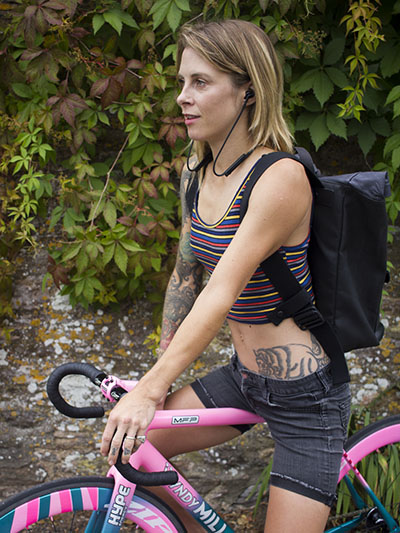
Juliet Elliott is the former pro-snowboarder, model, PR consultant and journalist behind top cycling blog, Bikes ‘N’ Stuff. Named one of the most influential women in cycling by Bikebiz, Juliet covers all forms of cycling from mountain biking to road racing. We caught up with Juliet who told us about her passion for cycling, her unique perspective and the best work she’s done with brands. Oh, and lots and lots about cycling.

Bikes n stuffWhat makes your blog unique?
My blog has a female perspective but isn’t ‘for women,’ it’s for everyone. I like to mix personal experiences, training tips, reviews and opinion pieces, and share my YouTube videos. I have, and have had, a very unique life, ranging from pro snowboarding and modelling on the catwalk at Milan fashion week, to turning cycling into my career. People seem to be interested in my life and I am more than happy to give them an insight into what makes me, me.

I am honestly taken aback with the response to my channel and really appreciate all the support I have received. Some of my followers have been supporting me for over 10 years! It’s amazing to think just how many people I have influenced over the years, even now it still gives me that warm feeling when I receive messages from people.

What’s the cycling blogging community like to be part of?
Honestly, I don’t feel like I’m part of a cycling blogging community per se, however there is a strong sense of community amongst cycle vloggers such as myself, Francis Cade, Keira McVitty and Levi Blue. We all get on well and like to collaborate, mainly just because it’s fun to do so.

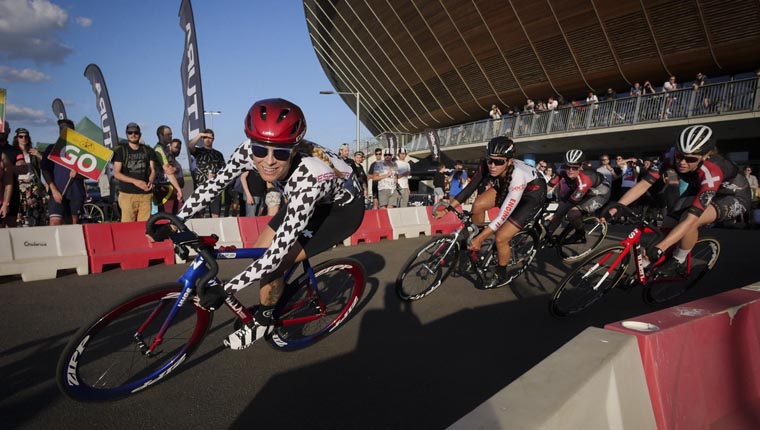
Within the cycling community, especially the fixed gear one, I feel a real sense of kinship. I have formed new friendships, been on amazing trips, raced all over the world and I even met my husband at a trade show. I race a variety of disciplines and love how friendly the scenes are. The cycle community really is like one big family.

What’s the best bike you’ve ever ridden?
Hmm, that’s a super hard question as I’ve ridden a lot of good ones. I really enjoyed testing the Cervelo S5 at the ASSOS London Track Day. My current favourites are my Liv Envie Advanced, my custom Wyndymilla track bike and Marin Wolfridge.

How many bikes do you own?
The number varies as I often borrow bikes and frequently long-term. I have a few frames and wheels sets in my loft too so if I added them all up if would be a lot.

Bikes n Stuff

What’s the best cycle route in the world?
Well I couldn’t say definitively what the best is as I haven’t ridden them all, however the best I’ve ever ridden is the Shiminami Kaido in Japan.

What will the next big thing (technological/cultural/design) in cycling be?
If I knew that I’d be rich! There seems to be a lot of progression at the moment, I suppose disc brakes on road bikes are totally going to take over, but as far as new trends that depends if the UCI changes its rules on frame restrictions etc…

What one thing should PRs know about you?
That I really, really enjoy my job and my enthusiasm comes across – I do this because I truly love it. Cycling, fitness, tech and travel projects are my big passions. My followers enjoy watching what I get up to and like hearing my opinion.

Reach-the-right-influencers-with-the-Vuelio-media-database

What is the best campaign you’ve collaborated on?
Working with SKODA is amazing, they’re such great supporters of cycling and it’s an honour to be a part of their team! I’m really enjoying working with them on their women’s cycling projects as encouraging and promoting women’s cycling is really important. I want my daughter to grow up with the same opportunities that men have. Travel wise, going to New South Wales in Australia was incredible.

Do you think bloggers need their own industry association?
I can’t speak for everyone else, but I don’t feel the need to be a part of an association. I enjoy just flying solo.

What other blogs do you read?
I don’t have heaps of time to read other blogs but I have always liked the Radavist and I enjoy seeing what Chris Hall is up to.

Juliet and Bikes ‘N’ Stuff  are both listed on the Vuelio Influencer Database along with thousands of other bloggers, vloggers, journalists and opportunities.

Sarah Stimson stepping down from the Taylor Bennett Foundation

The Taylor Bennett Foundation has announced that Sarah Stimson will step down from her role of chief executive in October. Stimson has been with the charity, which works to improve ethnic diversity in and access to the communications industry, since its creation in 2007 and CEO since 2016.

Taylor Bennett FoundationStimson has been at the forefront of the Taylor Bennett Foundation’s work for many years and is a popular figure in the industry. Among her many achievements as CEO, Stimson has seen the Foundation become the PRCA’s charity of the year, quadrupled the number of people it supports and made it more financially sustainable.

Stimson said: ‘I am enormously proud of everything we have achieved at the Foundation since 2007 including charitable status, numerous awards and supporting a generation of young BAME people into the PR industry. I am leaving the organisation with a strong team of staff and dedicated trustees, and I look forward to continuing supporting the Foundation’s cause.’

On her blog, Stimson added: ‘After over a decade it was a terribly hard and emotionally challenging decision to leave, but it is the right time to explore some new opportunities.’

She is launching her own business in the autumn, a creative talent consultancy called Ladder Talent. Ladder Talent will deliver consultancy around attracting, developing and inspiring talent in the creative industries.

Stimson is leaving the Taylor Bennett Foundation in rude health, in the last 11 years, the Foundation has won multiple awards and 97% of graduates who have been through its flagship programme are now in full-time employment.

A process to identify Stimson’s successor is now underway, with the charity keen to appoint someone who will take the Foundation to the next stage of its growth. The Foundation has recently expanded its support and offering to help greater numbers of BAME young people via mentoring and the Summer Stars programme, which successfully launched this year. It also created a shadow board, led by Kuldeep Mehmi, to support the Foundation’s alumni.

Kuldeep recently joined Vuelio for a webinar about diversity in the industry, where he also discussed the work of the Taylor Bennett Foundation.

Sarah Pinch FCIPR, MIoD, Chair of the Taylor Bennett Foundation said: ‘It was with great reluctance that I accepted Sarah’s resignation. She has given so much to the Foundation and affected the lives of many BAME young people, supporting them to forge successful careers in PR. She leaves the Foundation in its strongest position ever, as we continue to work closely with our supporters and partners to achieve the next level of growth.

‘We have ambitious growth plans and we will be searching for a new CEO who shares our passion to continue to improve diversity in the PR industry.’

If you are interested in leading the Foundation, please contact Claudia Mair at Taylor Bennett.

PRWEEK

Taylor Herring and The Romans lead PRWeek Awards shortlist

Taylor Herring and The Romans are leading the shortlist for the PRWeek Awards 2018 with 13 and 11 nominations across all categories, respectively.

Both agencies are shortlisted in the Small Consultancy of the Year category, along with Talker Tailor Trouble Maker, Cow, Ready10 and Manifest.

In the Large Consultancy of the Year category, Golin, Instinctif Partners, Hill+Knowlton Strategies, Weber Shandwick and FleishmanHillard Fishburn will battle it out for the top prize.

In the Best Influencer Marketing Campaign category, which Vuelio is sponsoring, there are five campaigns shortlisted, including two featuring the work of Tin Man.

The five campaigns nominated are: #ISeeMore by Tin Man for The Institution of Engineering and Technology; I’m On by Tin Man for Pink Parcel; Soapland Security by Unity for ADT; Flight HIV101 by 90TEN for Gilead; and Yay Delay by The Romans for Diageo.

PRWeek will announce the winners at the awards evening on Tuesday, 16 October in central London.

Mr Kipling

4 tips on creating a GIANT comms campaign with true impact

Combine insights and creative magic to create comms campaigns with impact says Cirkle’s Jodie Hull.

From pest control – to stop the BFG being eaten! – to securing the right food artist, there was a lot of planning and work behind the scenes to ensure the giant found the right home in London’s Primrose Hill and that the media and influential bloggers told his tale.

Here are Jodie’s top tips for creating a comms campaign with impact.

1. Bring insight, or logic, together with creative magic to deliver impact
‘Logic is the starting point for any campaign. At Cirkle, this is the strategy part where we work with our planner to uncover relevant insight and the right comms platform. We knew that this campaign needed to be intrinsically linked to the recognisable Roald Dahl characters. People instantly recognise who they are and this formed one of our key insights.

‘Then, we apply the ‘Magic’ and get really creative with ideas, working with our creative director.

‘The danger with ideas like this, however, is that you face the temptation to be too heavily branded. The beauty of this stunt is that the Mr Kipling product is so recognisable and therefore we didn’t have to include other visual branding.’

2. Create great, authentic content that resonates
‘Premier Foods asked us to create excitement and drive fame around Mr Kipling’s limited-edition Roald Dahl range of themed ‘Splendiferous’ cakes and its on-pack promotion – to win Roald Dahl inspired family holidays and adventure days out – this summer.

‘From our point of view, the campaign not only needed to be linked to the identifiable Roald Dahl characters but it needed to be subtly Mr Kipling branded as well as intertwined with family summer fun. The life-sized BFG – an instantly recognisable Dahl character – made entirely from 7,000 Mr Kipling cakes was part of a multi-layered, integrated, campaign that provided content and also delivered product range messages and blogger endorsement.

‘It’s important not to be seen to be simply jumping on the ‘super-size stunt’ bandwagon but our giant edible statue was so authentic we felt it wasn’t an issue. It resonated as people knew what it was as soon as they saw it – the statue really brought the BFG to life in a creative way.’

3. Get the planning right and small details are crucial
‘When we were selling the idea in to the client, we got professional sketches done of ‘The BFG made from cake’ to bring the concept to life. A big consideration was finding the right food artist and, then, when the giant was ready, we had to deter ‘pests’ from eating the sculpture!

‘We had worked with Michelle Wibowo before, when creating an edible billboard for Mr Kipling, and I knew how amazing her food art was so we decided to partner with her again.

‘Pest control was an operation in itself. From 5am, when we delivered the sculpture to Primrose Hill (a huge logistical and military operation in its own right), we had a team member on ‘dog watch’ and scarecrow erected nearby to keep birds away.’

4. Integrate your media and influencer relations
‘Our media strategy ensured that we targeted the right journalists with news relevant to them. We also made authentic claims that could be substantiated; for example, how many cakes were used and how long the sculpture took to build.

‘Before sending our picture story to journalists we also determined whether the information is relevant to the publication’s target audience. A seeding campaign helped to warm up the media and, although the campaign is still delivering results, we already have coverage in The Metro and the Daily Star, as well as the Mirror Online.

‘Content is vital too and we made a time-lapse video of the build. For social media impact, we applied our ‘Influence in the Round’ model where we mapped out an eco-system of influencers so that we were 100% clear on who we were targeting from the outset. In addition, we were able to use our ‘Social Inner Cirkle’ to access leading online influencers to share the content.’

iGen report front cover

Brands must give the iGen generation ideas to express themselves says Good Relations report

Do you know how to communicate and engage with the iGen? The latest report from Good Relations – Meet the iGen – provides invaluable advice on the importance of speed and relevance in brand comms. Here are the top five things comms and PR professionals should bear in mind when targeting the iGen demographic.

Brands can engage with consumers under 23 if they give them ideas to help them express themselves, says David Wiles, executive director, consumer at Good Relations, the PR and content agency.

His insight comes from a recent Good Relations report – Meet the iGen – which is based on the findings of a survey more than 1000 people, backed up by qualitative research with some 80 ‘iGeners’ between the ages of 16 and 21.

Wiles adds that there are five points communicators and PR professionals should bear in mind when they are getting messages out to people in the iGen (16-23 year olds born between 1995 and 2012) demographic group:

1. It’s not just playing with their phones, it’s augmenting their lives.

‘We know that the iGen have grown up with technology and this shapes how they see the world,’ says Wiles. ‘It also changes how they access content, which is changing how they communicate. They expect brands to keep up with these communication trends too.’

‘However, they are not just playing with their phones, they’ve integrated technology into their lives. They use their smartphones as the tool to better themselves and the world around them, not just as a vehicle to waste time and play Candy Crush. Brands must make sure they are building in their new reality, and communicating in their new language.’

2. They’re not just taking selfies, they are managing their personal brands.

Crafting and managing their own personal brand, as well as understanding their impact on society, are two of the key objectives for the next generation as they enter adulthood, says the Good Relations report.

iGen use social media as a tool by which to manage their personal brand, and believe that it determines a person’s future success – socially, professionally, and romantically.

‘Selfies may have started as a light-hearted tool of self-promotion, but actually, they exhibit a mindset that puts the individual at the core of personal brand. Emphasis on the self has never been stronger,’ Wiles explained. ‘Brands must be confident that they are giving the iGen ideas that are helping them to express themselves. Does your brand’s content express a sentiment that the iGen can relate to and share?’

3. They’re not vain, they’re worried about their careers, politics, and their future.

According to Wiles, if they don’t put the effort into curating their online personas, they are more likely to be bullied. This is leading to an increase in depression and anxiety. With 36% worried about bullying and 34% about trolling.

4. It’s not a short attention span, it’s an eight second filter.

‘With so much content available, they have had to develop incredible filters,’ Wiles adds. ‘This is called the eight second filter. iGens control so many accounts and channels that they are suffering from an attention diversion crisis which has changed how they observe life around them. Brands now only have eight seconds in which to grab consumers’ attention.’

5. They’re not consuming different things, just in different ways.

The content is largely the same, just consumed through different channels. Wiles explains: ‘They follow brands and watch TV just like everyone else. But they’re not waiting for Match of the Day, they’re watching it 24/7 on Copa90. They’re not turning to magazines for the latest beauty and lifestyle hacks, they’re getting it from their favourite influencers on Instagram and YouTube.’

He adds: ‘When it comes to engaging the iGens, the simplest and most useful thing a brand can focus on is adapting to the sheer speed of their communications. From the moment they wake up in the morning and go to sleep at night, their efficiency of communications and content consumption is, regardless of channel, neck-breakingly fast and highly reactive.’

Peter Linsley

Interview with top cycling blogger Peter Linsley

Peter Linsley is the man behind ragtime cyclist, the blog that was recently ranked in the Top 10 UK Cycling Blogs. Writing about everything cycling, including the best snacks and his own humorous take on races . We chatted to Peter about the best bike he’s ever ridden, his favourite cycle route and whether bloggers need their own industry association.

What makes your blog unique?
I zero in on the detail.

If I write about a bike ride you won’t get route descriptions and practical advice, but descriptions of the mid-ride flapjack and the way, in a certain light, that my riding partner looks like Gareth Southgate.

What’s the cycling blogging community like to be part of?
Generally, it’s great. Here in the UK, cycling has become such a huge cultural phenomenon and many of us are still a bit wide-eyed with surprise at the way it nudges the mainstream from time to time.

Also, cyclists are funny, handsome, and smart. Even wearing Lycra. Don’t let anyone tell you any different.

What’s the best bike you’ve ever ridden?
Like many cyclists I have a slightly ridiculous and almost emotional attachment to my current best bike: a Wilier Triestina Zero 9. However, if I’m honest, the Raleigh Burner I got for my eighth birthday takes some beating.

How many bikes do you own?
Just two. A Wilier Zero 9 for the summer months, and a Pinarello Angliru for the winter. Never got into mountain biking. Not too bothered about cyclo-cross.

Maybe I should buy another road bike?!

What’s the best cycle route in the world?
Ahh, that’s a tough one.

I can highly recommend basing yourself at Barcelonette in the Southern French Alps. From there, you ride the Three Cols: up the Col d’Allos, over the Col des Champs, and back via the Col de la Cayolle, for a total of 120 kilometres and 3500 metres of vertical climbing.

It’s a big day on the bike, and not for the faint-hearted, but the chance to head above 2000 metres in altitude three times in a single day is worth every pedal stroke.

What will be the next big thing in cycling?
Oh man, who knows?

With the benefits around ride comfort, improved rolling resistance, and a promise of fewer punctures, I have a feeling the time is right for tubeless tyres to finally take off. Obviously, the “puncture fairy” might have one or two things to say about that!

The cycling world – professional and amateur alike – has been resistant for years, but with tubeless ready rims now available from tons of manufacturers we might be just be on the cusp of change.

What one thing should PRs know about you?
For the right collaboration I’ve even been known to cancel a bike ride. That’s how committed I am.

Reach-the-right-influencers-with-the-Vuelio-media-database

What is the best campaign you’ve collaborated on?
It’s a secret!

I worked with one of the world’s top bike brands to develop a convincing “voice” for a new range of their products, and my lips are contractually sealed. The chance to see how they work at that level of the industry was hugely impressive.

Also, it was nice little reminder that the big-boys do care what goes on in the blogging world – I took it be a little respectful tip of the hat!

Do bloggers need their own industry association?
Blogging is peculiar in that it’s almost exclusively an amateur pursuit, which encroaches on the professional world (of journalism). Perhaps an industry association could legitimise the standards bloggers hold themselves too, and are held against? It might help those bloggers who take it seriously, be taken seriously. Where do I sign?!

What other blogs do you read?
I get my pro cycling fix from INRNG.com – an absolute authority on the sport.

I also like humancyclist.wordpress.com for his take on everyday cycling. He has a great turn of phrase, and a really genuine bitter/sweet love/hate thing going on.

I still read Velominati.com. Is that a blog? Whatever – it’s funny, and inspires me to write!

Peter and ragtime cyclist are both listed on the Vuelio Influencer Database along with thousands of other bloggers, vloggers, journalists and opportunities.

Four tips for true comms integration

Four tips for true comms integration from Angie Moxham at The Fourth Angel

Truly integrated PR, comms and marketing campaigns are not common enough, says Angie Moxham, founder and Arch Angel of the North of Integrated comms agency The Fourth Angel.

However, she says there are huge benefits to be reaped if you can deliver true integration.

Moxham, who also founded award-winning PR consultancy 3 Monkeys, shares with us four tips for in-house teams and agencies if they want to set-up and run a successful integrated campaign:

1. Get buy-in from the top and involve everyone from the outset

‘The most important thing is that everybody is involved from day one. When I worked with Microsoft, at 3 Monkeys, our client would brief out all the agencies and say: “May the best idea win!” In effect, they wanted the best ideas – regardless of the agency’s core discipline – to be looked at in an integrated way. As a client, they are very discipline-neutral.’

‘I also worked with United Biscuits (now part of pladis) and, not only was there a very enlightened marketing and comms team, the chief executive Martin Glenn (now at the FA) knew the importance of getting the marketing right and the power of PR. This meant different agencies worked together as one team, led by the client.’

2. Shatter internal silos

‘A big challenge to integration is when you have to battle through internal silos. This usually occurs with big brands with complicated internal structures. Another challenge you can encounter is insecure or inflated egos. And, of course, there can be the traditional marketing heirachy which tends to see advertising – as a discipline – sitting at the top table and PR parked at the bottom. You have to rise above it all and leave egos and the usual budget buckets at the door.’

3. Introduce an integration manifesto

‘You need one person in charge and, at the kick-off meeting, agree rules of engagement between in-house teams and any agencies that are involved. One way of ensuring people don’t fall short is to introduce an integration manifesto to get them to ‘sign-up’ to. In my experience, everyone starts off with best intentions to deliver one story brilliantly, but they may sometimes need help and guidance to keep on track. It’s too easy to fall back into old patterns of behaviour and working, and the ‘day job’ can get in the way too.’

4. Bring people on the campaign together

‘You need to have someone in charge, but it helps to have two people ensuring integration happens – one on the client and one on the agency side. And it’s not just about how people work together and how they behave in meetings. Help them build into a fully functioning team.’

‘I created a model called Tribe – and the concept of tribal working. It might sound a little shallow, but, as well as working hard together, it really helps if the team working on an integrated brief ‘plays’ together a little bit too. Go out for a few cheeky beers so you all bond better, get to know each other outside of the office; have fun and celebrate key milestones. Critically you also need to empower people and give them permission to try something new.’

It’s worth getting integration right, she adds. ‘You absolutely do get better results and maximise the spend,’ Moxham believes. ‘You’ll get the best thinking out of the teams involved and make sure the measurement and evaluation is factored in at the beginning. Output’s fine but real achievable outcomes – an ultimate bottom-line business benefit – need to be measured. That’s what the CFO, the CEO, and ultimately, you, will want to see. Integration is a way to ensure you get way more bang for your buck.’

Angie Moxham founder of The Fourth Angel


Angie Moxham is an award-winning founder and manager of PR consultancies. She sold 3 Monkeys to Zeno, part of the DJ Edelman Group, to ‘help my baby fly’. Two years later (in March this year) she launched The Fourth Angel, a Soho-based full service consultancy which is ‘testing the boundaries of traditional PR and marcoms thinking and execution’.

Andrew P Sykes

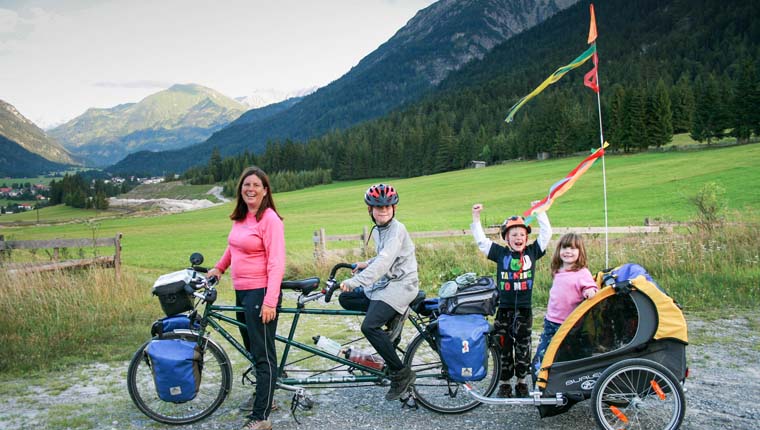
Cycling adventures with leading cycling blogger Andrew P. Sykes

Andrew P. Sykes created CyclingEurope.org, the blog that was recently ranked in the Top 10 UK Cycling Blogs. Sharing his adventures as he cycles around the UK and Europe. We caught up with Andrew to talk about what makes the cycling community different, the next big thing in cycling and how he likes to work with PRs.

What makes your blog unique?
2018 marks the 10th birthday of the blog so I suppose that in a world of websites that come and go, CyclingEurope.org does at least have longevity. Over the last 10 years I’ve probably written about most aspects of cycling in nearly 3,000 posts so it has become a useful source of reference for people wishing to find out about travelling with a bike, especially within Europe.

What’s the cycling blogging community like to be part of?
Very much like the cycling community. People who cycle have a take on life, which is subtly different to those who don’t; a combination of adventure and free-spirit but above all friendly. They don’t take themselves too seriously either.

What’s the best bike you’ve ever ridden?
My Ridgeback Panorama, Reggie, of course… He’s been the star of three books so how could I say anything but!

How many bikes do you own?
Just the two; Reggie is currently ‘resting’, so at the moment most of my time is spent sitting on a Cannondale CAADX 105 cross bike called (what else?), Dale… He’s not as forgiving as Reggie on the steep Pennine hills of Yorkshire however.

What’s the best cycle route in the world?
The next one you plan on taking, especially if it’s got a good view from the top.

What will be the next big thing in cycling?
When I started the blog in 2008, disc brakes were sneered upon as a fad for mountain bikers. Now they are fitted as standard on most bikes, even touring bikes. I’m hoping that the next big shift will be away from derailleurs and towards hub gears and carbon belt ‘chains’. Time will tell.

What one thing should PRs know about you?
Don’t send me an email that has clearly been sent to a thousand other people as well simply consign it to the trash. If you want my attention, call me Andrew (rather than my email address!) and give me a clue that you’ve spent at least a few minutes looking at the website to discover whether it really is a suitable one for your client to be associated with.

Reach-the-right-influencers-with-the-Vuelio-media-database

What are the best campaigns you’ve collaborated on?
I recently worked with two organisations in the travel industry relating to train and ferry travel. The nice thing about the collaboration was that some really useful information was made available to readers about combining cycling with taking the train or ferry.

Do bloggers need their own industry association?
Probably not; bloggers are no longer the new kids on the block. We know our stuff and are increasingly savvy about the ways of the PR world. Respect us for that and we can have a fruitful relationship without needing a governing body to regulate things

What other blogs do you read?
How long is a piece of string?? It changes every week. Currently, I’m planning my next long ride along the entire length of Japan in 2020 so anything connected to that is attracting my attention.

Andrew and CyclingEurope.org are both listed on the Vuelio Influencer Database along with thousands of other bloggers, vloggers, journalists and opportunities.
you shouldn't have missed

Five Things: Google fine, BuzzFeedNews, Trump, Top 50 and DJ D-Sol

This week’s Five Things You Should Have Missed – sorry I meant to write ‘Shouldn’t’, rather than ‘Should’ – includes Google’s record fine, the new BuzzFeed News, Trump’s bizarre approach to communication, the Top 50 Blogs and DJ D-Sol.

1. Google’s Fine

Google fineLast week’s Five Things included a story on the fine Facebook had incurred from the ICO for breaching data rules. The £500,000 fee was just a drop in the ocean of Facebook’s earnings as it applied to offences committed before the GDPR came into force. This week Google has made the news for violating EU antitrust laws, which has led to a significantly higher fine of €4.34bn (£3.8bn or about 5% of revenue). As reported by the Guardian, the EU claims Google has carried out ‘serious illegal behaviour’ to secure the dominance of its search engine on mobile phones. Google search is the default on Android phones and the EU believes this doesn’t give people serious choice.

Margrethe Vestager, the EU’s competition commissioner, said consumers ‘pay with their data. Or to slightly paraphrase what [US free market economist] Milton Friedman has said: “there ain’t no such thing as a free search”.’

Google plans to appeal as it believes ‘Android has created more choice for everyone, not less’. However, if Google doesn’t end its ‘illegal conduct’ within 90 days, it could face fines of 5% of its daily revenue (in excess of $15m) every day it is late.

President Trump has now waded into the argument, on Twitter (of course):


2. BuzzFeed News

Buzzfeed

BuzzFeed has created a new standalone website to house its serious journalism: BuzzFeed News. This new brand not only showcases its impressive journalistic content (it has been nominated for and won a number of international awards) but also makes it stand out from the content BuzzFeed is famous for, namely listicles and quizzes.

As reported by TechCrunch, Buzzfeed senior product manager Kate Zasada said the company’s own research has found that some readers ‘don’t completely understand’ that while BuzzFeed is famous for GIF-filled lists, it also produced ‘deeply researched and fact-checked’ journalism. The BuzzFeed main site will still host news content and BuzzFeed News will still link to the main site, but the entities are intended to be distinct.

BuzzFeed News’ design means content is not separated into traditional news topics, instead it is focused on trending and top stories as selected by the BuzzFeed News editorial team. The site will also eschew traditional sponsored posts that appear frequently on BuzzFeed. Currently the site is based in the US and covers US news – if successful it is likely to roll out to other BuzzFeed markets including the UK.


3. Trump Derangement Syndrome

President

President Trump has had a tricky week. While we could say this of most weeks of his Presidency, this week Trump has uncharacteristically backtracked, sort of.

After Trump met Putin in Helsinki, the pair gave a joint press conference during which Trump said he saw ‘no reason it would be’ Russia who had meddled in the US election. This flew in the face of intelligence from several American agencies and led to Trump being branded by some as a ‘traitor’.

Perhaps realising he had created a potentially career-ending remark, Trump made an incredible correction. Back on home soil, Trump said: ‘In a key sentence in my remarks, I said the word “would” instead of “wouldn’t”’. That means he meant to say he saw ‘no reason it wouldn’t be Russia’.  Though this doesn’t make much sense the context of the speech, it is very typical of Trump’s approach to comms, telling his own narrative and sticking to it.

His opinion on Russia since is very mixed, with some tweets suggesting the meeting was excellent and people hated that he got on with Putin because they had ‘Trump derangement syndrome’, and others suggesting he believes Russia meddled in the election. This week it was announced that he has invited Putin to the Whitehouse.

Adding more pressure to Trump’s bad week, Barack Obama gave a speech that was seen to target Trump even though he wasn’t named. Obama said politicians today lie, which isn’t new, but when they’re caught out, they keep lying. He also explained that it’s very difficult to engage with people who refuse to agree on basic fundamental truths. Watch Obama’s speech below:


4. Top 50 Blogs

The biggest ranking Vuelio publishes each year has once again found Guido Fawkes to be the number on blog in the UK. The political giant, whose posts literally have the power to shape Government, is enjoying a boom time as Brexit makes politics a daily news factory. This is reflected by the other political bloggers in the list: ConservativeHome (7), Wings Over Scotland (12), Politicalbetting.com (14), LabourList (15), Bella Caledonia (21), Left Foot Forward (24) and Slugger O’Toole (30).

As always, football and automotive blogs have done very well, the former no doubt boosted by this year’s World Cup. Outside of these dominant categories, the Top 50 shows great variety with bloggers covering everything from fashion and beauty to crafts and photography.

Find out how Vuelio decides its rankings here.


5. Wicked, Wicked, Goldman is Massive

Goldman Sachs

A surprising bit of news from Goldman Sachs has been a boon for its PR this week. While most new CEO announcements are dry affairs, Goldman Sachs’ appointment of David Solomon has brought an added bonus. The new boss, who will take over the top job in October, is also a DJ, who goes by the stage name DJ D-Sol. No, really. Check him out on Instagram or Spotify.

This has made the corporate giant seem that bit more human, young and interesting this week – something Goldamn Sachs perhaps didn’t need but has certainly gained it an incredible amount of additional press.


Did we miss anything? Let us know on Twitter @Vuelio

Think tank Awards

Centre for European Reform wins Prospect’s 2018 Think Tank of the Year award

The Centre for European Reform took the main prize at Prospects Think Tank awards this week as it won the Think Tank of the Year category [pictured]. The Igarapé Institute, a Brazilian Think Tank which examines security, justice and development challenges in Brazil, took home the One to Watch award, sponsored by Vuelio.

Other winners at the event, which was sponsored overall by Tata and held at the Institute of Directors in Central London on Tuesday, included the Joseph Rowntree Foundation, Policy Exchange, the Institute for Government and the Norwegian Fridtjof Nansen Institute (FNI).

Policy Exchange won best UK think tank in the Energy and Environment category, which was sponsored by Octopus Energy. The judges said its work paid ‘particular attention to the economic drivers behind effective environmental policies’ with research ranging from the role of future nuclear modular reactors to reducing vehicle emissions in Britain’s cities.

Other UK winners included the Institute for Government (Economic and Financial category), sponsored by Funding Circle, Joseph Rowntree Foundation (Social Policy category) and UK in a Changing Europe which won the UK – International category, sponsored by ABP.

The Prospect Think Tank awards, which were founded in 2001, are an ‘annual recognition of the important and influential work carried out by Think Tanks across the globe.’

A full list of the 2018 winners can be found here.

Diversity in Comms

Diversity in Comms webinar: PR can change recruitment processes to improve diversity says Kuldeep Mehmi of the Taylor Bennett Foundation

The PR and communications industry must change its approach if it wants to recruit people from Black, Asian and Minority Ethnic (BAME) backgrounds, says Kuldeep Mehmi, a graduate of the Taylor Bennett Foundation and director at FTI Consulting.

Our recent webinar Diversity in Comms, highlighted the work of the foundation, which is the PRCA’s charity of the year. Kuldeep was our guest and he said: ‘I think that it is more of a question of how you attract your candidate base. There is a number of things you can do; look back at where you advertise – maybe you can advertise in different places for the role, for example through a diversity charity like the Taylor Bennett Foundation.’

He also suggested that if using an external recruitment agency, employers should ask their recruiters to provide a more diverse candidate shortlist.
For the wider industry this might mean recruitment processes have to change as the challenge is attracting people who are ‘not going to actively seek out the communications industry’.

To do this, he added, the Taylor Bennett Foundation is actively seeking out speaking opportunities at Universities and schools to reach these audiences.

It also runs networking events and a 10-week ‘traineeship’ where the trainees get access to mentors in the industry and are taught about how different aspects of PR and communications work. ‘It was very intense and highly educational,’ Mehmi explained, having completed the course in 2012.

The traineeship helped him get his first role in PR with agency MHP.

‘It is very important to open those same doors for other people who want to enter the communications industry, people who don’t have a network to rely on,’ he said.

A recording of the webinar will be available next week.

BBC

Two sides to the story: is the BBC biased?

A recent article from journalist Nick Cohen: ‘How the BBC Lost the Plot on Brexit’ for The New York Review of Books (NYR), accuses the BBC of ‘journalistic cowardice’ in regards to its coverage of Brexit. Accusations of bias at the BBC are not new, but it has taken the unusual move of responding, from its official media centre, with a letter from James Stephenson, news editor at BBC News and Current Affairs.

Here are both sides of the argument.

Biased
Cohen’s article lays out Brexit as he sees it – ‘There is no plan, and there never was a plan’. He criticises Nick Robinson, who said: ‘The day we broadcasters have to ‘broadly balance’ the views of the two sides is at an end. Why? Because there are no longer two sides.’

He points out the current distrust in the media, being driven by the likes of Trump and Putin, and how journalists need to oppose their agendas.

In an acerbic attack, Cohen writes: ‘The BBC’s reporting of the scandals around the Brexit referendum is not biased or unbalanced: it barely exists.’ He suggests that massive stories such as the Facebook/Cambridge Analytica scandal, the Brexit campaign funding scandal and the exposure of Russian interference in British politics scandal were covered with ‘only the most perfunctory of reports’.

He writes that his colleague at the Observer, Carole Cadwalladr – a huge force in uncovering and reporting on the data scandals this year – offered BBC Panorama the chance to interview Cambridge Analytica whistleblower Christopher Wylie, but the current affairs show turned it down as there was no ‘smoking gun’.

Cohen ends his article, suggesting the BBC may change its approach to Brexit as public opinion changes, but that ‘No one should praise journalists who speak out when, and only when, they are certain that public opinion is with them.’

Not biased
James Stephenson is more succinct in his reply, which is directed at the editor of the NYR. He claims that Cohen has ‘ignored a number of inconvenient facts’ and points out that when the Facebook/Cambridge Analytica scandal broke, the BBC covered it on major news bulletins for 11 days in a row. Its business, economics, media and North America editors, as well as the technology correspondent, all reported on aspects of the story.

The BBC also interviewed the whistleblowers on multiple programmes.

He also explains the Panorama issue: ‘For Panorama to make a programme, it needed to be confident of the underlying evidence behind the whistleblowers’ claims. Panorama asked for access to all the evidence, but that was not forthcoming. Limitations were placed on the BBC’s own investigation of the allegations and constraints on who we could approach. In short, we did not have the scope to make a programme which met our standards of robust independent investigation in the time available.’

He goes on to write: ‘We do not expect our journalists to “say what they believe”, as Nick advocates. We ask them to report accurately, offer informed professional judgements and go wherever the evidence takes them.’

He finishes: ‘There can be few times in the BBC’s history when its journalism has mattered more. This is not an organisation frightened of journalism, but committed to it.’

So, is the BBC biased?
The BBC is in a unique position; funded by the public it must remain impartial – and when you attempt to report everything from all sides, you’re often seen as taking sides. We’ve presented both sides of this story, so you can decide if the BBC is biased yourself.

Queer Little Family

Exploring the LGBTQ blogging community with Bread Skalka

Bread Skalka is behind Queer Little Family, the blog that was recently ranked in the Top 10 UK LGBT+ Blogs in the UK. Writing about life as a parent as well as other topics spanning LGBT+ and mental health. We caught up with Bread to talk about the LGBTQ blogging community, the LGBT Action Plan and working on campaigns she believes in.

What makes your blog unique?
We believe in stories over stuff so there aren’t many reviews or product placement. We don’t do a lot of brand stuff. We prefer real life and can be painfully honest at times and I think that makes us a little different. I’m an old school blogger in an influencers world, which can be a little difficult but I make it work. I want to inform and entertain, which is always a hard line to walk, but I think I manage it.

What’s the LGBT+ blogging community like to be part of?
It’s small and we tend to make up parts of other communities, like parenting blog communities or writing groups, and find each other that way. I work hard to include as many LGBTQ bloggers and writers on my blog and social media as possible. I want to highlight my peers as well as myself.

What’s the biggest issue facing the LGBT+ community today?
Getting past tolerance and into true equality. At least in the UK. In many places, we’re tolerated but that’s not enough. You tolerate things that annoy you, and we’re not an annoyance. The recent Stonewall survey conducted last year (which I definitely took part in) really shows how far we still have to go to get the equality we deserve. I think we really need to work on the suicide and self-harm risk to our LGBTQ youth. I used to self-harm and have attempted suicide and I actually have been pretty privileged in terms of family acceptance and suffering, from microaggressions to blatant homophobia.

Where is the best Pride event?
My favourite was Pride on The Prom in Aberystwyth a few years ago, which I’m hoping will come back in the future. Cardiff Pride is pretty good. Because of my anxiety and social phobia, I tend to avoid large crowds but as my mental health improves I hope to attend more in the future with my family.

What do you make of Theresa May’s LGBT Action Plan?
I’ll believe it when I see it. Theresa May doesn’t have the best history when it comes to LGBTQ issues and neither do the Conservatives. If she makes conversion therapy illegal that would be a good start because I couldn’t believe how many LGBTQ people had been offered it and had to go through it. An action plan is nice but we need the action now.

What one thing should PRs know about you?
I’m not your typical blogger. I like working with smaller business, Welsh and LGBTQ ones in particular, and charities too. I’m also interested in things my son can experience as he is my main driving force for the blog and for my life.

Reach-the-right-influencers-with-the-Vuelio-media-database

What are the best campaigns or collaborations you’ve been part of?
I do some posts for the Woodland Trust that I enjoy because it’s something I really believe and definitely want to do more charity work/collaborations in the future.

Do bloggers need their own industry association?
I think so. Something that encompasses freelance blogging and influence marketing possibly. There are a lot of brands/PRs who will pay a pittance but get a great return. An association that could advocate for bloggers would be beneficial and stop things like influencers and business owners going viral for disagreeing over rates or reviews.

What other blogs do you read?
I read a few (a lot). A Moment With Franca, LesBeMums, Meet The Wildes (they have amazing pictures). Daddy and Dad is a great blog and Lydia Schoch is a wonderful writer. I also like Babi a Fi. I could go on and on. I’m not big on visual content but I read a lot. Also, Mombian is a great resource for LGBTQ families.

Bread and Queer Little Family are both listed on the Vuelio Influencer Database along with thousands of other bloggers, vloggers, journalists and opportunities.
Propeller Group

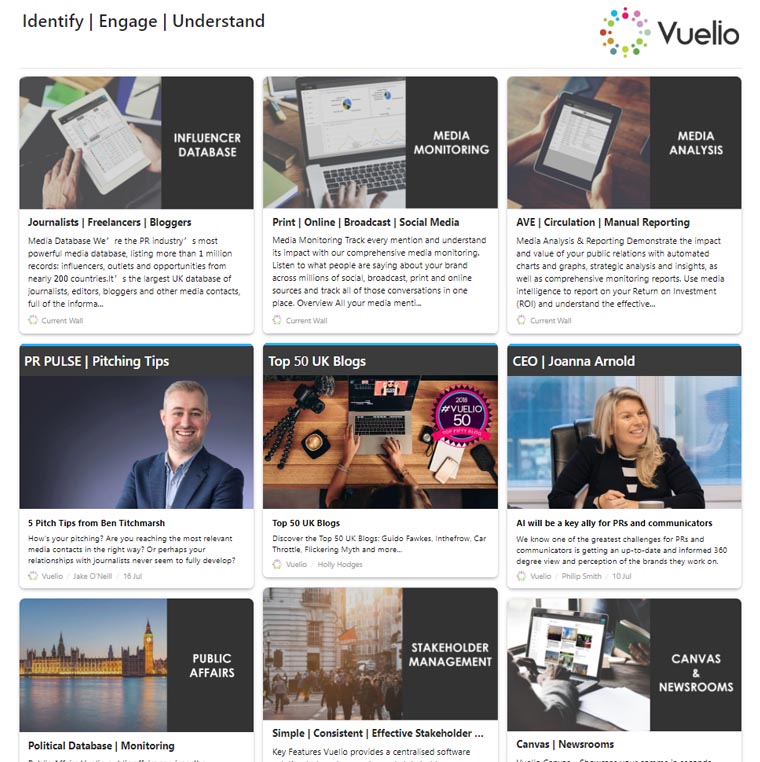
5 Pitch Tips from Ben Titchmarsh

How’s your pitching? Are you reaching the most relevant media contacts in the right way? Or perhaps your relationships with journalists never seem to fully develop? One man who knows what a successful pitch looks like is Ben Titchmarsh, head of media and marketing at Propeller Group.

We spoke to Ben for our white paper – Media Relations in 2018 – and he revealed his top pitch tips for the modern PR.

1. Know your sector

Ben says: ‘Never underestimate the power of reading constantly and really immersing yourself in the sector you’re pitching to.’

There’s no point starting your pitch until you know your industry inside out. That means knowing the company you represent, its place in the market and any major trends that could affect the company or its clients. With a holistic view of the industry you’ll be able to provide rich and varied content to journalists who are, themselves, experts in the field.

2. Personalise your pitch

Ben says: ‘Always personalise your messaging because journalists can tell if you’ve mail merged. I tend to make a shorter media list and personalise every line of the message.’

This should be a given but it’s clear some PRs (surely­­ not readers of the Monday PR Club) are still aiming for quantity over quality. The short-term aim of your pitch may be to secure coverage, but you should really be focusing on the long-term goal of building a fruitful relationship.

Ben’s advice for anyone struggling to personalise a pitch is: ‘For subject lines, I would write ‘Hi [name], story for publication – [story title]’ and then in the first line I would reference another story they’ve done that was similar to my pitch.’

3. Write like a journalist

Ben says: ‘If you’re writing a press release, try to write it as a news story, which includes using the house style of the publication you’re pitching to.’

Journalists are overworked and understaffed; most don’t have time to take a template press release and turn it into a news story that fits their publication. If you write in the house style and lose unnecessary elements (for example LOCATION: DATE at the beginning of the release, and sales speak in the copy) it makes it much easier for the journalist to use your content.

4. Don’t hold the gold

Ben says: ‘I was once told that with an email pitch, you should imagine you have 100% of their attention for the first line, 50% for the second, 25% for the third, 12.5% for the fourth etc. That’s true, so don’t hold the gold; put what they need to know at the beginning.’

Your email may be more exciting if you tease a build up to what you’re sending but for a journalist, they may not read all the way to the pay-off. Again, they’re understaffed and overworked – don’t be too clever in the pitch, just make it clear why what you’re pitching is a great fit for them.

5. Make it exclusive

Ben says: ‘There’s also a benefit of scarcity with journalists – they love an exclusive. They will always google the story to see if it’s elsewhere, so if you say it’s an exclusive, mean it.’

If the same story is appearing in multiple publications then all you’re doing is making those outlets compete for audience share. And if the story has already appeared elsewhere, you’re making a publication play catch up. Obviously, it’s not always possible to make a story exclusive, but when you can – and when the audience is right – use it to your advantage.


Find out more about media relations in 2018, including relationship advice and how this affects the GDPR, by downloading our white paper here


Five Things: BBC Pay, Facebook’s fine, Sky bids, Twitter purge an Build-A-Bear

This week’s Five Things You Shouldn’t Have Missed includes BBC star pay, Facebook’s fine, the billion-pound tussle for Sky, the Twitter-follower purge and the Build-A-Bear promotion.

1. BBC salaries

BBC star pay

The BBC has released its annual list of star salaries, which is once again topped by white men. The top 12 on the list, all earning at least £400K, are now led by Gary Lineker who earns between £1.75m and £1.76m. Last year’s number one, Chris Evans, has seen his salary fall by nearly £600K as he longer presents Top Gear.

Claudia Winkleman is still the top woman, earning between £370,000 and £379,999. While a number of male presenters have seen their pay fall, including Graham Norton, Jeremy Vine and John Humphreys, Winkleman has fallen from 8th to 13th on the list due to the production arm, BBC Studios, being reclassified as a commercial entity. BBC Studios is responsible for most of the BBC’s entertainment, factual and drama programmes and doesn’t have to declare star pay.

There’s also an obvious lack of ethnic diversity on the list, though the BBC says the number of BAME stars is rising.

Director general Tony Hall said the BBC was ‘making progress’ but that ‘these things take time. Jane Garvey, who is one of eight women to join the list, said: ‘There needs to be a proper conversation about why in 2018 we are still fighting the same old battle on equal pay and why the work of women just isn’t valued in the same way as the work of men.’


2. Facebook’s fine

ICO fine

Facebook has been fined £500,000 for data breaches in the Cambridge Analytica scandal. This is the maximum allowable fine from the ICO, as the offences were committed before the GDPR came into force; if it had been after 25 May, the fine could have been billions. The fine is for two breaches of the Data Protection Act – Facebook failed to safeguard its users’ information and it failed to be transparent about how data was harvested by others.

Elizabeth Denham, the information commissioner, said: ‘Fines and prosecutions punish the bad actors, but my real goal is to effect change and restore trust and confidence in our democratic system.’

As reported by The Guardian, Facebook takes £500,000 in revenue every five and a half minutes.


3. The Sky’s the limit

Rupert Murdoch

Murdoch and Comcast both upped the stakes for the Sky takeover this week. Murdoch revised his offer for the remaining portion of Sky he doesn’t already own, bidding £24.5bn. This was approved by Sky’s independent committee, which recommended the deal to shareholders. However, just hours after Murdoch’s bid, Comcast increased their offer to £26bn – this was then approved by Sky’s independent committee who have recommended it to shareholders ahead of Murdoch’s bid.

In addition to all the bidding, the UK Government has given Murdoch clearance to take over Sky, removing a hurdle that has been in place for some 19 months. The announcement was made by new Culture Secretary, Jeremy Wright, who said he was just confirming undertakings his predecessor Matt Hancock had put in place.

If Murdoch wishes to continue his takeover of Sky, it is now only price that stands in his way.


4. Twitter purge

Twitter birds

Twitter has made changes to users’ follower counts, with ‘locked accounts’ no longer counting towards your follower numbers.

Twitter locks accounts when it detects changes in account behaviour – for example, tweeting a large volume of unsolicited replies or mentions, tweeting misleading links, or having large number of users block the account. Once Twitter locks an account, it emails the original user who can easily unlock it by following a few simple steps. There is some debate about how many of these locked accounts represent ‘fake’ accounts and how much are just old or abandoned accounts.

Locked accounts were already unable to tweet, retweet or like posts but until now they still showed in follower numbers. Since the purge, several high-profile accounts lost millions of followers, including Obama (down about three million), Rihanna (down over two million) and Trump (down by about 340,000).

The Kardashian/Jenner clan all lost a vast number of followers, though this doesn’t seem to have affected Kylie Jenner’s chances of becoming the world’s youngest ‘self-made’ billionaire.

Even Twitter itself lost 7.7million from its official @Twitter account.

The purge is an ongoing process; when Twitter is finished it expects to have removed about 6% of total follower counts. While this may bruise some egos, it will increase the transparency of individuals’ ‘influence’ on Twitter – an issue every platform is currently trying to tackle.


5. Build-A-Bear

Build-A-Bear

Wimbledon, Ed Sheeran, Nigeria’s World Cup kit at Nike and now Build-A-Bear. What do they have in common? Unprecedented demand.

This week, the make-your-own-stuffed-teddy-bear shop held a promotion: ‘Pay your age’. The idea is simple, bears that cost between £12 and £50 would, for one day only, be available to anyone for the price of their age. Unfortunately, it seems like Build-A-Bear underestimated its own popularity with queues stretching miles – actually miles – as parents attempted to take advantage of the offer.

One customer told the BBC she queued from 09:10 until 12:40 to get into the shop and then spent another two hours in store due to ‘stuffing counter queues’. Police and security across the country struggled to control the crowds, with images of queues snaking around shopping centres, a common sight on Twitter.

Build-A-Bear eventually abandoned the promotion, and gave out vouchers to its members who were affected. Incidentally, members are already entitled to the promotion if their child is under 14 and it is their birth month, so needn’t have queued in the first place.


Did we miss something? Let us know on Twitter @Vuelio.

CIPR 2017

CIPR welcome 1,800 new members in record-breaking year for training

Some 1,800 new members joined the CIPR in 2017, according to the Institute’s Integrated report published ahead of its AGM this evening. A record number of PR professionals (1,970) attended CIPR training last year, which 2017 President Jason MacKenzie said shows, ‘a passion for learning and a hunger for PR to be recognised as a strategic management function’.

In total, CIPR membership at the end of 2017 was made up of 9,750 PR professionals. Its retention rates rose to 83%.

The report also details the Top 10 CPD resources of 2017, which shows how keen the level of interest in GDPR is. The CIPR’s GDPR webinar: Reputation matters – new data protection act is top of the list. Other CPD resources that were popular in 2017 include content focusing on industry trends, such as open data, Brexit and ‘Making movies with iPhones and iPads’.

More people accessed CIPR news in 2017, another record, with articles attracting 64,019 views – an increase of 23% on 2016. The report highlights the success of Influence, which featured articles on George Osborne and Arianna Huffington, and acknowledges its respected reputation within the industry.

In the UK, there are more Chartered Public Relations Practitioners than before. Numbers have risen from just 46 in 2013 to 223 in 2017.

The report, which you can download here, follows the 2017 financial report, which showed a profit of £4.3m leading to the CIPR’s biggest surplus in five years.

World Cup

It’s coming home: England’s road to the final

England’s first semi-final since 1990, with the opportunity for our first final since 1966. It’s coming home.

England’s road through Russia has been long and tough. But using the new Vuelio Canvas, it looks easy with match reports, news, tweets, posts, images, graphs and stats all in one place.

Check out the Canvas we’ve created for England’s Road to the World Cup Final > >

England World Cup


With our new and improved Canvas you can:

  • Showcase anything from news stories, social media activity, videos to charts, PDFs and reports – a visual presentation made in seconds
  • Share the content with your colleagues, stakeholders and the board with a single link, fully optimised for mobile
  • Create branded newsrooms with accessible, press-friendly content, easily embedded on your website
White paper

How to have good Media Relations in 2018

Relationships and trust are at the heart of everything we do in PR and communications. Without the right relations with the media, PR and comms would not be able to function, and vice versa.

Before the internet and digital media, media relations seemed more straight forward – long ‘business’ lunches with the right people, a press release in a journalist’s hands and an understanding that coverage was secured.

Now journalists are under resourced, and have more work for more channels, 24-hours a day. That’s quite an ask, and it means long meetings are now out of the question.

Social media has also changed the way everyone communicates, including how we approach and stay in touch with journalists on a daily basis, from following our contacts on Twitter, connecting with them on LinkedIn or contacting them on WhatsApp.

And it’s not even just journalists any more, anyone with an internet connection can create a news site or blog and start accepting press materials. ‘Influencers’, though itself a term derided by many bloggers, vloggers and Instagrammers, are now recognised outlets for comms to use whether that’s leaking a news story or promoting a fashion item.

Our latest white paper – Media Relations in 2018 – explores all of these phenomena to help you better manage your media relations in 2018 and even includes a section on the GDPR so you know your relationships are Regulation compliant.

We spoke to journalists, bloggers and leading PR professionals: including top parenting blogger Jo Middleton of Slummy Single Mummy fame, Ben Titchmarsh, head of media and marketing at Propeller Group, and Anne-Marie Lacey, managing director of Filament PR, who both shared the secrets of their success and gave their top tips for improving media relations in 2018.

You can download the white paper here.


Find out more about our Media Database, which lists contact details for thousands of journalists, editors, bloggers, vloggers and ‘grammers waiting to build relationships with you.

Channel 5 News

People power the best broadcast pitches says Jack Leather at Channel 5 News

Channel 5 News wants people at the heart of all of its stories says Jack Leather, digital editor, when asked what makes a good story and a good pitch to broadcasters.

He added, talking specifically about digital content, that he wanted people to feel an emotion – whether it was joy or anger, say – when watching a Channel 5 News video online.

Leather was talking at Good Broadcast’s event this morning about reaching ‘younger audiences’ with broadcast content and his colleague Jess Bulman, deputy editor of Channel 5 News said both people and case studies helped tell the story.

Bulman added that the key to success with a pitch was understanding the detail of your story: ‘No matter what your story is, understand what you are pitching. The detail of the story is important when pitching to us.’

Unfortunately, PRs pitching in to the Channel 5 team don’t always know the details of the story or are able to answer follow-up questions, she explained.

Chris Smith, presenter, BBC Radio 1 Newsbeat, joined them on the Good Broadcast panel and said the way to get your message across to younger listeners was simple: ‘You just have to be authentic!’ Younger listeners have a ‘very keen nose’ for anything that doesn’t ring true, he added.

His advice for pitching to journalists was for PRs to do their homework and know who they want to pitch to. ‘Know who you are picking up the phone and asking for when you call.’

Phil Caplin, director of Good Broadcast, stressed at the start of the event that the key to broadcast success was to focus on quality not quantity in terms of content and reach in campaigns.


For more on what constitutes good media relations, check out our white paper: Media Relations in 2018