95% of comms from PRs is crap

‘95% of comms from PRs is crap’ – is Amol Rajan right?

Amol Rajan, media editor at the BBC, gave a speech at the PR360 and Media360 gala dinner last week, in which he made the claim that 95% of comms from PRs is crap. He said this comms is: ‘insulting, infuriating, irrelevant or a waste of time, or some combination of all of those’. Is he right?

Before we go further, it’s worth pointing out that Rajan doesn’t believe it’s all doom and gloom – he explained that the remaining 5% ‘makes all that crap worth it’, but this is a silver lining at best.

The short answer to whether Rajan is right is obviously no, PR comms is so much more than media outreach, which is surely the bulk of what Rajan is talking about. And we do hear this at Vuelio, whether it’s from journalists and editors like Rajan or freelancers, bloggers and social influencers, there’s a sense that some PRs are sending irrelevant, see-what-sticks comms in the hopes for success-by-numbers.

Losing control
But this isn’t the bulk of PR work, nor is it a majority of PRs. As Rajan continued, he said, in relation to public narratives: ‘All of us in this room have to a very significant degree have lost control, and taking it back is impossible. A lot of people think of this as democracy in action. But when it comes to controlling the reputation of a brand or an individual, or crisis management, I think a better description is anarchy.’

This suggest Rajan does have a more comprehensive understanding of PR, and that bad press releases is not where his issue really lies. Is this more problematic for PR? Perhaps not. The suggestion that everyone is losing control of public narratives highlights this not as a PR problem but as the entire media industry’s problem.

The rise of social media has to some extent given power to the people, but more so to the social media companies – the data aggregators who curate our experience online.

So, while direct access to individuals, businesses and leaders is surely a good thing for a democratic society, algorithms are creating oft-maligned echo chambers, and where once both PRs and journalist had control over their own, and others’, stories, that power has slowly slipped away.

What’s the solution?
Rajan offered two pieces of direction, if not full advice: ‘It means recognising the yawning demographic divide whereby reaching young and old increasingly happens on completely different platforms and channels, both of which require time and expertise to master.

‘It means realising, frankly, that your contacts book is not only constantly out of date, but is becoming more out of date by the minute.’

Let’s take these one at a time – no one in PR should be targeting their audience, via influencers or others, through one channel. Rajan breaks it down into young and old, but the truth is there’s a variety of reasons and demographic details that defines how someone consumes media, where they consume media and how they consume your narrative.

It’s not just about social media, either. It’s understanding the difference between all channels and mediums you and your audience use – that may be one of the myriad social platforms, print media (newspapers, local news or magazines), digital media or face-to-face at events or political surgeries. What’s important is you continue to understand, track and react to the way your target audience behaves.

As Rajan points out, it’s all of our jobs to stay on top of the tech and developments in the media, so we continue to reach our audience – our stakeholders – in the right places and understand how best to create messages for different platforms.

And then there’s Rajan’s final point – your contacts book is becoming out of date by the minute. We’re not sure we agree with that. Obviously, Rajan doesn’t use a media database that is continually updated by an in-house research team, which also allows you to record relationship status and search for new contacts based on the topics they’re covering today, right now.

Amol Rajan does not have the Vuelio Media Database, but he is listed on it. Whether it’s journalists, editors, broadcasters, bloggers, vloggers or social influencers – make sure your contacts book is always up to date; get a free demo of the Vuelio Media Database today.

UN sustainable development goals

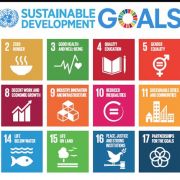
80% of PRs have helped meet the UN Sustainable Development Goals

A PRCA analysis of the social impact of PR and communications agencies has revealed that 80% of practitioners have helped meet the UN Sustainable Development Goals (SDGs) through their work.

Of the 17 UN SDGs, four stood out as the most popular; over 35% said their work was helping to achieve gender equality, with similar numbers reporting they have helped ensure healthy lives, promote sustainable economic growth and build resilient communities.

Launched by the PRCA Council, the survey of PR professionals has revealed that a third (35%) of respondents had declined or refused to engage in green washing (making unsubstantiated environmentally-friendly claims) and astroturfing (hiding the true source of a campaign to make it look grassroots) campaigns for clients.

Last year, the PRCA launched a new definition of the social impact of public relations and communications (you can see the definition here, and also get an assessment of your own social impact and a star rating), which was met with widespread approval from respondents, with over 90% backing the initial suggestions.

In addition to helping to meet the UN SDGs, the definition highlights further ways PR and communications can have a positive social impact.

Three quarters of respondents have encouraged workplace diversity through positive employment practices, two thirds had encouraged philanthropy and giving, with similar numbers involved in genuine corporate social responsibility programmes.

Simon Francis, founder member of social enterprise Campaign Collective, who worked on the definition said: ‘From PR Apprenticeships to working with Social Enterprise UK to buy social in the supply chain, PR and communications can have a huge positive impact on society over and above the impact of the work of communicators.

‘It is the responsibility of all practitioners to understand the social impact of PR and be aware of the actions they are taking. The new test will give agencies and in-house teams an easy way to calculate the social impact of their work and gain a social impact star rating to promote their organisations.

‘Campaign Collective will be using this to report on our own social impact, which in turn makes us more attractive to prospective clients.’

Francis Ingham, director general of the PRCA, said: ‘The social impact of PR is hugely important, but hardly talked about. From the impact of campaigns on target audiences and helping to deliver genuine corporate social responsibility programmes and encouraging workforce diversity, the communications industry can have a hugely positive role to play in the world.

‘All communicators should take an interest in this definition as proving social impact will be vital not just in recruiting new talent and in brand campaigns, but also in organisation’s procurement systems.’

Just 17% had used social enterprises in their supply chain, which Peter Holbrook, chief executive of Social Enterprise UK commented on: ‘It is fantastic to see that the PR industry is playing its part in helping meet the SDGs. If we’re to achieve these ambitious targets, then all businesses need to be actively considering and addressing their social and environmental impact.

‘One easy way to do this is to buy from social enterprises, businesses which trade to meet a social purpose. Whether its stationary supporting female entrepreneurs in the Global South or coffee creating jobs for the homeless, switching to social enterprises suppliers will enable you to use your everyday business spend to change lives and make the vision behind the SDGs a reality.’


PRCA Census 2018 diversity

PRCA Census 2019: Majority is female, white and British

The PRCA’s PR and Communications Census 2019 has been published showing an industry in rude health. The topline stats show that the industry value has grown by 7.9% since 2018 and is now worth £14.9bn while the number of practitioners has shot up to 95,000 – some 9,000 more than last year.

While the industry has improved, diversity is still lacking – the majority of the industry is still white, British and female, and the median age is 33. And while the industry is dominated by women, the gender pay gap is still in men’s favour, sitting at 13.6% (7.4% lower than 2018’s).

On average, female employees earn £40,651 and male employees earn £47,063. The pay gap is higher than the industry average at agencies but lower in-house.

Bibi Hilton, president of Women in PR and managing director of Golin London, said: ‘It’s positive to see the gender pay gap in our industry reducing, but in an industry which is 67% female, we should have no pay gap.

‘The lack of change in the ethnic diversity of the industry is even more concerning. Talking about the issues is not enough, we have to collectively take action – from overhauling outdated recruitment practices to championing flexible working and increasing the representation of women from all backgrounds and all ages at leadership level. At Women in PR, we are doing this through our mentoring programme, speaker directory and monthly events which give leaders of all genders and backgrounds a platform but there is a lot more work to be done.’

The ethnic diversity of the industry is a huge concern, with no improvement from 2018; white practitioners still make up 89% of the industry and a bigger group in this segment are white British than in 2018. The Census points out that the 13% of the younger portion of the industry that ‘identifies as non-white’ brings hope that the industry is changing, but the fact it has grown 10% and the ethnicity breakdown remains the same, suggests otherwise.

The full report gives a fascinating insight into a burgeoning, but in many ways problematic, industry with year-on-year trends as well as new stats – for the first time it’s asked about mental health and discovered that 32% have suffered from or been diagnosed with mental ill health.

Much like the CIPR’s State of the Profession survey earlier this year, the PRCA Census has revealed an industry in need of help, guidance and change. Shining a light on the problems is a good place to start so we can see where we are now, but that’s the easy part. What comes next is the challenge.

Your guide to local elections

Your Guide to Local Elections

This year, local elections will take place on 2 May and thousands of councillors will be elected across the country.

No every council is having an election – in England its split as follows:

  • 33 metropolitan district councils electing by thirds
  • 116 district councils holding whole council elections
  • 53 district councils electing by thirds
  • 30 unitary authorities holding whole council elections
  • 17 unitary authorities electing by thirds
  • Elections are also being held in many areas for parish, town, community, neighbourhood and village councils

In addition, local elections are being held for all 11 local authorities in Northern Ireland.

Local councils are vital to public relations and public affairs and any organisation working with an audience at a local or regional level.

Vuelio has published Your Guide to Local Elections, which breaks down what different councils and councillors do, the local election timeline, the rules around purdah and the biggest future issues facing councils.

As local councils are responsible for a broad range of services – from education, libraries and highways to local planning, council tax and rubbish collection – few comms teams can afford to ignore them.

Download the guide here.

State of the profession CIPR 2019

PR is not diverse enough – results from CIPR’s State of the Profession 2019

The results from this year’s State of the Profession survey from the CIPR reveal that PR firms are getting bigger but alongside the greater headcounts, they also contain gender imbalance, mental health issues triggered by high workloads and unfair advantages for those who come from a paid-for education background.

The CIPR’s survey of 1,503 members showed that PR departments are more likely to have grown in size, with half of the agencies getting bigger. It’s a positive sign for the importance and value of PR, but there are greater concerns among the workforce.

The PR workforce is less diverse this year, with more than one in ten (92%) classifying themselves as white – up from the 88% in 2018. When it comes to gender equality, two-thirds (67%) of the industry identify as female, yet almost half (44%) of the most senior roles are occupied by men. To add to issues of unfair advantage in the world of PR, a quarter of this survey’s respondents went to fee-paying schools – much higher than the national average (7%).

As for how the industry’s unique pressures impact its workers, this survey found a level of disconnect between what firms expect of their employees versus the skills people believe are actually important for their roles. Junior practitioners, for example, don’t identify ‘technical and digital’, ‘research and evaluation’ or ‘project and account management’ skills as strengths, whereas recruiters do.

A more serious disconnect, however, is the continuing difference between the demands of the job and the workloads people can manage while remaining healthy.

Over half (59%) of respondents classed a heavy or unmanageable workload as a factor for workplace stress, with 46% highlighting unrealistic deadlines and expectations, and 32% find the unsociable hours a problem. Nearly a quarter (23%) said they had taken absence from work due to stress, anxiety or depression, and 14% rated the contribution of work on their diagnosed condition as significant. How the industry supports workers with stress-related mental health issues could also be cause for concern – 23% said managers did ‘nothing’ when informed of the problem.

Those working all-hours won’t be surprised by all these numbers, maybe they won’t even have time to read them, but there are also encouraging statistics to be found in the CIPR report. Of the staff with mental health concerns related to their career – 36% said they were offered counselling after talking to their managers, 28% time off and 19% re-allocation of workload.

CIPR President Emma Leech, said: ‘This report identifies clear challenges and opportunities for the PR industry. Diversity is an issue we must tackle head on. Talent doesn’t have a postcode and it isn’t determined by skin colour. Our industry has to work harder to be inclusive. Similarly, mental health is a growing area of concern and we must be proactive in changing working practices and shifting the ‘always on’ culture that contributes to the problem.’

Avril Lee, chair of the CIPR Diversity and Inclusion Forum, said: ‘The PR industry agrees that diversity is important for attracting the best talent to bring fresh thinking, creativity and insights into new audiences, but our actions speak louder than our words. And our actions are building a profession of white, ex-public-school professionals; we are less diverse than in previous years.

‘Who can make our industry a fairer place where there is opportunity for all? You! Every manager, every employee, every agency leader – we all need to challenge outdated and biased recruitment and retention policies. We are all responsible for shaping the future of our industry by establishing workplace cultures in which all talent is judged fairly and given an equal opportunity for progression. Without those inside changing the status quo, those outside will remain locked out and our profession will be the poorer for it.’

As the CIPR report states, the numbers may ‘paint a picture of a profession which lacks self-awareness and consciously or unconsciously disadvantages people based on who they are rather than what they can do,’ but this is an industry in the process of self-correcting. Surveys like this can only help with gaining greater insight for the support of those already in PR, and with the improvement of hiring practices for those who could do great work as part of the industry in the future.

Vuelio are exhibiting at B2B Marketing Expo 2019

On 27 and 28 March, the ExCeL Centre will transform into Europe’s leading marketing event, B2B Marketing Expo. Exhibiting on stand 2212, the Vuelio team will be ready to answer any questions about our portfolio of products, from the market-leading journalist enquiry service to our fully integrated communications suite.

You’ll find the Vuelio stand close to three masterclasses, including digital marketing, customer acquisition and empowering your ecommerce, so why not get up to speed with the latest marketing theory and visit our stand all in one trip!

With hundreds of other exhibitors to visit at B2B Marketing Expo this year you’ll need to make sure you’ve got a solid plan, so you don’t miss anyone out.

And we’ll be running a special competition for a chance to win £100 for a charity of your choice. Just speak to any member of the Vuelio team – you can’t miss us.

Unable to make it this year? Follow @Vuelio and stay up to date with the latest news, events and blog posts.

PRCA conference

Public Affairs industry gears up for Brexit

Yesterday, senior figures from across the public affairs industry gathered for the inaugural PRCA Public Affairs conference. With the UK still due to leave the EU in just eight days, the conference topic was unsurprisingly ‘Cutting through Brexit’.

Opening the discussion with a speech that ranged from emperor Diocletian to Voltaire’s Candide, Brunswick Group’s head of public affairs, Jon McLeod [pictured], explained that Brexit was one of those moments where the page of history turned but it was still unclear what would be on the other side.

Theresa May’s former director of legislative affairs, Nikki da Costa, who is now senior counsel at Cicero Group, provided insight into the goings-on at Number 10. She suggested that it would now have become ‘exhausted’ and ‘defensive’, unable to adapt to the changing climate. She argued that the last few years had seen Parliament grow in strength, doubted that May would get her deal through and thought the chances of there being a general election this year were high.

What does this mean for the public affairs industry?

It’s clear that Brexit has already provided new opportunities for a sector that thrives on political uncertainty, from high levels of engagement with c-suite executives, as FTI Consulting’s Alex Deane observed, to relatively small companies needing to work with public affairs agencies for the first time, as John Higginson of Higginson Strategy has experienced.

However, there have also been problems. According to Gill Morris, founder of DevoConnect, practitioners like her who do something a ‘little bit different’ have suffered from ‘Brexit paralysis’. There are future opportunities too, Deane pointed to regulatory divergence potentially allowing the UK to become a world leader in new technologies, such as driverless cars.

Another important question was if the UK’s attractiveness as a base for international businesses would decline after Brexit. The Law Society’s Alexandra Cardenas felt that the UK would still be an attractive destination because international businesses valued the certainty of UK common law and its expert courts.

Dominick Moxon-Tritsch of Taxify said that the UK was currently a good environment for start-ups, but that Brexit risked this, while tax policy had already pushed some tech firms to choose alternative locations. He also expressed concern about the UK being left on the margins of pan-EU regulations.

Ketchum’s Jamie Robertson warned that there was a risk of global businesses feeling that they were being ignored or treated with hostility by the Government, though the ‘eccentric’ political system provided opportunities for public affairs professionals to provide their expertise to multinational businesses looking to invest in what is still an ‘essential’ market for them.

So far Brexit has been good for most public affairs practitioners, exposing the industry to a broader and more senior range of clients as businesses reach out for a helping hand in a time of adversity. However, the post-Brexit era will pose new challenges, from changes in the strategy of multinationals to getting to grips with an independent UK trade policy. Whatever happens in the coming days and months, it’s clear that ‘business as usual’ will not return any time soon.

Emergency Brexit

Emergency Brexit: Predictions for the Comms Industry

The UK is set to leave the EU on 29 March – that’s only 25 days away. Our next webinar will explore what these final weeks have in store for the comms industry and what’s coming next.

Emergency Brexit takes place at 11am on Tuesday 5 March. You can sign up to join us live, or receive the recording afterwards.

The webinar will hear from leading industry experts including Iain Anderson, executive chairman at full-service communications and market research agency Cicero Group, Matthew Elliott, who was chief executive of the Vote Leave campaign, and our host Lionel Zetter.

Matthew, who is now senior political adviser to Shore Capital, has been described by the Financial Times as ‘one of the most formidable political strategists in Westminster’, by the New Statesman as ‘one of the most successful – and feared – campaigners in British politics’, and by the BBC as ‘one of the most effective lobbyists at Westminster’.

He previously led the successful NOtoAV campaign in the 2011 referendum on changing Britain’s voting system, and he also founded the TaxPayers’ Alliance and Business for Britain.

Iain is an expert in integrated communications, global political risk and public policy. He has over 25 years’ experience in communications, initially as a business journalist and then as a founding shareholder at Incisive Media. He has also worked for a range of politicians, including Kenneth Clarke MP on his leadership bids.

He is co-founder and executive chairman at Cicero Group and focuses on public policy and corporate communications strategy supporting many global FTSE and Fortune 500 blue chip organisations. He provides CEO and Board-level counsel.

Lionel is known across the industry and has written, spoken and taught widely on politics and public affairs. The former CIPR President is an expert in lobbying and will play host to our other esteemed guests.

The webinar will cover the comms aspects of the original Brexit referendum, the effect the result has had on communications and business over the last three years, how to prepare for Brexit and what the likely scenarios are over the next four weeks and beyond.

Everyone who signs up will have a chance to question our guests but if you’re unable to join us live you’ll receive a recording of the whole webinar afterwards.

Sign up here, and prepare for Brexit.

DEFRA

Government comms focuses on influencer outreach

Michael Gove’s announcement that he has appointed 10 ‘green ambassadors’ is the latest sign that the political and influencer worlds are colliding.

Under Gove, the Department for Environment, Food and Rural Affairs (Defra) has embarked on an ambitious programme of work. Some of this is forced – leaving the EU requires major changes to agricultural, fisheries and environmental policies – but much of it seems to stem from Gove’s own desire to make a mark.

Indeed, improving our environment seems to have become something of a personal mission for Gove, who tweeted that footage of the impact of plastic pollution on our oceans in David Attenborough’s Blue Planet II had left him ‘haunted’. Measures he has announced include a ban on plastic straws, stirrers and cotton buds and a deposit return scheme for drinks containers.

When Theresa May launched the 25-Year Environment Plan in January 2018, one of its measures was a commitment to make 2019 the ‘Year of Green Action’, alongside a commitment to scope out ‘an evidence-based behaviour change strategy’. Indeed, one of the most important parts of delivering the environmental change our planet requires is to deliver behavioural change by getting us to appreciate our impact on the environment.

With this in mind, it is hardly surprising that Gove has chosen to work with influencers in order to communicate his department’s environmental message. By moving beyond ‘traditional’ ambassadors – you might expect such a list to contain charity leaders, academics or high-profile businesspeople – Gove will know that his message is reaching a larger, more diverse audience that more conventional figures simply wouldn’t reach.

Indeed, the list of ten ambassadors is wide-ranging. It contains Besma Whayeb, whose blog Curiously Curious was ranked as one the top ten UK green blogs by Vuelio, and Sian Conway, the Green & Eco Influencer of the Year 2018. Alongside these, the list also includes an endurance swimmer, television presenters and an adventurer who sailed across the Pacific in a boat made of 12,500 plastic bottles. And while there is an academic – Professor Tim Jackson – even he has nearly 11,000 Twitter followers.

Gove’s expressed hope is that his strategy will, ‘ensure that this country is recognised as the leading global champion of a greener, healthier, more sustainable future for the next generation’.

The ambassadors were introduced at a reception which also featured the #iwill4nature campaign, encouraging young people to take part in green social action. Among the newly-announced influencers was the student Izzy McLeod, who blogs as The Quirky Queer. It seems clear that by working with younger influencers to spread messages about environmental responsibility to their peers, Defra hopes reaching the next generation and implementing its environmental goals will be much easier.

Photo of Cardiff University building

Transforming public affairs at Cardiff University

Building, developing and keeping track of corporate relationships with different stakeholders is a challenge often faced by anyone working in public affairs. Whether you’re faced with losing vital information when an individual leaves or lacking a central place to log every interaction, the small issues can build into a bigger headache.

Ed Bridges, public affairs manager at Cardiff University, told us about the challenges faced in his team and how Vuelio has ‘transformed and professionalised’ the University’s approach to public affairs.

Find out more about our public affairs services

Cardiff University

The challenge

While the University has historically had good relationships with our political stakeholders, the management of those contacts had at times been haphazard. Valuable contacts were sometimes lost when individuals left the University, key interactions were often not recorded, and it was sometimes hard to evaluate the level of interest/take-up from stakeholders in our work. Previous attempts at using a database to manage these contacts hadn’t worked, primarily because we had tried to tag Public Affairs onto databases which were more appropriate for sales or marketing.

The solution

After looking around for an appropriate solution, it quickly became apparent to us that Vuelio was not only the best database for our needs, but would significantly enhance the work of the team. We were particularly impressed by the level of information available on the Vuelio Database about our stakeholders. This has allowed us to do things like identifying groups of politicians interested in particular areas of our research and target briefings to them.

The database also had as much data for political stakeholders at a devolved level as it did for those in Westminster – something which, for us, was a key requirement. We have also been consistently impressed by the level of technical support we have received from Vuelio, which is allowing us to get the most out of the system.

Benefits and results

In the four months we’ve been using Vuelio, we have been able to track how many and which stakeholders have been opening and reading our briefings, and tailor/improve them accordingly. We have also been able to put steps in place to ensure that interactions with key stakeholders are properly recorded so there is a lasting record of who has met with the University (and, just as importantly, so we can identify who hasn’t).

Are you ready to transform your public affairs strategy? Fill in this form and we’ll be in touch.

Fyre Festival

5 PR lessons from the Fyre Festival

The Fyre Festival, the botched attempt to run the most luxurious and Instafriendly festival ever, was already famous thanks to several viral posts highlighting failings at the time in April 2017. 

However, two documentaries, on Netflix and Hulu, have shed new light on the fiasco and brought the event back into the spotlight. The documentaries have also inadvertently provided simple lessons (the good, the bad and the ugly) for anyone working in PR and comms.

1. Influencer marketing works – but needs strategy
How do you make an event super famous? Get the most famous people on Instagram to promote it for you. Fyre Festival had a simple plan, pay a fortune to social media influencers – from Bella Hadid to Kendall Jenner – to promote the event and create a ‘big buzz’.

As evidenced in the documentaries, the budgeting was way off and the cost of the influencers unsustainable, but to make matters worse, the promotion wasn’t clearly labelled by many of the influencers, and the wording suggested all the stars would be in attendance, potentially misleading the audience of ticket buyers. After the event, the rules around disclosure tightened in the US as a result of this lack of clarity.

Yes, influencer marketing works, but it needs to have a clear strategy, be affordable and be ethical.

2. Communication, communication, communication
Seems like a given in a PR post but if the documentaries taught us anything, it was how important it is to have good comms. There were a number of occasions communications let down the event – at the beginning, middle and end – but perhaps one of the most obvious, particularly highlighted in Netflix’s documentary, was when they failed to alert guests to the fact that the festival was not going to take place.

This is crisis management 101 – be transparent and honest before things get worse. The lack of communication led to a number of guests arriving and sharing the chaos (and cheese sandwiches) on social media. It also led to a number of them becoming stranded and was when the story became the viral sensation it didn’t want to be.

3. Never lose sight of the purpose of an event
How many people knew Fyre Festival was intended to promote a celebrity booking app? The event became the company’s sole focus to the detriment of the app it was intending to promote.

Sometimes publicity can seem like the greatest goal but if no one knows what you’re publicising, a great stunt is a spectacle and nothing more.

4. Make sure you’re consistent
The event filmed a glamorous promo promising an experience on an island that wasn’t the one used for the actual event. From start to finish you have to be consistent with your message and if circumstances change outside of your control, then communicate them professionally and clearly – see point 2.

5. Big campaigns need an integrated strategy
It’s hard to say if traditional media outreach was part of the Fyre Festival PR plan but there’s little evidence of it in the documentaries. That means when the only news about the event was from the disgruntled guests on social media, knee deep in mayhem, there was no official channel of communication and the press could only report the news they were presented with: basic cheese sandwiches and soaking wet mattresses.

Big campaigns, the kind of campaigns that intend to support the greatest festival event ever, need to be fully integrated and consider every type of media, relationship and channel.

Did you spot any PR lessons in the Fyre Festival documentary? Let us know on Twitter

Want to create integrated campaigns, work with influencers in the right way and manage all of your relationships in one place? You need Vuelio.

CIPR advisor service

How to hire PR professionals and agencies

The CIPR has launched the Client Advisor Service to guide businesses through the process of hiring public relations support. Whether it’s for in-house PR staff or external PR agencies and independent practitioners, the new Service will connect businesses with experienced CIPR Client Advisors.

The Advisors are all Chartered PR Professionals and will help businesses identify their needs and provide a range of support from preparing job descriptions and briefs to joining interviews and pitch panels.

The Service will be launched at MHP Communications on 24 January, where CIPR President, Emma Leech, will set out her vision for the CIPR in 2019. You can register to attend online.

The CIPR has also launched two new guides, designed to further support businesses looking to recruit PR staff or hire the right PR agency.

In-house roles
Recruiting for public relations roles offers information and advice for individuals and businesses seeking to recruit for PR roles. It covers the whole hiring process from common job titles and typical salaries by both role and experience, to shortlisting and making an offer.

The guide is also a valuable tool for anyone applying for PR roles, as it’s the ultimate guide to what’s required.

PR agencies and independent practitioners
The second guide, A guide to selecting PR agencies and independent practitioners, explains what services you can expect to receive from external PRs, how to define what you need and how to select the right people.

The guide provides detailed case studies for different areas of PR including The McOnie Agency’s work on the Ebola outbreak for Arco – in the ‘Issues and Crisis Management’ section; Taylor Herring’s Fit Kwik campaign for Kwik Fit – in the ‘Special Events, Conferences and Meetings’ section; and MHP’s Drop the Duty campaign for the Wine and Spirit Trade Association & Scotch Whisky Association – in the ‘Government Relations and Public Affairs’ section.

Again, the guide is not only vital for businesses trying to work how to pick a PR agency, but also for the agencies and independent practitioners themselves, who can draw inspiration from the detailed selection of successful campaigns.

Emma Leech said: ‘Reputation has never been more important for businesses and yet public relations is sometimes misunderstood and undervalued by UK PLC. The Client Advisor Service, along with these new guides, aims to change that.

‘The Service takes the pain out of hiring PR support and gives businesses peace of mind when recruiting or hiring agencies. Our Client Advisors will work closely with businesses to ensure they get maximum value from their public relations function. This is an exciting and significant step forward for our industry as we continue to assert the strategic value of public relations to the business community.’

Find out more about the Client Advisor Service

Vegan sausage roll

The best campaign of the year …so far

We’re only a week into 2019 but there’s already a strong contender for best campaign of the year. Greggs grabbed headlines throughout 2018 with its reactive PR and campaigns and this year is no different.

The launch of a Greggs vegan sausage roll seemed inevitable – there are reportedly over three million vegans in the UK and ‘vegan’ was one of the most requested topics by journalists in 2018.

It was the social strategy that went alongside the launch that received all the attention, particularly when it triggered Piers Morgan into tweeting this:

This was the start of a series of anti-vegan tweets from the GMB host. Greggs, already dealing with a few ‘upset’ social media users, replied to Morgan with:

This simple, inoffensive reply shot the story into the headlines as the company was seen to be ‘hitting back’ at Piers Morgan. With a slow Government-isn’t-back-in-session-yet start to 2019, stories about the vegan sausage roll started to dominate – the Evening Standard reported that Londoners are split on the ‘insanely popular sausage rolls’, while Good Morning Britain presenters (without Morgan) tried them live on air.

Morgan tried one this morning on air, and spat it into a bin.

Greggs scored a whopping result with a single, simple tweet that wasn’t mean or malicious. A later tweet from Morgan perhaps revealed how much he enjoys getting attention this way, while also highlighting Greggs’ success:

Other brands joined in on the pro-vegan gently-anti-Morgan tweeting, including McDonald’s:

As well as Pizza Hut and TGI Fridays:

But the media’s attention was only for Greggs’ vegan sausage roll and ‘owning’ Morgan.

So, what lesson have we learned for 2019? Is it this one from W?

Or is it the same as every other year: be smart, be responsive and be relatable.

Happy 2019 from your Monday PR Club. Now… where’s the nearest Greggs?

shouldn't have missed

Five Things: The Circle, CIPR, GDPR, Evan Davis & Cathay Paciic

This week’s Five Things covers a week of news (see what we did there?). We have a new social media warning, a new President-Elect, a new development in GDPR, a new presenter for Radio 4’s PM and a new job for the plane paint shop.

1. The Circle

The Circle

Is it another naff reality show or a comprehensive comment on modern society? Possibly both. The Circle sees a group of people isolated in their own flat within a block, only able to communicate through a social network called ‘The Circle’. While the personalities are loud, and some of the interface action quite annoying (the shouting at the ‘voice-recognition’ system, which is clearly an intern typing what’s being said, is quickly grating), there’s definitely an interesting point being made about social media and its role in modern life.

Not everyone is being themselves – for example, there is a gay man pretending to be straight, a man pretending to be a woman using his girlfriend’s pictures and an ad exec pretending to be an oncologist. All of it is being done in the name of being the most popular to win a prize, with regular star-ratings from the other Circle users (oh hi Black Mirror!). It’s hard to watch this without thinking about your own social media use, thinking you ‘know’ people online – and, inevitably, drawing parallels with the frequent ‘scandals’ hitting the influencer marketing industry. In an age of FAKE NEWS, ‘for the Gram’ and catfishing, The Circle may be just what everyone needs as a reminder that we really don’t know who’s behind the avatar.

And if you still doubt whether Channel 4 are using The Circle to troll social media every night for three weeks, check out the retweets of Ian Katz, director of programmes at Channel 4 (including some colourful language):


2. New CIPR President Elect

CIPR

The CIPR has named its President-Elect for 2019. Jenni Field, director of Redefining Communications and co-founder of The IC Crowd, will become President in 2020 when she takes over from 2018’s President-Elect Emma Leech.

Jenni has been a volunteer with the CIPR for several years and championed the work of volunteers in her candidate statement. She is going to use her tenure to find a way to further utilise volunteers in the organisation and grow membership. Find out more about her appointment and the CIPR’s 2019 Council here.


3. GDPR

GDPR Made simple

The first GDPR notice has been served by the Information Commissioner’s Office (ICO). AggregateIQ (AIQ) – which has been linked to scandal hit Cambridge Analytica – has 30 days to cease processing ‘any personal data of UK or EU citizens obtained from UK political organisations or otherwise for the purposes of data analytics, political campaigning or any other advertising purposes’.

If AIQ fails to comply with this Enforcement Notice, or is unsuccessful in any appeal,

the ICO may serve a penalty notice requiring payment of any amount up to 20 million Euros or 4% of AIQ’s worldwide turnover.

It is the first time a GDPR notice has been served by the ICO, and while AIQ’s activities took place before GDPR came into force, it is still considered to be processing the data after the GDPR. All eyes are now on this story as it unfolds to see how GDPR will shape the future of data processing in the UK.

Vuelio helps its customers to comply with the GDPR – find out more about our extensive GDPR work here.  


4. Evan Davis

Evan Davis

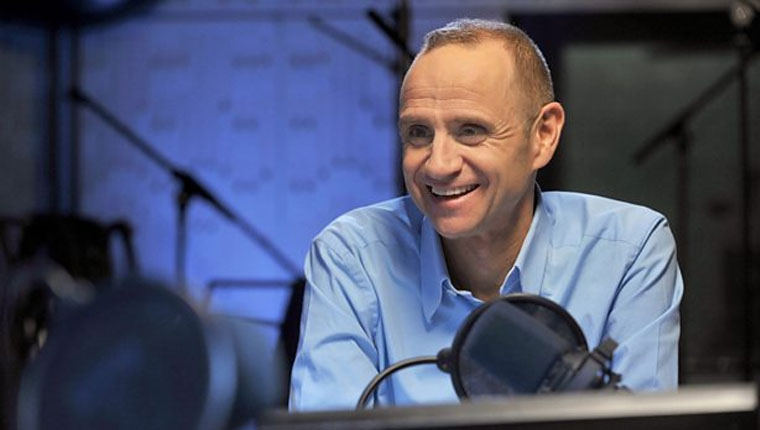
Evan Davis has left Newsnight to become the presenter of BBC Radio 4’s PM programme. He was at Newsnight for four years and was previously a presenter on the Today programme as well as the BBC economics editor before that. On his appointment, Evan said: ‘Having survived several years of people saying “you’re not as good as Jeremy Paxman”, I now look forward to people saying “you’re not as good as Eddie Mair”.’

Eddie left the BBC earlier this year to join LBC, where he now presents his own afternoon show.

Evan takes up his new role later in the autumn; a Newsnight replacement is yet to be announced.


5. Cathay Paciic

Cathay Pacific

Sack the sub! Cathay Pacific were left with red faces after the livery on one of their planes missed out one of the 13 letters that makes up the company’s name. As any PR knows, you proof, proof and proof again. Then you get someone else to proof, then you proof again – because once it’s done, it’s done.

Cathay Paciic were good sports about the whole thing tweeting:

As was pointed out on Twitter, no Fs were given that day.


Did we miss something? Let us know on Twitter @Vuelio.

CIPR

Jenni Field named 2019 President-Elect of the CIPR

Jenni Field, director of Redefining Communications and co-founder of The IC Crowd, has been named President-Elect of the Chartered Institute of Public Relations for 2019, having stood unopposed in the 2018 Election.

Field, who will take over from Emma Leech as President in 2020, is a chartered PR practitioner and former CIPR Inside Chair. She said: ‘I am delighted to have been nominated as the CIPR’s President-Elect for 2019. I have been a volunteer with the CIPR for several years and I’m proud of the work we have achieved to further our profession. I’m excited about working closely with Emma Leech and Sarah Hall, as well as with those who’ve been nominated to serve on Council.

‘I’d like to thank all those who supported my nomination and I hope that with their continued support we are able to make a real difference to the profession and the communications industry as a whole.’

Current President, Sarah Hall said: ‘Volunteers are the lifeblood of the CIPR and my thanks go to all the fantastic professionals who have put themselves forward to ensure the Institute remains ambitious, relevant and forward looking.

‘Jenni is a superb board member who has brought additional internal comms expertise to the table and has always supported the drive to reassert public relations as a strategic management function. I know she’ll bring strong leadership to the role and look forward to seeing all she achieves over the next three years.’

Field was nominated by 10 other members. In her candidate statement, she said: ‘[The CIPR] should be the body for all practitioners at every level – understanding the changing environment practitioners operate in and how PR has a role to play in organisational leadership.’

She has also outlined her commitments, which are:

  • To grow membership and increase volunteer engagement
  • To improve the understanding of PR as a strategic function
  • To have a training and development programme for everyone

Alongside Field’s appointment, the full line-up for the CIPR’s Council in 2019 has been revealed:

  • Jenifer Stirton
  • Laurian Hubbard
  • Hayley James
  • Chris Taylor
  • Nicola Brown
  • Gary Taylor
  • Andras Sztaniszlav
  • Alison Tobin
  • Andrew Bartlett
  • Michael Blowers
  • Mandy Pearse
  • Daniel Gerrella
  • Peter Holt
  • Kerry Sheehan
  • Rachel Royall
  • Lindsey Collumbell
  • Clare Parker
  • Deb Sharratt
  • Andy Green
  • Trudy Lewis
Nigel Milton

How Heathrow used an integrated campaign to win its third runway

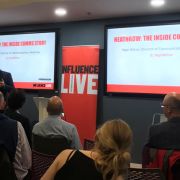
Nigel Milton, director of communications at Heathrow Airport, recently spoke at the CIPR’s Influence Live event and explained how the airport went from being called ‘Heathrow Hassle’ to having its third runway approved by Government.

Heathrow airport is the busiest in Europe, with some 78 million passengers passing through it in 2017. It’s also recently had plans for a third runway approved – fulfilling the UK’s need for increased air traffic capacity.

But getting to this point wasn’t an easy journey; while a third runway was initially supported by Gordon Brown’s Government in 2009, the policy and politics all changed when the coalition Government came to power and immediately scrapped it.

Milton told Influence Live that when he joined in 2010, the airport already had the reputation of a ‘national embarrassment’, with ‘Heathrow Hassle’ in the lexicon. This made finding political supporters almost impossible.

So, how did they manage to turn it around? With the help of an international event, the London Mayor and an integrated campaign like no other.

In 2012, London hosted the Olympics and Heathrow became the official airport of the games. For Milton, it was an opportunity to reset the dial as the Games could effectively make or break the airport’s fortunes. In Milton’s own words, they ‘nailed it’.

Part of the success was leaving nothing to chance. Not only did Heathrow prepare for the oddly-shaped luggage carried by international athletes (oars, bikes, racquets etc), it also increased spending on toilet maintenance because, bizarrely, the number one factor that makes a difference to someone’s opinion of an airport is the cleanliness of the toilets.

Major incident-free, the London Olympics were a huge success for Heathrow and, what’s more, the Government had changed its position on the need to expand UK airport capacity. This policy reversal was, in no small part, thanks to the London Mayor at the time, Boris Johnson.

While Johnson may have more recently been elected as MP for Uxbridge and South Ruislip with the promise there would be no third runway at Heathrow, he was at the time considered the airport’s champion politician – Milton said, ‘Without Boris, we wouldn’t have secured a third runway’. Johnson had argued that London needed more airport capacity, favouring the creation of an island in the Thames. While this wasn’t realised – his desire for more capacity was and so the long road to an extra runway began again for Heathrow.

The success of the Olympics put Heathrow in a strong position for its runway plans, as it could now trade on its national and international reputation of excellence, making it the frontrunner for expansion.

Milton’s approach was two-fold, a public relations campaign was designed to bring everyone, from its staff and local residents to Scottish businesses, on board and a public affairs campaign to gain political support.

The airport’s four business priorities were at the centre of its PR campaign:

  • Mojo – getting staff onside by making the airport a great place to work and risk-free when increasing staff numbers
  • Service transformation – proving it can deliver the best service for passengers and airlines
  • Beating the business plan – staying ahead of its plans so it could meet deadlines and expectations
  • Sustainable growth – working with local communities to impact them negatively as little as possible and positively as much as possible

The campaign was complex, with thousands of stakeholders to be considered, influenced and managed. It required a national strategy, and the airport reviewed both passenger and freight journeys, so it could prove that it wasn’t just London’s airport, but Britain’s airport. It got Scottish business to back the plans, explaining the benefits locally because, Milton explained, ‘My accent saying Heathrow expansion is good for Scotland, in Scotland, means nothing compared to a Scottish accent saying it’.

The PR fed into the public affairs, Heathrow using the wins up and down the country to gain additional political support. It also polled politicians to show MPs they were not alone in their support. With a comprehensive integrated campaign that took everything into consideration, Heathrow was successful and a third runway has now been approved.

But the challenge isn’t over yet, as Milton is all too aware. When Vuelio asked if he was planning for a change in Government, Milton responded that yes – administrations and policies change and Heathrow was still preparing for every eventuality.

Do you want to run successful campaigns that combine public relations and public affairs? With Vuelio, everything you need is in one place, on one platform. Find out more.

Daily Mail

Dacre out, Greig in

Paul Dacre has reportedly edited his last edition of the Daily Mail, months before his supposed November departure date. The Press Gazette also reports that Geordie Greig will take over earlier than planned in the role, becoming editor on 1 September.

Press Gazette questions whether Dacre will be given the official Fleet Street banging out, as some mail staff are calling his low-key departure a ‘soft exit’.

The change of editors has created a big question mark over the future editorial direction of the Daily Mail – the paper is one of the most vehemently pro-Brexit nationals, which is completely at odds with Greig’s remain stance.

Greig, who has already left his role of editor at the Mail on Sunday, received a custom front page from colleagues, which carried the headline: ‘You lot Remoan here. I’m heading for the Grexit!’, as well as the strapline: ‘Remainer-in-chief Geodie Greig’s farewell to his troops as he rides to the dark side.’

The Guardian reports that Grieg will ‘only gradually tone down the strident pro-Brexit agenda espoused by his predecessor’. Grieg apparently fears alienating readers, who have, for some 26 years, hungrily consumed Dacre’s idiosyncratic editorial line. There’s also concern about the wider political situation, which remains uncertain, and Greig will be wary of heavily supporting a political position when it could all change overnight.

The Guardian also reports that during Greig’s leaving drinks, he praised his Mail on Sunday colleagues’ efforts as ‘tireless and fearless’, ‘imaginative and persevering’ and ‘collegic’. The Guardian suggests the last point is an emphasis on teamwork that has never been associated with Dacre and his hierarchical management style.

To help support his slow and steady editorial transition, Greig has brought a number of staff from the Mail on Sunday with him: Gerard Greaves and Tobyn Andreae as his new deputies; Ruth Sunderland as financial editor; and Simon Walters – the Mail on Sunday’s political editor – as his assistant editor. Walters is considered to be closely attuned to Greig’s thinking and will be used to assert the new editorial line.

Whatever Greig does to the paper, he’s likely to have Dacre breathing down his neck now that the latter has ascended to become chairman and editor in chief of publisher DMG Media. Though Dacre won’t be directly involved in day-to-day decisions (especially now he has sold his remaining shares in the company), if readership figures start to slip, Dacre will be in a strong position to oppose Grieg’s changes.

BBC

BBC spends £2.5m to hire PR agencies for licence fee promotion

The Times reports that the BBC is spending £2.5m to hire six PR agencies that will ‘promote the licence fee and spell out the consequences of non-payment’.

The BBC has put out a tender for six regions, with successful agencies representing their geographical area. The regions are: London and the South East, Midlands and East Anglia, Northern England, Wales, Scotland and Northern Ireland.

The Drum reports that the agencies will be tasked with ‘fielding enquiries from journalists as well as placing stories in local papers about who must purchase a licence by law or face a £1,000 penalty’.

The successful pitches will also be required to promote campaigns on ‘Twitter and beyond’.

The Times suggests the £2.5m is an unnecessary cost as it is the equivalent of 16,000 TV licences and TV Licensing already has a devoted press team, as does the BBC.

A spokesperson from TV Licensing said: ‘The work of the agencies and the BBC’s TV Licensing communications team has been proven to bring in more money from TV licence sales than it costs.

‘Those working on TV Licensing communications perform a completely different job to the BBC press office, including spending half their time on working with stakeholders such as money advice organisations to help people pay their licence.

‘We will, as always, be looking for the best value for money in the procurement and we have kept the cost of these contracts down at the same level for the last decade.’

Francis Ingham MPRCA, director general, PRCA, said: ‘The BBC is absolutely right to invest in agency support as it seeks to maximise revenue and to remind viewers of their legal responsibilities.

‘Money spent well on PR and communications activity delivers a significant ROI, and this commitment will undoubtedly repay itself several times over.

‘There is something frankly tiresome about this ignorant, kneejerk reaction to any public spend on communications. Not least as it comes from organisations and publications which almost invariably themselves have significant PR and marketing operations, and which therefore know that their apparent outrage is entirely fabricated and false.’

SEO Tips

3 top tips for creating SEO-friendly digital PR content from David Fraser, founder of Ready10

SEO (search engine optimisation) and its evolution over the past five years, in particular, has been a boon for the PR industry, says David Fraser, founder and managing director of Ready10, a digital-specialist consumer PR agency that works with Paddy Power and MoneySuperMarket, among others.

Fraser said: ‘I am from a consumer PR background and I believe very strongly that SEO is an absolute gift to the PR industry as it shows how effective our work can be. It is an evaluation gift. In some ways, I find it frustrating that not everyone feels that way, but, of course, it means I see great opportunity too.’

Here are Fraser’s top tips for creating SEO-friendly digital PR content:

1. Bring SEO into your thinking as early as possible
‘The best PR people are the best SEO people, but you need to bring SEO into your planning and preparation as early as possible. The best and most effective way to get to the top of the organic search on Google is with good, natural content that has an intrinsic reason to link and that also causes people to like and share.

‘The key is content and creativity – PR skills and thinking are a huge benefit in cracking both the ideas and the creativity. So the earlier the better when you bring SEO into your thinking; your campaign will be more impactful as a consequence. It can be retro-fitted but it’s harder to do, it’s not as good and it will cost more.’

2. Don’t reinvent the wheel – good PR is integrated and digital doesn’t change this
‘SEO and, indeed, digital should not change the way you work or think about integration. The model still works the same. The best work is always integrated and it’s better to have an all-agency solution if you can.

‘In fact, some of our clients are bringing SEO and PR specialists into teams to work together. It makes sense as you can get SEO in your thinking from the beginning. We see this in sectors, like insurance or gaming, where clients have an online transactional ‘reason for being’. In other words, their website is their lifeblood.

‘We recommend an integrated solution for PR and organic SEO. You don’t need to reinvent the wheel.’

3. Write for people not search engines
‘As far as it goes on the SEO side of the equation, a lot of results are still driven by text and so this features prominently in a lot of our output. But, things are changing very quickly and Google is looking to advance itself through video, voice and image-search and all sorts of content. PR – to succeed – needs to use its ability to connect with people on an emotional level and convey its core message through great creativity. That can involve anything from video to podcast content. Everything has a role in the mix.

‘We never write for search engines. We write everything for people. Good content has to be new or news and has to be something people like and share. If that happens, then search engines will recognise its quality.’

Five Things: TV, Radio, Mobile, Internet and Post

Ofcom has published its 2018 Communications Market Report, which covers television, radio, phones, the internet, online content and post. It covers a lot and there’s a lot for the PR, communications and media industry to learn from it – and plan their future strategies – so, without further ado, here are five things you shouldn’t have missed from Ofcom’s report.

1. TV

TV stats

Broadcast TV is in decline, with revenue falling for the first time since Ofcom started measuring it in 2012. It is down from £14.2bn to £13.6bn. At the same time, online TV revenue has increased for the fifth consecutive year, up to £2.3bn from £1.8bn.

The number of minutes being spent watching TV per day has fallen, as it does every year. It’s now at 203 minutes per person (aged 4+), down from 240.7 in 2012. BBC One is still the most popular channel, followed by ITV, BBC Two, Channel 4 and Channel 5.

Across the four main genres Ofcom categorises programmes into – UK drama, sport, soaps and entertainment – the average age of the audience for each is between 54 and 57.


2. Radio

Radio stats

Radio is still a hugely popular medium, reaching 90.2% of the population (since 2012 it has always been about 90%), though each listener is spending fewer weekly hours tuning in, down to 20.8 hours per person a week – the lowest on record.

While the BBC’s share of listening is down to 51.9%, it is investing more in local radio and less in its flagship channels such as Radio 2 and Radio 5 Live.

DAB digital radio devices now have a record share of adult listeners, reaching 63.7% of adults up from 57.9% in 2017 (and 44.3% in 2012). Digital platforms also, for the first time, account for over half of all radio listening.

In terms of age, 29.4% of radio listeners are 15-34 and favour commercial radio; 33.4% of listeners are 35-54, also favouring commercial radio; and 37.2% are 55+ but favour BBC radio.

One-in-ten radio listeners use a smart speaker, such as the Amazon Echo, Google Home or Apple HomePod.

Podcast listeners are also on the up, with around 11% of the population listening to a podcast each week. Two thirds of podcast listeners, who are generally younger listeners, are male.


3. Mobile and apps

Mobile stats

A whopping 96% of the population now has a mobile phone, but only 87% have an internet connection.

App usage is on the up, the average adult has 74 app sessions a day, each lasting over six minutes. For social media, the stats for the big four are quite varied:

Facebook is used seven times a day on average, with 18-24 year-olds accessing it the most. Sessions last on average just one minute, though for the over 55s it’s 75 seconds. While 71% of all adults have the Facebook app, 80% of women have it compared to just 66% of men.

There is no information for Twitter sessions but on average people spend 51 seconds each time they visit the Twitter app, with those over 55 spending 64 seconds. Only 37% of adults have the Twitter app, which breaks down into 41% of men and only 30% of women.

Instagram is used on average just three times a day, though 18-24 year olds use it five times. On average, adults are spending just 37 seconds on the app, though this rises to over 40 seconds for over 35s. The Instagram app is used by 39% of all adults, 47% of women and 34% of men.

YouTube is used in just two sessions per person per day, but on average adults are spending 85 seconds on the app, with 25-34 year-olds spending 103 seconds. Matching Facebook, 71% of adults have the YouTube app, though this is almost equally split between genders with 71% of men and  72% of women.

Unsurprisingly, the most popular apps are those categorised as communications or social.


4. Internet and online content

Internet stats

The internet continues to be the focal point for 21st century lives, with 42.42 million adults now regularly accessing it. For the first time in 2018, women spent more time online per day (206 minutes) than men (197 minutes).

A huge £11.6bn is now being spent on digital advertising, up from £10.4bn in 2016 and just £6.8bn in 2013. Paid-for search dominates this spend, taking just over 50%.

It is perhaps not surprising then that Google is the most popular site, with 41.9m monthly visitors, followed by Facebook (40.2m), BBC (29.5m) and Amazon (37.7m).


5. Post

Post stats

Fewer letters are being sent but more parcels are being sent. That’s the Amazon effect.


Did we miss something? Let us know on twitter @Vuelio