ICO charity tips

How charity comms teams can stay data compliant

The Information Commissioner’s Office (ICO) has published data protection tips for charities. Charities rely on data – from their donors, beneficiaries, clients, partners, media contacts, influencers, staff and trustees – in order to achieve their goals and ultimately support those in need. Charity comms teams often have to juggle data from all of these otherwise disparate groups, making data compliance a key part of the modern comms role.

The ICO has presented charities with five data compliance tips:

  • Set compliance goals
  • Host training sessions
  • Prepare for the unexpected
  • Keep on top of data housekeeping
  • Be transparent about people’s data

It suggests that ‘data protection compliance should be one of the main priorities of an organisation’, and as we’re almost one year on from the implementation of the GDPR, most charities should now have a good understanding of their data management processes and how they are compliant.

As a reminder, the General Data Protection Regulation requires every organisation that processes data to have a legal basis for doing so, which should also be made clear to everyone whose data you’re processing.

There’s also a requirement for staff to know why and how you’re processing data, which is why the ICO includes advice to ‘Host training sessions’. This is good advice for both new and existing team members. While it may seem like we all swallowed the GDPR dictionary last year – at Vuelio we produced a large number of resources for PR and comms professionals (you can see them all here) – how many new team members have you taken on since 25 May 2018? And how much do you remember from the advice at the time?

Refreshers and training for communications teams are great, but if you don’t have the right tools in place then it’s all talk and no substance, and compliance can prove complicated. Vuelio helps you stay fully GDPR compliant, with tools to automatically send your privacy policies out, record consent and record an audit trial so if anyone ever requests their data, you can prove how and when you’ve collected and used it.

This means when the unexpected happens, not only are you more prepared – as the ICO recommends – but you’re also equipped to quickly and easily produce evidence of your data compliance, keeping your stakeholders happy.

If you’d like to find out more about how Vuelio can help you manage your GDPR requirements and data protection compliance, fill out our dedicated form here and one of our compliance experts will be in touch.

PRWeek Best places to work

Mental health is key to the best PR workplaces

Looking to escape an office with drippy taps in the kitchen, no teabags or… something even worse? PRWeek has released the Best Places to Work Awards 2019, which represent all sectors of the industry, from the largest agencies to in-house comms. In PRWeek’s overview of the winners, there’s no mention of in-office teabag situations (if that’s what’s important to you), but there is something much more vital – a culture of mental health support and employee wellbeing.

‘It’s a cliché, but in our industry, people really are our most important asset,’ believes Nicky Young, group MD at Mid-Size Agency and Culture winner MullenLowe Salt. ‘Employees and prospective candidates rightly and increasingly demand a workplace that nurtures their wellbeing rather than destroying it. Our working lives have the potential to be hugely fulfilling and enjoyable. As employers we need to strive to create working environments that make this possible.’

MullenLowe Salt’s approach includes mental health ‘champions’ among its 40-strong team (with more being trained) as well as ‘Head Talks’ to help employees work through any issues they may be facing. The agency’s B-Corp status also highlights its commitment to its workers, something that’s integral to its success.

‘We were a founding B Corporation in the UK and that philosophy (that business can and should be a force for good) combines with our own purpose – to drive positive change through communications – to inform the way we prioritise and manage our culture.’

If you’ve ever checked out Glassdoor for the goss on which companies are good (or very bad) to work for, cultures of support and even protection is what gains staff loyalty, or as Glassdoor has put it: ‘The three top drivers of long-term employee satisfaction are company culture, career opportunities and trust in senior leadership.’

‘We’ve worked hard to put processes in place to schedule support for the team,’ says UKTV’s director of comms, consumer and social, Justine Bower, of its win in this year’s In-House Communications Department category. ‘We are particularly proud of the work being done at UKTV to ensure a consistently open and understanding approach to mental health […] The whole team is delighted and proud to have such a prestigious award as testament to our culture. It’s never taken for granted.’

Taking employee satisfaction – and their resulting effectiveness – for granted is something agencies cannot do if valuable staff are to be retained and growth is to be achieved. UKTV has trained mental health first-aiders as part of the team, partnered with CALM and supports Mental Health Awareness Week and Time to Talk day – and it’s all paying off. For Justine, it has to: ‘Communications and social is ‘always on’ – we are hard-wired for news and it can be difficult to switch off […] We try to be honest and supportive, if someone is too busy they put their hand up and ask for help.’

If you think this sounds too warm and fuzzy, or you came up in harder times when enforced pub visits and borderline-lethal working hours were the norm in PR, consider the statistics from CIPR’s State of the Profession report around mental health – nearly a quarter of those surveyed had taken time off work due to stress, anxiety, or depression.

And even if the human aspect doesn’t concern you, it’s just really bad for business.

‘Our industry does attract high potentials who are proven to be more prone to give too much of themselves, often to their own detriment,’ says Nicky. ‘There may be additional pressures that come from wanting to serve and delight, to please clients quickly and from being only as good as the quality of your last piece of work. We know that when culture feels the strain, so does the business.’

For Nicky, she uses her own experiences to make MullenLowe Salt special: ‘One of my first roles in the country was at an unsupportive workplace and it made me realise what I didn’t want from a workplace; that I wanted to enjoy going into work every day.’

And a welcoming environment is one Justine also advocates at UKTV: ‘I’m a big believer in team as family – you support each other and create an atmosphere of trust.’

More successful than access to caffeine and long working hours? Those warm and fuzzies – especially if you want to be a winner in building worthwhile and happy teams that work.

Farhad and Maz PR and Journo 'blind date'

PR and Journalist ‘Blind Date’: When Ahmadiyaa Muslim Community met a Freelance Journalist

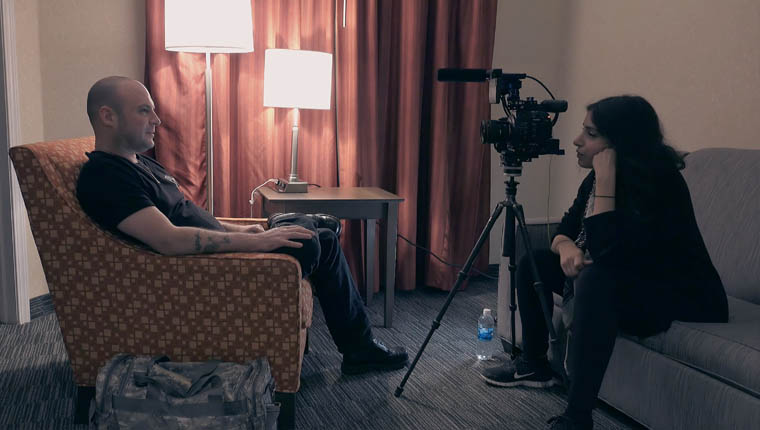
Our latest professional pairing were Farhad Ahmad, press officer and Imam at Ahmadiyaa Muslim Community and Maz Halima, a freelance journalistHere’s what happened when they met for their PR and journalist lunch. 

How was your lunch?
Farhad: It was great. The food was excellent and we had the chance to get each other’s thoughts on so many issues, such as religion, tolerance, how news media works and we agreed on so many things.

Maz: It was really good. Networking can feel like a necessary evil depending on who you are speaking to – so it is great when you connect with another media professional and actually learn something new, and of value to your role. Also, the food at Paternoster Chop House was to die for!

Did you learn anything new about their role? If so, what?
Farhad: I did, particularly the fact that going freelance is quite a daunting experience because you always have to be on a lookout for stories. Also, on top of being a freelance journalist, Maz has to have a stable job too for job security for the time being.

Maz: Farhad filled me in on the vast amount of community work he does locally and internationally, which was inspiring. As a journalist it made me want to make more of an effort to report on my local community in Croydon, to help shed light on the section of society who need it most.

Were you surprised by anything they told you about their job?
Farhad: I was surprised by the fact that only around 0.2% of journalists are Muslim! That is so not proportionate to the number of Muslims in the UK, which is around 5%!

Also that when you pitch an opinion piece to an editor, you often get given a 48-hour deadline to write a piece, if the issue is current.

Maz: Probably just the extent of his community outreach as mentioned. Unfortunately, one thing I wasn’t surprised hearing about was the struggles he has experienced in getting the narrative of the Ahmadiyya Muslim Community into the public eye in the positive light it deserves.

We went on to discuss the portrayal of Islam in the media and the media’s responsibility to showcase a more positive view of the religion. Not to say that it is solely their responsibility, but it is vital they do more positive reporting on Muslims rather than constant sensationalist reporting – particularly in a time where anti-Muslim hate crimes in the UK have increased greater than tenfold.

If you could share one top tip from lunch what would it be?
Farhad: Contact more Muslim journalists as they are more likely to be able to relate to the challenges we as Muslims face and can relate to issues we see in the media regarding the portrayal of Islam.

Maz: We discussed society at large a lot over lunch, and it was a refreshing reminder to me that people want what they invest in to mean something. Consumers and journalists don’t have the desire to consume soulless brands with cliché press releases attached. We are in an era of being actively conscious. Genuine communication and connection are really important, inclusivity is vital, and so is an innovative thought process when creating press releases. Journalists can smell a half-hearted press release quicker than you can say ‘delete’.

Do you think this lunch will change how you interact with PRs/journalists in the future?
Farhad: I think it has given me a better understanding of the challenges journalists, and in particular freelance journalists, have to face. So when I meet or contact journalists in future, I’ll definitely be more aware of their perspective.

Maz: Yes, I think it may. I came to a realisation that I don’t connect with fellow media folk much beyond email anymore, and emailing people just doesn’t have the same impact as sitting opposite somebody and having a chat. While it can be hard to align schedules to meet for that coffee, when you do make the time, the professional relationship you build is far more rewarding.

Did you disagree on anything? If so, what?
Farhad: We generally agreed on most things but there were one or two things we had a different perspective on. However it was great to see that Maz had a big heart to listen and not be judgemental, and to focus on things which we shared in common, as that is how you move forward in life I guess. Otherwise there is a tendency for us to get stuck on things we disagree on and not focus on things that we share in common, which far outnumber our disagreements.

Maz: We agreed on most things! But agreeing to disagree can be just as refreshing – it’s interesting to hear different viewpoints.

If you could change one thing about PRs/journalists what would it be and why?
Farhad: This does not really apply to Maz. However, my general experience with journalists has been that often journalists are having to report on issues relating to Islam, yet many of the journalists have not often had the opportunity to speak in detail to someone that looks at things from an Islamic perspective, to get their thoughts on the current issues. As an Imam, I’m happy for any journalists to reach out to us and we’d love to talk and discuss, perhaps over a coffee or for lunch or dinner at our Mosque (I’m based in Morden, where we have Britain’s biggest Mosque, so do come round for a tour and a curry!).

Maz: I know PRs have to connect with a vast amount of media professionals, but my biggest pet peeve might be when someone forgets to change the name from the last email they sent, and I receive ‘Hey *random name*! I thought you might be interested in…’ it happens a lot. I lose interest straight away when an email has been obviously copied, pasted and sent to me with no thought. It is also vital to research what a journalist covers before sending them a press release that has no relevance to what topics they report on.

Finally, do you think you’ll stay in touch?
Farhad: Yes definitely!

Maz: Absolutely, it was an enlightening afternoon.

Farhad and Maz’s ‘blind date’ took place at the Paternoster Chop House aka the First Dates restaurant! If you’re a PR or a journalist and you’d like to be set up on one of Vuelio’s professional ‘blind dates’, please email Rebecca Potts.

The PhD Runner

Running blogger spotlight: Emma Neachell, The PhD Runner

Emma Neachell is The PhD Runner and was recently ranked in the top 10 UK running blogs. A self-confessed injury-prone runner, Emma finds the balance between recovery and competition. We caught up with Emma to find out how she describes her blogging to the uninitiated, the best places to run, her favourite shoes and her love of testing and reviewing products.

How do you describe what you do to other people?
I’ll be completely honest; I don’t think my family and friends understand blogging and social media. On the very rare occasion I get asked about this blog, I describe it as an online running diary with bonus product reviews. As for my full-time ‘proper’ job, I’m a hydrologist and find that people don’t tend to understand what I do on a day-to-day basis.

How does social media feed into your blog – are any channels more important?
I share all my new blog posts on Twitter and occasionally in a couple of Facebook groups. Twitter is definitely my preferred social media channel and I’m trying to get to grips with Instagram. Otherwise, I don’t think I’m very savvy when it comes to social media. I could definitely do more to promote my blog.

Emma NeachellHow important is the right clothing/gear for running?
Vital! In my tips for completing the Couch to 5k, I recommend people buy a decent pair of running shoes. You can get by without technical running clothing to start with but a decent pair of running shoes is essential. Female runners should also consider purchasing a sports bra. You don’t really need technical gear to start with. Just wear clothes that are loose fitting and comfortable in a breathable material such as cotton. If you do want to invest in technical running gear, then shop around for bargains. Running doesn’t have to be an expensive sport.

What’s your favourite pair of trainers?
Definitely Brooks Adrenaline GTS trainers.

Where’s the best place to run in the world? 
I may be a little biased but Sutton Park in the north of Birmingham.  

How many races do you compete in a year?
It varies depending on how many injuries I pick up during the course of the year. Last year, I completed 21 races, this year I’m yet to make it to the start line of any races.

What advice would you give PRs?
Please give me time to complete my product reviews. Some PRs have slightly unrealistic expectations and expect bloggers to be able to produce meaningful reviews after a week. I like to test products thoroughly before writing a review. Also, I know that PRs are busy people, but please remember to acknowledge emails.

Do you accept press releases?
If they are relevant to my blog and I’ll think my readers will find the content useful, yes I do.

What’s the best collaboration you’ve worked on with a brand or PR?
Now this is a really tricky question! I’ve worked with some awesome brands recently, but I would have to say Supacore Compression. PRs if you read this please get in touch; I love testing and reviewing products!

What are your favourite blogs?
I read a lot of running blogs but these (not in any particular order) are my favourites: AnnatheApple, Maria Runs, A Healthier Moo, HelsBels and Lazy Girl Running.

Reach-the-right-influencers-with-the-Vuelio-media-database

Trust

Who can you trust? Newsguard ranks the UK’s news brands

Picking the right news brand used to mean careful considerations, such as: ‘Does this brand align with my ethics?’, ‘Can I open this one on the tube without elbowing someone in the face?’, ‘Do I really need to see past this paywall?’ But no more – here to help with the decision on what to read/cite/trust/work with comes NewsGuard’s UK launch, rolled out midweek with traffic lights to lead the way.

The US news rating tool is simple – green is good, red is bad – and decided by nine key factors:

  • Not repeatedly publishing false content
  • Gathering and presenting information responsibly
  • Regular corrections and clarifications (where necessary)
  • Handling the difference between news and opinion responsibly
  • Avoiding deceptive headlines
  • Disclosing ownership and source(s) of financing
  • Clearly labelling advertising
  • Revealing who is in charge and any conflicts of interest
  • Providing names of content creators with either contact or biographical information

Aside from a short stall with the MailOnline earlier this year – NewsGuard originally placed the brand as a red for its US product, later backtracking on the rating – the big UK news brands have, by and large, come out clean (well, green). Purely green reads include The Guardian, the Financial Times and Buzzfeed News UK, but the colour is also assigned to outlets that don’t get a full score across the nine factors.

These slightly fuzzier greens go to brands like BBC News (which failed on providing the names of content creators, and contact and biographical info), Sky News (not perfect on correcting and clarifying errors) and The Independent (issues with disclosing ownership and financing, and labelling its advertising, apparently).

As for the reds, PressGazette reports that Politicalite UK is the first to be publicly named.

Tastes may differ on which media outlets are most nourishing, but, according to Wikipedia co-founder and NewsGuard global advisory board member Jimmy Wales, NewsGuard offers a ‘unique tool for helping people understand who is feeding them the news’. And Wikipedia has form with this, having questioned the validity of Daily Mail reporting in the past (also backtracked, by the way).

It’s not just the usual suspects that have been classed as red or green, however, as 150 websites were reviewed by the news rating tool’s team for its UK launch – accounting for 90% of online engagement across the country, when it comes to traffic and social media statistics.

Not taken into consideration for each are issues like the arm span needed to open a print copy, or whether you should be embarrassed to be found with it on your mobile screen during the commute. But trustworthiness? That’s what everyone in the media, those working with it and those looking to consume it, need to be aware of.

A NewsGuard-commissioned YouGov poll for the launch found that nine in ten of those surveyed believe misleading information online is a problem. There’s proof of that easily found in the real-life impact of the online anti-vaxxer movement as we watch it play out across school playgrounds and in the media (both red and green). There’s the rise of fake news and other disturbing trends, like, say, the enduring belief that Goofy is actually a cow (he isn’t).

Those looking for information – whether vital, or frivolous – deserve trustworthy sources, and in a world filled with misinformation, the easier it is to access them, the better.

Know which news brands you want to work with but don’t have the right contacts? You need the Vuelio Media Database, which lists over 1 million contacts, influencers and opportunities. 

the5krunner

Running blogger spotlight: the5krunner

Running blog, the5krunner, has again ranked in the top 10 running blogs. Anonymously written, the5krunner covers running tech and the best routes, as well triathlon training and competing. We caught up with the5krunner to find out about blogging in secret, the right gear for running and the best kinds of press release.

How do you describe what you do to other people?
I am somewhat secretive about my blog. Even to friends. So, I suppose I should have a good answer to that question.

I would say that I probably angle my repose about what I do between the blog’s three main pillars: journalistic research and analysis of emerging sports tech; product reviews and opinions; and a good dose of lifestyle blogging about a wannabe age group triathlete’s trials and tribulations.

How does social media feed into your blog – are any channels more important?
It has taken me a long time to better understand my readership and it is THEIR use of social media channels that I invest in rather than ones that I think I ought to or that some expert or other has told me that I ought to. Eg. I wasted a lot of time with Instagram last year.

The blog itself is by far the most important channel although a notable number of readers use Facebook. I use Twitter as email proxy for one-to-one communications rather than as a means of capturing traffic. YouTube would work for my type of reader but I don’t have the skills or time to take that further right now… if anyone who is reading this does then give me a call.

How important is the right clothing/gear for running?
I would give the classic ‘it depends’ response. Most of the time it does not really matter in the UK but if there are specific weather or performance requirements then clothing is very important. Ranging from: keeping arms warm in the winter; to stopping chaffing on long runs; to allowing cooling on hot days; all the way to simply providing a means of carrying a gel, smartphone and key.

What’s your favourite pair of trainers?
I have the New Balance Fresh Foam Zante v4 right now. I bought three pairs (no freebies). I don’t especially want to like them but I rarely seem to get injured when wearing them so that is a massive bonus for me. No injury = favourite.

Where’s the best place to run in the world?
The London Borough of Richmond-on-Thames is pretty cool in a very safe-cum-pretty-cum-boring kind of way. Maybe I should get out more? but I love the Royal Parks here and the Rivers, nearby canals and more besides.

How many races do you compete in a year?
Excluding parkruns, it would probably be about six races with two of them being ‘A’ races. I train properly for them as best I can yet always set myself goals that are unachievable! If you are of a competitive nature then the beauty of triathlons is that there is a good level of ‘proper’ competition in age-group events. My goal is to win a medal at a national triathlon championship at some distance or other. That will be difficult but possible for me this year or next.

What advice would you give PRs?
The advice would be to understand the motivations of the blogger they are contacting. Some of us do it for fun, some for freebies and some for money. If your pitch to me is that you want 500 words and original photographs syndicated over all my channels in exchange for a free pair of running socks, then perhaps you might want to reflect on how much you are paid and how much of my free time you are requesting.

Do you accept press releases?
Yes. I probably look at all I receive. I probably act on 5% of them. That would be the 5% that are either of interest to me or to my readership.

What’s the best collaboration you’ve worked on with a brand or PR?
I can think of generous brands/PRs, stingy ones and I can think of prestigious ones. The BEST collaborations are those where the PR can respond quickly and intelligently to requests to clarify facts.

What are your favourite blogs?
I have a web dashboard thingy that brings up new content as the blogs that I follow produce it. It’s very much informational/transactional for me. I don’t really enjoy them. Only a very small number that I follow tend to inject an element of personality into what they do but not enough for me to call them my favourite. My favourite channel would be the GCN channel for cyclists on YouTube.

Reach-the-right-influencers-with-the-Vuelio-media-database

The runner beans

Spotlight with the No. 1 Running blog: The Runner Beans

Charlie Watson writes The Runner Beans, which was recently ranked as the number one running blog in the UK, a title it’s held for years. Charlie has been blogging her passion for running since 2011 and now runs around the world – this year she’s running three marathons!

We caught up with Charlie to find out how important running gear is, the rise of Instagram and how she works with PRs.

How do you describe what you do to other people?
It’s a tricky one – I think it depends who I am talking to (and their age!). I tell a lot of people that I ‘have a blog and Instagram’ whereas to the older generation I often say I’m a ‘freelance writer’.

How does social media feed into your blog – are any channels more important?
Yes, my Instagram is so helpful for driving traffic (through the swipe up feature) to my blog. I would say that recently brands are more keen on doing collaborations on Instagram and Instagram stories, with the other social and blog as supplementary channels.

How important is the right clothing/gear for running?
There is NOTHING worse than running 20+ miles in shorts that ride up/fall down, a sports bra that chafes and shoes that give you blisters. I’ve tried and tested enough shorts that I’ve found the right pairs for me (I love lululemon Track and Train and Oiselle pocket joggers), and I won’t wear anything other than Triumph Triaction sports bras.

What’s your favourite pair of trainers?
I just bought myself another pair of the Nike Vaporfly 4% for my marathon in November – there’s something so light and bouncy about them that make you feel like you’re flying.

The runner beans

Where’s the best place to run in the world?
For me it’s anywhere near water – I love the Thames towpath in west London from Putney to Richmond, but equally love running on the coast when abroad, or in Central Park in New York.

How many races do you compete in a year?
I’ve honestly never counted – but I do know that this year I’ll run three marathons!

What advice would you give PRs?
Don’t send blanket emails – engage with the blogger and target them with the right product for them. Understand how they work and it will create a more symbiotic relationship for everyone.

Do you accept press releases?
Yes – but again, when they have been targeted and personalised.

What’s the best collaboration you’ve worked on with a brand or PR?
I’ve worked on some incredible partnerships over the years, but most recently I am loving the partnerships that involve travel for races – like a recent partnership with Visit Savannah and the Savannah Women’s Half Marathon for the weekend, and the LA Marathon back in March.

What are your favourite blogs?
My favourite blogs are honest recaps, sharing fashion, fitness, recipes and real life – anything with beautiful photography but a sense of realness. I like A Foodie Stays Fit, Cat Meffan, Hello Fashion, Pumps and Iron, Fit Foodie Finds, Run to the Finish and so many others!

Reach-the-right-influencers-with-the-Vuelio-media-database

Top 150 2019

PRWeek Top 150 2019 – who came out on top?

PRWeek has published this year’s top 150 PR agencies – cue social media delight from the agencies that made it…

…and the sound of silence from those that didn’t quite make the cut for 2019…


…but will no doubt be back for 2020 to claim their places. Because growth is one of the big takeaways from this year’s list, despite industry woes including GDPR and the efficacy of social media. It’s been a difficult year for PRs, but one the industry rose to, with expansion in staff counts, and growth in revenue – the total for 2017’s list was £1.26bn. This year? £1.32bn.

The top slots are unchanged with the biggest players – Edelman, Weber Shandwick and Brunswick Group – still in first, second and third. The majority of the top 10 are very familiar; all but nine were in the top 10 last year, with only Havas PR conspicuous by its absence (Finsbury has moved up to take the spot).

Also familiar is the prominence of London-based agencies across this year’s swathe. But look at the new entries and you’ll find new bases, suggesting growth outside the capital – new locations include Hertfordshire (Sassy at 54), Winchester (BECG at 56), Manchester (Tangerine at 91), and Edinburgh (Stripe at 92).

The UK PR sector is on the up in 2019, with financial communication agencies enjoying a particularly successful period. Brunswick’s global deals, for example, were up 26.2% (according to the Mergermarket PR Advisors league table). A broader focus continues to bring success for the bigger agencies – Rachel Friend, chief executive of Weber Shandwick UK, attributes its growth to reach: ‘We are a very broad church; we are multi-disciplined, across B2B to corporate to consumer through to health. We probably flex a little bit more because we are full service.’

But flexing isn’t just for the top three – independents in the middle of the industry are able to adapt quickly to client demands, and make their way up the ladder.

‘Agencies that can come up with creative work […] are winning and we’re growing the market as a whole,’ said James Gordon-MacIntosh, co-founder of Hope&Glory, and he’s right – Hope&Glory rose five places this year, to 50.

Being able to revise and rework an approach or focus has been important for securing accounts over the last year, with competition furious in a climate of hesitancy from clients. Even a few industry giants felt the pinch – as PRWeek notes in its analysis of the figures, M&C Saatchi Public Relations saw its revenue and head count fall this year following its loss of two big accounts. Red Consultancy, Lansons and APCO Worldwide also faced a drop in revenue.

With agencies including Tulchan Communications (20), The Communications Store (21) and Exposure (26) hitting high in the line-up after being left out last year, this year’s results show that the landscape is open to change. Sure, the economy is uncertain and regulations are changing, but agencies across the UK are securing interesting work with their creativity and adaptability. And with all the change in this year’s list, who knows what agencies will be at the top in 2020.

What do the top agencies have in common? Access to the best products and tools, including the industry’s worst kept secret – the ResponseSource Journalist Enquiry Service

Innocent blue drink

3 social media lessons from the Easter weekend

We missed Monday PR Club, so for one week only we present Tuesday PR Club, with three very different examples of social media success and lessons for PRs from Twitter.  

1. Innocent’s Blue Drink

Over 10K likes and thousands of retweets and replies, Innocent is rocking wilful denial and baiting Twitter users into engagement. The company’s new drink, which is green, is called Bolt from the Blue and the drinks maker is claiming it’s the colour blue. Cue many thousands of people pointing out the obvious – it’s actually green.

But this drink isn’t called blue when it’s green by mistake, and Innocent has replied to hundreds of tweets correcting people who call it green.

Over…

…and over….

And over again…

What’s the lesson?
When you’ve built up a playful persona on Twitter, you can be playful with your audience and people don’t mind. Also – people love pointing out mistakes, and you can be sure of engagement if you make one.

UPDATE: We’ve received a request for a number of corrections from Innocent about some ‘errors’ in the above text. We’re delighted to update the post with the following:


2. M&S Mojito
Diane Abbot was snapped drinking from a can of Mojito from M&S on TFL’s Overground Line. The media picked up on the picture and it blew up on social media as Abbot was forced to apologise:

This may seem like a trivial matter but for M&S this was excellent coverage.

Many people started using the hashtag #IDrinkWithDiane and some even posted pictures of themselves enjoying alcoholic cans on the Underground. M&S didn’t even have to comment, all the work was done for them, and while Tesco tried to jump on the bandwagon – (the scamps):

The only real winner was M&S:

What’s the lesson?
Know when to comment and know when not to. But when a story breaks – and this story made headlines across nearly every major news site – make sure the rest of the business knows. Just because you’re not communicating publicly, doesn’t mean you can’t communicate internally and make sure your stock of ‘tinnies’ doesn’t run low…


3. A whole bunch of lessons
This is a bit of a cheat, like having three wishes from a genie and using one of them to wish for more wishes. But we came across a thread of excellent advice from Ben Jack Thomas, senior brand strategist at Twitter:

What’s the lesson?
When writing a listicle, find someone to do the heavy lifting for you.


Ready to launch the greatest social media campaign ever? Make sure you have the right tools for success

SheHearts

Luxury lifestyle blog spotlight: Laura Scott, SheHearts

Laura Scott is the blogger behind SheHearts, the luxury lifestyle publication. Covering a huge range of subjects, from travel to beauty, Laura draws on her own experiences and SheHearts benefits from Laura’s expertise as a social media consultant. We spoke to Laura about living a luxury lifestyle, when she realised she had ‘made it’ and her advice for others.

How would you introduce SheHearts?
SheHearts is a luxury lifestyle publication run by myself and blog partner covering travel, fine dining, fashion, beauty and events, emphasising personalised experiences. Creating unique and in-depth features are incredibly important to our readership.

Creative thought goes into our content curation and editorial, it’s important that readers feel at home on SheHearts by providing personalised content people can relate too. SheHearts started off as a blog with the main foundation being ‘all things that I love’ and that is at the heart of the brand.

How did you go about setting up the luxury blog?
Being in social media consultancy, photography and PR, after organising a specialist event in London for a luxury client, a fellow blogger suggested I started my own blog and of course it had been at the back of my mind due to my love of photography, editorial and social media. I started off as I meant to go on, if I’m going to create anything, the heart has to be authentic, personalised and photography-driven. Telling a story through the use of image is a powerful tool, where passion shines there’s truth, and for me that happened to be in unique and luxury experiences in any aspect of life. SheHearts was born.

When did you start getting invites to events?
Being in social media consultancy for many years, I created events so I had a knowledge of how things worked. It was through my own events I met other industry connections and in turn got invited to their events. I’m incredibly thankful to have met many inspiring individuals through SheHearts and my profession.

How much of your content is paid-for collaborations?
It’s truly dependant on the project and nature of the collaboration.

SheHearts 2019 When did you know you’d made it?
When it comes to any aspect of business what is important in terms of success isn’t just about income, but authenticity – set out to be yourself and to inspire others. Personally, for me having the opportunity to work on a one-on-one basis with couture luxury fashion designers, management in the luxury hotel and food industry and creating unique and in-depth visual features makes me feel accomplished.

Some highlights: A personalised tour around The Ritz London and having a menu created for us by executive chef, John Williams MBE was an honour. Interviewing and collaborating with international designer Omar Mansoor has been wonderful and supporting Top Model where Omar showcases his work. Top Model also supports the charity Children with Cancer so it’s wonderful supporting a fantastic cause.

How do you balance blogging and personal life – do you find you always have to be on?
When it comes to lifestyle I treat each experience as such, life is all about balance and taking time to embrace special moments.

What’s your favourite luxury?
Cherished moments and unique experiences with brands, for example when warmth shines through in terms of hospitality during travel/hotel review collaborations in turn creates fond memories for me to promote to my readership. Personalisation goes a long way and hospitality is important. Dining experiences with welcoming touches adds appeal, and brands who enjoy creating personalised experiences are just wonderful.

What advice do you have for luxury brands who want to work with bloggers like you?
Reach out and talk, communication is key and great collaborations are always a result of purpose-driven conversation. Adapting is also important and being flexible to create something truly unique is important. Just be friendly as I absolutely love talking to people and getting to know the heart of their company or brand. Creating on-going relationships is personally important, I love reviewing conceptual change and developing relationships with companies who truly love building trusted friendships in a digital space.

What advice would you give someone who is just starting their blog?
Create a blog for the sheer purpose of creating something you love personally, talk about what you truly enjoy and you will relate to others. Be yourself and don’t compare, enjoy your creativity. Your blog is your online space online to express through digital expression.

Reach-the-right-influencers-with-the-Vuelio-media-database

Lush Ltd

Is Lush building its own social network?

Lush hit the headlines last week when it announced the closure of its main UK social media accounts. The announcement claimed social media is ‘making it harder and harder for us to talk to each other directly’, the company is ‘tired of fighting with algorithms’ and Lush doesn’t want to ‘pay to appear in your newsfeed’.

Its plan is to highlight more voices, and some have read this as more influencer marketing, but that still requires a reliance on existing social media channels whether the company is using them directly or not. On the announcement to quit social media, Lush encouraged people to engage directly via live website chat, email or phone.

Within 24 hours, most major news sites, both mainstream and trade, had picked up the story in what’s undeniably a publicity win for a company that doesn’t spend money on traditional advertising. Unfortunately many of the stories focused on how confused Lush customers were by the news – like this story from the Mirror – with many suggesting that Lush’s target audience are unlikely to call, chat or email the company.

While there is likely to be a bigger plan to come (more on that in a moment), this is half an announcement. Without explaining the ‘What’s next’ part of ‘we’re quitting social media’, many have been left in the dark. To some, this tease may be exciting and the intrigued superfans will be on tenterhooks. But in the age of social media, where attention spans are measured in seconds, this tactic is also likely to lose members of its audience who lack the patience for a protracted stunt.

Not everyone is against the move though, Lush has a fan in David Parkinson, managing director of Brave & Heart who, writing for The Drum claims to have considered this type of move for many of his clients. He says: ‘For several global clients, my agency has looked at similar strategies […] we have started to think beyond the platform and back to the purpose and the people. Asking “who?”, “why?” and “where?”, not just “what?” and “when?”.

‘This is why a brand the size of Lush gets my thumbs up; its big enough for people to take notice, small enough to have the chops to do it.’

Signs of a new network
On the surface it may seem like a baffling move for a company such as Lush, for whom social media engagement seems to come easily for both its products and ethical campaigns. And it’s that level of content engagement that Lush won’t want to lose, which is why the final line of the announcement points at more to come: ‘This isn’t the end, it’s just the start of something new. #LushCommunity – see you there.’

The accompanying image says Lush is ‘switching up social’ – not abandoning it. Clarity can perhaps be found in the company’s annual report, which was published the week before this announcement. The report highlights a growth in online sales and the claim that it is ‘optimistic that our new global website launch will help generate further growth’.

The company is investing heavily in its ‘digital estate’, which is being created to ensure a ‘safe haven for our Lush communities online’. It is continuing to focus on ‘developing features in beta, an evolving brand led commerce experience online’. Beta.lush.com, or #LUSHLABS, is already open to UK customers with plans for it to roll out globally by the end of June.

At the moment the site is ‘by invitation only’ and encourages registered users to ‘invite collaborators’. Users – who have to create an account – will ‘hear it here first’ with ‘early-bird content reveals and news’.

The homepage finishes with the line ‘Want to know a secret? By joining you’re helping us build a new Lush platform. Lush has always been a community-led company. Lush Labs is the next step in putting your feedback at the front and centre’.

An online community with free-flowing engagement for registered users? Sounds like a social network to me.

What do you think of Lush’s move? Tempted to quit the Gram or leave Facebook? We’re still on social media so let us know your thoughts on Twitter @Vuelio.

Your guide to local elections

Your Guide to Local Elections

This year, local elections will take place on 2 May and thousands of councillors will be elected across the country.

No every council is having an election – in England its split as follows:

  • 33 metropolitan district councils electing by thirds
  • 116 district councils holding whole council elections
  • 53 district councils electing by thirds
  • 30 unitary authorities holding whole council elections
  • 17 unitary authorities electing by thirds
  • Elections are also being held in many areas for parish, town, community, neighbourhood and village councils

In addition, local elections are being held for all 11 local authorities in Northern Ireland.

Local councils are vital to public relations and public affairs and any organisation working with an audience at a local or regional level.

Vuelio has published Your Guide to Local Elections, which breaks down what different councils and councillors do, the local election timeline, the rules around purdah and the biggest future issues facing councils.

As local councils are responsible for a broad range of services – from education, libraries and highways to local planning, council tax and rubbish collection – few comms teams can afford to ignore them.

Download the guide here.

CIPR Energy ELP

CIPR’s ELP to shine a spotlight on strategic PR at World Energy Congress

CIPR‘s Energy Leadership Platform is preparing to highlight the importance of targeted public relations to a worldwide audience of energy industry experts and decision makers. September’s World Energy Congress in Abu Dhabi will offer the energy think tank an opportunity to show off the advantages of smart strategies in a sector tasked with great change.

The CIPR ELP team is made up of communications professionals working within the energy industry, including co-chair Ella Minty. For her, the upcoming opportunity is vital: ‘The energy industry is, undisputedly, the most risk-averse and risk-aware in the world. To be given the chance to demonstrate, through practical examples and in various sessions, the importance and standing of PR to and for this fascinating sector is an absolute privilege and honour.’

Compounding the privilege is the signing of a Memorandum of Understanding between CIPR’s Deputy CEO Phil Morgan and CEO of the United Arab Emirates National Committee of the World Energy Council, H.E. Eng. Fatima Al Foora Al Shamsi. The signatories are impressive, but so is the size of the potential audience the ELP will be talking to, with 2016’s conference reaching 7,000 delegates from 100 countries.

‘The PR industry is stepping out of its usual echo chambers and engaging with those who use our services,’ said Minty of the ELP’s involvement in World Energy Congress’ 24th event. ‘It is to our clients and employers we need to articulate and demonstrate the value of PR as a strategic management function.’

Communicating the risks and changes happening across the energy sector is a practical support the PR industry can offer to the World Energy Council’s audience of experts and world leaders. And with ‘Energy for Prosperity’ as the theme for this year’s gathering, CIPR’s continuing work on bringing PR and the energy sector together could pay off in clearer communications in what can be a technically complicated space, and a move towards smarter strategies for longevity. Not just longevity for light bulbs, hybrid cars or PR firms looking for new sectors to work in, but, well, us. Everyone. Living long(ish), and prosper(ing), hopefully. With some good PR opportunities along the way, naturally…

Dannii Martin HHH

Foodie blogger spotlight: Dannii Martin, Hungry Healthy Happy

Hungry Healthy Happy was created in 2011 by Dannii Martin as a place to share delicious and healthy recipes as she embarked on her weight loss journey. Recently ranked as the number one food blog (once again), Hungry Healthy Happy is also a top recipe book alongside an expanding library of books by Dannii.

We caught up with Dannii to find out about the growth of food blogging, the joy of avocado and how she likes to work with brands.

How do you describe what you do to other people?
I create recipes that show healthy food doesn’t have to boring and how to sneak in extra veg, then share those recipes on the internet. I also write books.

How does social media feed into your blog – are any channels more important?
Social media makes me feel connected to our audience. It’s a great way to communicate with them, hear what they like and want to see more of, and get feedback. We use it as a way to show the behind-the-scenes of the blog too. Instagram stories are our favourite, as there is a great community there.

What’s your favourite ingredient and why?
Avocado! I have a bit of a reputation for being avocado obsessed. But in terms of an ingredient to make recipes with, then maybe Greek yoghurt. It’s such a great healthier substitute in creamy sauces.

Can you tell the difference between a food fad and a genuine culture shift?
Yes, and I think there has been a massive culture shift recently. Everyone has left ‘clean eating’ behind and there is much more interest and focus on a healthy balanced diet without cutting anything out and we love that.

What’s the best course in a meal?
The main course. It’s the main for a reason.

Food & Drink was revealed as a supersector in the UK Bloggers Survey – how do you feel it fits in to the broader blogosphere?
The food and drink blogger category is huge now and pretty over saturated. Anyone that can cook and write can set up a food blog and that’s definitely not a bad thing. But very few people stand out. You have to be offering something other people aren’t.

The survey revealed that bloggers post less frequently, is that your experience?
Yes, because SO much more work goes in to a blog post now. SEO is (or should be) the main focus of a blogger now and gone are the days of being able to write and publish a blog post in 30 minutes. It takes a day or two to create one post now – to create professional quality photos, edit, write and then all the keyword research that goes alongside it. We try to post twice a week and then really dedicate time to each post – it’s only fair to the brands we work with to.

Do you accept PR press releases?
Yes, however it would be helpful if they also said what they were looking for. Like, do they want to collaborate or are they just looking for free advertising?

How do you choose which PRs and brands to work with?
The brand has to be a good fit for our audience – that is the most important thing for us. Our readers trust us and trust that the products we promote are only things we really believe in and would use ourselves. We have some great relationships with PRs that we have worked with many times over the past few years, which is great because they know how we work and we know what they are looking for.

What are the best collaborations you’ve worked on?
I don’t think it would be fair to single out one brand, but the best collaborations for us is when there is a clear brief from the beginning. So, there is not going backwards and forwards with drafts and re-dos for weeks because the brief has changed. We appreciate that sometimes things do change but making it as clear as can be from the start helps.

Also, it helps to know if brands want licensing from the beginning, rather than that being sprung on us after the post has gone live and we have to change the fee.

Ultimately, the best collaborations are ones that are a little bit different too. That allows us to have some creative freedom to do something we know will be popular with our readers.

What other blogs do you read?
I read a lot of American blogs, because blogging over there is way ahead of the UK in terms of brand collaborations and professionalism. Don’t get me wrong, there are some amazing UK blogs, but there are a lot of inspiring US blogs like Pinch of Yum and Half Baked Harvest.

Reach-the-right-influencers-with-the-Vuelio-media-database

Whimsical Wonderland Weddings

Wedding blogger spotlight: Louise Baltruschat Hollis, Whimsical Wonderland Weddings

Louise Baltruschat Hollis is the face behind Whimsical Wonderland Weddings, which has once again been named in the Top 10 UK Wedding Blogs. Covering DIY tips, inspirational editorials and real-life wedding stories, Whimsical Wonderland Weddings has been a key part of the wedding blogosphere since it was created in 2010.

We caught up with Louise to find out why any time of year is perfect to get married, the importance of going with your gut and working on creative with PRs and brands.

How does social media feed into your blog – are any channels more important?
Social media has always been crucial to our blog. In the beginning it was all about Twitter before moving onto Facebook, then Pinterest and now Instagram. Instagram and Pinterest are definitely where we see the most engagement and both platforms bring something totally unique.

When’s the best time of year to get married?
I think any time of the year can be perfect to get married. Each season brings something different, from festive cosy winter weddings to fresh bright spring weddings and golden light filled autumn weddings. Summer is always popular for weddings in the UK, with longer days and hopefully more sunshine. It really depends on what makes your heart sing.

Where’s the best wedding location in the UK today?
I love that more and more couples are thinking outside of the box when it comes to wedding venues. We have featured more and more couples trying the knot in a legal ceremony beforehand, leaving them free to have a ceremony or blessing wherever they wish. I myself did this and got married in the woods, so I am a little bias towards woodland weddings.

What advice would you give people planning their wedding?
Go with your gut, always. I think it’s really important to sit down together and really work out what is important to the both of you and include your personalities as much as possible. Don’t be afraid to ditch any traditions that don’t work for you too.

Wedding themes: yes or no?
Wedding themes can be so fun. We’ve featured lots of different wedding themes over the years, although we have also featured more and more weddings without any theme. Matchy matchy colour themes seem to have been less popular with our readers in recent years and we’ve seen more mix and match styles, which always works wonderfully.

The UK Bloggers Survey revealed that bloggers post less frequently, is this your experience?
I have reduced our blogging schedule slightly over the years. So I really focus on quality content rather than quantity. Saying that, we still blog at least once each and every day.

Do you accept PR press releases?
We receive many PR releases. Some are more targeted to our readership than others. If I think our brands are well aligned I will reach out to see if the brand would like to work together.

How do you choose which PRs and brands to work with?
I only work with brands which totally capture my attention, in terms of product and service. I will also take time to look at their reviews as we only work with brands with the highest quality and a top notch reputation. It’s important I love the product or service on offer so that it is a genuine and authentic recommendation.

What are the best collaborations you’ve worked on?
I think my favourite collaborations have been with brands we have worked really closely with to create a wide-ranging campaign. With imagery and styling by me, and blog and social media coverage too.

What other blogs do you read?
I read a wide range of blogs, at the moment I am into interiors as we are renovating our home. Roses and Rolltops has been a long term fave of mine.

Reach-the-right-influencers-with-the-Vuelio-media-database

Online Harms white paper

Reaction to Government proposals to tackle ‘online harms’

The Government has published a white paper that proposes a new regulator to oversee and enforce a ‘statutory duty of care’ by online tech companies. Enforcement includes the ability to issue ‘substantial fines’ and to ‘impose liability on individual members of senior management’.

The detailed white paper proposals draw a particular focus to terrorist activity and child sexual exploitation and abuse online, and say the Home Secretary would have final sign-off on the codes of practice that govern these harms. In what may be seen as a big threat to social and search giants’ proprietary practices, the proposals also call for the regulator to have the ability to see the impact of algorithms in selecting content for users.

This white paper comes off the back of Mark Zuckerberg calling for government regulation of the internet – and though cynics may suggest a tech boss requesting specific regulation is not as wholesome as it appears, ‘harmful content’ is an area he wants more regulation over. Of course, having read the Government’s white paper, Zuckerberg may now regret inviting this in to his company’s ethos.

Reaction to the proposals has been mixed, with many questioning the ethics of Government intervention in online spaces in what could be perceived as an attack on free speech. The fact the white paper claims it has a vision for ‘a free, open and secure internet’ with ‘freedom of expression online’, seems in many ways to directly contradict the requirement for tech companies to actively remove harmful content.

The Guardian has summarised many of the fears around the proposals here, which includes the line, ‘critics say online harms white paper could lead to North Korean-style censorship’.

These concerns were reflected across Twitter:

Though the voices in the media may not fully reflect the public’s perception (imagine), as this Martin Lewis Twitter poll suggests:

It’s very possible that the high-profile stories of tech giants and social platforms accused of failing their users, such as in the death of Molly Russell, have perhaps permeated the public’s collective conscience more than the media’s ingrained fear of Government censorship.

In PR land, the reaction has not been as strong, which is perhaps surprising as media concerns are typically comms concerns. The difficulties of strongly taking one side (Government potentially threatening freedom of speech) against another (we want children to be safe online) is summed up by the PRCA’s director general, Francis Ingham; he said: ‘The Online Harms White Paper builds on the political consensus around online safety, public concern, and the need to “rebuild” public confidence. The question of online platform regulation touches on sensitive subjects such as freedom of speech and our shared desire to keep people (especially children) safe online.

‘The devil is in the detail here and the Government itself argues that voluntary action from the industry has not “gone far enough”. While most people would support the intentions behind this White Paper, if all of these online harms are not clearly defined then the consequence would be far larger than intended.’

The CIPR similarly highlights that in theory this white paper is a positive step to protect people online but that any regulation must also allow tech companies to operate freely, a tightrope balancing act. Jon Gerlis, CIPR senior policy office, said: ‘This Paper is a welcome addition to the conversation around tackling the ills of harmful online content and the spread of disinformation online. The paper accepts that self-regulation has failed.

‘It is therefore right that the law addresses this in a way that allows it to keep pace with advances in the digital world and ensure tech companies operate freely but regulated to a clear set of standards expected of any other kind of business.’

What do you think of the regulation? Long overdue to keep people safe or the end of freedom of speech? Let us know on Twitter @Vuelio.

Sarah Anguish

Mummy blogger spotlight: Sarah Anguish, Boo Roo and Tigger Too

Sarah Anguish is the mummy blogger behind Boo Roo and Tigger Too, which was recently ranked in the Top 10 UK Mummy Blogs. Sarah told us about focusing on the bigger picture, the best thing about being a mum and working with brands and PRs in an honest and open way.

How has your blog changed in the last year?
Towards the end of last year, I found myself feeling somewhat overwhelmed by attempting to juggle too many plates. Saying yes to things for the fear of saying no and never getting future opportunities with that brand or PR. I took some time off over Christmas and New Year to reassess things and have adopted a better work/life balance this year. I’ve also focused on different topic areas to bring out regular content, such as parenting, family travel and fun recipe ideas for families.
 
How does social media feed into your blog – are any channels more important?
While I was away over the festive break last year I decided to take a look at my social media channels. In an ideal work I would be able to rock them all and engage with followers on each platform, but that isn’t something that I am able to manage at the moment. So, I opted to see which platforms give me the most enjoyment and work from there. Instagram has been the platform I have been giving the most focus to this year. And instead of trying to copycat others or play the follow/unfollow game, I am adding a micro post alongside a snapshot each day. Sometimes I’m chatting about a family day out that we’ve enjoyed or grumbling that it’s Monday again.

Boo roo and tigger too

What’s the perfect Mother’s Day?
Mother’s Day isn’t about the gifts for me, it’s about the children recognising all the things that I do for them throughout the year. From playing mum taxi, juggling 101 after school activities, ensuring they have all the supplies they need for school/clubs etc. Alongside the everyday tasks as cooking, cleaning, washing etc. Knowing that they are thankful for this is priceless.

What’s the best thing about being a mum?
Unlimited cuddles, no matter whether it is one to offer them support or comfort. The ones at the school gates that they don’t really want to do in front of their friends. Or the ones that caught you by surprise because they just wanted to give you a cuddle.

What advice would you give new mothers?
Take each moment as it comes, rather than focusing on the bigger picture. There will be trying times ahead but try not to dwell on how long it has taken to get your little one to fall asleep, feed or the fact that you are still wearing the same pyjamas from three days ago. Focusing on that task at hand, changing a nappy, bath time or running to the toilet uninterrupted will give you lots of tiny wins throughout the day.

The UK Bloggers Survey revealed Parenting as a supersector – how do you feel parenting fits into the broader blogosphere?
The parent blogging community has grown so much since I started blogging almost eight years ago. Parent bloggers are able to offer support and advice to parents (new or seasoned ones) that they might not have in real-life or are not willing to ask their friends and loved ones.

Boo roo and tigger too

The Survey also revealed that bloggers post less frequently – is this your experience?
I think that just as in life, blogging and bloggers have peaks and troughs when it comes to producing content. There will always be times when there are lots of things to share and times when life gets in the way and you aren’t able to post as frequently as you’d like.

Do you accept PR press releases?
I receive a number of press releases each week and while they might not be relevant to me or to my blog, they can be intriguing to read. It’s a very privileged position to be able to find out details of new products, events and activities ahead of time.

How do you choose which PRs and brands to work with?
I always look to see whether that brand, product or event would work for our family and something that would interest my readers. There are some amazing brands and PRs out there who value bloggers honesty in saying, ‘Thank you, unfortunately, this campaign isn’t suitable for me because of XYZ’, rather than accepting something because you want to work with that brand/PR and it not really being relevant to you or audience.

What are the best collaborations you’ve worked on?
A few years ago we were selected as the family to represent the UK at the Disneyland Paris 25th anniversary celebrations; a surreal weekend of discovering all that Disneyland Paris has to offer families. We enjoyed the celebrations and standing in front of the iconic Sleeping Beauty’s castle with Mickey Mouse.

What other blogs do you read?
I’m an old-fashioned blog reader, still missing the days of Google Reader where I was able to scroll through the list of posts published that day from across the blogging community. Thankfully, my Bloglovin app allows me to continue to do this and I like to scroll through to see what catches my eye as well as keeping up-to-date with some of the bloggers who have now become firm friends.

Reach-the-right-influencers-with-the-Vuelio-media-database

supersector collaboration pay

These 5 supersectors can’t afford to ignore influencer marketing

Influencer marketing is growing rapidly, with more professionals entering the industry and partnering with PRs and brands on collaborations. The Vuelio UK Bloggers Survey 2019 has revealed five supersectors that dominate influencer marketing both in terms of the number of influencers, and the number of PR pitches they’re receiving every week.

Lifestyle, Fashion & Beauty, Parenting, Food & Drink and Travel account for around two-thirds of all blogs. While Fashion & Beauty is in decline, Parenting, Food & Drink and Travel have all seen increases since 2016 and cannot be ignored by businesses and organisations in those respective sectors.

Age groups
The Survey reveals that different age groups specialise in different categories. Those aged 18-24 typically focus on Lifestyle and Fashion & Beauty; 25-34 year-olds focus on Lifestyle and Parenting; 25-54 year-olds cover all categories, but Parenting is the most popular; 55-64 year-olds are most likely to cover Food & Drink and Travel; and over 65s are most likely to cover Food & Drink.

Reflecting the broader blogsphere, four of the five supersectors are dominated by women, with only Travel having an even male/female split.

Pay

supersector blog post payThe Survey also contains information on pay across the supersectors, the first time this information has been reported on such a scale.

When it comes to individual blog posts, Fashion & Beauty and Food & Drink are mostly likely to command the top pay of over £1,000, while Parenting appears to be the most standardised supersector, as 48% charge between £101-£250 per post. This reflects the maturity of Parenting, which found its feet early on and has developed a strong influencer community.

When it comes to collaborations, Parenting is again the most standardised with 40% receiving between £100-£250. This reflects that many campaigns in the Parenting supersector are one-off single posts, which is why there isn’t a great deal of discrepancy between pay for posts and pay for collaborations.

Fashion & Beauty and Travel, on the other hand, show a much higher percentage of those paid in the top bracket (over £1,000) for collaborations compared to single posts. For Travel, this is not surprising – it’s very difficult to engage a travel influencer for a single post when trips typically take place across multiple days. These numbers also suggest Fashion & Beauty PRs and brands are reaping the benefits of long term collaborations.

Why does long term work?
While single posts can be effective, long-term multi-post collaborations makes influencers into ambassadors for your brand. It requires more work and typically more investment, but most influencers have loyal, regular audiences who are more likely to buy into your brand and messaging if exposed to it over a long period of time.

If you do want to work on long-term collaborations, building and maintaining the right relationships with the right people is the most important part of the process. Rather than blanket emailing a large number of individuals in the right sector, you need to carefully handpick the right people and understand why they’re the perfect fit before you send the first email. Using the Vuelio Influencer Database – the most comprehensive source of influencers, which includes detailed profiles – gives you a head start and takes the work out of research.

Do you work in a supersector? What’s your approach to influencer marketing? Let us know on Twitter @Vuelio

State of the profession CIPR 2019

PR is not diverse enough – results from CIPR’s State of the Profession 2019

The results from this year’s State of the Profession survey from the CIPR reveal that PR firms are getting bigger but alongside the greater headcounts, they also contain gender imbalance, mental health issues triggered by high workloads and unfair advantages for those who come from a paid-for education background.

The CIPR’s survey of 1,503 members showed that PR departments are more likely to have grown in size, with half of the agencies getting bigger. It’s a positive sign for the importance and value of PR, but there are greater concerns among the workforce.

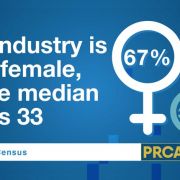
The PR workforce is less diverse this year, with more than one in ten (92%) classifying themselves as white – up from the 88% in 2018. When it comes to gender equality, two-thirds (67%) of the industry identify as female, yet almost half (44%) of the most senior roles are occupied by men. To add to issues of unfair advantage in the world of PR, a quarter of this survey’s respondents went to fee-paying schools – much higher than the national average (7%).

As for how the industry’s unique pressures impact its workers, this survey found a level of disconnect between what firms expect of their employees versus the skills people believe are actually important for their roles. Junior practitioners, for example, don’t identify ‘technical and digital’, ‘research and evaluation’ or ‘project and account management’ skills as strengths, whereas recruiters do.

A more serious disconnect, however, is the continuing difference between the demands of the job and the workloads people can manage while remaining healthy.

Over half (59%) of respondents classed a heavy or unmanageable workload as a factor for workplace stress, with 46% highlighting unrealistic deadlines and expectations, and 32% find the unsociable hours a problem. Nearly a quarter (23%) said they had taken absence from work due to stress, anxiety or depression, and 14% rated the contribution of work on their diagnosed condition as significant. How the industry supports workers with stress-related mental health issues could also be cause for concern – 23% said managers did ‘nothing’ when informed of the problem.

Those working all-hours won’t be surprised by all these numbers, maybe they won’t even have time to read them, but there are also encouraging statistics to be found in the CIPR report. Of the staff with mental health concerns related to their career – 36% said they were offered counselling after talking to their managers, 28% time off and 19% re-allocation of workload.

CIPR President Emma Leech, said: ‘This report identifies clear challenges and opportunities for the PR industry. Diversity is an issue we must tackle head on. Talent doesn’t have a postcode and it isn’t determined by skin colour. Our industry has to work harder to be inclusive. Similarly, mental health is a growing area of concern and we must be proactive in changing working practices and shifting the ‘always on’ culture that contributes to the problem.’

Avril Lee, chair of the CIPR Diversity and Inclusion Forum, said: ‘The PR industry agrees that diversity is important for attracting the best talent to bring fresh thinking, creativity and insights into new audiences, but our actions speak louder than our words. And our actions are building a profession of white, ex-public-school professionals; we are less diverse than in previous years.

‘Who can make our industry a fairer place where there is opportunity for all? You! Every manager, every employee, every agency leader – we all need to challenge outdated and biased recruitment and retention policies. We are all responsible for shaping the future of our industry by establishing workplace cultures in which all talent is judged fairly and given an equal opportunity for progression. Without those inside changing the status quo, those outside will remain locked out and our profession will be the poorer for it.’

As the CIPR report states, the numbers may ‘paint a picture of a profession which lacks self-awareness and consciously or unconsciously disadvantages people based on who they are rather than what they can do,’ but this is an industry in the process of self-correcting. Surveys like this can only help with gaining greater insight for the support of those already in PR, and with the improvement of hiring practices for those who could do great work as part of the industry in the future.

Emmy's mummy and Harry's too

Mummy blogger spotlight: Clare Nicholas, Emmy’s Mummy and Harry’s Too!

Clare Nicholas is the author of Emmy’s Mummy and Harry’s Too! a Top 10 UK Mummy Blog. A former nanny, Clare covers life with her two children and posts reviews, activities and competitions on her blog. We caught up with Clare to find out what’s best about being a mum, setting up a YouTube channel for her daughter and working with brands and PRs.

How has your blog changed in the last year?
It’s continued to grow from strength to strength, although I have also launched a second blog to start getting back to writing for me again. Starting from scratch again was a little daunting though and I certainly need to add more hours into my day.

How does social media feed into your blog – are any channels more important?
This year I’ve taken more of a focus on growing and improving my Instagram content and followers. I’ve dipped my toes into IG stories and love interacting with my followers over there. My goal for this year is to hit 10k and gain that much wanted swipe up.

I have turned YouTube over to my daughter. Emmy has been desperate for her own channel and has a love of watching Vlogs. She now has her own channel and she’s working hard (with my help) on adding content over there.

What’s the perfect Mother’s Day?
I’ve actually just written about this one and as much as I adore and love my kids, a day to myself would be amazing. No cooking, cleaning or breaking up fights.

What’s the best thing about being a mum?
It’s a dream come true for me, there were years when I didn’t actually think it would happen for me, but I didn’t give up that dream and it was fourth time lucky.

I love everything about being a mum, but the best times are those sleepy times when they sneak into my bed and all they want is a cuddle with mum.

What advice would you give new mothers?
Take any help offered and there is no right or wrong way to do things. Work out what works for you and trust your instincts.

The UK Bloggers Survey revealed Parenting as a supersector – how do you feel parenting fits in to the broader blogosphere?
While it may be the largest sector, many start out as parenting bloggers to document their children’s milestones (which is what I did) before finding their niche and moving onto with something completely different or combining it with crafts, travel or even cooking alongside.

Parenting blogs can help others from feeling alone, they help to show other parents that their problems are normal, that we all get stressed and can help to relieve the boredom of a 3am feed. They can be a mix of factual and humorous and make for more entertaining reading than a textbook in those lonelier times.

The Survey also revealed that bloggers post less frequently – is this your experience?
I guess it depends on the age of their children. Those with young babies may find it harder to find the time to post but as my children are older I post more frequently than I ever have done. I struggled with posting when the kids were home and young and could only do so in the evenings, but now they are in full time school I’ve no excuse not to find the time.

Do you accept PR press releases?
I do and I try my hardest to reply to all of them, posting which are relevant and forming a relationship with the PRs at the same time. Not all fit our family but it takes two minutes to reply and say why it’s not a good fit and by doing so it helps to build an ongoing relationship for future work.

How do you choose which PRs and brands to work with?
They have to be something we would use or the kids enjoy, gone are the days of saying yes to every review that was pitched to me.

They need to be in keeping with our family feel so gambling is a no-no and payday loans etc won’t feature.

I’m open to suggestions on many topics and can easily turn my hand to writing within my own style to fit what the brand wants if the price is right.

What are the best collaborations you’ve worked on?
Attending the red-carpet premiere of the BFG remains my all-time favourite event. Of course, we love working with various travel companies on holiday reviews, the press launch of the Royal Caribbean Independence of the Seas was amazing and working with Merlin Annual Pass was possibly the kids’ favourite.

What other blogs do you read?
I struggle to find time to read many any more sadly but The Oliver’s Madhouse, written by my good friend Jaime, hits my inbox weekly as I don’t see enough of her and her lovely boys,

Whinge Whinge Wine also gets my vote. Written by the lovely Fran, every post has me giggling out loud.

Reach-the-right-influencers-with-the-Vuelio-media-database