
Paul Dacre

Dacre’s MURDERERS headline due to personal relationship

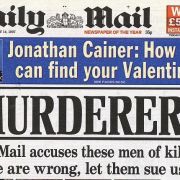
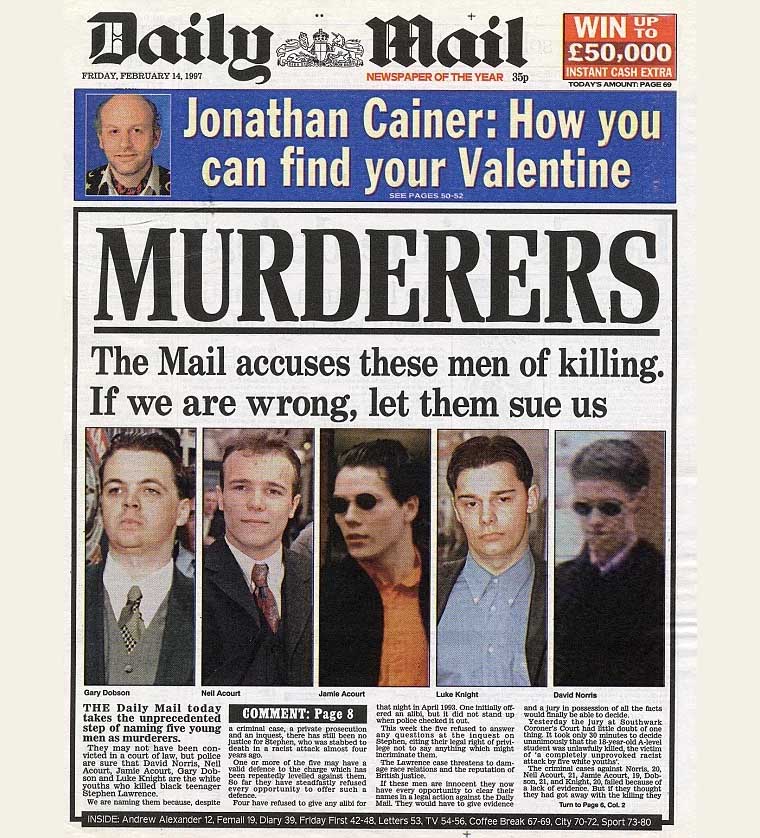
Following the murder of Stephen Lawrence, the Daily Mail ran a story under the headline ‘MURDERERS – the Mail accuses these men of killing. If we are wrong, let them sue us’, with pictures of five people the paper accused of the crime.

The front page is famous for driving the campaign to bring Stephen Lawrence’s murderers to justice. In an interview for a BBC documentary, marking the 25th anniversary of the murder, Paul Dacre, editor and editor-in-chief of the Daily Mail, has revealed he would not have backed the family’s campaign without his own personal connection to the Lawrence family.

Stephen Lawrence

As reported by the i, Stephen’s father Neville Lawrence was recommended to Dacre as a ‘very good plasterer’ when the editor needed ‘lots of working doing’ at his home. Dacre said: ‘He did a lot of plastering work. He was clearly a very decent, hard-working man. Would the Mail have done it without that knowledge? Probably not.’

This unusual revelation highlights how important relationships are to the running of the national press. Dacre carries on to explain that he decided to run the front page after meeting Paul Condon, then Met Police commissioner: ‘Paul said he would bet his life these men were the killers but they couldn’t get the evidence. These guys were taking the piss out of British justice.’

He apparently sketched out the ‘MURDERERS’ headline just 45 minutes before the paper went to press, and then forced the ‘cataclysmic’ front page through ‘nervous libel lawyers’.

This is a rare interview from Dacre who usually prefers to shine the spotlight rather than be in it. But it is also a revealing insight in to the power of personal relationships in the British media, and, in light of Condon’s assurances to Dacre, the power a conversation has over the news agenda.

The BBC One documentary Stephen: The Murder that Changed a Nation begins on Tuesday, 17 April at 9pm and continues on 18 and 19 April.

Inside the Travel Lab with Abigail King

Abigail King is the blogger behind Inside the Travel Lab, which is among the top luxury travel blogs in the UK. Abi was a doctor before she started travelling the world and now writes about the culture, history and food of amazing destinations for an audience that cares about the people and places they visit.

Abi told us about the best destinations for both new and seasoned travellers, the importance of her iPhone and her favourite way to work with PRs and brands.

Abi KingWhat makes your blog successful?
Now there’s the million dollar question… Who knows, really!?

I think it’s because I write for an underserved audience and show the world from a different perspective; it’s luxury travel but for people who want to understand a place. Readers are professionals who are passionate about travel, reading, watching and consuming content but they’re not always the chattiest kind. Many of them work in fields that explicitly forbid them from commenting online and so many travel blogs ignore them.

What’s better, luxury travel or travel on a shoestring?
It’s not the price tag that matters but the quality of the experience. So, often that does mean luxury travel is better but of course, as the cliché goes, the best things in life are free.

What destination would you suggest to first time travellers?
America. You’ve half travelled through it already on screen and you don’t need to worry about water or healthcare.

What about seasoned travellers?
Ooh, now that’s a different one because by then people have really honed the kind of things they like to do. So, in part, I would challenge seasoned travellers to try something new.

Madagascar remains relatively unexplored yet its wildlife and landscape are exceptional and the history is fascinating, especially around World War Two. The beaches are beautiful, too, which always helps…

Is there anywhere on your bucket list you’ve yet to visit?
Plenty of places because the list keeps growing the more I travel!

I long to see polar bears in Churchill, hike across Iceland, taste the flavours of Bali and peer into a volcano on Hawaii.

There are the salt lakes of Djibouti and the rock churches in Ethiopia. The swirling rock in Arizona and the quiet water of Kerala.

Then the old cities I love like London, Paris and New York keep adding highlights to their itineraries and former trouble spots like Belfast reinvent themselves!

I’d better stop. I could go on and on…

Abigail King

If you could only take three items with you when travelling, what would they be?
iPhone, iPhone, iPhone.

Or iPhone, charger, spare battery. Maybe a scarf.

So many travel details live on my phone, together with entertainment for long journeys, top editing software from Adobe, music, translation apps, currency conversion tools. It contains about half of what my luggage used to be.

What should PRs know about you?
Inside the Travel lab reaches an affluent, educated audience who love to travel and do so frequently. It’s been described as one of the best travel blogs in the world by Lonely Planet and National Geographic Traveller, and celebrates its 10th year in business next year.

As for me, I used to work as a doctor so I’m used to tight deadlines and getting things done – accurately. I love to work by email instead of phone so that I can work more flexibly around travel and my young daughter.

Oh, and my media kit and case studies live here.

Reach-the-right-influencers-with-the-Vuelio-media-database

What’s the best PR/brand campaign you’ve worked on?
Happily, over the last seven years, I’ve worked on so many good ones that it’s difficult to choose. However, the stand out one remains a project with Eurail where they acted as ‘artistic sponsors’ and invited me to create a trip to inspire other travellers.

I travelled from Istanbul to Berlin, zig-zagging back and forth across the former Iron Curtain, trying to understand the past and exploring and enjoying the present in each of the modern cities.

What do you call yourself (blogger/influencer/content creator)?
I’m old enough to still be saying ‘writer’ but as I now professionally create photos, videos and broadcast for Lonely Planet, a broader term is definitely needed. All of the above?

What other blogs do you read?
Again, too many!

I like Girl Tweets World, As The Bird Flies, Eat Like A Girl, Geotraveler’s Niche, Atlas and Boots, Y Travel Blog, Landlopers, Adventurous Kate, The Travel Hack, A Lady in London… and many more!

They certainly don’t all fit my niche but I find something interesting or inspiring in each one.


Abigail King and Inside the Travel Lab are both listings on the Vuelio Database, along with thousands of other influencers including journalists, bloggers, MPs and SpAds.  

Good Friday Agreement

Political Headlines – Good Friday Agreement, Syria strikes, serious violence strategy and the war on prostate cancer

Today’s Political Headlines include the anniversary of the Good Friday Agreement, May under pressure to join US strikes, the serious violence strategy and May’s £75m prostate cancer strategy.  

Good Friday Agreement anniversary marked, but Gardiner and Davis criticise Irish government over its Brexit stance
The BBC reports that former US President Bill Clinton is visiting Northern Ireland to mark the 20th anniversary of the Good Friday Agreement and will speak at a conference also featuring Tony Blair and Bertie Ahern. The BBC adds that Barry Gardiner, Labour’s Shadow International Trade Secretary is facing criticism after he suggested that the Irish government and Sinn Fein have ‘played up’ concerns about the impact of Brexit on the agreement, while The Times says that David Davis has accused the Irish government of bowing to political pressure from Sinn Fein and adopting a hardline stance on Brexit.

May under pressure to join US strike against Assad regime
According to The Times, Theresa May is under pressure from ministers and allies to join a US-led military strike against the Assad regime in Syria. Officials have suggested it is unlikely that MPs will be recalled from their Easter break in order to authorise action, but a senior military source told the paper that options are being examined and that a parliamentary vote is not necessary.

Serious violence strategy overshadowed by row over impact of police numbers
The Guardian reports the Government’s new serious violence strategy claims that tackling serious violence is not a law enforcement issue alone and fails to discuss the impact of police levels, despite a leaked Home Office report having linked the two issues. The paper claims that the leak ‘threatened to overshadow the broader findings of the strategy, such as the impact of drug markets, social and economic disadvantages and social media’.

May to set out £75m prostate cancer strategy
The Daily Mail says that Theresa May is to set out a ‘five-year campaign to wage war on prostate cancer’ today. She is to announce £75m of spending to help spot the disease earlier and improve treatment, with the amount spent on research to be roughly equal to that spent on breast cancer.

Norway offers to roll-over trade deals, as Denmark warns of post-Brexit bureaucracy
The Financial Times reports that Norway has signalled that it will co-operate with the UK’s desire to roll over trade agreements with non-EU countries in the post-Brexit transition phase. However, The Guardian says that the Danish Prime Minister said, following talks with Theresa May, that while he was in favour of ‘an enhanced trade agreement’ between the EU and the UK, there will be more bureaucracy after Brexit.

UK one of just five countries to meet foreign aid target
The Daily Telegraph reports that the UK is now one of just five countries which meet the UN’s foreign aid target of 0.7% of GDP. The UK is bound by law to keep the target, and gives almost double the average of all countries according to new figures from the OECD. The UK is responsible for £1 of every £8 given by developed countries.

Gove considers banning live animal exports
According to The Times, Environment Secretary Michael Gove is considering a ban on the export of live animals for slaughter abroad after Brexit. A call for evidence has been issued by the Government today, with animal welfare groups warning that travel can be stressful for animals and that some foreign abattoirs have lower standards.

Social media junk food adverts face ban
The Times reports that junk food adverts are to be banned on social media, with ministers examining the possibility of identifying social media users by age and banning targeted advertising accordingly, under plans to combat obesity, with minister considering whether to force restaurants to label unhealthy foods as they finalise a strategy before the summer.

Learn more about Vuelio political services.  

Children on tablet

YouTube accused of illegally collecting data on children

Google is under fire from a coalition of child advocacy, consumer and privacy groups in the US. The collection of 23 campaigners, including the Campaign for a Commercial-Free Childhood and the Center for Digital Democracy, has filed a complaint with the US Federal Trade Commission (FTC) alleging that Google is violating child protection laws by collecting data and selling advertising to under 13s.

As The Guardian reports, the group claims that YouTube is the most popular online platform for children in the US, with 80% of those aged six to 12 using it. YouTube’s Ts&Cs specify that the site is not for under 13s but the group says Google knows children use the site and it sells advertising specifically aimed at them.

The group also claims YouTube records location, device identifiers, phone numbers and tracks children across different websites and services without gaining parental consent, which is required by the US Children’s Online Privacy Protection Act (Coppa). Children’s data also has special rules under the GDPR, which comes into force in the EU on 25 May.

YouTube has a ‘child friendly’ service, YouTube Kids, which was released in 2015 specifically to suit the needs of children, with appropriate content and ads. The group doesn’t think this is sufficient, as it still sells child-focused advertising on the main YouTube platform.

As evidence that YouTube ‘knows’ children are using the service, the group points to some of the most popular channels aimed at children, including ChuChuTV Nursery Rhymes & Kids Songs (15.9m subscribers) and LittleBabyBum (14.6m subscribers).

Jeff Chester from the Center for Digital Democracy said: ‘Google has acted duplicitously by falsely claiming in its terms of service that YouTube is only for those who are age 13 or older, while it deliberately lured young people into an ad-filled digital playground.

‘Just like Facebook, Google has focused its huge resources on generating profits instead of protecting privacy.’

Katie McInnis, policy counsel for the Consumers Union, said: ‘YouTube knows children are watching content on their site, and has created content channels specifically aimed at them, but does not appear to obtain the required parental consent before collecting information about them.

‘Google has the responsibility to be Coppa-compliant and ensure that children can safely watch the programs designed and promoted for kids. These practices present serious concerns that warrant the FTC’s attention.’

The full complaint runs to 59 pages but apparently hasn’t been seen by YouTube. A spokesperson for the platform said: ‘Protecting kids and families has always been a top priority for us. We will read the complaint thoroughly and evaluate if there are things we can do to improve. Because YouTube is not for children, we’ve invested significantly in the creation of the YouTube Kids app to offer an alternative specifically designed for children.’

The complaint once again raises the question of who is responsible for content – the creator or the host. With examples such as the Logan Paul debacle, the argument is something of a grey area. But if it can be proved that YouTube is knowingly cultivating an audience of under-13s, and profiting from it, this case may be more cut and dry.

Politics on Sunday – violent crime crisis and Brexit’s impact on the Good Friday Agreement

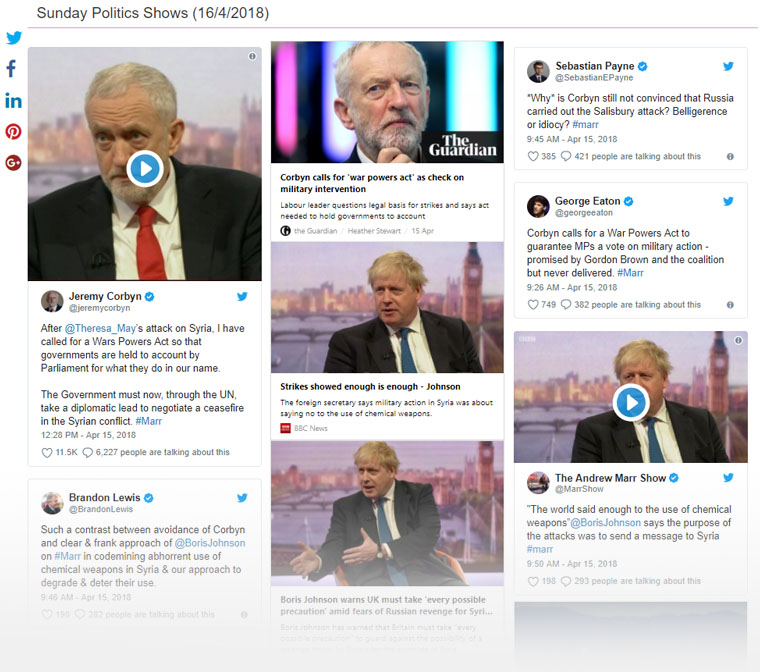
The violent crime crisis and Brexit’s impact on the Good Friday Agreement dominated both Andrew Marr and Niall Paterson’s Sunday shows this week.

On the Marr Show, when talking about the significant rise in knife crime, Julia Hartley Brewer described it as ‘black on black’ crime and said that schools and family breakdowns had a role to play. Journalist Polly Toynbee accused stop and search of creating resentment that strengthened gang culture as well as anti-social and anti-police attitudes.

Secretary of State for Education Angela Rayner called for evidence-based, targeted stop and search. She said that this could be achieved through the presence of community and youth workers, who would be able to recognise which young people are vulnerable or at risk of getting involved in gang activity.

Secretary of State for Communities and Local Government Sajid Javid spoke of the Serious Violence Strategy to be announced by the Home Secretary on Monday 9 April. He revealed that the strategy would focus on root causes and early intervention. Javid also spoke of the upcoming Serious Weapons Bill which would introduce measures such as making it illegal for under 18s to buy acid and for individuals to possess certain weapons, such as knuckle dusters and zombie knives. Javid claimed the evidence proved that the significant rise in violent crime was not due to the decrease in police numbers. He said that the Government would nevertheless be increasing the police budget by £450m in the coming year.

Paterson guest, Shadow Policing Minister Louise Haigh, welcomed the new measures, however, she criticised the absence of preventative measures. She claimed that taking action on the criminal side was not enough to solve the problem.

Also on Paterson, Stafford Scott, Tottenham community activist, said that the problem lay not just with the police but also with local authorities, central government and the Mayor’s Office who, according to him, ‘have all reneged on their responsibility to these young people’. Minister at the Home Office, Victoria Atkins, spoke of the dangerous impact social media can play in influencing young people to get involved in gangs.

George Mitchell, former US special envoy to Northern Ireland, urged the Government to recognise that it is ‘the futures of their economies [at stake], it is the possibility of resumption of conflict, of a reversion back to the time that nobody wants to go back to except for a very tiny fringe element on both sides.’

Adrian O’Neill, Irish ambassador to London, made an appearance on both Marr and Paterson. He spoke of the ‘indispensability’ of the Good Friday Agreement, referring to it as ‘a miracle’.

On the Marr Show, Christopher Wylie spoke about the Cambridge Analytica story and a potential re-run of the EU referendum. He stated that ‘we need absolute clarity that the decision made by the British people was made fairly and compliant with the law’. He argued that if that was not the case, then a second referendum was required.


Check out the Canvas, which has all the reaction and coverage from the Sunday shows, here. Make your own Canvas here.


Round up

PR blogger collaborations

5 top tips for successful collaborations

Vuelio talks to bloggers, vloggers and ‘influencers’ a lot (which means we know most of them don’t use the word ‘influencer’). We publish spotlights and, as part of these, we get amazing insight into the blogger/PR relationship – what works, what doesn’t and what it takes to be successful.

Every blogger is different, but there are fundamental ‘rules’ that crop up again and again that can help every PR and brand with their influencer outreach and campaign building.

Here are 5 tips, from some of our top blogger friends, on what makes the best campaigns.

1. Find something bloggers are passionate about

The best bloggers will only work with brands and companies they genuinely believe in. No matter how much you pay, few will go against their fundamental beliefs. But if you’re the right fit, then it can lead to stunning collaborations.

For Tamara Kalinic, who heads up the top fashion blog Glam and Glitter, sometimes loving a brand means she doesn’t require payment:

‘My team and I are proud to only accept campaigns with brands we truly love; previously, we’ve worked with brands for free, because it was a natural fit. Some of the projects I enjoyed the most are ones with Cartier, Dior, Dolce & Gabbana, Fendi, Louis Vuitton.’

Mike Huxley, Bemused Backpacker, believes the best campaigns he’s worked on are those that tap into his own passions:

‘One of my all-time favourites was the RIGHT tourism campaign with the charity Care For The Wild International. I absolutely loved that because it was a cause that was so close to my heart, and ethical wildlife tourism is something that I still campaign for today.’


2. Make their dreams come true

Everyone likes to be treated well, and special campaigns can really stand out and improve your coverage.

This is true for the Best Women’s Lifestyle blogger Lily Pebbles:

‘Last year I went to New York with Bobbi Brown to help promote their new lipstick range. I love NY, I love Bobbi Brown, I loved the new lipsticks… it was a dreamy job!’

And for Angie Silver, who writes the number one London Lifestyle blog Silverspoon of London:

‘Last year I worked with the Mayakoba resort in Mexico. They flew me out to stay at the Rosewood Mayakoba, a spectacular luxury hotel, in order to create content for them. It was honestly a dream come true!’

For top mummy blogger Clare Minall, who writes Mudpie Fridays, luxury treats that produce family memories are the foundation of the best campaigns:

‘We were gifted a Land Rover Discovery for a weekend adventuring in Cheddar Gorge. The reason it’s my favourite is that I will never forget my husband’s sense of satisfaction driving said car and Monkey’s pure excitement about being able to see over the hedges. It was the moment my husband finally ‘got it’.

‘The special memories created by time together as a family are what I hold dearest and the collaborations that mean the most.’


3. Challenge them

A press release and guidelines for posting can stifle creativity and make your campaign instantly forgettable. The reason you’re working with bloggers is because they have independently grown a loyal audience, who they know inside out! Take advantage of this – let the bloggers contribute to the campaign plan and find something to challenge them.

For Fiona Maclean, founder of London-Unattached, this approach is vital:

‘I really enjoy being given a challenge and creating something to use a specific ingredient or to pair with a specific wine.’

And for Becky Moore, owner of Global Grasshopper, challenges produce content that’s good for brands and bloggers:

‘We were challenged by Vauxhall to see how much fun we can have in 48 hours in their newly launched mini SUV. So, accompanied by Gary (the team videographer) I took a road trip to the surfer’s paradise: Newquay in Cornwall. We were really lucky with the weather and the scenery was so beautiful and, combined with Gary’s drone footage and creative talents, the video instantly took off on Facebook and YouTube – going viral.’


4. Think long-term

When you work with a blogger, you’re tapping into an established brand’s reach and influence. If you do a one off, that’s going to have less impact than working with someone again and again over a period of time, effectively turning them into a brand ambassador.

Angie Silver, who writes the number one London Lifestyle blog, Silverspoon of London, wants you to think long term:

‘I prefer to work on a long-term basis and develop a good working relationship and trust, rather than one-off campaigns or reviews.’

Kimberly Duran, who writes the Best Interior Design Blog Swoon Worthy, also wants the relationship to last:

‘I like to have an ongoing relationship with brands and continuous collaborations. My ideal scenario is having a brand that’s a great fit for my blog so that if they have something in particular or new they’d like to promote, they’ll think of me because they know my audience will respond well to it.’


5. Pay your way

There is still a lot of confusion around bloggers getting paid for collaborations. Firstly, they’re not journalists – they’re not on a salary getting paid whether they cover your campaign or not. Secondly, some are professional – which means they need to be paid – and some are hobbyists, which means they might be happy to cover an experience or product for the joy of it.

Remember, it’s not up to you to decide if a blogger decides to charge and you shouldn’t expect professionals to work for free. Often to work with the best bloggers, you will have to pay – but the rewards can be huge!

Craig Landale, responsible for the Best UK Blog – Menswear Style, makes his position on payment clear at the beginning of a relationship:

‘Some brands come through and they know exactly what they want, and they’re up-front about budget – making it clear if they’re willing to pay or not. I always ask about budget to make sure we both know how to work together.’

And Kate Williams, of top arts and crafts blog Crafts on Sea, wishes people would stop offering freebies:

‘In order to pay the mortgage each month you need to know everything about the latest changes in social media algorithm, what hosting companies are the best and be able to code; it’s not just a job about making pretty stuff. I would love people to stop asking to pay me in craft materials – at risk of sounding rude, I have more paints and paper than the average craft store!’


The Vuelio Database lists thousands of bloggers, and other influencers from the worlds of media and politics including journalists, editors, MPs and their SpAds. Each listing includes a detailed profile, with pitch tips and PR preferences, to help you make the right relationships in the right ways.

Police cuts

Political Headlines – police cuts, new centrist party, immigration and Badenoch

Today’s Political Headlines include the leaked Home Office police cuts document, the new centrist party, criticism of the Government’s immigration policy and Badenoch’s apology to Harman over hacking.  

Leaked Home Office documents link violence increase to Government cuts
Leaked Home Office documents obtained by The Guardian reveal that Government cuts to the police ‘may have encouraged’ violent offenders and ‘likely contributed’ to a rise in serious violent crime. The paper adds that Jeremy Corbyn is to put increasing levels of violent crime and housing issues at the heart of Labour’s local election campaign. Meanwhile, the i has details of a new Serious Violence Strategy, backed by £40m of funding, to be launched by Home Secretary Amber Rudd in a speech today.

Labour figures criticise new centrist party
The Times reports that senior Labour figures have criticised a new centrist political movement set up by former donor Simon Franks, with access to up to £50m. Lord Hattersley said that ‘third parties all end in fiascos’, while John McDonnell, the Shadow Chancellor, dismissed it as ‘A party of the rich, by the rich, for the rich. A party for the few not the many’.

Report criticises Government’s ‘hostile environment’ policy to immigration
A report by groups including Liberty, the National Union of Students and the Migrants Rights Network claims that the Government’s ‘hostile environment’ policy towards immigration has encouraged ‘discriminatory’ and ‘racist’ behaviour, The Guardian says. The report asserts that the policy encourages discrimination against black and ethnic minority people and disproportionately affects people who are young, homeless, or on lower incomes.

Badenoch apologises to Harman over hacking
The BBC reports that Harriet Harman has accepted an apology from the Conservative MP Kemi Badenoch for hacking into her website over ten years ago. Badenoch became an MP last year and the Conservative Party’s vice-chairwoman for candidates this January.

Outsourcing firms have wider gender pay gap than Government
A report in The Times claims that outsourcing companies used by the Government have worse gender pay gaps than the civil service. 18 out of the 27 ‘strategic suppliers’ have wider disparities than the Civil Service. Shadow Cabinet Office Minister Jon Trickett said ‘Public money should be used for the public good, not to hold people back.’

Housing Minister claims immigration increased house prices by 20% over 25 years
Housing Minister Dominic Raab has claimed that immigration has increased house prices by 20% over the last 25 years, The Times reports. He has passed his concerns to the Migration Advisory Committee, but according to the paper a leading expert has cast doubt on them and urged him to publish the Government’s analysis.

Two thirds of child refugees questioned over age are actually adults
The Sun claims that an official report has revealed that two-thirds of child refugees quizzed over their real age are actually adults. Overall, one in seven refugees who arrive in the UK claiming to be under 18 are revealed to be adults following checks of documentation.

NHS spends £40m a year on useless back pain injection
The Times reveals that tens of thousands of patients a year are being given a useless injection for back pain, costing the NHS almost £40m, despite doctors having been told to stop using it. The health service has promised to crack down on use of the treatment.

Learn more about what Vuelio political services could do for you.  

Five things

Five Things: Facebook, WPP, Disney and Sky News, Stranger Things and Marc Jacobs

This week’s five things includes the weekly Facebook update, Sir Martin Sorrell investigation, Disney’s Sky News offer, Stranger Things lawsuit and Marc Jacob’s public proposal.

1. Facebook’s tricky teenage years

Facebook

It’s difficult to know where to start with this story. Facebook continues to be on the wrong end of the Cambridge Analytica data scandal, which means the spotlight is on the company searching for any and all issues. Yesterday we tried to break down the scandal so far, including that it’s now 87m accounts that were possibly targeted (this has been disputed by Cambridge Analytica), Zuckerberg’s position being under fire and that the chief would appear before congress but not the UK’s digital select committee.

Even as we were publishing the story, more information was released. A common search function on Facebook – the ability to find a profile by the person’s mobile number – seems to have been used by data scrapers and Facebook has said if you had the right (or wrong) settings, you can assume your data has been harvested. There’s also a story from CNBC that Facebook tried to gather data on ‘vulnerable patients’, and one from the TechCrunch about Facebook removing executive’s messages from users’ inboxes.

Facebook turned 14 in February, and not since Adrian Mole have those difficult teenage years been this public. Expect this one to rumble on.


2. Sir Martin Sorrell investigation

Sire Martin Sorrell

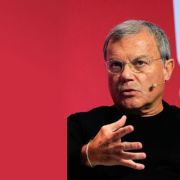
Sir Martin Sorrell, one of the UK’s highest paid executives and long-time chief of the world’s largest advertising agency WPP, is being investigated by his company. Details are few and far between but an email from Project Associates, which acts for Sorrell in his personal capacity, has been reported by Campaign as quoting Sorrell with: ‘Reports in the media have stated that WPP is investigating an allegation of financial impropriety by me, specifically as to the use of company funds. This allegation is being investigated by a law firm. I reject the allegation unreservedly but recognize that the Company has to investigate it.’

WPP has said: ‘The allegations do not involve amounts which are material to WPP’, which for a company with a £15bn revenue that pays Sorrell tens of millions of pounds a year, is fairly vague. The fact that no details of the investigation have emerged has left the press wguessing who could succeed Sorrell, should this be his downfall. The WPP succession plan is known to be a thorny issue, with various reports of how clearly it is laid out should the 73-year-old chief exit the business.


3. Disney offers to buy Sky News

Sky News

21st Century Fox is attempting to buy the 61% of Sky it does not already own. The acquisition has been in stasis since the company first made its move in 2016, due to government regulations and CMA investigations. The CMA has expressed that it is not in the public interest for the Murdoch family empire to own more of the British news industry.

To help with the matter, Sky has outlined plans to make Sky News a separate entity from the rest of Sky and Fox has proposed funding for the service for at least 15 years (up from its previous offer of 10).

But possibly making the whole problem go away is Disney, who this week offered to buy Sky News outright, and remove the issues of media plurality. This would, in theory, allow Fox to continue its takeover of Sky (and eventually Disney’s takeover of Fox). The story has not yet developed beyond the initial offer, but a huge shift in the (traditional) UK media landscape looks to be on the cards.


4. Stranger Things lawsuit

Cast

The creators of Stranger Things, the Duffer Brothers, are being sued by director Charlie Kessler, who claims they lifted ideas for their hit show from his 2012 short film. Kessler has worked on a number of Netflix series including Daredevil and Luke Cage. The Guardian reports he is claiming to have screened his short, titled Montauk, to Matt and Ross Duffer in 2014. The lawsuit says Montauk’s storyline features a number of elements similar to the cult phenomenon Stranger Things, including children with enhanced thoughts and abilities, a military facility that carries out experiments and a monstrous creature from another dimension. Stranger Things was also given the working title ‘The Montauk Project’.

It is unclear why the suit is only being filed after the second series has been produced, but there are potentially unreported talks that have not led to a resolution. The road ahead is likely to be long, with plagiarism cases known for being particularly complex, as they can, at times, be based on subjective viewpoints and evidence.

It is not the only plagiarism case from the week, Tulisa has apparently won a challenge to be named as a songwriter and receive 10% of royalties from will.i.am and Britney Spears’ smash hit Scream and Shout.


5. Marc Jacobs’ public proposal

An unexpected piece of good news and incredible brand exposure for Marc Jacobs. The fashion designer organised a flash mob to dance to Prince’s Kiss before dropping to one knee and proposing to his boyfriend Char Defrancesco. In a branch of Chipotle.


The video has had 148K views on Instagram with overwhelmingly positive comments and coverage in the global press (how couldn’t it, it’s super cute), making this a win for Marc Jacobs and Chipotle, the latter benefitting from being the surprise destination of such a big moment in the fashion designer’s life. Rumours Jacobs planned the venue to secure free burritos for life are completely unsubstantiated.


Did you see something we shouldn’t have missed? let us know on Twitter @Vuelio

Russia

Political Headlines – Russia, London murders, benefits and sugar tax

Today’s Political Headlines include Russia accusing UK of creating a fake story, Lammy’s criticism of the Government, Labour’s warning over benefit changes and the sugar tax. 

Russia accuses UK of creating a ‘fake story’
The BBC says that Russia has accused the UK of inventing a ‘fake story’ and ‘playing with fire’ over the Salisbury poisoning at a UN Security Council meeting. Former foreign secretary Sir Malcom Rifkind has accused Russia of an ‘attempt to obfuscate’. The Times reports that British intelligence has identified the source of the nerve agent as Russia’s Shikhany facility, in a briefing used to persuade allies that Russia was the source.

Lammy criticises Government over London murders
The Guardian reports that Labour MP David Lammy has accused the Prime Minister and Home Secretary of abdicating responsibility over a ‘culture of violence that’s now becoming endemic’. The Daily Telegraph says that Cressida Dick, the Metropolitan Police Chief Commissioner, has vowed to use Al Capone tactics to target violent gang members, while The Times claims that use of stop-and-search has fallen, despite Dick endorsing the tactic.

Labour warns that benefit changes may lead to vulnerable people struggling to pay mortgages
The BBC carries details of a warning by Labour that benefit changes may lead to vulnerable people struggling to pay their mortgage. Around 90,000 people on some benefits claim support for mortgage interest, but this is being replaced by Government loans from today.

Sugar tax on soft drinks comes into force
As the BBC reports, the sugar tax on soft drinks has come into force in the UK. Treasury estimates suggest that 50% of manufacturers have reduced sugar content ahead of the change, but some experts warned that consumer’s response to the levy was uncertain. Public health Minister Steve Brine described the levy as ‘a ground-breaking policy’.

Peers write to police to report antisemitic abuse
The Guardian says that a cross-party group of peers, including Lord Sugar, have written to the Metropolitan Police, reporting antisemitic abuse on pages backing Jeremy Corbyn. The Times adds that Joshua Garfield, a Jewish Momentum official in Newham, has quit his post after witnessing ‘more antisemitism in the past week’ than in eight years as a party member.

Justice Secretary on the side of homeowners who defend their property
According to The Daily Telegraph, Justice Secretary David Gauke has said that he is on the side of homeowners who defend their property, following the arrest of a pensioner on suspicion of murdering a man following a burglary. Former justice minister Mike Penning said that the decision appeared ‘heavy-handed’.

Momentum founder outlines plans to make it easier to oust MPs
The Daily Mirror has obtained a recording of Momentum founder Jon Lansman, in which he outlines a plan to make it easier for Corbyn supporters to force out MPs who oppose the Labour leadership, and to curb the power of the unions. The Times reports that the party’s new General Secretary Jennie Formby has placed two senior staff members, the head of the compliance unit and the secretary of the parliamentary party, on gardening leave.

Thirty organisations under investigation by ICO
The Daily Mail reports that thirty organisations, including Facebook, are being investigated by the Information Commissioner’s Office as part of its probe into the use of personal data and analytics for political purposes. Other organisations include Cambridge Analytica and Aggregate IQ.

Learn more about what Vuelio political services could do for you.  

Facebook

87 million Facebook users affected

It seems like an almost daily occurrence at the moment, but Facebook is one again facing a wave of negative press. Following the Cambridge Analytica scandal, it was believed that 50m users had their data scrapped – which was then allegedly sold and used by political entities. Now, Facebook has revealed that the number is 87m, including 1.1m in the UK.

The figure was published in a blog post by Mike Schroepfer, chief technology officer, a post that largely focused on plans to ‘restrict data access on Facebook’. Near the end of the post is the statement: ‘In total, we believe the Facebook information of up to 87 million people — mostly in the US — may have been improperly shared with Cambridge Analytica’, accompanied by the following graph:

cambridge analytica

The small print at the bottom says: ‘We do not know precisely what data the app shared with Cambridge Analytica or exactly how many people were impacted. Using as expansive a methodology as possible, this is our best estimate of the maximum number of unique accounts that directly installed the thisisyourdigitallife app as well as those whose data may have been shared with the app by their friends.’

Mark Zuckerberg, the chief who took days to respond to the initial crisis that wiped billions off the company’s share price, is now everywhere, and, for the most part, apologising.

As reported by the BBC, he said in a press conference that he previously assumed that if Facebook gave people tools, it was largely their responsibility to decide how to use them. He then added it was ‘wrong in retrospect’ to have had such a limited view.

The lack of official regulation (forcing data control), and relative infancy of the company, is possibly the source of the naivety. The company is now making many moves to correct this position, which is particularly timely considering the upcoming GDPR. This week, Zuckerberg U-turned on an original decision to only comply with the GDPR in Europe, now saying Facebook will make GDPR-compliant changes worldwide. In regards to the GDPR, it’s lucky Facebook is learning before 25 May, but all these lessons are coming at a personal cost for Zuckerberg, who is having to defend his position as the head of Facebook.

As Dave Lee says, the idea that Zuckerberg’s leadership would be in question could not have been predicted even as recently as a month ago. But this latest snowballing issue led to him being asked if his position has been discussed – he replied: ‘Not that I know of’.

One investor, Scott Stringer – New York City’s comptroller, responsible for the city’s pension fund – is calling for changes to the board (which Zuckerberg is also chair of). With close to $1bn investment in the company, the fund may be a relatively small investor but it’s still a big voice demanding change.

The social giant is now in full crisis mode and is accepting responsibility, which is a development considering it previously threatened The Guardian over the original Cambridge Analytica story. The FT reports that Zuckerberg said: ‘I’m not looking to throw anyone else under the bus for the mistakes we’ve made here’.

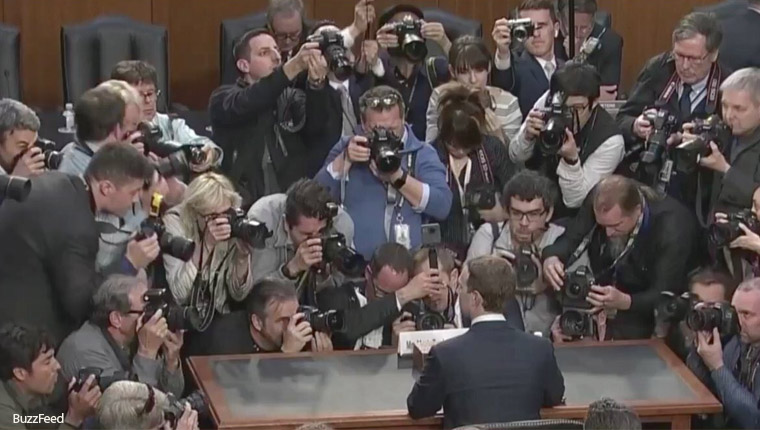
He has refused to appear before the UK’s digital, culture, media and sport select committee, instead opting to send either Schroepfer or Chris Cox, Facebook’s chief product officer. But Zuckerberg will appear before congress in the US, on 10 April and 11 April at two separate hearings.

Only time will tell if what we’re seeing is a car crash in slow motion or a bump in the road. Zuckerberg believes it will take a ‘multiyear effort’ to resolve the issues – suggesting the end of this turmoil is not yet in sight.

Bemused Backpacker

Travelling the world with Michael Huxley, Bemused Backpacker

Michael Huxley is an author, nurse and founder of travel blog, the Bemused Backpacker. With hints, tips and advice for travelling the world, particularly those on gap years, Bemused Backpacker has built a loyal following with its stunning destinations and travel reviews.  

We spoke to Michael about travel blogging, particularly how he likes to work with PRs and his personal pet peeves when it comes to PR/blogger outreach.

What makes your blog successful?
My audience without a doubt. There are other factors of course: integrity, tenacity and sticking with it for a long period when many others have given up; treating it as a business and not a blog; and trying to differentiate myself from everyone else out there! But I wouldn’t be anywhere without those who read what I write and say every single day. I have built up a lot of trust and a strong relationship with a good core of my regular readers and that just keeps growing.

How easy is it to become a great blogger?
It isn’t. It is easy to start a blog and call yourself a blogger, but there is a vast difference between that and being successful at it.

What’s the best destination for new travellers?
I used to say Thailand, because it was such a traditional go-to backpacker destination with all the traveller infrastructure any backpacker or traveller would ever need, and it still is to a large extent, but now I would say Indonesia too. Or Malaysia. Hell, just south east Asia in general really!

Bemused Backpacker

What’s the best destination for seasoned travellers?
Anywhere they haven’t been yet!

Where haven’t you been that you’d still like to visit?
I’m still waiting for that opportunity to trek across Antarctica!

If you could only take three items with you when travelling, what would they be?
My camera, my notepad and a pen. I’m assuming I still get to keep my passport with me!

What should PRs know about you?
That I am not just a travel blogger, I am a professional with a business. I have set – and fair – rates for a variety of marketing services and offer a strong ROI for all of them. And I never work for free, so please don’t ask.

What are you favourites campaigns you’ve been part of?
I have been part of so many good ones it is hard to choose. One of my all-time favourites was the RIGHT tourism campaign with the charity Care For The Wild International. I absolutely loved that because it was a cause that was so close to my heart, and ethical wildlife tourism is something that I still campaign for today.

And I was one of the first bloggers to work on the Trip Of Wonders Campaign with the Indonesian Ministry of Tourism and that was an amazing trip, but I am proud to have worked on it because of how successful it was, and continues to be.

I have worked on many more but those are two that really stand out. At the moment I am currently working alongside Bug Off, a national campaign to promote awareness of insect-borne diseases and how travellers can protect themselves, and as a nurse as well as a blogger that is something I am passionate about too.

Reach-the-right-influencers-with-the-Vuelio-media-database

What shouldn’t PRs do?
There are so many things that PRs do that immediately get bloggers backs up (I am sure there are just as many unprofessional bloggers who do the same for PRs) and I could create a very long list, things like spamming us with endless and largely irrelevant press releases (we are not traditional journalists who need copy and it is not our job to report news/product info in that way); sending irrelevant mass phishing emails (we really don’t care if the initial email isn’t personalised, we understand that you need to send it out to a lot of people but at the very least do a little research. My travel blog is not going to be interested in a fashion show in London or a book on how to cook the plants in your garden!); moving jobs and disappearing halfway through a campaign; approaching us for campaigns and then never responding when we answer back; or getting snarky when we ask for payment and trying to tell us how to do what we do.

And please recognise that our websites are our websites. We are very careful about what we put on there, what we link to and we control how things work. We don’t care if the brand has a list of demands and expects their logo to be front and centre on our homepage; we decide what services we offer and how we execute those services. Our readers trust us, we do not give that influence up easily, and we know how to market to them, so please trust us to do that.

But the primary thing is do not approach us without a strong budget in place to pay us (we know there is a budget in place, that is how you are getting paid, you or the brand just don’t want to allocate any of it to bloggers), and do not expect us to work for free. Or tell us any part of our hard work is at ‘no cost to us’.

Many professional blogs are run as businesses now, mine included, and we expect to be treated as such. Bloggers are experts in what we do, we have built up strong and highly engaged audiences (in many cases as large as a lot of traditional media and in many more cases a lot more targeted with higher reach and engagement), we know exactly how to market to that audience and can give a strong ROI for any brand that we work with. The blogging world IS changing and this is becoming the norm. The freebie grabbing hobby bloggers will always be around but ask yourself what value are you really getting from them?

And please just show us a little respect too. We are the ones at the end of the day that you need to complete the brief from your clients. You know the power of influencer marketing, you know the reach we have and just how powerful a marketing force we can be for the brands you work with, so respect that. Bloggers want to work with you and brands alike, so please build up relationships with us, develop those relationships, and work with us to promote your clients.

What do you call yourself (blogger/influencer/content creator)?
I call myself the founder of a travel website/business. I hate the term influencer (if you have to call yourself one you probably aren’t), but do use blogger occasionally, especially within the industry because that is just a widely recognised and easily generic term. But to be honest I don’t think any of those labels describe fully what professional ‘bloggers’ are any more.

What other blogs do you read?
I read so many blogs from a whole range of different genres and interests, but sticking to travel blogs I read Teacake Travels, TravelBreak and Nomadic Boys amongst many, many others.


Mike Huxley and his blog Bemused Backpacker are both listings on the Vuelio Database, and include detailed requests for how he likes to be contacted by PRs. 

Boris Johnson

Political Headlines – Salisbury poisoning, North Korea, gender pay gap and policing Travellers

Today’s Political Headlines include the cross party divide on the Salisbury poisoning, North Korea’s missile threat, gender pay gap, and policing Travellers. 

Johnson and Corbyn trade accusations over Salisbury poisoning
According to The Daily Telegraph, Jeremy Corbyn has said Boris Johnson has ‘serious questions’ to answer after claiming that Porton Down scientists had told him that the nerve agent was made in Russia, a claim denied by the laboratory. In response, Johnson has accused Corbyn of playing ‘Russia’s game’. The Guardian adds that Russia is to attempt to discredit the UK’s international reputation at a UN security council meeting, while The Times claims that it has learnt that security services have pinpointed the location of the covert Russian laboratory which manufactured the nerve agent used in Salisbury.

North Korea could have missiles capable of reaching the UK, in 18 months
A report by the Commons Defence Committee has found that North Korea is almost certain to complete development of ballistic missiles capable of reaching the UK, within 18 months, The Guardian reports. The report adds that the ‘Ministry of Defence does not consider that the UK will be a target of North Korean nuclear missiles, as its regime does not believe the UK to be a threat.’

Gender pay gap figures revealed
The Guardian says that almost eight in ten companies and public sector bodies pay men more than women, as the deadline for publishing gender pay gap information passed. Sam Smethers of the Fawcett Society said this ‘forces employers to look at themselves and understand their organisations and it prompts employees to ask some hard questions’.

Consultation on tougher powers for policing Travellers
According to The Times, police could be given tougher powers to target Travellers and Gypsies, after almost 4,000 caravans were found on unauthorised sites across the country. A consultation, to be carried out jointly by the Ministry of Housing, Communities and Local Government, the Home Office and the Ministry of Justice, will be launched today.

National Lottery giving less money to charity
A report by the Commons Public Accounts Committee says that the growth in popularity of scratchcards has led to the National Lottery giving less money to charity while the profits of the operator Camelot have risen, The Daily Telegraph reports. The committee describes the fall as ‘disastrous’ and warns that some projects will become ‘unaffordable’.

Jewish leaders to ask Corbyn to expel Livingstone
The Daily Telegraph says that Jewish leaders are to tell Jeremy Corbyn to prove his opposition to anti-Semitism by expelling Ken Livingstone from Labour. The Daily Mail adds that Corbyn wants to install Claudia Webbe as leader of the party’s disputes panel, despite the fact that she has previously defended Livingstone against anti-semitism charges.

Sutton Trust demands review of Sure Start cuts
The Times reports that the Sutton Trust has called for a Government review of the Sure Start children’s centre programme, after a review showed that the number of centres which have closed over the last eight years is around twice the amount claimed by the Government.

Sharp drop in number of plastic bags at sea following charge introduction
The Times reports that research by the Government’s Centre for Environment, Fisheries and Aquaculture Science (Cefas) shows that the number of plastic bags in the seas around the UK has fallen sharply since the introduction of compulsory bag charges at supermarkets.

Find out more about Vuelio political services.  

Hotwire UK

PR Spotlight: Matt Cross, managing director, Hotwire UK

Matt Cross is the managing director of Hotwire UK. Hotwire is the global communications agency with offices in nine countries around the world and affiliates in nearly every major city on the planet. We caught up with Matt to find out how a global agency works, what makes a good campaign and his advice for anyone looking to start a career in PR.

What does your day-to-day role consist of?
Meeting with practice leads across the business to get updates on client work and services, organic growth projects, new business prospects and pitches as well as overall team happiness. Naturally, there is a lot of number crunching involved in my role but I try not to get too bogged down in it! The communications industry is all about people, and my priority is our people in the London office.


What’s the best thing about working in PR?
Definitely the team I work with. We have a unique culture at Hotwire which enables us to get to know our colleagues from across the world, both in the way we work together and socialise. Every year we hold a Hotwire Bootcamp which involves everyone getting together in a European city for our annual conference, team building and a party!

At the same time, I find the work that we do really fulfilling – both creatively and in terms of the business impact we deliver to our clients. We strive to build really strong relationships with our clients, a high percentage of which we have worked with for many years. Nurturing that relationship is rewarding.


How does the agency work on a global level?
We have offices in San Francisco, New York, Paris, Madrid, Frankfurt, Munich, Milan and Sydney, as well as the London HQ of course. We have exclusive affiliate partnerships in most other globally significant cities to ensure we can service clients wherever they do business.

Often clients prefer to work closely with the team in their home country, so that team takes on a hub role with all the other markets reporting into them. We use tools like Zoom, Slack and OneDrive that enable us to keep in touch with each other really easily, regardless of location, making global working a breeze.


Why do clients choose Hotwire?
Our heritage is in the tech sector but clients come to us today to help them create compelling stories around their innovation. That could be anything from a clever widget buried in a datacentre somewhere through to an incredible consumer services-focused website. We’re lucky to work with up and coming disruptive brands like FiveAI, established giants like Facebook, McAfee and Qualcomm, as well as large corporates across finance, pharma and the legal sector who are exploring new ways to tell the world about the cool stuff they are up to.

We have spent 18 years perfecting a true global alternative to other multinationals, with the clients and award wins to prove it. We’re fun to work with, challenging our clients in the right way, with bags of enthusiasm.

We want to be the best agency that our people and clients get to work with, not only here in the UK but across all our markets globally. We’re a global player with a local approach to comms, which feels completely aligned with how clients want to work with agencies nowadays.


What’s your favourite recent PR campaign [not one of your own]?
The campaign from Calm (The Campaign Against Living Miserably) which launched last week was brilliant. #Project84 tells the stories of 84 real men lost to suicide, representing the 84 men who take their own lives every week in the UK.

Alongside sculptor Mark Jenkins, friends and families bereaved by suicide took part in the making of 84 sculptures which stand on top of ITV’s This Morning studio and South Bank buildings in positions of strength, looking out over the capital in solidarity against suicide.

Not only was this picked up by tons of broadcasters, but plenty of print and online media too. I also saw friends, outside the industry, sharing it on social too. It’s not often a campaign goes ‘viral’ but this one has got campaign of the year written all over it.


Have you ever had any PR ‘disasters’?
I don’t think I can point to any disasters, but I’ve definitely made mistakes in my early career, which have stayed with me to this day. Within the first month of my PR career I accidentally CC’d the whole of the tech journalist community into a press release distribution rather than BCC’ing them. The torrent of abuse and general tutting that followed ensured I never made that particular error again… we’ve all done it.

I was also lucky enough to have a boss early in my career who loved proof-reading while armed with a red pen, which he used liberally all over my work. To this day I automatically proof everything that I read and get irrationally upset when I spot typos… especially in the newspapers.


What’s your most memorable PR win?
There have been a lot of proud moments over the years but one more recent win was Eaton, a multinational power management company – we work with the brand across multiple markets with the UK acting as the hub team. This really added momentum to the work we do in the energy space in the UK and enabled us to create a specialist energy practice.

I’m anticipating some more memorable wins in the near future to announce, watch this space!


What’s more important for public relations – traditional or new media?
Both are equally important but it depends what a brand is trying to achieve. Prioritising which channels are most important starts by truly understanding a brand’s audience, where they hang out, how they are influenced when using those channels and what’s on their minds.

For instance, the broad reach of the national newspapers might be key to changing perceptions of particular stakeholder groups, while some clients might be looking to drive a specific call to action through paid social promotion. Neither is better than the other but the business objective is what drives those decisions.

99 times out of 100, you should take an integrated approach in order to see the most impactful results.


Do you think PR should have to pay for influencer marketing?
The short answer is that you don’t always have to pay for promotional work with influencers but there should always be a genuine and authentic value-add for that influencer’s audience or the whole thing is pointless.

For some people, a value-exchange of some sort is enough – for instance, tickets to an event or conference or perhaps a product that they get to keep after the fact. For others, they have such a huge audience to leverage that they quite rightly want to monetise it. There is a perception that some social influencers nowadays do very little apart from sit on a beach and chuck a brand name in there every so often. The reality is that the really good ones work extremely hard to keep themselves relevant in an increasingly competitive world… they know it can all disappear in the blink of an eye.

Transparency is the key though – authentic comms where a brand is really aligned to the end-audience in some way has to be the starting point.


What advice would you give new people starting in PR?
Come and join Hotwire! No, seriously, we’re always looking to hire ambitious people at every level. We’re planning an entry-level recruitment day very soon, and we’d love to meet any budding PR executives with or without prior experience.

I got into PR because I had (still have!) a love of technology and in particular I liked the challenge of explaining something relatively nascent to a broad audience. I’d spent five years working in tech-based recruitment which I had fallen into pretty much straight out of school and that stood me in good stead from a general work experience perspective.

It doesn’t necessarily matter what your qualifications are but you do need to show me how you have applied yourself, whether that is at university or elsewhere. We hire based on attitude. We’re an ambitious bunch and we value proactivity and a keen sense of accountability more than anything else.

My advice would be: don’t wait for someone to gift you an opportunity, work out what you want, then make your case for getting it – nine times out of 10 you will make progress because you’re showing that you have already given it real thought, not asking for someone else to do that thinking for you.

EEA

Political Headlines – EEA membership, gender pay gap, Russia and Jewdas

Today’s Political Headlines include the Commons committee calling on the Government not to rule out EEA membership, the ‘burning injustice’ of the gender pay gap, May battling to preserve alliance against Russia and Corbyn defending his decision to attend the Jewdas event. 

Commons committee calls on Government not to rule out EEA membership
The Commons Exiting the European Union Committee has published a report calling on the Government not to rule out continued membership of the European Economic Area, the BBC says. The report outlines 15 tests for the Government to meet, based on pledges made by Theresa May and David Davis. The conclusions have caused a split on the committee, with Conservative Brexiteers led by Jacob Rees-Mogg voting against the report.

Prime Minister describes gender pay gap as a ‘burning injustice’
The Prime Minister has warned that the country’s gender pay cap is a ‘burning injustice’ which must be tackled, in an article for The Daily Telegraph. Today is the deadline for larger firms to publish the average pay gap between male and female employees. So far, 8,330 of the 9,000 businesses and public sector bodies required to publish their pay gap have done so, with an average median hourly gap of 18%.

May battling to preserve alliance against Russia
The Times claims that Theresa May is battling to preserve the alliance against Russia, after Gary Aitkenhead, head of the Defence Science and Technology Laboratory at Porton Down, said that he had not identified the ‘precise source’ of the nerve agent used in the Salisbury attack. Downing Street said that the Prime Minister had drawn on a ‘comprehensive intelligence assessment’ before she blamed Russia.

Corbyn defends decision to attend Jewdas event
According to the BBC, Jeremy Corbyn has defended his decision to attend a dinner organised by the left-wing Jewish group Jewdas, despite criticism from mainstream Jewish leaders. A spokesman said that Corbyn had attended the event in a personal capacity, and not on behalf of the party. The Times adds that Corbyn has accepted an invitation to meet the Board of Deputies of British Jews and the Jewish leadership Council.

Dan Jarvis can stay as MP if he is elected as mayor, Labour decides
The Financial Times says that Labour’s National Executive Committee has decided that Dan Jarvis can remain as an MP, even if he is elected as mayor of the Sheffield City Region next month. The NEC has granted him an exemption from a resolution passed last month which would have prevented party members from holding two elected positions.

Passport firm in Estonian security scandal over ID cards
The Daily Telegraph reports that Gemalto, the Franco-Dutch firm set to produce the new UK passports, is currently caught-up in a national security row in Estonia after hundreds of thousands of identification cards that it produced were found to be vulnerable to hackers.

UKIP saved from bankruptcy
According to The Guardian, UKIP has been saved from bankruptcy after it raised £175,000 to settle a bill for costs resulting from a libel action brought by three Labour MPs and an additional £350,000. To avoid the cost of another leadership election, the party is also planning on keeping interim leader Gerard Batten in place for the next year.

Increase in childcare costs outstrips wage growth
The Daily Mirror reports that analysis by the Labour Party has found that the cost of childcare has grown by up to 47% since 2010, but wages only grew by 17% over the same period. Shadow Education Secretary Angela Rayner said this showed that the Government was ‘failing to deliver affordable, sustainable childcare for families across the country’.

Daily Political headlines curated by Vuelio political services.  

Beano

Beano accuses Jacob Rees-Mogg of IP infringement

The Beano has written an open letter to Jacob Rees-Mogg, accusing the eccentric Conservative MP of ‘infringing the intellectual property rights’ of one of their cartoon characters and ‘masquerading as Walter Brown’ (aka Walter the Softy).

The letter goes on: ‘It is evident that there are numerous instances whereby you have adopted trademarked imagery and brand essences of the character to the benefit of enhancing your career and popularity’.

If anyone is unsure of what these essences are, the letter lists seven points they believe are attributes of the character of Walter the Softy, which are being copied by Rees-Mogg:

  1. The character’s hair parting and style
  2. The character’s distinctive round reading glasses
  3. The character’s choice of spotty ties and vintage apparel
  4. The character’s enjoyment of classical music (because he thinks it makes him seem clever)
  5. The character’s bullish behaviour with peers and stopping others from having fun
  6. The character’s insistence to remind others of his father’s successful career
  7. Snootiness

It then asks that Rees-Mogg ‘cease and desist’ in the ‘ongoing impersonation of the character, which remains the exclusive property of Beano Studios’. Tongue firmly in cheek, Mike Stirling, head of Beano Studios Scotland, signs off ‘A swift response on this matter would be greatly appreciate to avoid getting Teacher involved.’

The letter, tweeted out from Beano’s official account, has been caused by keen-eyed readers who have brought the issue to the comic strip’s attention. Replies to the tweet are just as mischievous:

Many have applauded the Beano for a ‘perfect PR stunt’ and their great sense of fun. Rees-Mogg has yet to respond to the letter, much to the Beano’s disappointment.

US election Facebook

How Trump’s campaign won Facebook

Donald Trump’s successful Presidential campaign has previously boasted that it did a better job on Facebook than Clinton’s, and an internal white paper from the social media giant has shown they’re right.

Reported by Bloomberg, the internal white paper was published days after the American election and provides massive insight into two different methods of Facebook campaigns – and how important the platform is to political entities.

The white paper reveals that Trump’s campaign spent $44m on Facebook between June and November 2016, dwarfing the $28m Clinton spent in that time. The white paper also claims that ‘Trump’s Facebook campaigns were more complex than Clinton’s and better leveraged Facebook’s ability to optimize for outcomes’.

Next time you’re working out how many variations of advertisement to try on social media, think about this: Clinton’s campaign ran 66,000 different types of advert (seems high, right?), and Trump’s ran 5.9m. That’s five point nine million.

The campaign rapidly tested different forms before choosing the most successful to roll out further. Trump’s adverts were also focused on action – 84% asked people to do something, like donate, compared to just 56% of Clinton’s.

The Bloomberg article also suggests a possible link between the white paper and the Russian interference investigation, as the white paper was supplied to that investigation by a former Facebook employee. It says more than a quarter of Trump’s spend was tied to ‘third-party data files on voters’ and used a Facebook tool that helped the campaign show ads to people who looked similar to the names on file.

The former employee wrote: ‘Did Russian operatives give the Trump campaign a list of names to include or exclude from advertising that was running on Facebook?’

Clinton’s campaign was targeting broader audiences and only four per cent of her spend went on the lookalike tool.

Mark Zuckerberg is due to make his first congressional testimony this week and is likely to be questioned about this white paper. Whether he will be able, or inclined, to reveal what lists Trump’s campaign uploaded remains to be seen.

What is now arguable, is that Facebook helped Donald Trump win the election through a mixture of bigger budgets and more intelligent use of the system. Expect all future political campaigns to take note – Facebook victories can lead to real life victories.

At Crufts

Monty Dogge at Crufts

Top Pet blog, Adventures of Monty Dogge, is written by Mark Sanders and follows Monty – the large white-and-black Newfoundland. Monty was recently invited to the world’s greatest dog show, Crufts, and has very kindly agreed to let Mark tell us all about it!

Monty does Crufties

In what capacity were you at Crufts?
Monty has been going to Crufts for the past four years as a dog blogger. He was invited by the Kennel club to report on the show from a dog’s perspective and it’s very much Crufts unleashed. He particularly enjoys explaining to the ‘hoomans’ who follow the blog how the show is through his eyes, which is usually pretty different from how we perceive it.

Was Monty recognised at Crufts?
Every year people travel to Crufts specifically to meet Monty. It’s amazing how many times you get stopped walking around the show with people wanting to meet him. You hear people saying, ‘That’s Monty’ or ‘Look, it’s Monty Dogge’. As time goes on we meet new friends and it’s lovely to meet people in person and hear how the blog makes them smile and gives them a boost. We hear some very moving stories.

What’s the best thing about going to Crufts (from both your and Monty’s perspectives)?
Easy from Monty’s perspective – it’s the amount of treat stalls around the venue. It’s like watching an antelope graze as he goes from stall to stall fluttering his eyelashes and reaping the rewards. For me it’s an amazing opportunity to promote ourselves to a huge audience of dog lovers. We met with quite a few companies this year who are looking to work with us so it’s good chance to network as well.

What was your favourite product/stall/company at Crufts?
Monty would say any treat stall but in particular Sea Treats, becayse he loves fishy treats. He also has to pay a visit to the Canine Massage guild every year as he gets his pre-show massage and they see how he’s doing. He’s been going every year since we began going and they look forward to his visit. I love going to the dog charity stalls as we really enjoy supporting various animal related causes, like Hounds for Heroes and Canine Partners, throughout the year and it’s a nice chance to catch up.

Eating treats

Who was your favourite winner?
Well this year a Newfoundland got through to best in show which was lovely to see but for us, a puppy that we bred was competing for the first time. Merlot is two and was the only puppy that survived from the only litter we ever bred so she’s pretty special. She lives in Scotland with a friend and it was lovely to see her again. She came a very creditable fifth in a strong class so she was our ‘winner’.

What’s Monty like around other dogs?
Monty is very good around other dogs. He’s particularly good with small dogs and puppies and usually lies down so they can be the same height. It’s not uncommon to see a little dog jumping up trying to give him kisses. There’s no doubt though that his favourites are the ladies, he’s a big flirt. He does get strange reactions from some dogs who are just totally phased by his size and aren’t sure what to do.

Reach-the-right-influencers-with-the-Vuelio-media-database

Is Monty a future winner?
Monty will never be a show dog, he’s just too lazy. He’d lie down during the show and if he doesn’t want to move it’s pretty impossible to make him. He trained as a water rescue dog when he was younger but doesn’t like swimming because it’s all a bit too much like hard work. I think his future lies in his continuing school visits and charity work where he can take everything at his own pace… slowly.

How did you use social media during Crufts?
We did some live video this year for the first time, which was very popular. We set up a ‘Crufts according to Monty Dogge’ Facebook page that we use to build up to the show. We do things such as interviews with celebs with dogs and Monty’s explanation of the breeds and groups, which go down very well. This year we were featured as one of the dogs of Instagram and Monty appeared in the Daily Mail, which increased his profile further. I use Twitter quite a lot during the show as it gets quick responses and you can easily @ people or companies and get some good traffic.

meeting people

What’s the next event Monty is visiting?
The next major thing will be the book launch for our third children’s book, Monty and the Poppit Dragon. The two previous books were launched in Waterstones but this time we wanted to do a bit of a book launch tour in Wales, where the story is based. We will then be at the inaugural Dog Lovers show in Glasgow in September. They have invited us to go up and have an area where we can read stories to the children and they can meet Monty and Cookie, the stars of the books. We will then be at the Family Pet Show in Manchester in October and in between they will be visiting plenty of schools, so it’s a very busy year.

Adventures of Monty Dogge (and Mark Sanders) are both listings on the Vuelio Database along with thousands of other leading bloggers, journalists, editors and outlets. 

Disney offers to buy Sky News

Sky News will be sold to Disney or ring-fenced to allow 21st Century Fox to buy the 61% of Sky it does not already own. This follows concerns from the Competition and Markets Authority that the takeover is not in ‘the public interest’.

The BBC reports that the Murdoch family’s news outlets are ‘currently consumed by nearly a third of the UK’s population’, across TV, radio, online and print. Given the huge influence it has over the British media landscape, Fox’s proposed takeover has been under scrutiny by the CMA since it was originally announced in 2016. It has also, to some extent, been used as a political football, particularly in relation to media plurality and political relationships.

The latest announcement from Disney would not only help Fox purchase the rest of Sky but would also allow its own $66bn takeover of Fox. The Guardian reports that Disney is concerned over US rival Comcast’s attempt to buy Sky from under them, and is therefore hoping to move quickly on the acquisition of Sky News.

Backing this up, a statement from Fox makes it clear that Disney’s interest in Sky News does not depend on their takeover of Fox going through.

On top of Disney’s announced offer, Fox has outlined plans to make Sky News separate from the rest of the empire, making it independent within the larger Sky organisation. It is looking to legally separate Sky News from Sky, using the same structure as BT and Openreach – a move which would appease the media regulator Ofcom.

Fox has also said it would fund Sky News for at least 15 years, which is up five years on its previous proposal.

The Fox Statement points out that neither Fox nor the Murdochs ‘have ever ‘sought to influence the editorial direction of Sky News’. The BBC reports that critics of this, including politicians such as Ed Miliband, Vince Cable and Kenneth Clarke, have said the head of Sky News would still be appointed by the head of 21st Century Fox and so could be influenced by the Murdochs.

Fox said this was ‘unsupported and fanciful’.

With the news of Disney’s offer, shares in Sky rose, with some investors now predicting a bidding war between Fox and Comcast when CMA regulation is no longer a concern.

Jeremy Corbyn

Political Headlines – Corbyn, cancer detection, ivory sales and blue passports

Today’s Political Headlines include criticism of Corbyn’s Passover attendance, budget cuts failing cancer detection, tougher rules on ivory sales and challenging the passport contract. 

Corbyn criticised for attending Passover event with left-wing Jewish group
The BBC says that Jeremy Corbyn has been criticised for attending a Passover event with Jewdas, a left-wing Jewish group which is critical of mainstream Jewish community bodies. Last week the group accused the Jewish Board of Deputies, Jewish Leadership Council and Jewish Labour Movement of ‘playing a dangerous game’.

Lord Lansley blames budget cuts for failure to detect his cancer earlier
The Times reports that Lord Lansley, the former Health Secretary, has said that budget cuts meant that doctors failed to detect his bowel cancer earlier. He criticised the Treasury for thwarting a screening programme called Bowelscope which he introduced in 2010 butwhich only covers 50% of the population owing to cuts to the Health Education England budget.

Government to introduce tougher rules on ivory sales
The Government is to ban the sale of most antiques made of ivory under Government plans to protect elephants from poaching, The Times says. Exemptions will apply for items with only a small amount of ivory, musical instruments and antiques over 100 years old and deemed important, and museums will still be allowed to buy ivory.

De La Rue plans legal challenge to passport contract
The Financial Times reports that De La Rue is planning a court challenge against the Government’s decision to award the contract to produce the UK’s new passports to the Franco-Dutch firm Gemalto. The British company is taking the first steps towards initiating a judicial review in the High Court.

Thousands of cancer operations cancelled over winter
The Guardian reports a poll of acute NHS trusts by the Health Service Journal, which found that hundreds of cancer operations were cancelled over winter. Macmillan Cancer Support has warned that the delays could have affected some patients’ survival chances. Separately, an exclusive in the paper finds that thousands of ambulances are being prevented from responding to 999 calls because they are tied up at A&E units.

European Central Bank warning puts thousands of City jobs at risk
The Times says that the European Central Bank has instructed financial companies to prepare for ‘a no-deal scenario leading to a hard Brexit with no transition’. City sources told the paper that the stance will automatically lead to the loss of 5000-10,000 jobs in the UK, and blamed France for the ECB’s stance, which is at odds with that of UK’s regulators.

Survey of teachers warns of rising child poverty
A survey of teachers by the National Education Union and the Child Poverty Action Group, reported by the Daily Mirror, has found that 87% think that poverty has a significant impact on learning, while 60% think that the situation has got worse since 2015. School leaders described pupils ‘turning up at school with grey skin and stuffing food in their pockets’.

At least two trade deals will be ready for end of Brexit transition
The Sun claims that internal Government forecasts show that the UK will have ‘at least two bumper free trade deals’ ready for implementation when the Brexit transition period ends, in rolling-over ‘dozens’ of the EU’s current free trade agreements. A source told the paper that deals with Australia and New Zealand would be the simplest to reach.

Daily Political headlines curated by Vuelio political services.  

29 March

Four Things: Project 84, Tommy Robinson, Julian Assange and BBC woes

As it’s a bank holiday weekend, we’ve dropped our number of things you shouldn’t have missed to four! Happy Easter and bank holiday one and all.

1. Statues on ITV buildings

ITV statues

ITV is raising awareness of male suicide by unveiling 84 clothed statues of men atop its buildings in central London. Working with charity CALM (Campaign Against Living Miserably), ITV launched Project 84 on their flagship daytime programme This Morning. Suicide is the biggest killer of men under the age of 45, with 84 taking their lives each week. A change.org petition is calling to ‘Make suicide prevention and support a government minister’s reasonability’ and, thanks to the huge coverage of Project 84, has managed over 160,000 signatures.


2. Tommy Robinson banned from Twitter

Twitter ban

Tommy Robinson, former leader of the English Defence League, has been banned permanently from Twitter. Twitter has suspended and blocked his account on a number of previous occasions but it is understood that due to his breach of its ‘hateful conduct’ policy, this will be the final time. He had over 400,000 followers when it was last blocked at the beginning of March. Robinson continues to operate a Facebook page, YouTube account and personal website.

This ban follows Facebook’s banning of Britain First earlier in the month, and possibly shows signs that social media companies are now more willing to come down hard on hateful speech and high-profile policy infringers.


3. Ecuador cuts off Julian Assange’s internet access

Internet cut off

Julian Assange has had his internet access from the Ecuadorian embassy removed, following his apparent ‘interference in other countries’. Assange has been living in the London-based embassy for six years but has been digitally prolific in that time. The Ecuadorian Government said that it had removed his internet access because he had breached ‘a written commitment made to the Government at the end of 2017 not to issue messages that might interfere with other states’. It follows a tweet from Assange that challenged Britain’s assertion that Russia was responsible for the nerve agent poisoning.

The Guardian reports two previous occasions that Assange has been in similar trouble, in 2017 he was asked to stop discussing the Spanish Catalonia dispute by Ecuador and in 2016 his access was stopped as Ecuador feared he was interfering in the US presidential election.


4. More young people watch Netflix than BBC TV

BBC

The BBC’s Annual Plan for 2018 has acknowledged that Netflix is now more popular for children and young people than the BBC. The report states that 16-24 year olds spend more time with Netflix than ‘all of BBC TV (including iPlayer)’. In further damning news, the report says that 15-34 year olds spend more time each week listening to streaming music services than all BBC Radio. The report fears the BBC risks being overtaken by competitors, stating that 82% of children go to YouTube for on-demand content, half to Netflix and only 29% to BBC iPlayer.

As a reason for failing competitiveness, the report suggests funding has fallen 18% in real terms since 2010 due to the licence fee freeze and additional extra costs. The report claims that in the same period, ITV’s income has grown by more than 30% and Sky’s by 90%. It doesn’t detail the financial details of Netflix or Amazon.

The full report exposes the core practices of the BBC and is available online.


Seen something we’ve missed? Let us know on Twitter @Vuelio