How business comms can help fight fake news

How business comms can help with the fight against fake news

This is a guest post from Laura Morelli, UK Head of media at Semrush.

Trust is rapidly becoming a vanishing commodity. So says this year’s Edelman Trust Barometer, a long running gauge of belief in government, media and other prominent societal markers. The decline in media trust in particular is especially striking, dropping 13 percentage points over the last year to just over one in five people believing in the credibility of media brands.

The survey cites a widespread and growing concern about the dissemination of fake news and false information as reasons for this shift. Despite major media outlets investing significantly in fact checking functions and seeking to redress the inaccurate spread of information, it seems the public feels this isn’t enough to stem the tide. Of course, if media outlets cannot address these concerns, public trust in their output may never recover.

Businesses face the same challenge. While few would expect corporate entities to hold impartial views, consumer purchase power rests increasingly in their ability to demonstrate a matching set of values. The same study found that some 52% of people in the UK buy or advocate for brands which mirror their values, a metric rooted in belief that those values are being translated into positive action.

Communications professionals are then placed into a similar situation as the media – how to keep their narratives rooted in fact. This is particularly key when targeting younger demographics who have grown up under the shadow of fake news and risk essentially being trained to question all information from sources, both official and otherwise. We live in a time where we will continue to see a flood of opinion, false theories and fake news spread so easily online. According to new research from Semrush, UK online searches for ‘fake news’ regularly occur an average of over 12,000 times per month. We are also seeing the wider public become increasingly aware of what they are consuming. The term ‘How to spot a fake news story’ increased by 50% over the last 4 years. Searches for ‘fake news examples’ are up by 60% during the same period.

While fake news is insidious, one of the best tools to fight its spread is clear and irrefutable proof points and sources. Indicators of online misinformation or disinformation are often discovered in poor, single source references, or unsubstantiated platforms. Fake news counts on time poor readers being unwilling (potentially because the content plays into their own beliefs or opinions) or unable to sense check efficiently. This is also why reputable news organisations have invested so significantly in data journalism – a technique which comms providers should highly encourage.

Businesses may not recognise that they have access to a bigger data toolkit now than ever before to help substantiate their claims. While citations about business efficiencies and product efficacy must come from within R&D departments and internal data, there are well known external sources on offer for building consumer confidences. The internet is one of the most powerful research tools ever, and just a peek into search data can lend greater insights into consumer motivations, trends, and opinions. This can not only be used strategically to support business direction and decision making, but tactically to support content marketing initiatives too.

Fake news and misinformation online may be hard to stop – but it’s not impossible to keep fighting. And the tools you use to do so may just help improve consumer perceptions of your business and its purpose still further. Trust may seem at times to be a vanishing commodity, but savvy businesses can stop the slide, and potentially boost their brands in the process. It is increasingly essential that businesses deploy similar journalistic rigour to their branded storytelling. This is just as applicable to citing reputable sources and using data to shape narratives as much as it is for gaining those backlinks.

For more on the impact comms can have on the fight against fake news, check out this guest post from Sidekick PR’s Charlotte Dimond on how PR can stop the spread of misinformation. and well as our previous ResponseSource webinar with Polis, FactCheckNI and The Ferret, Facts, fakes and fast news

PRCA LGBTQ+ Network

PRCA relaunches its LGBTQ+ Network

The Public Relations and Communications Association (PRCA) has relaunched its LGBTQ+ Network with a focus on supporting the PR and comms industry to ‘show up’ for the LGBTQ+ community.

Originally launched two and a half years ago in partnership with YouGov, the PRCA’s LGBTQ+ group has held events, conducted cross-industry research into how sexual identity can impact work and highlighted LGBTQ+ role models in PR and comms. The group’s relaunch as a network includes the introduction of volunteers to boost positive impact across the industry when it comes to inclusivity.

Plans for the network include the sharing of resources and learning materials for reference, accessible events, commentary and discussion of important LGBTQ+ matters and new Role Models blogs.

The LGBTQ+ Network is led by Hill+Knowlton Strategies senior associate director Emma Franklin-Wright and Good Vibes Only Talent founder Katie Traxton.

PRCA LGBTQ+ Network Co-Chair Emma Franklin-Wright said:

‘As communications professionals we can have so much influence on the public narratives around LGBTQ+ people. At a time when we are increasingly under attack from the media it is so important for us to give as many people in our industry as possible the tools to create positive representation in our work, and to give agency leaders the resources to create inclusive workplaces. Having a refreshed network to deliver on those goals is vital and having so many new volunteers coming together to deliver this important work is truly energising.’

PRCA LGBTQ+ Network Co-Chair Katie Traxton added:

‘Having the backing of the PRCA to relaunch the group means a lot. Over the last two and half years, we’ve learnt about the ongoing challenges of equality, opportunity and representation that the LGBTQ+ community still face both in workplaces and the work we do. Now it’s time for us to invest our energy in catalysing real change. We know that progress is likely to be gradual, but we have a great group of people working with us and we want PRCA members to get involved, share their thoughts, and ultimately join us on our mission. The more of us who work together, both members of the LGBTQ+ community and allies, the more impact we will make.’

Committee members for the PRCA LGBTQ+ Network are:

Gian Marco Candolo (Senior Account Executive, Cicero)
Nina Eadie (Head of Lifestyle PR, Keko London)
Stephanie Ensten (Partner Manager, Mercedes EQ Formula E Team)
Sinead McGeever (Account Director, FleishmanHillard)
Will Richardson (Associate Director, TEAM LEWIS)
Lex Rosenthal (Account Manager, TALA)
Michela Siuni (Marketing and Communications Manager, I.G. Advisors)
Myles Storey (Campaigns Manager – Corporate Responsibility and Sustainability, O2)
Jonathan Sullivan (Account Executive, Brazil)
James Treacy (Senior PR and Communications Manager, Abercrombie & Kent)
Josh Wheeler (Broadcast PR Specialist)

For more information on the network and how to get in touch, check out the PRCA website.

Check out our previous accessmatters sessions on inclusion in the media, PR and comms industries with Proud FT’s Cassius Naylor, the Social Mobility Foundation’s Sarah Atkinson and The Unmistakable’s Asad Dhunna

Are PR and marketing a comms power couple?

Do PR and marketing make a perfect comms couple?

Public relations and marketing – two interlinked comms functions whose connection has been under debate for years. Since at least the 1970s, in fact, according to Stephen Waddington, who led our latest webinar on the subject, ‘PR & Marketing: The Ultimate Power Couple?’.

Sign up to watch the webinar

‘In researching our ‘Trends in the integration of marketing and public relations’ white paper, I found a piece from 1978 highlighting how the two functions should work together. That relationship in the headline is always going to be situational depending on size and scale, but there’s one thing that’s certain; this debate has been going on for 50 years and will keep going.’

Download the white paper ‘Trends in the integration of marketing and public relations’.

If this is a conversation that hasn’t yet started at your organisation, whether you’re working in-house or agency-side, take advice from Stephen, Mastercard‘s Suman Hughes and Hotwire Global‘s Tara O’Donnell shared during the webinar to consider the benefits of bringing your PR and marketing functions closer together.

Is this a debate for everyone?
As pointed out by Stephen, the CEOs, customers and celebrities that PR and marketing teams serve won’t really care so much about what is integrated and what isn’t – what matters is that the results are good. Who it is important for is those working towards the results, who have had to weave key messaging and strategy, such as ESG, into every aspect of their planning and actions over the last few years.

‘The pandemic has led to a reappraisal of organisations,’ believes Stephen. ‘Teams need to work together to understand their business’ place in the market and in wider society.’

‘An idea can start from anywhere’ – Mastercard’s Suman Hughes on the in-house perspective
On taking on her current role as Mastercard’s director of communications, UK, Suman Hughes joined a comms team already integrated. PR and marketing work closely together to communicate the brand’s message to its global audience and worldwide workforce and this connection aids every part of their strategy and execution.

‘Working as one team means offering a single unified voice. Whether it’s marketing, comms, public policy, HR, accounts, it all comes back to our employees and them as brand ambassadors – we talk as one, as Mastercard.

‘Integration means we can pool our resources and break down silos to make the most of what we have, making the biggest impact for our stakeholder groups and audiences.

‘It’s a global model that we run – not just across our international team, but across all our agency groups, too – we approach every piece of work this way, from paid, owned and earned. An idea can start from anywhere and become a campaign that’s holistic. It’s a level playing field and it makes it super-interesting for me to do my job.’

‘It’s all about business impact’ – Hotwire Global’s Tara O’Donnell on the agency perspective
‘In teams that have integrated marketing and PR, it’s all about business impact and how you measure it. When companies work in this way, it is more efficient, but depends on the organisation.

‘When companies had to go into ‘protect revenue’ mode in 2020, we realised that many were struggling because traditional marketing channels had shut down. Our comms clients, maybe for the first time, were tasked with having business impact – everyone in their organisations were tasked with improving business results. That’s what led us to look at what we do and evolve it to impact reputation along with revenue.

‘We’ve found it’s an incredible marriage; reputation to revenue resonates across the board. If you’re talking to a comms client about thought leadership – you’ve based it on insight about an audience they’re trying to reach; you should do that with your marketing anyway. You can use that insight all the way through the pipeline.

Is integrating PR and marketing for you?
‘It’s a really natural progression of using what you’re already creating to have different impact,’ says Tara.

‘The value to clients is really simple to show; our comms clients will understand it and our marketing teams do, too. It’s not necessary that they always work together, but we can show that there will be business impact when they do.

‘From a comms point-of-view, to be able to go to the business and show how you’ve impacted revenue… that ability to show value is incredible.’

‘Give it a go!’ says Suman. ‘If you’re really clear on your business objectives, you’ll all be pulling in the same direction’.

Watch the fullPR & Marketing: The Ultimate Power Couple? webinar here for more on integrating your comms functions.

The white paper, ‘Trends in the integration of marketing and public relations’ , can be downloaded here.

PR & Marketing: The Ultimate Power Couple?

It is a debate that has been raging for more than 50 years: how to integrate PR and Marketing. Successfully.

Vuelio’s latest white paper by Stephen Waddington explores the trends associated with integrating marketing and public relations. Gathering insight from industry professionals both in-house and from leading agencies, it uncovers a range of opportunities from ABM and community management to a changing media landscape and the reappraisal of brands.

In our latest webinar, PR & Marketing: The Ultimate Power Couple?, we bring you a discussion between Stephen Waddington; Suman Hughes, Director, Communications at Mastercard UK; and Tara O’Donnell, Managing Director UK at Hotwire Global, who will share their thoughts on how they see the integration of PR and marketing becoming a reality.

Fill in the form below to watch the webinar and learn:

  • The opportunities in PR and marketing integration
  • The impact Covid-19 has had on both functions
  • How to measure the success of integrated activities
The benefits of charity corporate partnerships

The benefits of charity corporate partnership for brands

Red Nose Day is coming up this week, and while people across the country will be taking part in charitable endeavours for Friday 18 March (sometimes involving baked beans and bathtubs), big brands are taking part, too. It’s not just about handing over the giant cardboard cheques on the night; alongside the number one priority that is helping people in need, there are many other benefits to corporate partnerships with charities.

Sainsbury’s, Argos, Habitat, TK Maxx, British Airways, Walkers and the Premier League are just some of the big-name brands listed as partners this year on the Red Nose Day website – you may have already bought something from one of them that will result in a contribution to the charity. Want more warm and fuzzy feelings alongside bonus business boosts? Consider the added value for brands wanting to get involved in the charity sector.

As Kurt Geiger subsidiary Shoeholics’ head of brand marketing Angela Asiedua pointed out, regarding the brand’s charity partnership with Smart Works for its ‘Shoe Good’ charity arm, there’s no better time for businesses to do some good: ‘Shoe Good a key mission for us moving forward, especially after the challenges of covid. It seems more important than ever that we look after each other and help where we can’.

As part of the team-up between Shoeholics, Smart Works were able to give donated shoes and bags to the unemployed women they coach and support back into work. ‘With the support of partners, we can be ready to help any woman who needs our support with the tools she needs to succeed,’ said the charity’s CEO Kate Stephens.

Such team-ups can be light-hearted in tone, too. Prostate Cancer UK has a remit that requires sensitivity in its messaging – the charity has partnered with brands like Below the Belt Grooming for Men, which often use playful branding. Their partnership was a perfect fit – the brand pledged to raise £10,000 for the charity during 2018, with funds going to research into diagnosis and treatment, as well as support for those impacted by prostate cancer.

‘It is partners such as these that will help us make prostate cancer a disease that the next generation of men need not fear,’ said director of fundraising James Beeby.

Awareness-raising and starting conversations about frightening topics is a key element of these partnerships. Just as the reputation of a charity can help highlight the credence and kindness of a business, that brand can give the charities it works with the benefits of its own ‘personality’; sometimes humorous, blunt or straightforward.

As shared by Numan’s marketing manager Abbie Moujaes in her guest post on healthcare comms, a straightforward tone can be difficult to nail when your subject matter is so potentially serious and life-altering, but if you can nail it, it will pay off in awareness and engagement. A bold and no-nonsense tone in comms may not always come naturally for an established charity; it can for consumer brands who have it built into their brand DNA already.

If you’re part of a brand’s in-house team and want to work with charity initiatives like Red Nose Day beyond bathing in baked beans to raise money, there are plenty of possible partnerships that will fit your organisation’s existing values and add to its purpose. Brands like SalesForce have teamed up with Human Appeal and Hands On London’s UK Wrap Up event, which has had six years of success so far. In 2019 alone, the initiative helped get 5,219 warm coats to local charities.

Initiatives like The Charities Aid Foundation have resources for finding corporate partnerships.

As the past few years have shown us all, people expect more from the businesses they buy from. If you have found success with your brand’s comms plan, it is the perfect time to share the benefits of your skillset.

In need of PR and comms solutions for your charity? Take a look at how Vuelio’s services can help you manage vital relationships, reach influential figures and access the political landscape here.

For more on building a charity brand, catch up with our webinar on the subject with Scouts and Shape History.

Want info on helping a local charity with their PR strategy? Check out this previous guest post from Spike’s Andre Gwilliam.

And for charities doing great things with their digital content, check out these 10 Top UK Charity Blogs.

Fair recruitment in PR and comms

How can PR and comms teams make recruitment fair?

It’s no secret that the creative industries have a long-established problem with hiring and promoting fairly and this needs to change. Don’t see an issue? If you haven’t experienced this yourself, you may need to pay attention to who exactly is working around you and then consider just how representative your team is of the wider society we serve.

You can take the time to consider the backgrounds the people you work with have come from. You can check out the data on the make-up of the PR industry, where 74% identify as white British (according to the 2021 PRCA Census). As Hotwire Global’s senior account director Natasha Gay warns – ‘We can’t yet consign to history the idea PR is only for young, white women’.

‘The good news is change is happening and progress is being made,’ says Melissa Lawrence, chief executive at the Taylor Bennett Foundation, which works to improve ethnic diversity in PR and comms. While initiatives like the Foundation, PRCA’s Race & Ethnicity Equity Board (REEB), the Social Mobility Foundation, Socially Mobile and A Leader Like Me are leading the change, organisations themselves have work to do.

‘The argument of not being able to find qualified Black candidates just doesn’t hold up in 2022,’ says Career Masterclass founder and CEO Bukola Adisa, who works to enable the progression of ethnically diverse professionals. ‘There are a plethora of resources available, from specialist talent sourcing organisations to AI solutions that are designed to help organisations to overcome individual and organisational biases in the recruitment process.’

The path to success starts with full understanding of what you’re up against, says Dr Femi Olu-Lafe, senior vice president, global inclusion at Kinesso: ‘The companies that have made the most meaningful progress took the time to firstly understand their current state and set a clear vision for the future state, before seeking input (internally and externally) about what was needed to make meaningful change. They also committed to short- and long-term goals on paper by building a roadmap with the steps to get there.’

We can’t find the talent – where should we be looking?
For a start, expand your aim.

‘Build strong partnerships with organisations and universities that have connections with people from historically excluded communities. When possible, this should be a two-way beneficial relationship; rather than companies just recruiting, companies could consider how they could also invest in the growth of these organisations, universities and communities,’ says Dr Femi.

‘And building your brand as a company that candidates seek out. Candidates want an inclusive culture where they can thrive. Being transparent about the long-term mission and short-term steps to get there will help enhance your credibility.’

‘Companies should be looking at a diverse range of places to advertise their roles, and attract talent,’ adds Melissa. ‘They can also engage with organisations who are actively working with the people they are trying to attract.’

And on the subject of such organisations…

Which initiatives can help with recruiting fairly?
‘Let’s start with the Taylor Bennett Foundation!’ says its chief exec Melissa.

‘We work really hard to engage people from ethnically diverse backgrounds at all levels. Our programmes are always oversubscribed and what we need are more opportunities for our candidate network to apply to. There are lots of other positive action initiatives out there, recruiters need to do a bit of work to find the right one for them.’

Bukola is also ready to connect businesses with talent: ‘Through our global community of professionals and access to our wide network of Black talent, at Career Masterclass, we are able to support organisations who want to recruit from a wide pipeline of diverse talent through our recruitment solutions including jobs board, executive searches and targeted outreach to our community and network.’

But before bringing in the experts, you may need to convince your hierarchy higher-ups that there is a problem that needs fixing…

How do I speak to my Board about this?
‘The tone from the top is critical to successfully building a diverse and inclusive culture in the workplace,’ says Bukola. ‘HR teams have to invest time in educating the board and senior management team on why diversity is not a ‘nice to have’ and how it is pivotal to building a sustainable and successful business as multiple studies have shown that diversity impacts businesses positively and contributes to the bottom line.’

‘There is so much information available on how important the contribution of diverse talent is to an organisation,’ says Melissa at Taylor Bennett.

‘There are multiple reports from the likes of McKinsey, Business in the Community and the PR/Comms industry bodies that highlight the moral, business and financial case that hiring managers can draw resources from to make their case to their boards.’

Some board members may need a short history lesson/update on how that impacts the present, warns Dr Femi:

‘Increase the awareness of those with the power to make decisions about what led us to where we are now (i.e. sharing context on the historical exclusion of some groups of individuals) and the current inequities that exist.

‘It’s also important to place emphasis on the benefits (e.g. increased employee engagement and retention, enhanced innovation, better understanding of customer base, stronger business results) and risks of not focusing on diversity and inclusion (e.g. gaps in decision making, clients and customers are being proactive about holding companies accountable around diversity and inclusion, lagging competitors).

Who is already doing recruitment right?
Melissa recommends TUC – ‘Antonia Bance, head of campaigns, communications and digital trade wrote a blog for the Taylor Bennett Foundation last year titled ‘Making your communications and PR recruitment more inclusive‘. In the blog she included six points on what she thought worked well from the attraction to conclusion stage – it’s a great read’.

Recruiting to put together fully representative teams is just the start of the journey for PR and comms – creating an environment where everyone feels safe and supported to do their best work is just as important.

‘Companies need to create an environment where people feel supported and encouraged to thrive,’ advises Melissa.

‘I personally feel an organisation that actively promotes equity and inclusion will ensure their team feels welcome, valued and safe in their roles.’

And if this all wasn’t enough to encourage you to ensure your recruitment processes are fair, it turns out that diverse and supported teams are better for everybody across a business, including their customers. Final word from Bukola:

‘A plethora of studies speak to the benefits of diversity for organisations. A 2017 McKinsey Study used a data set of 1,000 companies to determine that profitability and long-term valuation increased dramatically when teams were diverse. Diversity in People Management also advances better decisions: according to a study, researchers found that diverse teams outperformed individual decision-makers in making a business decision up to 87% of the time.

‘Diversity leads to a variety of perspectives, greater creativity, confidence in the team, fortifies loyalty, draws in talent, and even improves productivity. Diversity breeds innovation, and innovation breeds success. When leaders actively champion diversity in the workplace, the benefits become far-reaching, impacting not just employee engagement and satisfaction, but also the company’s bottom line’.

For more on building diversity into your team, watch our accessmatters sessions with Taylor Bennett Foundation’s Melissa Lawrence as well as the Social Mobility Foundation’s Sarah Atkinson and Proud FT’s Cassius Naylor

PR leaders celebrate International Women's Day

IWD 2022: PR and comms leaders support #BreakTheBias

This is a guest post from the team at Hotwire Global

Imagine a gender equal world. A world free of bias, stereotypes and discrimination. A world that’s diverse, equitable, and inclusive. A world where difference is valued and celebrated. Together we can forge women’s equality. Collectively we can all #BreakTheBias.

That’s the theme for this year’s International Women’s Day 2022. We spoke to a number of PR and communications professionals in the industry to ask about their experiences and shed light on how we can all play our part to spark lasting change.

Rebecca Taylor-Cottle, Head of Communications, EMEA at Citrix
Rebecca Taylor-Cottle‘As communications professionals, we have a significant amount of influence within our businesses. With the right planning and dedication, we can use this influence to elevate women’s stories, sponsor women, and raise their profiles both internally and externally. In a former role, I did an audit of the people who represent our business in the media and found them to be just 3% women. I then looked for ways to improve things, running more media training for women, introducing new narrative arcs, and simply elevating women’s voices on social media. A year later, 30% of our media coverage had a female spokesperson. By acting as a sponsor for women, I created a much more representative view of our business from a media standpoint, and helped some of those women develop and grow in their roles. We may not be in charge of who is hired, but Communications teams can still have a huge impact on women’s careers.’

Melanie Coffee, PR and Media Relations Director at Crayon
Melanie Coffee‘I’ve been a storyteller for over 20 years and am always on the hunt for a good story to share. We often hear about the lack of women in the IT space, but there’s certainly not a lack of stories about us. It’s just a matter of taking a brief moment to look and listen for them.

‘When I find out about a cool project, I like to talk to individual team members, not just the person leading it. In doing so, you will often get different insights that strengthen your story, and it is more inclusive for the whole team.

‘When it comes to working to #BreaktheBias, early in my career I was fortunate enough to work with some incredibly powerful women who showed me the different ways in which they “owned their space” and they were unafraid to stand up for what they thought was right. I carry those lessons with me and try to pay it forward through supporting women and young people in their careers.

‘This can happen through providing feedback 1:1 on their recent presentation, taking a few minutes to push them to “own their space,” combating feelings of imposter syndrome, and my personal favorite: Stop telling yourself no.

‘Sometimes we talk ourselves out of an idea before we even propose it. That’s telling ourselves “no.” We need to stop doing that and instead push forward. And if we “fail” then make sure we “fail” forward.

‘It’s also being transparent in my own work and life. How I have failed forward, how I struggle to balance family and work. I am hopeful that by being open and honest with others I can help them learn along the way.’

Natasha Gay, senior account director and UK Hotwire Ignite Possibilities Programme (HIPP) lead, at Hotwire Global
Natasha Gay‘As an industry, we must do more to restore the diversity balance through actions, in order to shift the narrative. It all starts with people, and it can’t be done in a tokenistic way.

‘We can’t yet consign to history the idea PR is only for young, white women. According to the most recent PRCA census, 74% of those working in the industry identify as white British and the average is 38.

‘We should be actively looking for ways to increase the diversity of our workforce. This extends beyond recruitment – it starts at an education level. It’s about recognising and understanding why the industry has not diversified like other sectors. This is something that we at Hotwire feel very passionate about and, as a start, we are working with organisations like 10000 Black Interns to help address this.’

Vic Miller, VP PR & Communications at GWI:
Vic Miller‘The term ‘PR girl’ should be banished for eternity. Now in my 40s I rarely get ‘girl’ but the concept is still the same – the presumption that there is a woman who does PR and she’s at your service. This completely removes the understanding that PR and comms is a strategic role that often needs to set the strategy as well as deliver on it.’

For more on how the UK PR industry is marking IWD 2022, check out our blog here.

International Women's Day 2022 in PR and comms

UK PR and comms industry celebrates International Women’s Day 2022

Is International Women’s Day still necessary to acknowledge in PR in 2022? While the workforce that makes up the PR and communications industry in the UK is mainly female, our sector is not fully equal across the board on gender quite yet…

Because while we’re on the subject of Boards – they’re still mostly led by men. Balancing home life and work – a necessary consideration for many women; not always for their male counterparts – has been even harder for many because of the pandemic and unconscious (and occasionally conscious) bias continues to impact career success. Where gender intersects with race, class and sexuality, the inequality built into our industry becomes even more difficult to overcome.

Yes – International Women’s Day is still important to recognise and celebrate, even in a sector that may seem to outsiders like it’s getting it right. So, happy IWD to all women; here are just come of the events and initiatives happening across PR and comms today to mark the occasion.

Recharging
M&F Health is giving its entire agency a day off in honour of International Women’s Day, encouraging staff to book a doctor’s appointment, take an exercise class or use the time to reflect and recharge.

‘74% of our agency are women and working in health and wellbeing as we do every day, makes us especially aware of the importance of taking care of our own health,’ says James Hollaway, M&F Health owner and managing director.

Inspiration for the move – the agency’s client Organon, which will also be giving its 10,000 employees a day off to prioritise their health, or the health of the women in their lives.

Educating
Over at performance marketing agency Journey Further, 160 members of staff across all three office locations will have access to a full-day event focusing on the three pillars of inspiration, education and celebration.

‘It’s important that the day is not only actionable, but also relevant to our staff,’ says PR director Beth Nunnington.

‘To ensure we are covering topics that will make the most impact, we spoke to a diverse group of women across the business, plus heads of departments, to gather feedback about which topics they would like us to put a spotlight on. Our day will include internal speakers, third party speakers, and existing content, such as Ted Talks and roundtable discussions. We’ll continue to drive this action all year round, not just on 8 March.’

Celebrating changemakers
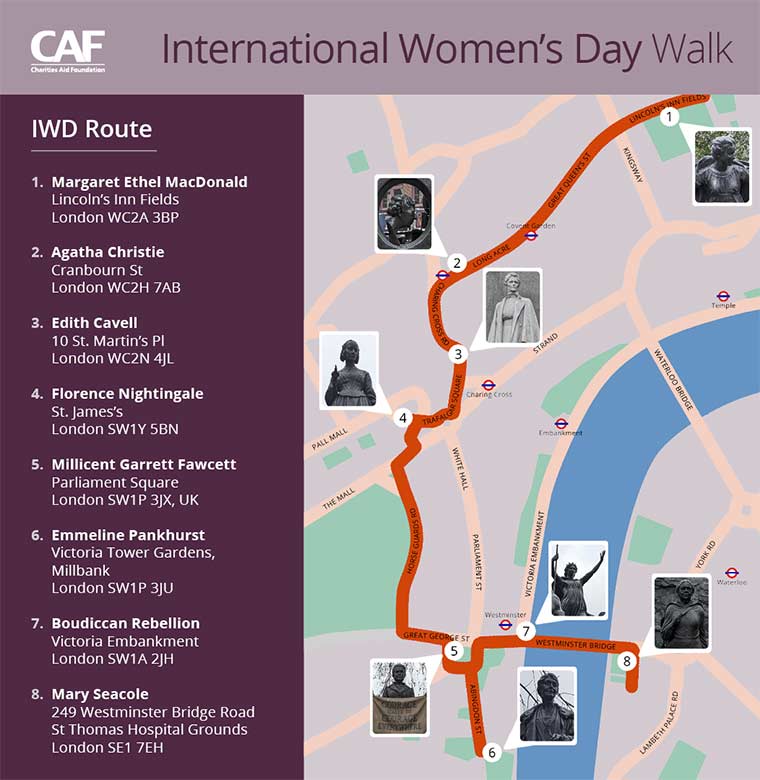
With local London charities, the Charities Aid Foundation will be taking part in a Statue Walk with the Charities Aid Foundation, aiming to draw attention to how much work there is still to do to raise awareness about women’s equality and accelerate gender parity across the world, while celebrating women who have left their marks on history.

International Women's Day walk

‘International Women’s Day is a global day celebrating the achievements of women and efforts towards making the world a more balanced place,’ says CAF Bank CEO and leader of the IWD Statue Walk Initiative Alison Taylor.

‘This day also marks a timely call to action following two years of a pandemic during which women’s employment has fallen and inequalities involving childcare and unpaid labour have become more evident.’

Supporting with sports
Fourth Day has sponsored the Stockport Vikings Pumas U8s and U13s girls football teams – which play in the South Manchester Girls Football League and Cheshire Girls Football League.

The daughters of two members of the Fourth Day team play for Stockport Vikings Pumas, with one of the team, account manager Caroline Fletcher, also coaching the U8s.

U8s Pumas

Nikki Scrivener, co-founder of Fourth Day said: ‘Working with technology clients we still see lots of areas where women are under-represented. The same is true in football, so we can see obvious comparisons. But there are brilliant signs of change everywhere. IWD is a chance for everyone to celebrate this change and show that we are still striving for more.’

Keeping the conversation going
Vhari Russell and her team at The Food Marketing Experts are passionate about gender equality and will be weaving this into the way they work for 8 March and beyond.

Vhari said: ‘As a business we are part of a number of mentoring programs in which we have the opportunity to share and guide business owners and will be using this opportunity to help women in business thrive. We will be sharing blogs about women in the food industry that have bucked the norm and driven huge growth in their sectors. We’ll be sharing views and content for the whole of March, as it is important to keep the conversation going.’

For more on equality in comms, check out our accessmatters session with Melissa Lawrence about the Taylor Bennett Foundation as well as our interview Advita Patel about the work of A Leader Like Me.

For connecting with journalists writing about these issues, try the Journalist Enquiry Service to receive requests from them directly to your inbox, or get to know the writers covering your sector with Vuelio’s Media Database and Monitoring solutions.

Accessible Communications Guidelines for Spring 2022

PRCA releases updated guide to help PRs deliver accessible content

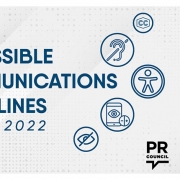
The Spring update of the Public Relations and Communications Association (PRCA)’s Accessible Communications Guidelines is now available for download.

Following its original release in April 2021 and produced in partnership with Current Global, the guide aims to aid PR and comms practitioners ensure that their content is accessible for all audiences they’re hoping to engage.

PRs who want to learn more about accessibility and improve their current offering can find advice and information on creating video and animated graphics as well as the use of language and the importance of representation. In addition to advice on digital and print content, the guide also features best practice on hosting fully-accessible events, both virtual and physical.

PRCA Director General and Chief Executive of ICCO Francis Ingham said:

‘Our guidelines for accessible communications are designed to help every member of the PRCA and the wider industry create more inclusive content and campaigns. The technology and tools to help us do this are readily available. The key priority is to update the way we work to adhere to best practices laid out in the Spring Edition document.

‘I want to recognise Current Global for partnering with the PRCA to develop these guidelines and for helping us instigate change across the industry. I would also like to thank our Digital Inclusion Partner Texthelp for their invaluable contribution to the Spring Edition.’

Current Global co-founder and CEO George Coleman added:

‘Every day content is published that isn’t accessible to all. Over a billion people worldwide have some form of disability, a significant audience many are excluding by default or design. We must change this. Morally, and commercially, it’s the right thing to do. It’s been extremely encouraging to see how well the guidelines have been received to-date; but it’s dynamic space, so a year on it felt timely to do a refresh. We hope they continue to be a valuable practical resource that contributes to meaningful change across the industry.’

The Accessible Communications Guidelines can be downloaded in both PDF and Word format.

For more on accessibility in the public relations and communications industry, here are five ways to make your workplace more inclusive for dyslexic people as well as this interview with Mark Webb and Sudha Singh on fairer representations of disability in PR.

Statistics on four-day working week in comms

‘Yes’ to four-day working week say a third of comms leaders

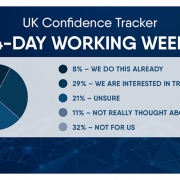
Three out of ten (29%) decision makers in the UK communications sector are seriously considering the move to a four-day working week, according to the latest UK Confidence Tracker from PRCA and ICCO.

A further 8% of comms leaders – a mix of CEOs, directors and heads of department – polled for the study carried out by Question & Retain have already adopted the working structure. This positive message for fans of the model reinforces a recent PRCA MENA study that found UAE professionals believe they work more efficiently under the new four and a half day working week adopted in UAE.

The quarterly Confidence Tracker from PRCA and ICCO tracks market confidence across the worldwide public relations industry. This year shows a boost in confidence and investment within the sector, as over two-thirds (72%) of in-house teams and PR agencies are hiring. In an increase of 3% from the last tracker update in October of last year, around nine in ten (87%) feel ‘confident’ or ‘very confident’ about the future of their business.

‘The data from our latest Global Confidence Tracker is very encouraging,’ believes PRCA director general and ICCO chief executive Francis Ingham.

‘Market confidence around the world is now higher than at any point since the beginning of the pandemic and the growing confidence is reflected in the number of organisations hiring. The four-day working week is an interesting proposition for agencies and in-house teams, many of whom are looking for creative ways to attract and retain the most talented professionals. The model won’t work for everyone but there are clear benefits for those willing to embrace change.’

The full PRCA and ICCO Confidence Tracker results for this quarter can be downloaded here.

Previous tracker findings from May 2020 can be found here, as can this update from March 2021.

For more about the work of Question & Retain, check out this guest post from its founder and CEO Annabel Dunstan on the benefits of working from home and the difference it has made to her team.

CIPR Communicating in a Crisis

CIPR celebrates the value of PR with publication of ‘Communicating in a Crisis’

The Chartered Institute of Public Relations (CIPR) is showcasing the strategic value of PR to organisations with the release of its new guide ‘Communicating in a Crisis’.

21 case studies – entries from the 2021 CIPR Excellence Awards’ Best COVID Response category – detail the way organisations utilised public relations to manage crisis and includes tips for businesses on making the most of their own PR teams.

The award-winning case studies featured include:

– King’s College London & ZOE (Giving scientists real-time data to fight COVID-19
– NHS in the North East and North Cumbria (The Great North NHS Comms Network
– Lloyds Banking Group (Helping Britain Recover)
– Scouts #TheGreatIndoors (The Scouts’ response to COVID-19)
– AstraZeneca (Emerging strong from the pandemic)
– Liberty Communications Limited (Tech for good – hacking for humanity)
– Ascenti (Using health and wellbeing to support staff returning to work after lockdown)
– University Hospitals Plymouth NHS Trust (Communications: a critical role in an effective response

Examples of valuable work done by the featured comms teams include their fight against misinformation, uniting remote teams, vaccine rollout support, and adapting to a changing economic environment.

‘The breadth of case studies in this guide demonstrates how public relations enables organisations to confidently communicate through difficult times,’ said CIPR President Rachel Roberts.

‘This guide demonstrates the versatility of public relations and how irrespective of the challenge faced by organisations, communications consistently acts as the bridge to enable organisations to inform and reassure their stakeholders. This guide will act as a great resource for all PR professionals as they scenario plan for the future and is a welcome addition to our industry knowledge resource.’

CIPR’s Alastair McCapra said:

‘PR professionals have shown what can be achieved in the midst of an overwhelming crisis. Now, however, the world has shifted again. We [had] all believed that COVID-19 was something that would leave scars but something that as a society we would be able to put behind us and return to normal. From the vantage point of early 2022, perspectives are now shifting on this.

‘COVID-19 has taught the world many lessons, one of the lasting ones must be that the resilience and power of communications professionals should never be doubted.’

The full ‘Communicating in a Crisis’ report from CIPR can be downloaded here on the website.

For more on managing communications effectively during difficult times, read this guest post from Onyx Health’s managing director Karen Winterhalter on learning the lessons from the COVID-19 crisis.

B2B PR Strategy

12 ways to maximise your B2B PR strategy

B2B PR doesn’t often grab the headlines, especially when it is compared to what is seen (incorrectly) as more creative consumer communications. But the benefits of good PR for business to business activities are plentiful, and clear to everyone working in this industry both in-house and in agency.

To gather the best expert advice for anyone putting together a B2B public relations strategy, we submitted an enquiry through the ResponseSource Journalist Enquiry Service. The response was enormous, and very clear – B2B PR is valuable and for many businesses, vital to their success.

James Murray, client services manager at Definition Agency spelled it out quite simply: ‘PR is about building brand awareness so organisations feel comfortable aligning themselves with you. After all, brand trust is an important part of the buying decision.’

Trust is at the heart of every relationship, and relationships are what PR are all about. As Claire Lamb, director at B2B agency Skout said: ‘A B2B relationship marketing renaissance is coming. Companies need to get human interaction back into their businesses. And remember, people don’t want to be sold to, they want to be helped.’

While some of this advice may prove valuable for all PR, B2B requires special attention. Sarah Carpin, head of PR for Spike explained: ‘Effective B2B coverage, whether it be coverage for brands looking to increase their wholesale client base, or to position themselves as respected and trusted brands within their sector, needs specialist management. B2B PR also covers things like non-competing brand collaborations and charity partnerships, providing client support at trade shows and conferences; hosting customer networking events; submitting award entries and supplying relevant content for LinkedIn, blogs and email newsletters.’

Without further ado, here are 12 tips to improve your B2B PR strategy:

Think about your business strategy
‘A well-thought out, strategically driven media relations programme that’s closely aligned with your business goals will deliver impact, credibility and authenticity, drive loyalty and communicate values. You want the reaction from your customers that they see you “all over everywhere”. If you’re front of mind, you’ll be first on the call list.’ – Felicity Read, managing director, Leapfrog PR

‘It all begins with your objectives – tell us what they are, and we’ll deliver a holistic strategy which is measurable. That’s because we may love words, but we’re big fans of data too. Every decision we make and piece of content we write, all loops back to those long-term ambitions.’ – Katie Mallinson, founder and MD at Scriba PR

‘As a business, pretty much everything you do is public relations so connecting your business strategy with your PR strategy will help you create impactful campaigns that communicate the right messages to the right people at the right time. It will also make you aware of new opportunities while keeping you ahead of the competition.’ – Anastasia Psarra, account director, Cerub PR

Connect through thought leadership
‘When crafting a B2B PR strategy, it’s important not to forget that people buy from people. B2B PR provides an invaluable opportunity for businesses to authentically connect with their target customers through thought-leadership.’ – Julia Clements Roche, Write Thought Communications

‘Thought leadership remains crucial to B2B PR strategies, as it helps to build trust, credibility and influences brand perception and purchasing decisions. To make an impact, thought leadership needs to be original and deliver real value and expertise to the intended audience.’ – Gemma Eccleston, associate director at PR Agency One

‘A strong thought leadership led public relations campaign helps businesses to get heard above the background noise and create brand awareness that amplifies other marketing campaign elements, while also providing critical ‘air cover’ to the sales campaign.’ – Ashley Carr, founder and managing director, at Neo PR

Build up internal profiles and personal brands
‘Contributing articles, making yourself available for comment and securing interview and podcast opportunities will all help to build your organisation as a trusted source of information and opinion and hopefully someone that other companies will want to consider doing business with.’ – The PR Team at Progeny

‘Newsrooms are shrinking, content is increasing digitally and editors are looking for vendor neutral thought leadership bylines on an ongoing basis. If you have subject matter experts on your team, you are missing a huge PR opportunity if you are not writing and having your PR agency place these articles with your target media.’ – Joanne Hogue, partner at Smart Connections PR

‘Think about smaller-scale, but potentially more effective, comment opportunities around industry news and trends. Although the client may not have a huge pull to their name, and may not get featured in nationals, don’t forget to send these insider comments to lesser-known, but still extremely valuable, industry-relevant blogs.’ – Lydia German, marketing and outreach coordinator at Tao Digital Marketing

Think digitally
‘Join things up. B2B can provide fundamental support to other marketing functions, such as lead gen and SEO, so make sure you fully leverage the opportunities available.’ – Louise Findlay-Wilson, funder and managing director of Energy PR

‘Not only does digital PR help with building brand awareness, but it can also be used to increase the overall domain rating of your website, drive traffic to specific product pages and help to rank above your competitors for certain terms.’ – Chloe Deans, PR and content manager at Access Mintsoft

‘Over 70% of B2B purchase decisions start with a search, according to Google. Allow PR to do what it can do best – leverage relationships, create link-worthy PR stories and earn coverage with links.’Proactive PR, which specialises in B2B technology PR

Make your content work for you
‘PR is not an isolated tool – amplification is a core part of any PR strategy. Simply sending out a press release or a thought-leadership article is not enough. It deserves more. So, make sure you’re using your other assets – your blog, social, email – to amplify that message to your core audience. Make your content work as hard for you as possible.’ – Tom Bestwick, content marketing and PR consultant at Hallam

Keep it simple
‘Make your copy to the point, jargon free and easy to understand. If the journo has spent three years writing for Coil Winding Intl and then moves to Mobile Europe as feature editor, they are not going to understand the importance of the 5G frequency spectrum for connecting to multiple IOT devices in the first few months. Guide them.’ – Mark Casey, founder and CEO of Dais Comms

‘Simplicity is at the heart of B2B PR. Not simplistic ideas or lazy thinking, but the ability to make complex and nuanced information understandable. Any intelligent fool can make things bigger and more complex. It takes a touch of genius – and a lot of courage – to move in the opposite direction.’ – Lynsey Barry, co-founder of B2B PR agency Five not 10

Provide context in your content
‘We’ve found that a greater focus on macroeconomic data helps. Adding more background to communications can help clients make sense of what’s happening in the wider world and how the service/product you are marketing resonates in context. We’ve been focusing on this over the past year and saw an almost 50% increase in coverage in 2021 as a result of this and other actions.’ – Leor Franks, business development & marketing director at Kingsley Napley LLP

Be creative and collaborate
‘Reach out to other brands who aren’t direct competitors but whose service offering can interlink with yours. At the very least, propose a blog post exchange. Or go bigger with a podcast/webinar!’ – Heather Wilkinson, content manager, Addition

‘There are now various mainstream examples of B2B brands being as creative, if not more, as their B2C counterparts. The likes of Slack, Salesforce and NICE are all investing huge sums in ad space that would historically be reserved for B2C brands, often with big name celebrity endorsements. So, you shouldn’t feel restricted in your creativity as a B2B brand.’ – Lee Simpson, account director at Fourth Day PR

Uncover opportunities in your data
‘If content is king, data is queen. Many B2B companies are already sitting on a wealth of useful data that can be used for PR. Highlighting product/service trends, regional variations or industry insights within a particular targeted sector is usually really appreciated by journalists and has the resulting effect of positioning the organisation involved as an expert on the subject.’ – Ali Cort, client services director, Browser Media

‘Data is your friend: Make the most of the research and the data team. Find out what they can pull from customer experience or from the back end of the site and see if there is a story within it.’ – Jodie Harris, head of digital PR at www.BlueArray.co.uk

Maximise your social channels
‘Social media can be your biggest asset. A little bit can go an awful long way to drive additional reach and engagement with a brand, if you get your strategy right. Don’t let clients tell you their audience isn’t on social – they just haven’t found them yet.’ – Louise Watson-Dowell, PR & digital strategy director at Definition

Understand your audiences
‘Really understanding your audience — PR at Degreed is about building our authority as a market leader. We cannot achieve this if we aren’t hyper-focused on the major opportunities and pain points facing our target market today. Our PR outreach is global, so instead of a one-size-fits-all approach, we tailor everything to each region including our angles, research, experts, and even our timings.’ – Jade Emmons PR manager at Degreed

‘Know your verticals – B2B brands often have very specific sectors they’re selling into and the message and offering may change wildly from sector to sector. As a PR professional, you must be able to adapt the message and adapt your pitch to secure coverage in a range of publications, across different verticals.’ – David Clare, head of PR at B2B tech marketing agency Fox Agency

Adapt for a sectorised approach
‘In the property sector, the best B2B results often come from integrated corporate and consumer campaigns, with audiences sourcing news and information from a range of sources.

‘Whether developers, agents, funds, charities or other, all organisations working in real estate need to earn trust from their stakeholders to achieve their objectives – if you’re considering whether to grant planning permission or invest millions, that market-wide reputation really matters to seal the deal. That means B2B PR in the property sector needs to ensure you’re building authenticity in your brand, in everything that you do, whether it’s how you show up in your audience’s LinkedIn feed and your share of voice in the investor circuit to what is being said about you or your projects in the weekend papers they read, by an influencer they trust or by your customers.’ – Laura Leggetter, one of SEC Newgate UK’s heads of communications

For more information on how Vuelio can help your B2B public relations and marketing, find out more here.

Want to try out the Journalist Enquiry Service for yourself? Start contributing relevant data, expert comment, product news and much more to the UK media – book a demo.


Brand personality

How to showcase your brand’s personality

This is a guest post from EverBold marketing executive Orla McCormack.

If you asked a marketing director or public relations manager what is meant by the term ‘brand personality’ twenty years ago, you may have got a response along the lines of, ‘What did you put in your coffee this morning?’

Nowadays, you are more likely to come across a human being lacking in personality traits rather than a brand that lacks them. Brand personality is a central focus for all marketing and public relations efforts of any brand looking to stand out among the crowd.

Here are some tips on how you can best portray the personality of a brand within a competitive sector, using the car insurance industry as an example.

Identifying and defining your brand personality
Just as an individual’s personality affects how others view them, your brand personality will determine how your customers view your brand. Therefore, it’s important that you strategically outline the traits of your brand’s personality from the get-go, rather than leaving the development of the brand personality to chance. So, the first thing you should ask yourself is simply, ‘Who are you?’ and ‘What are your core goals?’

Look: Brand appearance
Sectors like insurance can be perceived as quite boring and mundane – a task that requires lots of paperwork. But with the right brand appearance, it could be aligned with the liberation of being able to travel anywhere we like, alongside the security of knowing you’re covered. For our work with MissQuote.ie, for example, we use fun, bright and bold colours – orange, pink and white.

Sound: Brand voice
The next thing to identify is the tone of voice of the brand; in other words, how do we want to be heard? The voice of your brand contributes significantly to the perception of the brand personality. Should your tone of voice be formal or casual? Serious or funny? Traditional or on trend?

Once you have decided the tone of your brand’s voice, it is critical to keep the sound of your voice consistent – consistency is essentially the only way to build a recognisable and memorable voice.

Action: Brand behavior
Once you have established the appearance and voice of your brand, you need to start emulating this defined sound and look within the behaviour of your brand. The brand behaviour is demonstrated through the way in which your brand interacts with real customers. Essentially, you need to show that your brand can walk the walk. Engaging with your community online and offline through the content you post on social media, sponsorships and online interactions are all fantastic ways to engage with the brand’s community.

It’s vital to ensure that the content you are posting to your social media channels is emulating the brand’s personality; this could be funny, yet relevant memes, question polls and compelling blogs. You should also put real effort into replying to messages, comments and posts from social media followers, with all comments consistently relaying the brand voice.

Those working in the marketing, comms or public relations departments of any company, big or small, that operate within a competitive industry will appreciate how difficult it can be to get your brand to stand out among the rest. Consumers are more likely to trust and engage with a brand that resembles traits of their own personality. Therefore, it is important to really focus on the target market of the brand when defining your brand personality. Ultimately, it’s better to have a defined personality rather than one that is undefined and unheard, even if it means you won’t catch every fish in the pond.

For ensuring your brand is finding the right audience, book a demo of Vuelio’s monitoring, insights and media database solutions.

Want more on brand personality? Here are 3 tips for keeping your brand consistent across social media platforms , top tips for finding an effective tone of voice for your online brand and how to pick the right ambassador for your brand.

Emmanuel Ofosu-Appiah

Emmanuel Ofosu-Appiah becomes Vice Chair of the PRCA Race and Ethnicity Equity Board (REEB)

The PRCA’s Race and Ethnicity Equity Board (REEB) has appointed Emmanuel Ofosu-Appiah as Vice Chair.

Having originally joined REEB in January 2021, Emmanuel leads the ethnic men in PR and social mobility work stream. He works to create long-term change for diverse talent in public relations and comms and has mentored professionals from diverse backgrounds throughout his career to help them in their own journeys in the comms industry.

Alongside his role at Mercer as Acting UK PR Lead, Emmanuel serves as a Board Member for the London Chamber of Commerce and Industry’s Black Business Association, is part of the UK Black Comms Network, and is a Board Member of South Quay College. Adding to his credentials, Emmanuel also recently gained a qualification from the University of South Florida Muma Business College focusing on Diversity and Inclusion within the workplace.

‘This week is Race Equality Week and Emmanuel exemplifies why we need an annual reminder that racial equality along with gender and social mobility can’t be taken for granted,’ said REEB Chair Barbara Phillips.

‘We should never forget that most of us intersect across at least three protected characteristics where race is the foundation. Appointing Emmauel as Vice Chair of REEB sends a message to Black, Asian, Mixed Race and ethnically diverse men that your voice is as important as anyone else’s especially in the ongoing battle to achieve greater racial equality in our industry.’

Emmanuel himself is encouraged by the work the PRCA is doing when it comes to equality within the industry:

‘As Race Equality Week begins, I am encouraged by the progress we have made through our Ethnicity Pay Gap report and our PRISM mentoring scheme,’ said Emmanuel.

‘We want to see visible, equitable representation among senior decision makers. I am personally committed to ensuring that more black men like myself can occupy senior roles and thrive. I look forward to working with Barbara and the REEB members to create meaningful change.’

For more on the work of PRCA’s PRCA Race and Ethnicity Equity Board (REEB), read our previous interviews with Chair Barbara Phillips and Vice Chair Emmanuel Ofosu-Appiah.

How to tackle vague requests from journalists

How to tackle vague requests from journalists

While the ResponseSource Journalist Enquiry Service enables the UK media to send out targeted requests to PR and comms professionals, sometimes exact detail on what would be most useful to them isn’t included.

If you’ve received a vague but intriguing request from a journalist, here is how to approach it.

1) Check all of the information that is available to you
When filling in the Journalist Enquiry Service form, a journalist has space to add plenty of detail on what they’re looking for in the ‘Query’ field but, like PRs, journalists are often working to set deadlines and might not have time to include everything. That can occasionally mean a short and slightly vague description of what they want coming to your inbox.

However, there will be useful detail included in the request. Enquiries sent out via the Journalist Enquiry Service have to include certain details before they’re distributed to the PRs signed up to receive them – giving you a good start on determining their relevance to you, even without a lengthily-written Query section.

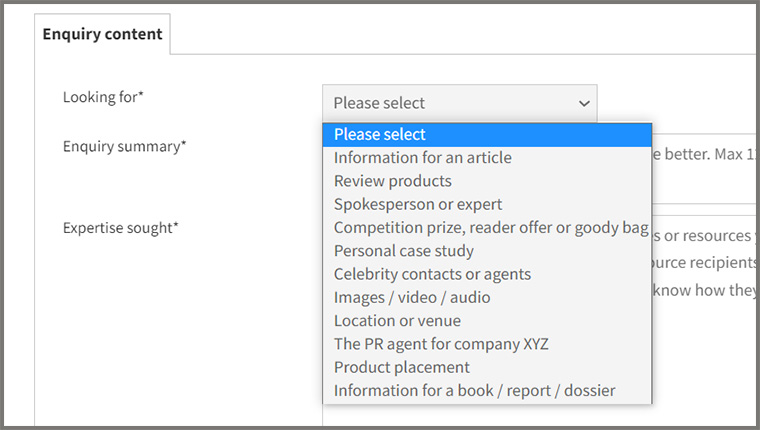
When a journalist fills out the form, they will have picked out what they’re ‘Looking for’:

What journalists are looking for

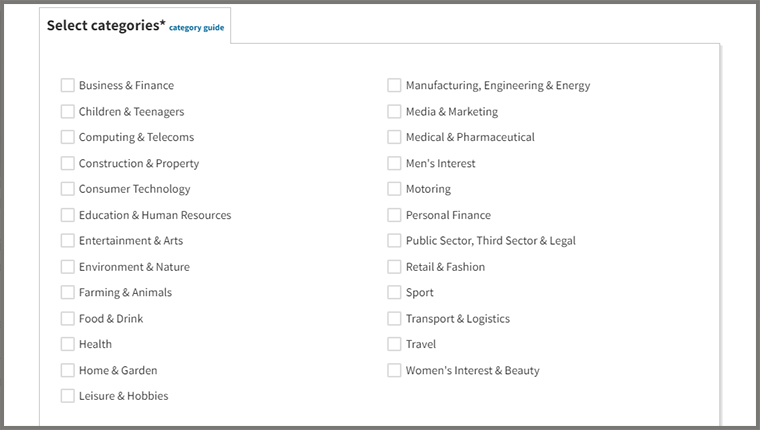
They will also have picked from the ‘Select categories’ section, choosing which PR sectors they want to receive contributions from for the request (which will be decided by the sectors and topics they’re writing about as well as the audiences their content is being written for – meaning you’ll know if their audience is also likely to be yours):

Categories on the Journalist Enquiry Service

If you’ve received the request, there’s a good chance you can help, but there are other elements to check first:

Don’t: Pitch news about products, even if you think it might be related to their topic. Quotes and expertise are what is being asked for here – they aren’t working on a product piece this time.

Do: Offer time with a person who can offer expertise, obviously, but you could also send over a recent press release with information about a related project your expert is working on, with how journalists can get in touch.

2) React to their deadline
Dreaded deadlines – everyone working in the creative industries has them. And as in comms, the research that goes into the writing/filming/production of a piece or project for a journalist has its very own timeline, separate from the filing of the finished piece, and its sharing with the wider world.

The deadline a journalist adds to a request distributed via the Journalist Enquiry Service will be for the research gathering part of their piece – not for the filing or the finishing. That doesn’t mean you have extra time to play with when collaborating with them.

Don’t: Offer something you won’t definitely, absolutely be able to provide in time for the journalist to finish and file their piece with their editor. Check your client is available before you arrange a time to call, make sure you can post a product to the journalist before they need to hit ‘send’ on their copy. A journalist will remember a PR who has let them down.

Do: Be clear about what exactly you can provide and when, making sure it’s before the deadline on the enquiry. ‘I might be able to to…’ won’t work – a journalist isn’t likely to take a chance on a lead that won’t lead to anything.

3) Use the opportunity to introduce yourself as a useful connection – not as a hindrance
The Journalist Enquiry Service is a great first step for creating a connection with media contacts you want to keep working with. Like introducing yourself in person, first impression is important. You might not know at the start exactly what the journalist wants, but be cautious and clever with your introduction.

Don’t: One thing to never do is send something only very vaguely connected to the subject the journalist is writing about. It’s too much of a long-shot. Rather than be filed away for another day, the irrelevant press release, product info or offer of expertise could get you added to a ‘not a helpful PR – possible spammer’ list in the journalist’s memory bank, or even straight-up blocked from their inbox.

Do: If the journalist is someone you’d love to work with, but this request they’ve sent just doesn’t seem to be for you? Hold back this time – there will be another request you can help with in future.

Not signed up to receive requests from the UK media via the ResponseSource Journalist Enquiry Service yet? Book a demo here, and check out why it might be more effective for you than searching #JournoRequest on social media.

Bold Communications in Regulated Industries

Managing comms and PR in regulated industries can be challenging. With additional rules to know and follow, it can sometimes feel like your comms is being stifled.

But the greater the restrictions the more creative the solutions, and brands across regulated industries have been forced to find news ways to reach their audiences, deliver cut-through content and achieve campaign success.

In our latest webinar, Bold Communications in Regulated Industries, we were joined by Lisa Stone, Director, Client Strategy at Edelman and Luke O’Mahony, Head of PR at Investec, who shared their secrets to finding success in controlled industries.

Fill in the form below to watch the webinar and learn

  • What you need to know when communicating in a regulated industry
  • How reactive comms can still be part of your playbook
  • The secret to (regulated) creative success
Regulated industries

6 tips for being creative and compliant in regulated industries

Compliance doesn’t have to stop the flow of creativity when putting together campaigns within regulated industries. For our webinar Bold Communications in Regulated Industries, Edelman’s director, client strategy Lisa Stone and Investec’s head of PR Luke O’Mahony shared solutions for sectors including healthcare, pharma, fintech and financial services.

1) New KPIs mean new opportunities
‘In healthcare, it’s really difficult because we can’t promote products,’ said Lisa. ‘I see that as an opportunity. We don’t have that as a KPI – there’s no “how many brand or product mentions did we get?” Instead, we really get to focus on the cultural insight, the patient population we’re trying to track.

‘When we talk about product in healthcare, it’s actually about client need. What is the trigger we’re trying to solve? If you take product out of it, it becomes a lot easier.’

2) Parameters can provide you with a blueprint
‘From the outset, we have a basic understanding of what you can and can’t do in a regulated industry,’ said Luke of working in the financial services sector. ‘That’s the key constraint, more than money in many cases.

‘When agencies are involved, there’s an interesting tension there. You want an agency to be aggressive with their ideas and push you, but it’s also got to be sensible.’

Subscribe to Vuelio newsletters

3) Make the most of your clients’ and agencies’ existing knowledge
‘Because we’re all in the same space, we all usually understand the parameters,’ says Lisa.

‘Clients are really involved in that journey. If we’re talking about a new drug launch, we’ll need to consider from a client or healthcare professional perspective, and in a way, that’s freeing. Instead of talking about a drug, how instead do we talk about the challenges in a way that will really resonate and encourage a dialogue that will lead them to consider other treatment options?’

The same is true in the finance sector, says Luke: ‘The business understands what’s required of us, in my experience; nobody’s saying, “Well, why didn’t you do a load of TV ads?”

‘The way we like to work with clients is to consult. We’ll engage with them. Sometimes they’ll say, ‘maybe you’ve been overcautious’ – we work compliance in right from the beginning, rather than at the end.

4) Compliance considerations covered = quicker sign off from stakeholders
‘Involving compliance from the get-go really helps with getting the sign off,’ says Lisa.

‘KPIs should be built into your programming from the beginning. In the healthcare industry, so many of our clients are trying to build trust within stakeholder groups and that’s something we can really measure effectively. There’s lots of room for us to look at how perception has changed and how the campaign has impacted that. There is value in investing in that kind of work.’

See the impact of your content with Media Monitoring

5) Use caution – find different ways to be creative
‘Be cautious,’ says Luke. ‘You’ve really got to read the room – it’s really important that your campaign ties into something broader in regulated industries.’

‘We find that personality can come through when it’s a personal communication. As a company, we have to have a certain tone, but we encourage our research analysts, for example, to let their own tone of voice shine through in comms. I think that reflects positively and makes the content more engaging.’

6) Anticipate change to get your sector ready for what’s on the horizon
Is your sector not regulated yet, but it’s on the way? Act like you’re already regulated, advises Luke.

‘The worst thing a business can do is think “let’s make hay while the sun shines.” Be a trusted company before the regulation comes in – that pays off in the long term.’

‘The latest Edelman’s Trust Barometer found that businesses are the institution most trusted by the public,’ adds Lisa.

‘This represents a huge opportunity – know your audience. Share thought leadership – as a trusted sector, you can really take the lead.’

More Vuelio webinars sharing best practice for both agency and in-house comms and public relations practitioners can be found here

Expanding into Europe

Supporting your clients in their European expansion: 4 points to consider

This is a guest post from Nikki Scrivener, director & co-founder of Fourth Day PR.

It has been a challenging couple of years for UK businesses and pandemic-driven uncertainty has forced many to adapt their strategies. Budget cuts – paired with restrictions on international travel and events – have also made launching in a new market difficult.

But, while the complexities brought about by COVID-19 and Brexit are not completely behind us, organisations are still optimistic about expansion. For many, this might mean entering a new market or region.

Your client may be looking to replicate their UK success in Europe, particularly where there are opportunities in the sectors they are targeting. Energy, healthcare, and manufacturing are growth industries in France, for example, while automotive, food, and electrical engineering are buoyant markets in Germany.

Regardless of the industry your client is in, there’s no ‘one size fits all’ approach when it comes to international comms. Don’t be tempted to just replicate what’s worked in the UK. Here are just a few things to consider when planning a PR campaign across multiple countries.

1. Understand the landscape
The PR landscape differs greatly across Europe. The UK, for example, is more open to direct PR approaches, due in part to the ratio of journalists to PR practitioners. With smaller newsrooms, many outlets will accept PR content that is of editorial standard – making it possible to place the right stories in high quality publications.

The numbers are different in Germany, however, with two-thirds of journalists to one-third PRs. When the PR landscape is vastly shaped by journalists, they are in firm control of what makes it onto their pages. Understanding how the media operates in a new territory, and the types of stories that resonate, will help you to adapt your strategy and content.

2. Adapt your tactics
Your usual PR tactics might yield different results across Europe, so it’s important to understand media preferences when planning your launch.

Obviously, in the UK, journalists expect a quick turnaround on content and often request last-minute, data-rich quotes from top-level executives. Companies that can be agile and act quickly can land the best coverage, including in national titles.

Bylines are also a powerful PR tool in the UK, but mainly in the B2B media arena. In France, however, national newspapers regularly accept bylines from company execs, provided they address a newsworthy, trending topic.

In Germany, the PR landscape is slightly more traditional. The importance of print is undeniable, and there’s a certain prestige attached to magazine coverage. With deadlines months in advance for B2B print media, companies often pitch stories in May and have them published in September, so a long-term content strategy is needed for this market.

3. Build relationships
As face-to-face meetings slowly make a comeback, knowing how to network with journalists in a new market can be a real boost for your PR campaign – whether you are setting up a meeting to introduce your client to a journalist, or simply trying to build connections with local editors yourself.

Europe’s bustling events calendar – packed with annual trade shows and industry showcases – presents a great opportunity to meet with journalists, introduce your client, and build meaningful connections. While these opportunities do exist in France, French journalists often prefer one-to-one lunches or desk-side briefings.

Knowing where the media are based in each market is also important when trying to secure quality time with journalists. In the UK, for example, most (but not all) trade publications are based in the South of England, whereas in Germany, trade outlets tend to be located in sector-specific hubs. So, you will typically find more tech outlets clustered in Munich and more financial outlets in Frankfurt. And unlike the UK – which has strong regional business outlets – most French news outlets are headquartered in Paris, so meetings with journalists will need to take place in the capital.

4. Localising your content
My last piece of advice is simple – localise! At a very basic level, content should be translated and adapted using local insights where possible. Having local spokespeople is also advised if you are planning to make a lasting impression with the media. In Spain, for example, a local country manager who can talk about local plans will be more interesting than an English-speaking CEO addressing the ‘global picture’.

And when it comes to the subject matter, proceed with caution when it comes to promotional or product-led content. The UK media are sometimes happy to include product details if it ties in with a feature, but the German press are less lenient and will more than likely offer you a paid opportunity instead.

Once you’ve had a taste of success launching your client in one market, it’s great to be able to replicate that elsewhere. However, with each location having its own cultural nuances, it’s crucial to have a tailored communications plan that can work in each region. To launch successfully in Germany, France – or beyond – take your time to assess the PR landscape, adjust your tactics, and localise, localise, localise!

For targeting the right journalists with the right content internationally, try the Vuelio Media Database – book a demo here

BBC

PR needs the BBC

Dead cat or party policy, the very real threat to end the BBC licence fee announced by culture secretary Nadine Dorries – before she partially backtracked – should be a concern to all in PR.

The announced two-year freeze to the BBC licence fee will impact its output, and director general Tim Davie has said ‘everything’s on the agenda’, including news and programming. While commentary on the small amount of money the freeze is saving each household – compared to the costs of rising energy bills or tax changes – suggests this move was politically motivated during ‘partygate’, the conversation around BBC reform and its replacement has been present in Westminster for many years.

Jessica Morgan, owner of Carnsight Communications, believes the end of the BBC ‘Would be devastating for so many.’ She added: ‘We are so lucky to have a quality national broadcaster in the BBC and I’ve benefited from it so much, both professionally and personally.’

The BBC is by no means perfect, questions continue to be raised on its editorial position on certain subjects, and its funding model is not as progressive as public broadcasters in some neighbouring countries. But it has the biggest audience, its output and content streams are vast and, though it is often criticised for not achieving it, the corporation is required to be impartial and deliver content without commercial association.

This is one of the reasons the BBC gets such a hard time in much of the press – in a digital age, it has become one of the news sector’s biggest competitors and it is not reliant on consumer payment to justify its content.

But for PR and comms professionals, this should be seen as one of its virtues.

Jessica said: ‘It’s still incredibly discerning – you always have to have a very strong angle to be featured, and I think that’s fantastic. No commercial tie ups ever come into it, certainly within the UK, and I think that makes the content all the more powerful.’

PR rightly focuses on the increasing threat of mis and disinformation, audience trust and journalistic independence. The BBC, despite its flaws, generally manages these issues to a high standard and trust in the organisation remains high. Securing PR coverage with the BBC means your story has passed quality control and will have a greater impact on your target audience.

And if your target audience is niche, which organisation is better able to serve them appropriate content than the BBC? Not needing consumer payment for content cuts both ways in this respect. All things to all people is usually a terrible approach – and the BBC has at times wildly missed the mark – but it is required to serve as much of the population as possible, often giving unique or underrepresented communities a greater platform.

Media strategist and How to make your company famous author Jon Card points to niche audiences as something that would be lost if the licence fee was scrapped: ‘The BBC produces such a broad range of content any reduction in its output would spell bad news for people in comms and PR.

‘It covers a lot of areas which are either quite niche or the public interest. I very much doubt the commercial sector would fill these voids if it stopped doing that.’

The BBC is under threat but 2027 is still a long way off and PR and communications is well placed to support and campaign for improvements to the BBC now, so it can benefit from the BBC of the future.

As Jon concluded: ‘Overall, we are better off for it and anyone working in media would miss it.’

Vuelio media monitoring covers BBC news and programming as well as every other media outlet and publisher.

Feeling blue? Here's some things that you can do

Feeling blue? Here are some things you can do

While the PR and comms industry is working hard to better support the mental health of practitioners, we can probably all do with more of a boost. Here are some extra ideas for maintaining your wellbeing from a fellow PR, an HR expert and a fitness aficionado.

Pointers from a PR peer: Natalie Trice, author, PR director, career coach
‘Clients, bosses, journalists, colleagues, KPIs and deadlines, is it any wonder that Blue Monday resonates with those working in the PR industry? Add in family commitments, skyrocketing energy prices and Covid and you might want to crawl back into bed and hide under the duvet, but it doesn’t have to be that way.

‘One way to help keep your mood in check is to have a routine that you stick to. Whether you are back in the office or working from home, set your alarm, get up, get showered and get ready for the day ahead. Have a start time, planned breaks, get away from your desk at lunchtime – ideally outside – and set a finish time. This isn’t always possible but long days, sat at your desk, with no fresh air and eating junk food, washed down with gallons of coffee, will not do your mental or physical health any good. These are the foundations for new boundaries and if you block out time in the diary, be strict about saying yes, when you mean no, and are kind to yourself, as well as others, you can start to feel more energised and less blue.

‘Getting away from your desk at least once a day can really help you to not only soak up some vitamin D but blow away the cobwebs, step away from any tricky situations and just let things go for a little while. A walk in the park, a run by the river, a quick bike ride or even lunch with a friend on a bench can be really beneficial for your mood. Block out that time in your calendar as busy so no meetings pop up, grab your coat and feel your shoulders loosen and the tension in your neck release, and remind yourself that you matter as much as that press release with 25 tracked changes that needs “urgent attention”.’

Resources from Human Resources: Access Intelligence’s Head of HR Kate Fraser
‘At Access Intelligence, we’ve been working to normalise conversations about mental wellbeing. As many as 1 in 6 of us experience common mental health issues every week – our mental health is sacred and needs to be nurtured just as much, if not more, than our physical wellbeing.

‘Our own Wellness Manager is both a body transformation coach and a behavioural change specialist and a trauma-informed coach who is aware that focusing on physical fitness is not the complete solution to wellness. She stresses that to achieve long lasting results we may need to change behaviours that often exist as coping mechanisms wired into our brains from childhood and supports us by integrating neuroscience, fitness and holistic approaches to wellbeing and providing an empathic, trauma-informed service (as well as making us sweat in her HITT classes!).

‘Over the past two years of homeworking and Covid travel restrictions, it’s important to retain a distinction between work and home and of taking holiday at intervals over the holiday year. We have seen how important it is to plan regular mental breaks from work, even as we have seen benefits from homeworking.’

Wisdom from a wellness expert: Roxy Danae, Wellness Manager at Access Intelligence
‘It’s so important to value our mental health in the same way as we value our physical wellbeing. Depression, stress and anxiety will affect all of us in varying degrees throughout our lives.

‘Respected clinicians like Gabor Mate say we are experiencing collective trauma with increased levels of substance abuse, dependence on anti-depressants and addictions to things like social media, work and consumerism. It’s no wonder, in the dead of January, post-festivities and half a month in to the ‘new year, new me’ cliche we may be experiencing signs and symptoms of low mood, anxiety and a lack of motivation. What can you do to start the new year feeling as good as you possibly can?

‘1. Find a somatic therapy and do your research. Somatic therapies are about connecting to the body’s innate intelligence. We are so in our own heads, we often dismiss our own intuition or can’t recognise it. Our minds do the decision making for us but actually, it’s our bodies that know best. We just don’t know how to tune in. Somatic therapies include breathwork, somatic experiencing, sound healing, Kambô, ecstatic dancing and movement, meditation and Yoga amongst others.

‘2. Give yourself the ultimate gift of self-love by doing ‘the work’. Did you know that suffering from anxiety is usually a result of us not dealing with underlying problems in our life? By finally opening that Pandora’s box we can finally get to know and understand ourselves, understand our triggers, our trauma, what’s holding us back and what we can do to live the very best version of our lives. I’ve encouraged many of my clients and friends to pick up the amazing book, ‘How to do the Work’ by The Holistic Psychologist Dr Nicole LePera.

‘3. Set an intention for yourself. Just one. And it doesn’t have to be overcomplicated, in fact it needs to be simple. ‘My intention this year is to work on my negative self talk,’ or ‘my intention this year is to feel stronger in my body.’ Once you have the intention you can put small steps in place to achieve it. Those who overpromise, set themselves up for disappointment. Be kind to your future self; a phrase I always ask people to consider before setting goals and intentions.’

Looking out for the mental wellbeing of your colleagues and employees can help take the blue filter off of the day-to-day – here are just some industry initiatives helping to support mental wellbeing in PR and comms.